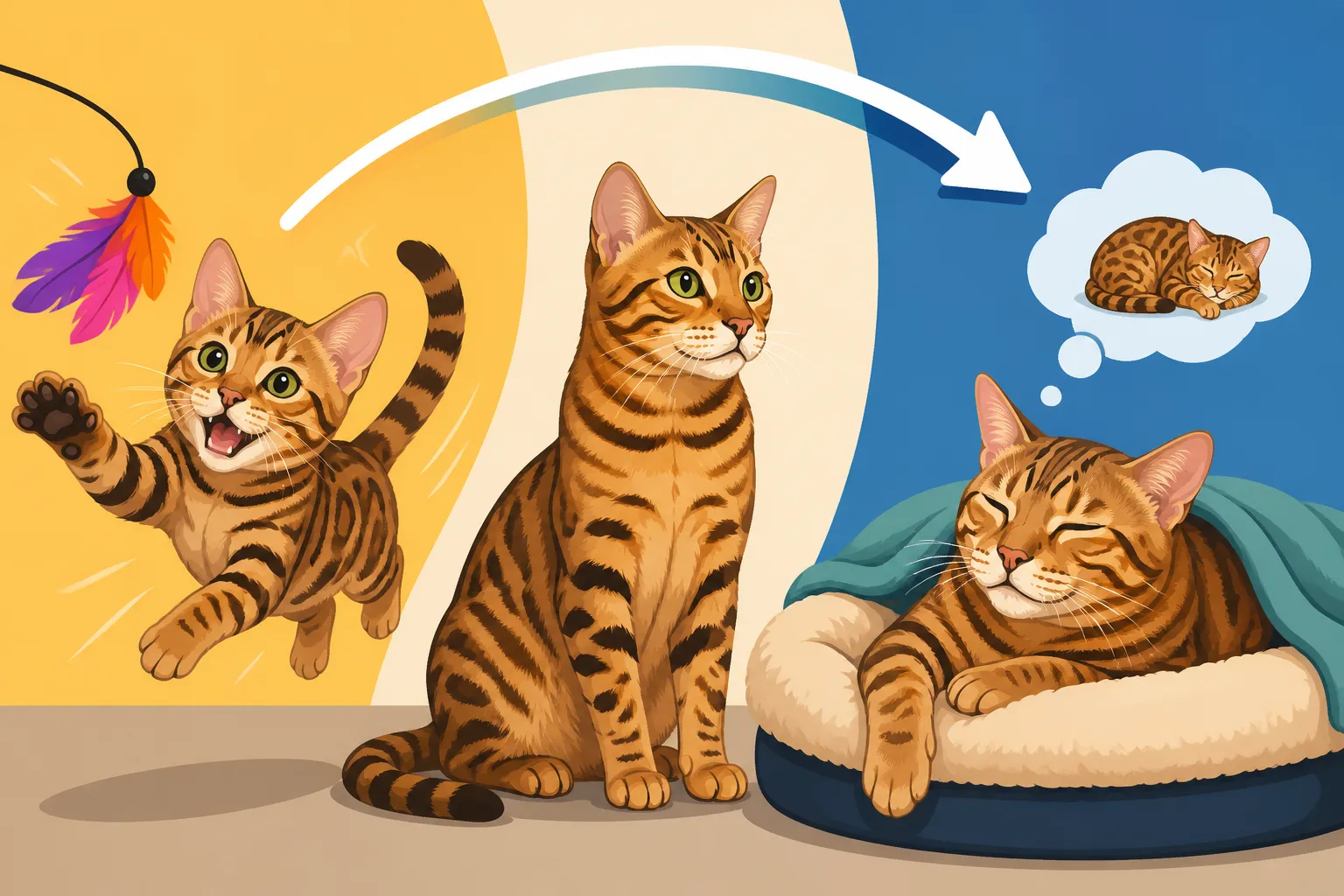
How Much a Bengal Cat Calms Down With Age
It's a common dream for many Bengal cat owners, especially those living through the whirlwind of kittenhood: the idea that one day, their magnificent, energetic feline will simply "calm down." You watch them scaling curtains, flooding the bathroom sink, and zooming through the house like a furry comet, and you just hope that maturity will bring a serene, quiet lap cat. While some changes certainly occur as a Bengal cat matures, expecting a complete transformation into a sedentary housecat is often a recipe for disappointment. This guide will explore the reality of a Bengal's energy levels throughout its life, helping you understand what "calming down" truly means for this unique breed and how best to support their needs at every stage.
Understanding the Bengal Cat's Innate Energy Levels
Let's be real: Bengal cats aren't your average housecats. Their wild ancestry, stemming from the Asian Leopard Cat, imbues them with a zest for life, an insatiable curiosity, and an energy level that can frankly put many other breeds to shame. This isn't just a kitten phase; it's deeply ingrained in their DNA. Thinking they'll magically become sedate senior citizens overnight is missing the core essence of what makes a Bengal a Bengal.
The Wild Ancestry Factor
The Asian Leopard Cat (ALC) isn't known for lounging around quietly. These are active, intelligent, and resourceful creatures in the wild, constantly hunting, exploring, and navigating their environment. When this genetic blueprint was blended with domestic cats to create the Bengal, much of that incredible vitality and drive came along for the ride. You see it in their keen hunting instincts, their agility, their love for water, and their often-insatiable need for interaction and exploration. This isn't a personality quirk; it's a fundamental aspect of the breed. You'll find that A Leopard Cat and a Housecat Made the First Bengal Cat really sets the stage for understanding this breed's unique traits.
Imagine bringing home a miniature wildcat – because, in many ways, that's what you're doing. This isn't to say they aren't loving and affectionate; they absolutely are. But their affection often comes wrapped in a bundle of dynamic energy. They aren't content to simply nap all day. Their minds are constantly whirring, looking for the next puzzle to solve, the next height to conquer, or the next "prey" (often your feet or a favorite toy) to stalk. This inherent drive doesn't vanish entirely with age, but rather shifts in its expression.
Activity Levels Across a Bengal's Life Stages
While a Bengal cat's innate energy remains high, its manifestation of that energy does evolve with age. A Bengal kitten is an absolute tornado of activity, seemingly powered by endless batteries. They are learning about the world at a rapid pace, testing boundaries, and developing their physical prowess. This is when you'll see the most frantic, unpredictable bursts of energy, often involving acrobatics you never thought possible.
As they transition into adolescence and young adulthood (roughly 1-3 years old), some of the most chaotic kitten behaviors might soften. They might not climb every single curtain, every single day, or have quite as many "zoomies" in the middle of the night, simply because they've learned the layout of your home and perfected their hunting techniques. However, their need for engagement, play, and mental stimulation doesn't diminish. They might become more focused in their play, more strategic in their mischief, but the underlying drive is still very much there.
Senior Bengal cats, typically starting around ten years of age, will naturally slow down a bit. Their joints might not be as supple, their stamina might wane, and they might prefer more sedate forms of play. But even a senior Bengal often retains a spark of their youthful vigor, enjoying short, intense play sessions or a good "hunt" for a hidden treat. It’s a shift from a sprint to a brisk walk, not a stop. Learning The Age a Bengal Cat Is Considered Senior can help set realistic expectations for this later life stage.
When "Calming Down" Really Means "Adjusting"
The idea of a Bengal cat "calming down" is less about a reduction in their overall energy and more about how they learn to channel and manage that energy. It's also heavily influenced by their environment and the structure you provide. A well-adjusted Bengal might appear calmer, but this often comes from years of consistent enrichment, training, and understanding from their owners.
The Role of Maturity and Learning
Just like human teenagers, Bengal cats learn boundaries and routines as they mature. A young Bengal might see an open cabinet door as an invitation to explore the contents with reckless abandon, scattering cereal boxes and canned goods. An older, more mature Bengal might still be curious about the cabinet, but they might approach it with more deliberation, perhaps pawing at it or giving a vocal demand rather than simply plowing in. This isn't a lack of energy, but rather an evolution in their problem-solving skills and their understanding of cause and effect.
They also learn what works to get your attention and what doesn't. If yowling incessantly for food at 4 AM consistently gets them fed, they'll keep doing it. If, however, they learn that calm nudges or a specific chirp at a reasonable hour are more effective, they'll adapt. This adaptation makes them seem calmer, but it's really a refinement of their communication and behavior, shaped by your responses and their environment. Understanding How Intelligent a Bengal Cat Is sheds light on their capacity for this learning.
The Importance of Routine and Environment
A chaotic environment or an inconsistent routine can exacerbate a Bengal's already high energy. If they never know when play sessions will happen, or if their feeding times are irregular, they might become more anxious and express their energy in more destructive or frantic ways. Establishing a predictable routine provides a sense of security and allows them to anticipate their needs being met. This can include regular feeding times, dedicated play slots, and consistent bedtime rituals.
Moreover, a stimulating environment that offers appropriate outlets for their energy is crucial. Think of it this way: if a highly intelligent child isn't given challenging schoolwork or engaging activities, they might become disruptive. The same applies to a Bengal. If they don't have cat trees to climb, puzzle toys to solve, or interactive play with you, they will find their own ways to entertain themselves, which often translates to behaviors you perceive as "wild" or "uncalm." Many excellent enrichment items can be found online, with a quick search on Amazon for "interactive cat toys" or "tall cat trees" yielding endless options.
For example, I once had a client, Sarah, who adopted a young Bengal named Kian. Kian was tearing up her apartment. Sarah was frustrated, thinking Kian would eventually calm down. When we talked, I realized Kian wasn't getting enough structured play. We introduced two 20-minute intense play sessions daily with a wand toy, puzzle feeders, and a Catio Is the Answer to a Bengal Cat. Within a few months, Kian's destructive behavior drastically reduced. He wasn't "calmer" in terms of less energy, but he was "calmer" in his behavior because his energy was being directed appropriately.
Factors Influencing a Bengal Cat's Perceived Calmness
Several elements contribute to whether your Bengal cat appears "calm" or perpetually energetic. These aren't just about their age; they're about a holistic approach to their well-being. By optimizing these factors, you can help your Bengal channel their energy in positive ways, leading to a more harmonious household.
Diet and Nutrition
What you feed your Bengal cat plays a surprisingly significant role in their energy levels and overall demeanor. A diet rich in high-quality protein, mimicking what their wild ancestors would eat, is often recommended. Many owners report that diets high in fillers, grains, or artificial ingredients can sometimes lead to hyperactive behavior or digestive upset, which can manifest as restlessness or irritability.
Think about it from a human perspective: if you eat a meal full of sugar and processed foods, you might experience a quick energy spike followed by a crash, or just feel generally unwell. Cats are no different. Providing a consistent, nutritious diet helps regulate their system, providing sustained energy rather than erratic bursts. It's why many Bengal owners carefully consider The High Protein Argument for a Bengal Cat and sometimes opt for specific wet or raw food options. Remember to check the specific protein percentage that suits a Bengal, and talk to your vet if you're considering a diet change.
| Age Stage | Typical Energy Expression | Apparent Calmness Level | Key Considerations for Owners |
|---|---|---|---|
| Kitten (0-1 year) | High-intensity zoomies, climbing everything, destructive exploration, frequent play bouts. | Very Low | Consistent, varied play; early training; secure environment. |
| Young Adult (1-3 years) | Focused hunting play, strategic mischief, bursts of intense activity, demanding interaction. | Low to Moderate | Continued enrichment; mental challenges; established routine. |
| Adult (3-10 years) | Consistent need for play, less frantic, more refined "conversations," settled routine. | Moderate | Quality play; consistent mental stimulation; stable environment. |
| Senior (10+ years) | Shorter play sessions, more lounging, but still enjoys interaction; reduced stamina. | Moderate to High | Gentler play; comfortable resting spots; vigilance for health changes. |
Environmental Enrichment and Stimulation
This is arguably the most critical factor. A Bengal cat is an intelligent creature with a strong prey drive and an innate need to explore and climb. If your home doesn't provide outlets for these natural behaviors, they will create their own, often at the expense of your furniture or sanity. Providing ample How Much Enrichment a Bengal Cat Actually Needs is not a luxury, but a necessity for their well-being and your peace of mind.
Consider these elements:
- Vertical Space: Tall cat trees, wall-mounted shelves, and cat "superhighways" allow them to climb, observe their territory from above, and get exercise. Many brands on Amazon offer robust options designed for active cats.
- Interactive Toys: Wand toys that simulate prey, puzzle feeders that challenge their minds, and automatic laser pointers (used sparingly to avoid frustration) are excellent for burning off energy. Which Puzzle Feeder Beats a Bengal Cat can be a fun challenge to research!
- Outdoor Access (Safe): A secure catio is often hailed as the ultimate solution for a Bengal. It provides fresh air, sensory stimulation, and a safe space to explore without the dangers of free-roaming. Even a supervised leash walk can provide immense enrichment. A Bengal Cat Walks on a Leash can be a surprisingly rewarding experience for both of you.
- Mental Challenges: Teaching tricks using clicker training, hiding treats for them to find, or rotating toys to keep things fresh can keep their minds engaged. Which Tricks a Bengal Cat Can Learn is an inspiring read for those looking to deepen their bond through training.
Without these outlets, their pent-up energy can manifest as destructive scratching, excessive vocalization, aggression, or even anxiety. A Bengal cat that is truly "calm" is often one whose needs are fully met, not one who has simply run out of steam.
Health and Wellness
Any chronic discomfort or undiagnosed health issue can make a cat seem restless, irritable, or unusually energetic. For instance, a Bengal cat experiencing discomfort from something like untreated dental disease might act out or be less tolerant. Similarly, internal parasites or digestive issues can cause chronic discomfort, leading to a cat that can't settle.
It’s crucial to keep up with regular vet check-ups. Your vet can rule out underlying medical conditions that might be contributing to behavioral issues. Changes in behavior, including increased restlessness or lethargy, should always prompt a veterinary visit. For a breed known for its sensitive gut, something like Chronic Diarrhea Is the Bengal Cat Complaint Nobody Warns About can have a significant impact on their overall disposition and perceived energy levels.
Managing Expectations for an Adult Bengal Cat
Ultimately, successfully living with a Bengal cat means understanding and embracing their inherent nature, not waiting for them to become something they're not. They are always going to be more active and demanding than many other breeds. The "calming down" you might observe isn't a fundamental change in their personality, but a reflection of their maturity, your consistent training, and the enriching environment you provide.
The Myth of the Sedentary Senior Bengal
While senior Bengal cats (those The Age a Bengal Cat Is Considered Senior) will naturally slow down physically, they rarely become truly sedentary couch potatoes. They might spend more time napping in sunbeams or on your lap, but they'll often still retain a spark of their youthful playfulness. Instead of scaling the highest cat tree in a single bound, they might enjoy a more leisurely climb. Their intense chase games might shorten from twenty minutes to five, but the enthusiasm for the hunt often remains.
Caring for an older Bengal cat means adapting your enrichment to their changing physical capabilities. Use gentler wand toys, ensure their favorite climbing spots are easily accessible (perhaps with ramps), and continue with puzzle feeders that don't require too much agility. Their minds remain sharp, and they still benefit from mental engagement, even if their bodies are slowing down. Caring for a Bengal Cat Past Ten offers valuable insights into adapting to their senior years.
Embracing Their Unique Personality
The best approach is to embrace your Bengal cat for exactly who they are: intelligent, active, curious, and often wonderfully boisterous companions. Instead of trying to force them into a mold of a "calm" cat, focus on providing them with appropriate outlets for their energy. This means:
- Dedicated Playtime: Schedule at least two robust play sessions a day. Use interactive toys like fishing rods with feathers or mice. Many owners swear by certain brands of durable wand toys available on Amazon because cheaper ones simply don't stand a chance!
- Mental Stimulation: Utilize puzzle feeders for meals, teach them tricks, and engage them in conversation. Their intelligence is a gift; don't let it turn into boredom.
- Verticality and Exploration: Invest in tall cat trees, wall shelves, and even a catio. Giving them their own "territory" to climb and explore safely makes a world of difference.
- Consistent Routine: Predictable feeding times, play sessions, and cuddle times help them feel secure and reduce anxiety, which can sometimes manifest as hyperactivity.
- Understanding Their Communication: Learn to distinguish a demand meow from a greeting chirp or a frustrated growl. Bengalese are very vocal, and The Bengal Cat Voice Is a Demand, Not a Greeting is often true. Addressing their needs promptly can prevent escalating behaviors.
Remember, a Bengal's energy is a defining characteristic, not a flaw. When channeled correctly, it leads to a vibrant, engaging, and incredibly rewarding companionship. You might not get a cat that sits quietly for hours on end, but you'll have a loyal, playful, and endlessly entertaining friend who enriches your life in countless ways.
Disclaimer
This article is for general informational purposes only and does not constitute professional advice. Laws, prices and regulations vary by location and change over time. Consult a qualified professional for guidance on your specific situation.