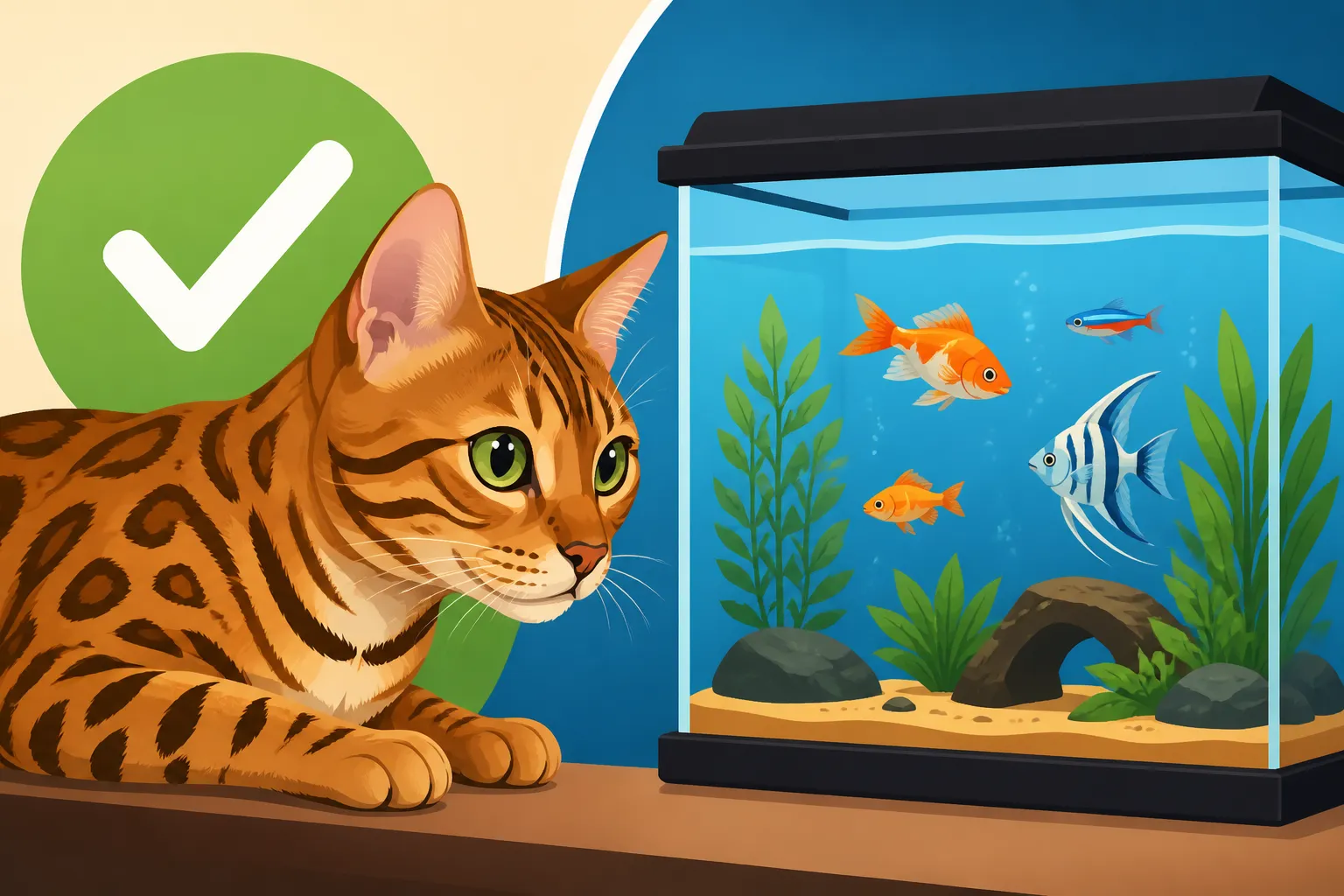
Whether an Aquarium Is Safe Around a Bengal Cat
Bringing a Bengal cat into a home with an aquarium often sparks a unique kind of anxiety for owners. You adore your spotted marvel, but their notorious love for water and boundless curiosity can turn a peaceful fish tank into an irresistible, and potentially dangerous, playground. This guide is here to help you navigate the intriguing challenge of having an aquarium and a Bengal cat under the same roof, ensuring the safety of both your beloved pet and your aquatic inhabitants.
Understanding Your Bengal Cat's Fascination with Water
It's no secret that Bengal cats possess a peculiar, almost dog-like, affinity for water. Unlike many domestic felines who treat anything wet with disdain, Bengals often leap into the tub, play in running faucets, and become utterly mesmerized by a bubbling water bowl. This isn't just a quirky personality trait; it's deeply rooted in their unique ancestry.
The Instinctual Draw of Water
Your Bengal's wild ancestor, the Asian Leopard Cat, hails from regions where water is an integral part of their habitat, often used for hunting small prey like fish and amphibians. This means that a deep-seated instinct to explore and interact with water is essentially hardwired into your Bengal's DNA. It's not just a passing fancy; it's a primal urge. When they see a shimmering surface, their brains light up with curiosity and the echoes of generations past. They aren't trying to be destructive; they're simply following an instinct that tells them "water equals potential fun or food." This is why you might find them fascinated by everything from a dripping tap to a full bathtub. It’s part of Why a Bengal Cat Loves Water so much.
This instinct isn't just about drinking. It's about engagement. They want to dip their paws in, splash around, and investigate what lies beneath the surface. For a Bengal, water isn't just a thirst quencher; it's an interactive environment. This means any open water source in your home, especially one teeming with movement and interest like an aquarium, becomes a prime target for their inquisitive paws and keen eyes. You'll observe them staring intently, tracking the fish, and perhaps even batting at the glass. It’s a natural expression of their heritage, but one that requires careful management in a domestic setting.
Curiosity and Playfulness
Beyond instinct, Bengal cats are renowned for their high intelligence and insatiable curiosity. They thrive on mental and physical stimulation, always seeking new challenges and ways to interact with their environment. An aquarium, with its constant motion, shimmering lights, and intriguing inhabitants, is like a living, breathing television show for a Bengal. It offers endless visual stimulation, and for a cat that loves to bat and chase, those darting fish become irresistible moving targets.
This curiosity often manifests as playful attempts to "hunt" the fish from outside the tank. They'll stalk, pounce at the glass, and try to bat at the water's surface if given the chance. This is your Bengal trying to play, and while it might seem adorable at first, it can quickly lead to problems. Their clever minds will constantly be strategizing how to get closer, how to manipulate the environment, and how to get those tantalizing fish. This is the same drive that leads them to explore every nook and cranny of your home, open cabinets, and generally get into places you never thought possible for a cat. They are constantly testing boundaries, and an aquarium is a big, exciting boundary.
Intelligence and Problem-Solving
Bengal cats are not just active; they are incredibly smart problem-solvers. If there's a perceived barrier between them and something they want, they will often figure out a way around it. This is where the danger to an aquarium truly escalates. A flimsy lid or an insecure tank stand isn't just an inconvenience; it's a puzzle for your Bengal to solve. They will push, pull, pry, and often succeed. I’ve heard stories of Bengals figuring out child locks on cabinets, so a simple aquarium lid might not stand a chance.
Their dexterity and persistence mean they can often manipulate objects, and if they discover a weakness in your aquarium's defenses, they will exploit it. This might mean pushing a lid ajar just enough to dip a paw in, or even knocking over a smaller, lighter tank. This innate problem-solving ability, coupled with their sheer strength and determination, means that relying on anything less than robust security measures for your aquarium is a gamble. You might even find them experimenting with water play outside the tank, turning on faucets, or playing in their water bowls, just to satisfy that aquatic urge, as covered in Why a Bengal Cat Turns on a Faucet and Why a Bengal Cat Plays in Its Water Bowl. This highlights their need for constant mental engagement, and if they don't get enough, your aquarium might become their next "project."
Potential Dangers and Risks for Your Aquarium
While your Bengal's fascination with your aquarium might stem from innocent curiosity, the reality is that an unsecured tank poses significant risks, both to your aquatic pets and to your Bengal itself. Understanding these dangers is the first step in creating a safe environment.
Physical Damage to the Aquarium
The playful pounce of a Bengal cat can be surprisingly destructive. Their claws are sharp, and their body weight, especially during a high-energy leap, can put considerable strain on an aquarium.
- Scratches and Cracks: Even if they don't get inside, a Bengal cat aggressively batting at the glass can cause scratches, especially if the tank is acrylic. While minor scratches might seem aesthetic, deep ones can weaken the structure, and prolonged stress could even lead to cracks. For a glass tank, a direct impact from a pouncing cat, particularly if it's a smaller or less sturdy tank, could lead to disaster.
- Displaced Lids and Equipment: A common Bengal cat trick is to dislodge lids. Many standard aquarium lids are simply resting on the tank or have minimal clips. A determined Bengal can easily push these off, especially if they are trying to reach the water or the fish. Once the lid is off, not only is the tank exposed, but filtration systems, heaters, and lighting fixtures that might have been secured by the lid can become loose or even fall into the water. This creates an immediate electrical hazard and a serious risk of water damage to your home.
- Tipping Smaller Tanks: Small desktop or bowl-style aquariums are particularly vulnerable. A curious Bengal, especially a kitten full of boundless energy, could easily knock these over. The result is not just lost fish and a shattered tank, but a huge mess, potential injury to your cat from broken glass, and significant water damage to furniture, carpets, and electronics. This isn't a minor spill; it's a flood.
Contamination and Stress for Fish
Beyond physical damage, your Bengal's interaction with the tank can directly harm the fish and the delicate ecosystem within.
- Introducing Contaminants: A Bengal dipping its paw into the tank can introduce all sorts of unwanted elements. Dirt, litter particles (even if you clean their paws, some residue can remain), cleaning product residues, or even pathogens from their fur or mouth can contaminate the water. Fish are highly sensitive to changes in water chemistry and the introduction of foreign substances, which can lead to stress, disease, or even death. Think about how meticulously you clean your hands before handling anything in the tank; your cat has no such hygiene protocol.
- Stress to Fish: Constant batting at the glass, loud meows (Bengals are known for their vocalizations, and sometimes they vocalize their demands, as noted in The Bengal Cat Voice Is a Demand, Not a Greeting), or the sudden shadow of a large cat looming over the tank can be incredibly stressful for fish. Fish perceive movement and sudden changes as potential threats. Chronic stress weakens their immune systems, making them more susceptible to disease and shortening their lifespan. They may hide constantly, refuse to eat, or display aggressive behavior towards each other due to the perceived threat.
Risk to the Cat Itself
It's not just the fish and the tank at risk; your Bengal cat also faces potential hazards when interacting with an aquarium.
- Electrical Shock: This is perhaps the most serious danger. Aquariums are full of electrical equipment: heaters, filters, air pumps, and lights. If a Bengal dislodges a lid and accesses the water, or knocks over the tank and exposes electrical components, there's a very real risk of electrocution. Chewing on power cords is another common cat behavior, and live wires near water are a deadly combination.
- Falling In: While many Bengals are excellent swimmers, falling into a large, deep tank, especially one with strong currents or heavy decor, could be dangerous. They might panic, struggle to get out, or become entangled. Even if they get out, the shock and stress can be harmful. For smaller tanks, the danger isn't drowning but rather the impact of breaking the tank as they fall through.
- Ingesting Tank Water or Decorations: Tank water, especially if it's been treated with chemicals or contains accumulated waste, is not safe for your cat to drink. It could cause stomach upset, vomiting, or more serious health issues. Similarly, if your Bengal manages to get items out of the tank—like small rocks, plastic plants, or even dead fish—these could pose choking hazards or cause internal blockages if ingested. Even the curiosity of tasting the water can be detrimental.
Strategies for Coexistence: Making Your Aquarium Bengal-Proof
The good news is that with careful planning and some persistent effort, you can absolutely create an environment where your Bengal cat and your aquarium can coexist peacefully. It just requires thinking ahead and being proactive.
Secure the Tank
Security is paramount when you have a Bengal cat. They are strong, agile, and surprisingly adept at overcoming obstacles.
- Heavy, Locking Lids: This is non-negotiable. Forget flimsy plastic hoods. You need a heavy, tight-fitting lid that a Bengal cannot budge, lift, or push off. Glass canopy lids are a good start, but consider adding clips or even small child-proof locks (the kind you find on cabinets) to truly secure them. If you have an open-top tank for plants, you might need to rethink this choice or find a robust mesh cover that can be clamped down securely. Many pet supply stores, or even online retailers like Amazon, offer specialized clips and locking mechanisms for aquarium lids.
- Sturdy Stands: Your aquarium stand should be heavy, wide, and stable. A wobbly stand is an invitation for disaster. Ensure it's placed on a level surface and consider securing it to a wall if possible, especially for larger tanks. Think about the sheer force of a Bengal launching themselves onto the stand; it needs to be able to withstand that. If your stand has cabinet doors, add child-proof latches to prevent your cat from accessing filters, food, or electrical outlets stored within. This is similar to the challenges of How to Cat Proof Cabinets From a Bengal Cat throughout your home.
- Optimal Placement: Choose a location for your aquarium that minimizes temptation and access. Avoid placing it near climbing structures, shelves, or furniture that your Bengal could use as a launchpad onto the tank. A dedicated, clear space is ideal. Also, ensure it's not in a high-traffic area where an accidental bump could cause issues. Some owners even dedicate a room where the aquarium is located and the Bengal's access is limited or supervised.
Deterrents and Distractions
Sometimes, prevention isn't enough, and you need to discourage direct interaction while providing alternatives.
- Barriers: If your Bengal is still determined to get close, consider physical barriers. Clear polycarbonate sheets can be cut to size and placed around the base of the tank or even over parts of the lid that your cat might try to manipulate. Some people use sticky mats (cat deterrent mats) around the base of the stand – Bengals usually dislike the feeling on their paws.
- Unpleasant Surfaces: Bengals are sensitive to textures. Double-sided sticky tape or aluminum foil placed on the edges of the tank stand can deter them from jumping up. The sensation is typically unpleasant enough to make them think twice. Just be consistent, and reapply as needed until the habit is broken.
- Providing Alternative Water Play: Since your Bengal loves water, give them approved ways to interact with it. A cat-safe water fountain can provide running water to bat at and drink. Some Bengals enjoy a shallow pan of water with floating toys. You can even consider a designated "Bengal water play station" with a large, heavy bowl where they can splash without endangering anything. This satisfies their innate urge in a safe, controlled manner. Check out options on Amazon for durable cat water fountains.
Smart Aquarium Choices
The type of aquarium and its inhabitants can also play a role in safety.
- Tank Size: Generally, larger tanks are more stable and less likely to be tipped. They also offer more volume of water, making contamination less impactful than in a small tank.
- Type of Fish: While any fish can be stressed, some species are more robust and less prone to panic. Fast-moving, schooling fish might be less affected by a cat's presence than slow, shy, or delicate species. Research fish behavior and choose inhabitants that can tolerate some level of environmental activity.
- Filtration and Equipment: Opt for internal filters or canister filters where all hoses and electrical components are safely tucked away. Ensure all wiring is secured, covered, and out of reach of curious paws and teeth. Consider a cable management box for any exposed cords behind the tank to prevent chewing and reduce electrical hazards. You don't want any stray wires becoming part of their next game, especially given What a Bored Bengal Cat Destroys.
The Importance of Supervision and Training
Even with the best preventative measures, supervision and consistent training are crucial.
- Early Intervention: As soon as you see your Bengal showing too much interest in the aquarium, redirect their attention. Use a loud clap, a firm "no," or spray them gently with water (many Bengals don't mind water, but the sudden spray can still be a deterrent). Immediately follow this with positive reinforcement when they choose an appropriate activity, like playing with a favorite wand toy.
- Provide Ample Enrichment: A bored Bengal is a destructive Bengal. Ensure your cat has plenty of engaging toys, puzzle feeders, cat trees, and regular interactive play sessions with you. A cat wheel can burn off a lot of energy, and leash walks can provide outdoor stimulation. The more tired and stimulated they are, the less likely they are to seek out forbidden activities like harassing the fish. Remember, The Bengal Cat Is the Most Active Cat You Can Own, and meeting their activity needs is vital.
- Clicker Training: Bengals are highly intelligent and can be clicker trained. Teach them commands like "off" or "leave it" and reward them for ignoring the tank. This builds a positive association with desired behavior and gives you a tool to manage their curiosity. How Clever a Bengal Cat Is means they respond well to this kind of engagement.
Choosing the Right Setup: Aquarium Types and Considerations
Selecting the right aquarium setup from the get-go can save you a world of headache when sharing your home with a vivacious Bengal. It's not just about aesthetics; it's about robust, cat-proof design.
Larger, Heavier Tanks Are Safer
When it comes to aquariums and Bengal cats, bigger really can be better. A small, lightweight tank is a liability. It's easily pushed, knocked, or even tipped over by a determined Bengal. Imagine your cat, mid-pounce, landing on the edge of a tiny betta bowl – disaster.
- Stability is Key: Larger aquariums, typically 20 gallons and up, have a wider footprint and significantly more weight, making them much more stable. When filled with water, gravel, and decorations, they become incredibly heavy, making it almost impossible for even the strongest Bengal to dislodge them. This stability provides peace of mind that a playful bump or a determined jump won't result in an aquatic catastrophe.
- Less Vulnerable to Vibrations: Larger tanks also tend to be less prone to vibrations from a cat jumping on the stand or batting at the glass. Constant vibrations can stress fish and even cause small decorative items to shift, potentially trapping or injuring inhabitants. With a heavier setup, the impact is absorbed more effectively.
- A Solid Foundation: Along with a large tank, invest in a purpose-built aquarium stand that can bear the considerable weight and offers a wide, stable base. Avoid flimsy furniture or anything with open shelving that a Bengal could climb inside. A heavy-duty, enclosed cabinet stand not only looks good but offers another layer of protection, preventing your cat from accessing wires or the back of the tank.
Covered vs. Open-Top: The Clear Winner
This is perhaps the most critical decision for Bengal cat owners. There's really only one safe choice here.
- Covered Aquariums (Always!): An aquarium with a securely fitting lid is the absolute minimum requirement. Open-top tanks, while popular for planted aquariums or certain aesthetic looks, are simply an open invitation for a Bengal cat to go fishing. A Bengal cat's dexterity and problem-solving skills mean that any lid must be heavy, tight-fitting, and preferably lockable or secured with clips. Glass canopy lids, often in two hinged pieces, are excellent because they're heavy and less prone to warping. You can then add clips or small child-proof latches, easily found on Amazon, to the corners to truly secure them. This prevents them from dipping paws, consuming tank water, or worse, making contact with electrical components.
- Why Open-Tops are a No-Go: With an open-top tank, your Bengal can easily bat at the water's surface, terrorizing the fish, scratching the interior of the tank, and introducing contaminants. More dangerously, they can try to jump in. While many Bengals enjoy water, a large, deep aquarium isn't a safe swimming pool, especially if they struggle to get out or panic amidst the decor. The risk of electrical hazards from exposed equipment is also significantly higher.
Filtration and Equipment: Hiding Cables and Tubes
An aquarium is a hub of electrical activity, and for a cat as curious and investigative as a Bengal, exposed wires and tubes are just another toy waiting to be discovered.
- Internal vs. External Filters: Internal filters, fully submerged within the tank, are inherently safer as their electrical components are encased in waterproof housing and out of reach. Canister filters, which sit outside the tank, are also good because the filter unit itself is often contained within a cabinet, and only the intake and output tubes enter the tank. These tubes should be secured to the tank rim or lid to prevent your cat from pulling them out.
- Cable Management is Crucial: All electrical cords from heaters, lights, and pumps must be meticulously managed. Use cable ties, cable management sleeves, or even dedicated cable boxes (available from places like Amazon) to bundle and hide wires. Run them behind the stand and secure them to the wall or the stand's structure so they aren't dangling temptingly. This prevents your Bengal from chewing on them, which can lead to electrocution or damage to expensive equipment.
- Heater Guards: If your heater is internal and your Bengal might find a way into the tank, consider a heater guard. These are plastic cages that fit around the heater to prevent fish (or paws) from touching the hot surface. While the main goal is to keep your cat out of the tank, this is an extra layer of protection if they somehow bypass your primary defenses.
Fish Species and Compatibility
While your primary focus is on cat-proofing, considering the fish themselves can add another layer of peace.
- Resilient Species: Choose fish species that are known to be more robust and less prone to stress from environmental disturbances. Fast-moving, schooling fish, like many types of tetras or danios, often handle perceived threats better than shy, slow-moving, or territorial fish that might stress easily or become ill.
- Avoid Skittish or High-Value Fish: If you have an exceptionally persistent Bengal, it might be wise to avoid very expensive, rare, or extremely skittish fish species. Even with the best precautions, a very determined Bengal might still find ways to cause stress.
- Observe Behavior: Continuously monitor both your Bengal's and your fish's behavior. If you notice signs of stress in your fish (hiding constantly, erratic swimming, disease), or if your Bengal is showing signs of intense, unmanageable obsession, you may need to re-evaluate your setup or consider alternative solutions like a catio to provide outdoor enrichment, as discussed in Why a Bengal Cat Needs a Catio.
| Feature | Risky Aquarium Setup for a Bengal | Bengal-Proof Aquarium Setup |
|---|---|---|
| Tank Size | Small (under 20 gallons), lightweight | Large (20+ gallons), heavy |
| Stand Stability | Wobbly, open shelves, lightweight | Heavy, wide, enclosed, wall-mounted |
| Lid Type | Open-top, flimsy plastic hood, loose fit | Heavy glass canopy, secure clips/locks |
| Electrical Wires | Dangling, exposed, accessible | Bundled, hidden, in cable management |
| Filter Type | Hang-on-back with exposed parts | Internal, canister (in cabinet) |
| Placement | Near climbing furniture, high traffic | Dedicated, clear space, away from climb-aids |
| Fish Species | Very skittish, slow-moving, delicate | Robust, fast-moving, schooling |
| Cat Deterrence | None | Sticky mats, foil, dedicated water play |
With these considerations in mind, you can absolutely create a captivating aquatic display that provides endless enjoyment for you, and safe, intriguing observation for your clever Bengal, without either being a source of stress or danger.
Disclaimer
This article is for general informational purposes only and does not constitute professional advice. Laws, prices and regulations vary by location and change over time. Consult a qualified professional for guidance on your specific situation.