Whether Neutering Quiets a Bengal Cat
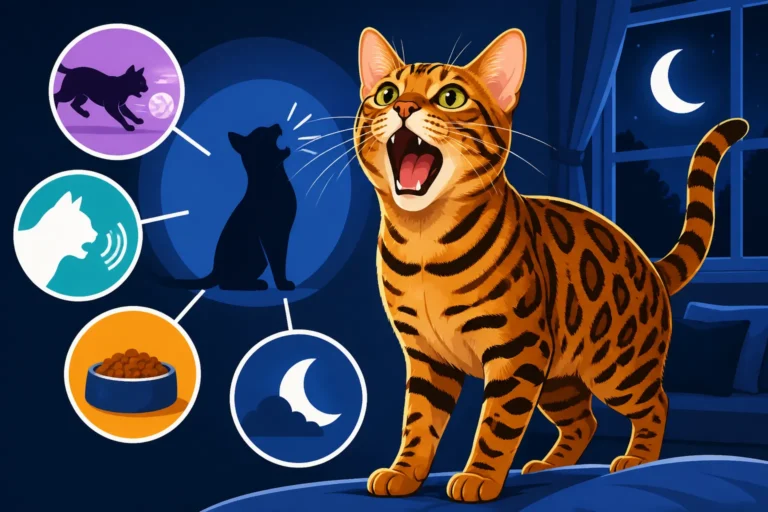
Many prospective Bengal cat owners wonder if they're signing up for a constant chorus of meows and yowls, and it's a completely fair concern! The truth is, Bengal cats are renowned for their expressive voices, and if you're hoping for a silent companion, this breed might not be the quietest choice. This guide will delve into whether neutering can bring peace to your home by quieting down a Bengal cat, exploring the nuances of their vocal nature, and offering realistic expectations and strategies.
The Inherently Vocal Nature of Bengal Cats
Before we even talk about neutering, it's crucial to understand that Bengal cats, by their very nature, are a talkative breed. They come from a wild ancestor, the Asian Leopard Cat, known for its various vocalizations, and this trait has definitely been passed down. It's not just a matter of "my cat likes to meow sometimes"; for a Bengal, vocalization is a significant part of their communication toolkit, often used to express needs, desires, and even opinions.
Imagine living with a cat that doesn't just meow for food but engages in a full-blown conversation, complete with chirps, trills, growls, and full-throated yowls. This isn't an exaggeration for many Bengal owners. Their vocal range is incredibly diverse, and they're not shy about using it. They might have a specific "hello" chirp, a demanding yowl for attention, or a rumbling growl when playing too intensely. If you've ever heard a Bengal, you know it's a distinctive sound, often described as more primal or "wild" than your average domestic cat. This inherent vocality is a hallmark of the breed, a big part of their charm for some, and a potential challenge for others. For more insight, check out The Bengal Cat Voice Is a Demand, Not a Greeting.
Why Bengal Cats Are So Chatty
Bengal cats are intelligent, curious, and incredibly active creatures. Their high energy levels often translate into a need for constant engagement, and if they're not sufficiently stimulated, they'll let you know. A bored Bengal is often a vocal Bengal, using their voice to demand playtime, food, or simply your undivided attention. They are also highly social and form strong bonds with their human families, often "talking" to them as a way to interact and maintain that connection.
Think about a human child who constantly asks "why?" or tells you about their day with boundless enthusiasm. A Bengal cat is similar in its desire to communicate and be acknowledged. They crave interaction and stimulation, and when they don't get it, they're not going to sit quietly in a corner. They'll use their voice to express their displeasure or their desire for more action. This isn't necessarily a bad thing; it means they are highly engaged with their environment and their people, but it does mean a certain level of noise is part of the package. Their distinct vocalizations are a way of asserting their presence and their needs, and it's something owners learn to interpret over time. You might find yourself having full-on "conversations" with your Bengal throughout the day!
Common Bengal Cat Vocalizations
Bengal cats possess a diverse repertoire of sounds, far beyond a simple "meow." Understanding these can help you better communicate with your feline friend, neutered or not. They often chirp, a soft, bird-like sound used for greeting or attracting attention, especially if they're leading you to something interesting. Trilling is a similar, rolling sound that often signifies contentment or a friendly invitation.
Then there are the more intense sounds. The yowl is a long, drawn-out cry that can range from a plaintive plea to a demanding bellow. This is often the sound associated with territorial disputes, mating calls, or deep dissatisfaction. They can also growl, especially during intense play or when feeling threatened, which again, ties back to their wild ancestry. Sometimes, their vocalizations can even sound like distressed cries, especially if they are feeling unwell or anxious. It's truly a symphony of sounds, and being able to differentiate between them can give you clues about your cat's mood and needs. You might find yourself wondering What a Bengal Cat's Chirp Means or Why a Bengal Cat Yowls at You after hearing a new sound.
Hormones and the Unneutered Bengal Cat's Voice
Before a Bengal cat is neutered, many of their vocalizations are directly linked to their hormones and the primal instincts associated with reproduction. This is where you'll hear some of the loudest, most persistent, and most insistent calls. Understanding these hormonal drives helps to set expectations for what changes neutering might actually bring.
Consider an unneutered male Bengal, often referred to as a "stud." His primary biological directive is to find a mate. This isn't a gentle request; it's a deep-seated urge that overrides much else. He will yowl, howl, and often spray to mark his territory and broadcast his availability to any receptive females in the vicinity. These aren't just polite meows; they are loud, insistent, and often mournful cries that can go on for hours, especially at night. It's a primal scream designed to travel distances and attract attention, and it's certainly not conducive to a quiet home environment. This behavior is incredibly strong and can be distressing for both the cat and the owner.
Similarly, an unspayed female Bengal, or "queen," when in heat, will also become incredibly vocal. She will yowl, caterwaul, and often roll around, presenting herself and trying to attract a male. These sounds can be equally, if not more, piercing and relentless than a male's. Her hormones dictate that she needs to advertise her fertility, and she will make every effort to ensure any potential suitor knows she's ready. This isn't just a daily occurrence; a queen can come into heat every few weeks, and each cycle brings with it a period of intense vocalization, often accompanied by other behaviors like spraying or excessive affection (or aggression).
The Biology of Mating Calls
The intense vocalizations of unneutered Bengal cats are not random noise; they are a complex biological mechanism driven by hormones like testosterone in males and estrogen in females. When a female enters estrus (heat), her body releases hormones that trigger behavioral changes, including increased vocality, restlessness, and a strong urge to escape and find a mate. Her cries are designed to alert males to her presence and readiness.
For males, the scent of a female in heat is an incredibly powerful stimulus. It triggers a surge of hormones that compel them to seek out that female. Their yowls and howls are part of this seeking behavior, essentially a loud announcement of "I'm here and I'm ready!" These hormonal surges are incredibly potent, making it very difficult for an unneutered Bengal to simply "be quiet" when their instincts are screaming at them. It's a fundamental aspect of their reproductive biology, and it explains why these particular vocalizations are so intense and unwavering.
The Frustration for Owners
Living with an unneutered Bengal cat during these periods can be incredibly frustrating and disruptive. The constant yowling can be ear-splitting, especially at night when you're trying to sleep. Neighbors might even complain, mistaking the sounds for a distressed animal. Beyond the noise, the accompanying behaviors like spraying (marking territory with urine, often strong-smelling) or persistent attempts to escape can add to the stress.
Owners often report feeling helpless, as traditional methods of quieting a cat (like distraction or ignoring) are often ineffective against such powerful hormonal urges. The cat isn't being "naughty"; it's simply acting on deep-seated instincts. This can lead to a breakdown in the bond between owner and cat, as the constant noise and problematic behaviors become overwhelming. It’s important to remember that the cat isn't doing it to annoy you; it’s a natural drive. Many owners often find themselves considering drastic measures or even rehoming their cat if they're not prepared for this aspect of unneutered Bengal ownership.
How Neutering Directly Affects a Bengal Cat's Vocalizations
Now to the core question: does neutering quiet a Bengal cat? The answer is a resounding "yes" for hormonally-driven vocalizations, but a more nuanced "maybe" for their overall chattiness. Neutering significantly impacts the specific, loud, and often frantic calls associated with mating behaviors, bringing a much-needed calm to those aspects of their voice.
When a male Bengal is neutered, the source of his testosterone is removed. This eliminates the powerful drive to seek out mates, mark territory with strong-smelling urine, and, crucially, to yowl and howl for a queen. You’ll find that the desperate, insistent calls that could go on for hours largely disappear. The constant pacing, the spraying, and the urge to escape to find a female dramatically reduce, and with them, the accompanying vocalizations. Similarly, spaying a female Bengal removes her ovaries, thus eliminating her heat cycles. This means no more yowling, caterwauling, or rolling around to attract males. The frantic, hormonal cries that signal her readiness to mate vanish, bringing an immense sense of relief and quiet to the household during what would have been her heat periods. It's a profound shift that removes a major source of noise and stress from both the cat's and the owner's lives.
Reduction in Mating-Related Calls
The most significant and reliable impact of neutering on a Bengal cat's vocalizations is the reduction, and often complete elimination, of mating-related calls. These are the loudest, most persistent, and most disruptive sounds emitted by unneutered animals. Without the constant hormonal signals compelling them to find or attract a mate, the intense, primal yowls and cries simply cease.
This change is almost immediate and incredibly noticeable for owners. No longer will you be woken in the dead of night by desperate cries or subjected to endless caterwauling. This alone can transform the home environment from one of high stress and constant noise to one of relative peace. It's a primary reason why veterinary professionals and responsible breeders strongly advocate for early neutering for non-breeding animals, not just for population control but also for the behavioral benefits, including a quieter, more content cat. This is a behavioral change that vastly improves the quality of life for both the Bengal and its human companions.
Persistence of Inherited Vocality
However, and this is where the nuance comes in, neutering does not necessarily quiet a Bengal cat's inherent vocality. Remember, Bengal cats are naturally chatty, curious, and demanding. These vocalizations stem from their personality, intelligence, and need for interaction, not from hormones. So, while you won't hear the mating calls anymore, you'll still have a cat that communicates vocally for other reasons.
Your neutered Bengal will still chirp to greet you, meow to demand dinner, or yowl when they're bored and want to play. They might still voice their opinions on the state of their litter box or their favorite toy. Neutering doesn't turn a vocal Bengal into a silent one; it just removes a specific, intense category of vocalization. Expect your Bengal to remain an expressive and talkative companion, just without the added soundtrack of mating season. How Vocal a Bengal Cat Is gives more context on their overall chattiness.
Potential for Decreased Overall Demandingness
While neutering doesn't silence a Bengal, some owners do report a general decrease in overall demanding behavior, which can indirectly lead to less vocalization. When a cat isn't constantly driven by hormonal urges, they might become more relaxed, less restless, and less prone to frantic attention-seeking. This shift can manifest as a slight reduction in vocal demands for things like escape or incessant attention.
It's not that the cat stops communicating, but perhaps their communication becomes less urgent, less frantic. They might still ask for playtime, but perhaps with a softer meow rather than a piercing yowl. This can vary greatly from cat to cat, depending on their individual personality and how strong their inherent vocal nature is. Think of it as toning down the volume and intensity, rather than turning the sound off completely.
Here's a quick overview of how neutering typically affects Bengal cat vocalizations:
| Vocalization Type | Unneutered Bengal Cat | Neutered Bengal Cat |
|---|---|---|
| Mating Calls | Frequent, loud, insistent yowls/caterwauls, especially at night. Often paired with spraying/escape attempts. | Largely eliminated. Occasional "phantom" calls may occur initially, but typically cease. |
| Demand Vocalizations | Frequent meows, chirps, trills for food, attention, play. Can be intense and persistent. | Still present, but potentially less urgent or frantic. Frequency may vary based on individual personality and enrichment. |
| Greeting Calls | Chirps, trills, soft meows upon owner's return or for interaction. | Continues. This is a social behavior not linked to hormones. |
| Complaint/Discomfort | Yowls, growls if unhappy with environment, pain, or anxiety. | Continues. These are signs of distress and persist regardless of neuter status. |
| Playtime Sounds | Growls, chitters during intense play. | Continues. Part of their natural play drive. |
Living with a Still-Vocal Bengal Cat: Post-Neutering Strategies
Even after neutering, your Bengal cat will likely remain a vocal individual. This is part of their unique charm, but it can also be a challenge if not managed correctly. The key is to understand why they are vocalizing and to provide appropriate responses and enrichment. Since those hormonal screams are gone, any remaining excessive vocalization is likely due to boredom, a need for attention, or an unmet environmental need.
One of the biggest reasons a neutered Bengal will still be vocal is boredom. These are not couch potato cats! They need mental and physical stimulation, and lots of it. If they aren't getting enough playtime, if their environment is too static, or if they feel ignored, they will absolutely let you know with their voice. Think of it as a constant plea for engagement. Providing ample opportunities for play, exploration, and mental challenges is paramount. This isn't just about throwing a toy; it's about engaging their sharp minds and athletic bodies. For ideas on how to keep them busy, check out How Much Enrichment a Bengal Cat Actually Needs.
Ensuring Adequate Physical and Mental Stimulation
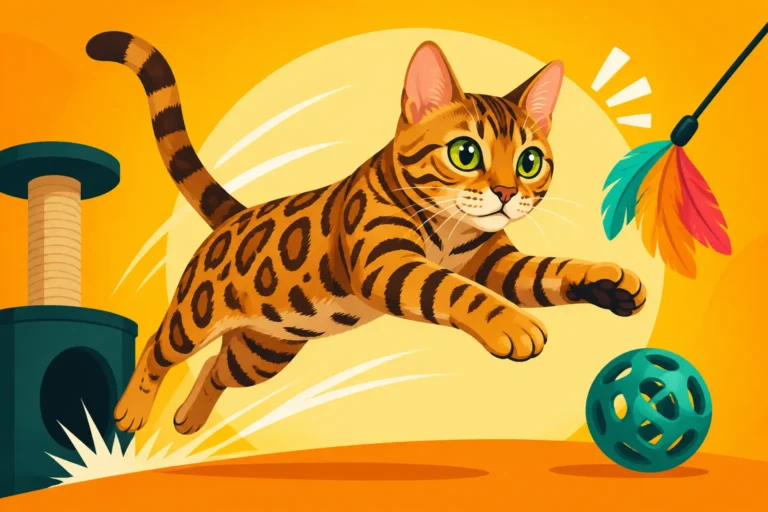
To minimize vocalizations driven by boredom or excess energy, focus on structured play sessions. A Bengal cat thrives on interactive play that mimics hunting. Use wand toys with feathers or fuzzy attachments, making them "fly" and "hide" to engage your cat's predatory instincts. Aim for at least two to three intense play sessions per day, each lasting 15-20 minutes, where your cat can stalk, pounce, and "catch" their prey. Interactive toys you can find on Amazon, like automated laser pointers or moving feather toys, can also provide some self-play opportunities, but nothing truly replaces direct human interaction.
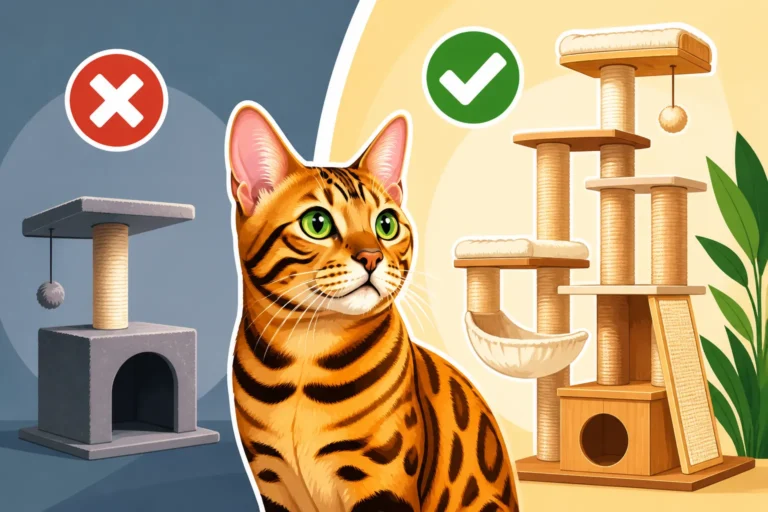
Beyond physical play, mental stimulation is crucial. Puzzle feeders, available widely on Amazon, are fantastic for making your Bengal "work" for their food, slowing down mealtime and engaging their problem-solving skills. Rotate toys frequently to keep things interesting, and consider teaching your Bengal tricks using positive reinforcement and clicker training; they are intelligent enough to learn many commands! Providing vertical space with tall cat trees and shelves, also readily available online, allows them to climb and survey their territory, satisfying their natural urge for high vantage points. If your Bengal is still waking you at odd hours, consider What a Bengal Cat Does at Four in the Morning for strategies.
Addressing Attention-Seeking Behavior
Bengals are incredibly social and can be very demanding of their owners' attention. If your neutered Bengal is vocalizing for attention, it's essential to respond thoughtfully. Never reward negative vocalizations (like yowling) by immediately giving them what they want, as this teaches them that loud noises get results. Instead, wait for a moment of quiet before engaging.
Establish a consistent routine for attention, play, and feeding. Your Bengal will learn that their needs will be met at predictable times, reducing the urgency of their vocal demands. When they are quiet and calm, lavish them with praise and affection. Use designated "attention times" to interact with them, making them feel seen and loved. If they start demanding attention outside of these times, try to redirect their energy with a puzzle toy or a short, non-committal interaction, rather than a full-blown play session that reinforces the demanding behavior. Consider how The Bengal Cat Is the Most Active Cat You Can Own influences their need for attention.
Environmental Enrichment and Companion Animals
A stimulating environment can make a world of difference for a vocal Bengal. Catios (outdoor cat enclosures) are an excellent way to provide safe outdoor access, fresh air, and new sensory experiences, which can significantly reduce boredom and its associated vocalizations. These can be custom-built or purchased in modular kits. Inside, ensure plenty of climbing opportunities, scratching posts (Bengals love to scratch!), and window perches from which they can observe the world outside.
Some Bengals may benefit from a companion cat, especially if you work long hours. Another active, playful cat can provide mutual entertainment and reduce loneliness, which can be a driver for vocalization. However, introducing a new cat must be done carefully to ensure compatibility. Not all Bengals get along with other cats, and some may prefer to be the sole feline focus of your household. If considering a second cat, look for a personality that matches your Bengal's energy levels. For some Bengals, a cat wheel, which you can find from various retailers, offers an excellent outlet for their boundless energy, helping to burn off steam and quiet them down. Whether a Bengal Cat Accepts a Second Cat can offer more guidance.
Rule Out Underlying Issues
If your neutered Bengal suddenly becomes excessively vocal, particularly with cries that sound distressed or unusual for them, it's crucial to rule out any underlying medical issues. Cats are masters at hiding pain or discomfort, and increased vocalization can be a primary symptom of illness, injury, or even chronic conditions.
A sudden change in vocal habits warrants a visit to your veterinarian. They can perform a thorough examination, check for dental problems, urinary tract infections, digestive issues, or other health concerns that might be causing discomfort. Older Bengals, in particular, can develop conditions like arthritis or cognitive dysfunction, which may lead to increased vocalization, especially at night. Never assume a sudden increase in vocalizations is "just Bengal behavior" without first consulting a professional, as it could be their way of telling you something is seriously wrong.
Disclaimer
This article is for general informational purposes only and does not constitute professional advice. Laws, prices and regulations vary by location and change over time. Consult a qualified professional for guidance on your specific situation.