Why a Bengal Cat Digs to the Bottom of the Box
If you've ever watched your magnificent Bengal cat excavate their litter box with the ferocity of a wild leopard digging for prey, sending a blizzard of litter across your bathroom floor, you know the struggle. It's frustrating, messy, and can leave you wondering if your cat secretly moonlights as a construction worker. This guide is here to unravel the mystery behind why your Bengal feels the need to dig to the very bottom of the box and offer practical, empathetic solutions to help you both live in harmony – or at least, with less sweeping.
Understanding Your Bengal Cat's Instinctual Digging
The unique behaviors of Bengal cats are deeply rooted in their lineage. Unlike your average domestic shorthair, Bengals carry a strong genetic link to their wild ancestor, the Asian Leopard Cat (ALC). This isn't just about their stunning spots; it’s about their instincts, and those instincts manifest profoundly in their daily habits, including how they use the litter box.
The Wild Ancestry Link: Asian Leopard Cat Behavior
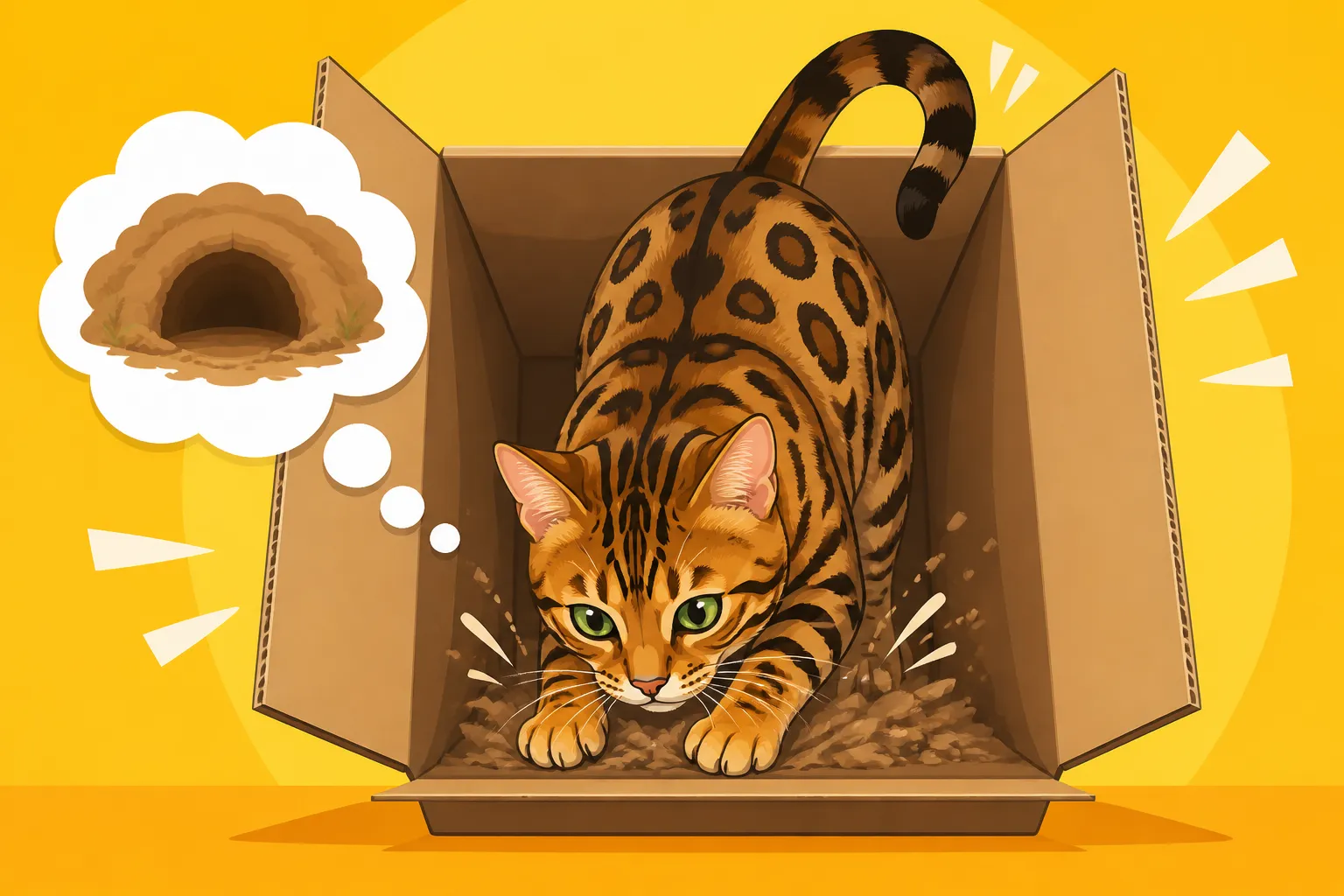
Think about it: in the wild, an Asian Leopard Cat doesn't have a tidy litter tray. They rely on instinct to conceal their presence from both prey and predators. Burying waste deep is a fundamental survival mechanism. It minimizes scent markers that could give away their location, protecting them from larger predators and preventing prey from detecting their presence. This isn't just a casual flick of dirt; it's a deliberate, thorough act of concealment.
When your Bengal cat digs to the bottom of the litter box, they are essentially tapping into this ancient, hardwired behavior. They’re not doing it to annoy you, despite how it feels when you're sweeping up litter for the third time in a day. They are driven by an instinct to completely cover their scent, ensuring no trace is left behind. This deep-seated urge means a mere surface scratch isn't enough; they want to feel like their efforts are genuinely successful in "hiding" their waste.
Why Deep Digging is More Than Just Covering Up
While scent concealment is a primary driver, a Bengal's deep digging can also stem from other factors that are intrinsic to their nature. It's a complex behavior with layers of meaning for your feline friend.
Firstly, it's a form of territorial marking, even if it seems counterintuitive for covering scent. While the primary goal is concealment, the act of digging and depositing waste is also a confirmation of their presence within their territory. By thoroughly manipulating the litter, they are asserting ownership over that space and making sure their "business" is properly dealt with according to their wild standards. This might seem contradictory, but for a cat, the nuance between hiding a trace and establishing presence can be subtle.
Secondly, there's a strong sensory component. Bengal cats are highly intelligent and incredibly tactile creatures. The feel of the litter between their paws, the sound it makes, and the physical exertion of digging are all stimulating. For an animal as active and engaged as a Bengal, the litter box isn't just a bathroom; it’s a small, contained environment where they can engage their senses and expend a little energy. They might be enjoying the texture of the litter, or the sensation of moving it around. If they find the litter satisfying to dig in, they will often dig more enthusiastically.
Lastly, and sometimes overlooked, is the potential for stress or anxiety to exacerbate digging. While not the primary cause of all deep digging, a Bengal who feels insecure, stressed by changes in their environment, or is reacting to an inadequate litter box setup might dig more intensely as a coping mechanism. The repetitive action can be soothing, or it could be a sign of increased anxiety about their environment or the cleanliness of their box. A Bengal cat's sensitivity, rooted in its wild heritage, means they are often more attuned to environmental changes than other breeds.
Common Reasons for Extreme Litter Box Digging
While their wild instincts are a huge factor, the specifics of how and where your Bengal cat expresses this digging behavior are often influenced by the environment you provide. Identifying the common pitfalls can help you tailor a better solution.
The Wrong Litter Box Setup
This is arguably one of the biggest culprits when it comes to extreme digging. Many standard litter boxes simply aren't designed with a Bengal's powerful instincts and larger size in mind.
A lack of sufficient depth in the litter box means that even if you fill it with a good amount of litter, your Bengal will quickly hit the bottom with their vigorous digging. This isn't satisfying for them. They're looking for that deep, thorough covering, and if they can't achieve it, they'll keep digging, trying to find more material, inevitably scattering what's there. Imagine trying to dig a hole in a shallow puddle; you'd just splash water everywhere. For a Bengal, a shallow litter box is akin to that.
The size of the box also plays a crucial role. Bengals are lean, muscular cats, often larger and longer than many domestic breeds. A standard litter box can feel cramped and restrictive, especially when they're trying to perform a full-body digging maneuver. If they feel confined, they might struggle to find enough space to dig effectively, leading to more frantic, less contained digging. They need ample room to stand, turn around, and dig without feeling like they're bumping into the sides. This is why it's so important to find a box that caters to their athleticism and size. You might find some excellent options available at larger pet retailers like Chewy, specifically designed for bigger breeds. It really comes down to providing them with a space that feels natural and functional. Providing a truly expansive bathroom space for your Bengal is key, which is why we often discuss Why a Bengal Cat Needs the Biggest Box You Can Find.
Then there's the debate between covered versus open boxes. While a covered box might seem like it would contain the litter better, for many Bengals, it can actually exacerbate the digging problem. Covered boxes trap odors, which can be a huge deterrent for a scent-sensitive cat. If the box smells bad to them, they might dig more aggressively in an attempt to "clean" or "cover" the perceived offensive odors, or they might try to avoid touching the soiled litter, digging around it. Furthermore, the enclosed space can feel even more restrictive to a large, active Bengal, making their digging feel less effective and more desperate.
Unsuitable Litter Type or Amount
The type of litter you use and how much of it you provide can significantly impact your Bengal's digging habits. It's not a "one size fits all" situation for these particular cats.
Texture preferences are a big deal. Some Bengals absolutely adore fine-grained, soft litter that mimics sand, which would be found in their wild habitats. This type of litter feels satisfying to dig and provides excellent clumping for covering waste. Other Bengals might find very coarse, dusty, or crystal litters uncomfortable on their paws, leading to frantic, less effective digging as they try to avoid prolonged contact, or they might associate discomfort with the box itself. If the litter isn't easy to manipulate and scoop, they'll struggle to bury their waste to their satisfaction. You might need to experiment with a few different types, perhaps looking at reviews on Amazon for popular fine-grain clumping litters, to see what your Bengal prefers. This experimentation can be a bit of an investment, but finding the right litter can be a game-changer. This is also covered in more detail when considering Which Litter a Bengal Cat Throws Least.
Dust aversion is another concern. Many litters can be incredibly dusty, which can be irritating for a cat's respiratory system and eyes. If your Bengal experiences discomfort or irritation while digging, they might dig more quickly and aggressively to get the job done and escape the cloud of dust. Switching to a low-dust or dust-free formula can make a noticeable difference in their comfort level and, consequently, their digging style.
Finally, the amount of litter matters. Too little litter, and they hit the bottom of the box instantly, as discussed. They can't perform their natural burying ritual. However, too much litter can also be problematic. If the box is overflowing, or the litter is so deep it's hard for them to maneuver, they might still make a mess trying to dig through an excessive amount. A good rule of thumb is 3-4 inches of litter, allowing for sufficient depth without overfilling the box.
Cleanliness Standards of a Bengal Cat
Bengals are, by and large, incredibly fastidious creatures. Their high standards for cleanliness are another direct link to their wild ancestors, where hygiene played a vital role in health and survival. This fastidiousness can significantly influence their litter box behavior, especially their digging.
A Bengal cat often has a very low tolerance for a dirty litter box. If the box isn't scooped frequently enough, or if it has lingering odors, your Bengal might dig excessively in an attempt to find a clean spot. They might try to bury their waste even more vigorously, or they might try to dig around existing clumps to avoid touching them. This isn't just a preference; it's a deep-seated need for a sanitary environment. Imagine having to use a public restroom that hasn't been cleaned all day – you'd probably try to avoid touching anything, right? Your Bengal feels something similar.
Regular scooping is non-negotiable for a Bengal household. Ideally, the box should be scooped at least twice a day, if not more frequently, especially if you have multiple cats or your Bengal uses the box often. Beyond daily scooping, a full litter change and a thorough cleaning of the box itself should be done regularly. The frequency depends on the litter type and how many cats use the box, but generally, every 1-2 weeks is a good starting point for a full scrub-down. Lingering odors, even those you can't detect, can be very off-putting to a Bengal's sensitive nose, leading them to protest through intensified digging or, worse, by choosing to go elsewhere. This fastidiousness is one of the key aspects of Litter and Boxes for a Bengal Cat That Digs.
Practical Solutions to Manage the Digging Dilemma
Now that we understand why your Bengal is channeling their inner excavator, let's talk about tangible solutions. It's all about making their litter box experience as natural and comfortable as possible for them, while also protecting your floors from a litter explosion.
Optimizing Your Litter Box Environment
This is where you can make the most immediate impact. The physical setup of the litter box is paramount to a Bengal's satisfaction.
Firstly, go big, and go high-sided. Forget the standard-sized litter boxes you see in most pet stores. For a Bengal, think extra-large, jumbo, or even a modified storage bin. A large, high-sided litter box gives them ample room to move, turn, and dig without feeling confined. The high sides are crucial for containing the inevitable spray of litter that accompanies their enthusiastic excavations. Many owners find success with large, clear storage containers (like those you might find for holiday decorations), cutting an entry hole in one side. This offers significant depth and height. When shopping, consider browsing options from a retailer like Chewy for heavy-duty, large litter boxes or even large plastic storage tubs that can be repurposed.
Secondly, experiment with litter depth. While too little litter is definitely a problem, too much can also be inefficient. Aim for about 3 to 4 inches of litter. This provides enough material for them to dig deeply and cover their waste to their satisfaction without creating an overwhelming mountain. Observe your cat: if they are still hitting the bottom with ease, gradually add a little more. If they seem to struggle with the sheer volume, slightly reduce it. It's a balance you'll find through observation.
Finally, consider the location of the litter box. Is it in a high-traffic area? Is it near noisy appliances? Bengals can be quite sensitive to their environment. A quiet, private spot where they feel safe and undisturbed can reduce any stress that might contribute to excessive digging. Ensure there are enough litter boxes for your household – a common rule of thumb is one box per cat, plus one extra, but with a Bengal, sometimes just bigger or more spread out locations work better.
| Litter Box Feature | Ideal for Bengal Cats | Why It Helps with Digging |
|---|---|---|
| Size | Extra-large / Jumbo | Ample space to dig and turn without feeling cramped, reducing frantic digging. |
| Sides | High-sided (6-12 inches) | Contains litter scattering from enthusiastic digging. |
| Litter Depth | 3-4 inches | Allows for satisfactory deep digging and covering without hitting the bottom or being too cumbersome. |
| Type | Open (usually preferred) | Reduces trapped odors, which can deter fastidious Bengals and lead to more digging. |
| Location | Quiet, private | Minimizes stress and interruption, promoting relaxed and efficient use. |
Choosing the Right Litter and Routine
The type of litter you use can make a huge difference, not just in containing odors but in how satisfying your Bengal finds the digging experience.
Many Bengal owners find success with fine-grained, soft clumping litters. These litters often have a texture that Bengals seem to prefer, as it's reminiscent of sand or loose soil. It's easy for them to manipulate, clumps tightly for effective waste removal, and provides that satisfying "feel" they seek during digging. You can explore a wide variety of brands and formulations on platforms like Amazon, reading reviews from other cat owners, especially those with larger or more active breeds. Avoid overly dusty litters, as mentioned, as they can cause respiratory irritation and make the experience unpleasant.
The scented versus unscented debate often leans heavily towards unscented for Bengals. Cats have incredibly sensitive noses, and while a floral scent might appeal to us, it can be overpowering and off-putting to them. If the litter smells too strong, your Bengal might avoid it or try to dig even more aggressively to "bury" the artificial scent, not just their waste. Stick to natural, odor-absorbing litters without added perfumes.
A rigorous scooping routine is your best defense against extreme digging driven by cleanliness. Aim to scoop the litter box at least twice a day – once in the morning and once in the evening. For some very particular Bengals, or in multi-cat households, you might even need to scoop after every use. Beyond daily scooping, a full litter change and a thorough cleaning of the box (with mild, pet-safe soap and water) should be done at least once a week, or every two weeks at most. This prevents odor buildup and ensures your Bengal always has a fresh, inviting place to go. Remember, for a Bengal, a "clean" box means no visible waste and no lingering smell.
Enrichment and Stress Reduction
Sometimes, excessive digging can be a symptom of a larger issue: a bored or stressed Bengal. These are incredibly intelligent and energetic cats who need a lot of mental and physical stimulation.
Ensure your Bengal has plenty of opportunities for play and exercise throughout the day. This could include interactive toys, regular wand play sessions, puzzle feeders, and plenty of vertical space like tall cat trees or shelves for climbing. A bored Bengal can become destructive, and that energy might manifest in behaviors like overly aggressive litter box digging. Engaging their natural hunting instincts through play can help channel their energy positively. After all, The Bengal Cat Is the Most Active Cat You Can Own, and that energy needs an outlet!
Addressing underlying stress is also critical. Changes in routine, new pets, household moves, or even loud noises can stress a sensitive Bengal. If you suspect stress is a factor, try to identify the source and mitigate it. Providing safe, quiet spaces, sticking to a consistent routine, and offering extra reassurance and playtime can all help. Sometimes, simply ensuring they have enough stimulating activities can reduce stress-related digging, as it gives their busy brains something else to focus on.
When to Consult Your Vet: Health & Behavioral Concerns
While most extreme digging can be attributed to instinct or environmental factors, it's always wise to consider whether a medical issue or more serious behavioral problem might be at play. Any sudden or drastic change in litter box habits warrants a professional opinion.
Medical Reasons for Changes in Litter Box Behavior
A sudden increase in digging, or digging accompanied by other changes in behavior (like going outside the box, straining, or changes in appetite), could signal a health problem.
Urinary tract infections (UTIs) are a common culprit for changes in litter box behavior. Discomfort during urination can cause a cat to associate pain with the box itself, leading them to dig more frantically, try different spots, or spend an excessive amount of time trying to "fix" the problem by digging. Similarly, other bladder or kidney issues can cause discomfort that influences how they use the litter box.
Gastrointestinal issues, such as diarrhea or constipation, can also impact digging. A Bengal experiencing discomfort from Chronic Diarrhea Is the Bengal Cat Complaint Nobody Warns About might dig more vigorously to bury particularly messy stools, or they might feel a greater urgency and try to "prepare" the spot more thoroughly. Conversely, if they are constipated and straining, they might spend a long time in the box, digging excessively out of frustration or discomfort. Any change in stool consistency, frequency, or appearance should be noted and discussed with your vet.
Pain in general, perhaps from arthritis, an injury, or even dental problems (which can make them reluctant to stoop or maneuver comfortably), can lead to changes in litter box habits. If moving into or out of the box is painful, they might try to get in and out quickly, or they might dig in an awkward, stressed manner. Always consult your veterinarian if you notice any health-related changes alongside the digging.
Behavioral Quirks and Professional Help
Sometimes, despite your best efforts to optimize the environment and ensure good health, the digging persists at an obsessive level. This might indicate a deeper behavioral issue.
Obsessive digging, where the cat spends an inordinate amount of time digging far beyond what's necessary, even in a perfectly clean box, might be a compulsive behavior. This can sometimes develop as a way for cats to cope with underlying anxiety, or it could be a manifestation of boredom if their environment lacks sufficient enrichment. These behaviors are complex and often require a multi-faceted approach.
If you've ruled out medical issues and optimized their litter box environment and routine, but the digging remains extreme and problematic, it might be time to seek the advice of a certified feline behaviorist. These professionals can observe your cat's behavior, assess their environment, and help you identify subtle stressors or triggers you might be missing. They can then develop a tailored plan, which might include specific enrichment strategies, behavioral modification techniques, or even temporary anti-anxiety medications if appropriate. They can help you understand the nuances of your Bengal's unique personality and instincts to find a solution that works for everyone.
Disclaimer
This article is for general informational purposes only and does not constitute professional advice. Laws, prices and regulations vary by location and change over time. Consult a qualified professional for guidance on your specific situation.