Whether a Bengal Cat Needs a Litter Mat
If you've ever welcomed a magnificent Bengal cat into your home, you've likely experienced the unique joy – and sometimes, the unique challenges – that come with this incredibly active and intelligent breed. One common frustration that often crops up for Bengal owners is the sheer amount of litter that somehow manages to migrate from the litter box to every corner of the house. It's enough to make you wonder if you're living with a tiny, furry excavator rather than a feline, and it begs the question: is a litter mat truly a necessity, or just another gadget collecting dust? This guide dives deep into the world of Bengal cat litter habits and whether a humble mat can actually make a difference.
The Energetic Excavator: Why Your Bengal Cat Makes a Littery Mess
Let's be honest, Bengal cats aren't known for their delicate, demure approach to, well, anything – especially not their bathroom habits. Many new Bengal owners are utterly baffled by the sheer volume of litter tracked and flung around, often comparing their cat's efforts to a small-scale construction project. This isn't just your imagination or bad luck; there are very real, very "Bengal" reasons behind it.
Instinctual Digging and Covering Habits
The Bengal cat carries a strong genetic legacy from its wild ancestor, the Asian Leopard Cat. This isn't just visible in their stunning rosetted or marbled coats; it's also deeply ingrained in their behavior. In the wild, effective waste burial is crucial for survival – it helps to hide their presence from predators and prey alike. While your Bengal doesn't have to worry about a sabre-toothed tiger sniffing out its potty spot, those primal instincts are still very much alive.
When your Bengal steps into the litter box, it's not just doing its business; it's performing an ancient ritual. They will often dig with an intensity that seems disproportionate to the task, meticulously excavating a perfect spot before relieving themselves. Once done, the covering process is equally fervent. They'll scratch, scrape, and often kick with all four paws, sending plumes of litter flying over the edges of even what you thought was a sufficiently high-sided box. It’s not malicious; it's simply how they're wired. You might read about Why a Bengal Cat Digs to the Bottom of the Box and realize this isn't just about making a mess, but a deep-seated behavioral trait. This intense digging dislodges a significant amount of litter, which then inevitably clings to their paws.
The Post-Potty Zoomies and Water Affinity
Beyond the digging, consider the Bengal's notorious energy levels. This breed is renowned for being incredibly active, playful, and often downright boisterous. It’s why The Bengal Cat Is the Most Active Cat You Can Own is a common refrain among owners. After a successful trip to the litter box, many Bengals experience a burst of energy – affectionately known as "zoomies" or "wacko o'clock." They might tear out of the litter box at top speed, launching themselves off the floor, or darting through doorways.
Imagine those litter-laden paws, having just performed an elaborate digging ceremony, suddenly propelling themselves across your hardwood floors or carpet at Mach speed. Each step, jump, and skid is an opportunity for more litter to be shed. It's like a tiny, furry confetti cannon, but instead of glitter, it's clay or silica gel.
Compounding this is the Bengal's unusual love for water. Unlike many domestic cats, Bengals are often fascinated by water, and some will even play in sinks, shower with you, or dip their paws in their water bowl. If your Bengal has recently played in water, or even if their paws are just slightly damp from a drink, they can become even more effective at picking up and carrying litter particles. Damp paws act like tiny magnets for litter, ensuring that every grain has a chance to cling on for dear life before being deposited elsewhere in your home. This unique trait, explored in Why a Bengal Cat Loves Water, means an extra dimension to the litter tracking problem.
Navigating the Maze of Litter Mat Options for Your Bengal
So, you've accepted that your Bengal is a champion litter-tracker. Now comes the inevitable question: what can you actually do about it? The market is flooded with various types of litter mats, all promising to solve your woes. But for a Bengal, not all mats are created equal. Understanding the different options and their specific strengths and weaknesses can save you a lot of headache and sweeping.
Mesh, Silicone, and Honeycomb: A Bengal's Battleground
When you start browsing for litter mats, you'll encounter a few main categories, each with its own approach to trapping those rogue litter particles.
-
Mesh or Fabric Mats: These are often the softest and most affordable options. They usually feature a looped or textured surface designed to brush litter off paws. For a less active cat, they can be quite effective. However, for a Bengal, they have some significant drawbacks. The fabric can absorb odors, and if your Bengal has a "wet" potty habit or steps in something unfortunate, cleaning these can be a nightmare. Furthermore, a determined Bengal can easily kick litter over or past these, and the softer texture doesn't always dislodge all particles from their strong, active paws. They also tend to hold onto dust, making them less ideal for indoor air quality.
-
Silicone or PVC Mats: These are usually flat or have raised ridges. They're excellent for waterproof protection and are generally easy to wipe clean. The raised ridges are meant to catch litter, and they do a decent job of preventing it from spreading under the mat. However, their flatter surface means they aren't as effective at actively removing litter from paws. Litter tends to sit on top of them, and your Bengal can still track a good amount off the mat itself, especially with their characteristic post-potty dash. Many Bengals will also view these as a fun new chew toy, especially if they are bored, a scenario detailed in What a Bored Bengal Cat Destroys.
-
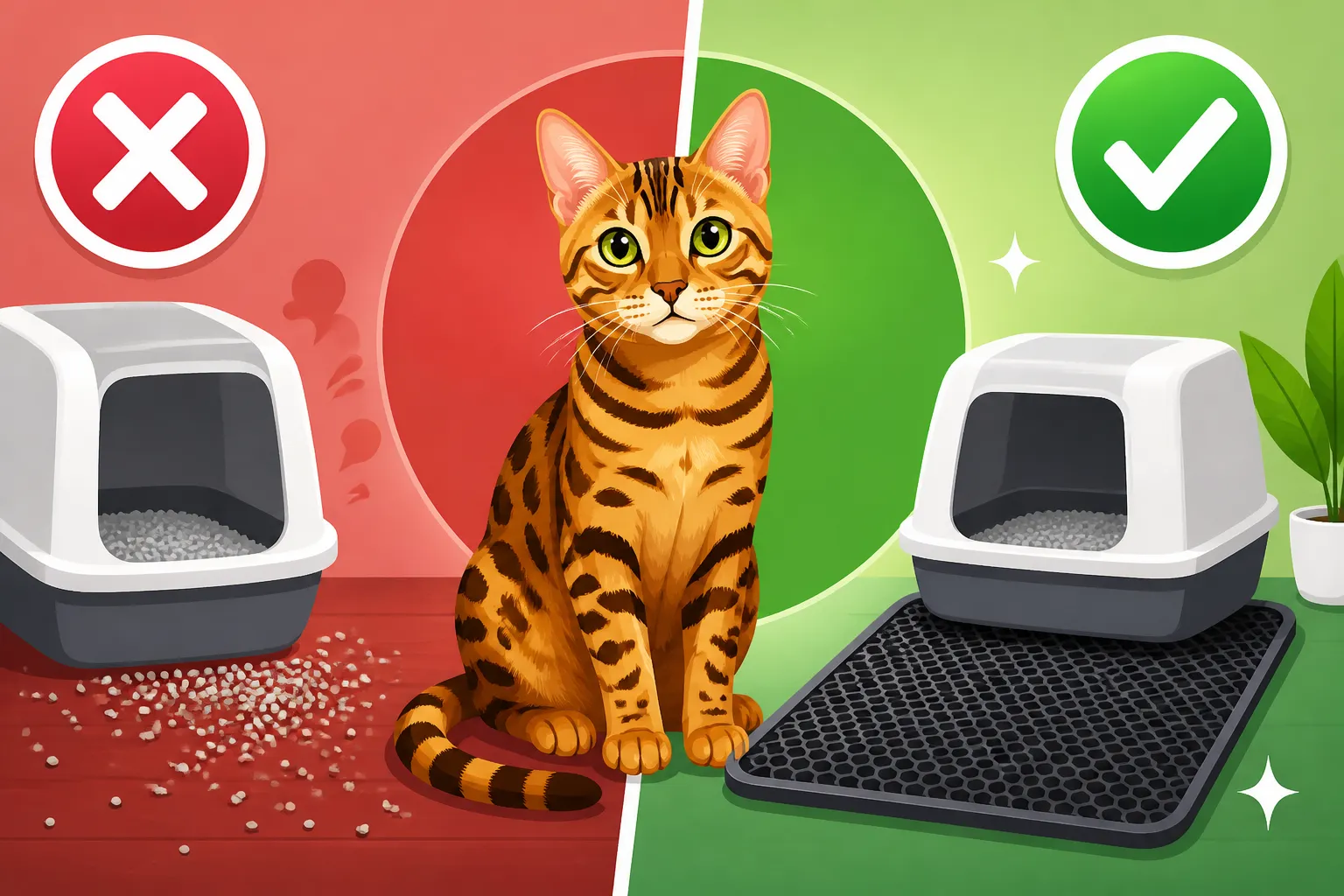
Honeycomb or Double-Layered Mats: These are often considered the gold standard for high-tracking cats like Bengals. They feature an upper layer with large holes (the "honeycomb") that allows litter to fall through into a solid, waterproof bottom layer. This design traps a significant amount of litter between the layers, keeping it off your floor. To clean, you simply pick up the mat, open one end, and pour the trapped litter back into the box or into the trash. They're typically made of EVA foam or similar durable, non-toxic materials. The texture is usually firm enough to encourage litter removal from paws without being uncomfortable for your cat. Many owners find these mats on platforms like Chewy or Amazon, and they tend to hold up well to a Bengal’s vigorous digging and kicking.
Beyond the Mat: Complementary Solutions
While a good litter mat is a fantastic first line of defense, it’s rarely a standalone solution for a Bengal. Combining it with other strategies offers the best results.
One of the most impactful changes you can make is to the litter box itself. Traditional open-tray boxes are an open invitation for a Bengal to redecorate your floor with litter. Consider a high-sided litter box, or even better, a top-entry litter box. These boxes significantly reduce the amount of litter that can be kicked out. Top-entry boxes, in particular, force your Bengal to jump onto the lid and then down into the box, and then back out. This small journey acts as a natural "mat," as litter tends to fall off their paws before they even exit the box. You can delve into more detail on Which Litter Box Survives a Bengal Cat to find options that stand up to their unique demands.
Another often overlooked factor is the type of litter you use. Fine-grained, clumping litters tend to cling more to paws and fur. Switching to a larger granule litter, like pellet-style wood or paper litter, or even a coarser clay litter, can make a noticeable difference. These larger particles are less likely to stick to paws and are easier for mats to capture. Exploring Which Litter a Bengal Cat Throws Least can guide you toward less messy options.
Here's a quick comparison of common litter mat types:
| Mat Type | Bengal Cat Effectiveness | Pros | Cons | Ideal Use Case |
|---|---|---|---|---|
| Mesh/Fabric | Low | Soft, affordable, good for sensitive paws | Absorbs odor, hard to clean, low litter trapping | Less active cats, temporary solution |
| Silicone/PVC (Flat) | Medium | Waterproof, easy to wipe, durable | Litter sits on top, less effective at paw cleaning, chewable | Cats with occasional tracking, easy messes |
| Honeycomb/Double-Layer | High | Traps large amounts of litter, easy to empty | Can be more expensive, some cats dislike texture | High-tracking cats (like Bengals), long-term solution |
| Textured Rubber | Medium | Durable, good grip, some litter trapping ridges | Not as efficient as honeycomb for trapping, can be stiff | Medium-tracking cats, outdoor catios |
Practical Tips for Minimizing Litter Tracking with a Bengal
So, you've armed yourself with the perfect litter mat, perhaps even upgraded your litter box, and you're feeling ready to tackle the litter challenge head-on. While these are excellent steps, consistent management and a few clever tricks can make all the difference in keeping your home tidy. Think of it as creating a multi-layered defense system against the inevitable litter invasion.
Strategic Placement and Litter Choices
The placement of your litter mat is surprisingly crucial. Don't just plop it down right in front of the box and call it a day. Think about your Bengal's exit strategy. Do they tend to leap out of the box and immediately turn left? Or do they bolt straight out? Observing their habits will help you position the mat optimally.
Ideally, the mat should be wider than the litter box opening and extend a good distance away – at least 18-24 inches – in the direction your cat usually exits. If possible, consider placing multiple mats to create a "litter-free zone" around the box. This provides more surface area for litter to be brushed off those powerful paws before they hit your pristine floors. For instance, you could place a large honeycomb mat from Amazon directly in front, and then a slightly smaller, flat silicone mat from Chewy adjacent to it, covering more escape routes.
As touched on before, your choice of litter plays a huge role. Fine-grained clay litters, while excellent for clumping and odor control, are often the biggest culprits for tracking. Their tiny particles cling to every hair and paw pad. Experiment with different textures and types.
- Larger Pellet Litters: Wood, paper, or even silica gel crystal litters often come in larger, heavier pellets that are less likely to stick and track. They're also usually dust-free, which is a bonus for respiratory health for both you and your cat.
- Coarser Clay Litters: If you're committed to clay, look for brands that offer larger, heavier granules designed for "low tracking." Some manufacturers specifically formulate litters to reduce scatter.
- Dust-Free Options: Regardless of granule size, choosing a low-dust or dust-free litter can also help. Less dust in the air means less dust settling on surfaces and less for your Bengal to carry out. This also ties into overall feline health, especially for a breed that can sometimes have a sensitive gut, as discussed in Why a Bengal Cat's Gut Is So Sensitive.
Routine Cleaning and Environmental Management
Even with the best mat and litter, consistency is key. A litter mat isn't a magical, self-cleaning portal. It will accumulate litter, and if left too long, it will simply become another source of tracking.
- Daily Mat Cleaning: Make a habit of emptying the litter mat daily, or even twice a day if your Bengal is a super-tracker. Most honeycomb mats are designed for easy emptying – just lift, fold, and pour. For flat mats, a quick shake outdoors or a pass with a handheld vacuum will do the trick.
- Regular Litter Box Maintenance: This goes without saying for any cat, but especially for a Bengal. Scoop the litter box at least once, preferably twice, daily. A cleaner box means less waste for your Bengal to cover and less chance of them stepping in something squishy that then gets tracked everywhere. Consider using a dedicated scoop that helps sift out fine particles effectively.
- Multiple Litter Boxes: For a busy household with an active Bengal, having more than one litter box is often beneficial. The general rule is one box per cat, plus one extra. So, for a single Bengal, two boxes are ideal. This ensures that a clean spot is always available, reducing the likelihood of them trying to "make do" in an overly full box and kicking more litter out. This strategy is highlighted in Why One Box Is Never Enough for a Bengal Cat.
- Create a "Litter Zone": If space allows, designate a specific area for the litter box setup. This could be a laundry room, a quiet corner of a bathroom, or even a large closet (with the door kept open, of course!). Within this zone, you can place a larger, easier-to-clean floor covering, like a washable rug or an old shower curtain under the litter box and mat. This creates a containment area where any escapee litter can be easily dealt with, rather than spreading throughout your entire home.
The Verdict: Does a Bengal Cat Really Need a Litter Mat?
After all this discussion about digging, zoomies, and various mat designs, it boils down to the core question: is a litter mat a non-negotiable item for a Bengal cat owner? While nothing is truly "required" beyond food, water, and shelter, a litter mat moves very quickly from a "nice-to-have" to an "essential tool" in the arsenal of a Bengal owner.
Not a Magic Bullet, But a Crucial Tool
Let's manage expectations right away: a litter mat, even the most advanced honeycomb design, isn't going to eliminate every single speck of litter tracking. Your Bengal is a force of nature, and some litter will always find its way out. That's just part of the charm (and mess) of living with such an incredible breed.
However, a good quality litter mat, properly placed and regularly cleaned, will dramatically reduce the amount of litter tracked through your home. We're talking about going from sweeping multiple times a day to maybe once, or significantly fewer stray granules across your carpet. It's about damage control and making your life a whole lot easier. Without a mat, you're essentially allowing your Bengal's paws to be uncleaned litter distributors, carrying their excavation efforts far and wide.
Consider the benefits beyond just cleanliness:
- Hygiene: Less litter on the floor means a cleaner environment for you and your cat.
- Safety: Tiny litter particles can be a slipping hazard, especially on hard floors.
- Wear and Tear: Litter grit can scratch hardwood floors and embed itself in carpets, causing premature wear.
- Peace of Mind: Knowing you've taken a proactive step to mitigate tracking can significantly reduce your daily frustration.
Embracing a Proactive, Multi-Pronged Approach
Ultimately, the most effective strategy for managing Bengal cat litter tracking is a holistic one. A litter mat is a vital component, but it works best when integrated into a broader plan:
- Invest in a good quality, honeycomb-style litter mat. Look for larger sizes that extend well beyond the box.
- Consider upgrading to a high-sided or top-entry litter box. This provides physical barriers against scatter.
- Experiment with different litter types, focusing on larger granules or low-tracking formulas.
- Establish a consistent cleaning routine for both the litter box and the mat.
- Provide multiple litter boxes if you have more than one cat, or even if you just have one very active Bengal.
- Create a dedicated "litter zone" if space allows, further containing any stray particles.
By combining these strategies, you're not just reacting to the mess; you're proactively preventing it. While your Bengal will always be an energetic, wild-at-heart companion, you can certainly tame the litter situation enough to enjoy their magnificent presence without feeling like you're constantly cleaning up after a sandstorm. It's about understanding their natural instincts and giving them, and yourself, the tools to live in harmony.
Disclaimer
This article is for general informational purposes only and does not constitute professional advice. Laws, prices and regulations vary by location and change over time. Consult a qualified professional for guidance on your specific situation.