Whether a Bengal Cat Breaks Into a Timed Feeder
It's a frustration many Bengal cat parents know all too well: you invest in a fancy timed feeder, convinced it's the solution to your cat's incessant morning demands or their tendency to gorge, only to wake up and find the feeder either completely emptied, tipped over, or even cleverly dismantled. This guide is here to help you understand why your Bengal is so adept at breaking into these devices and what features to look for to finally outsmart them.
The Bengal Cat's Brain: Why They're So Clever with Food
Bengal cats are not your average house cats. They are renowned for their intelligence, curiosity, and boundless energy, traits that can quickly turn a standard timed feeder into a mere puzzle for their agile minds to solve. Their wild ancestry, specifically the Asian Leopard Cat, imbues them with a strong drive for hunting and problem-solving, which often manifests around food.
Understanding Their Motivation: Hunger and Curiosity
Imagine a Bengal: sleek, muscular, and constantly on the move. Their metabolism runs high, and their natural instincts tell them to seek out food actively. When a timed feeder sits there, emitting the faint scent of kibble, it's not just a food dispenser; it's a challenge, a potential prey item that needs to be "captured" and opened. This isn't naughtiness; it's deeply ingrained behavior. They aren't trying to be difficult; they're simply being Bengals. Their curiosity is equally powerful. They'll poke, prod, scratch, and chew anything new in their environment, especially if it promises a reward. If they see or smell food inside, their motivation to explore and exploit any weakness in the feeder's design skyrockets. This drive is why The Bengal Cat Is the Most Active Cat You Can Own and why their minds need constant engagement.
The Problem with Predictable Feeding Schedules
While timed feeders are great for routine, they can also create a predictable pattern that a smart Bengal can learn to anticipate and, more importantly, manipulate. If your feeder consistently dispenses food at 7 AM and 7 PM, your Bengal will not only learn these times but will start trying to get to the food before it's dispensed. They might associate the feeder's whirring sound or click with food, leading them to investigate the device more closely. This can escalate into them swatting, prying, or even trying to force open the dispense mechanism itself, particularly if they're particularly food-motivated. This anticipatory behavior is a testament to their sharp minds, but it's certainly frustrating for us humans trying to get a peaceful night's sleep.
Common Timed Feeder Weaknesses Against a Bengal Cat
Most timed feeders are designed for typical domestic cats, not the acrobatic, problem-solving prowess of a Bengal. This often leaves them vulnerable to a Bengal's unique tactics. You might find yourself cycling through different models, only to discover they all succumb to similar feline ingenuity.
Lightweight Design and Easy Tipping
Many popular timed feeders are surprisingly light. They might look sturdy on the shelf, but put them down in front of a determined Bengal, and you'll often find them easily pushed, shoved, or outright tipped over. Once on its side, many feeders have gaps or seams that can be exploited, or their lid might pop open from the impact. A Bengal doesn't need to logically understand how a latch works; they just need to generate enough force or leverage to destabilize the unit, hoping for a cascade of kibble. This is especially true if the feeder is placed on a smooth floor like tile or hardwood, where it can slide without resistance.
Simple Latching Mechanisms
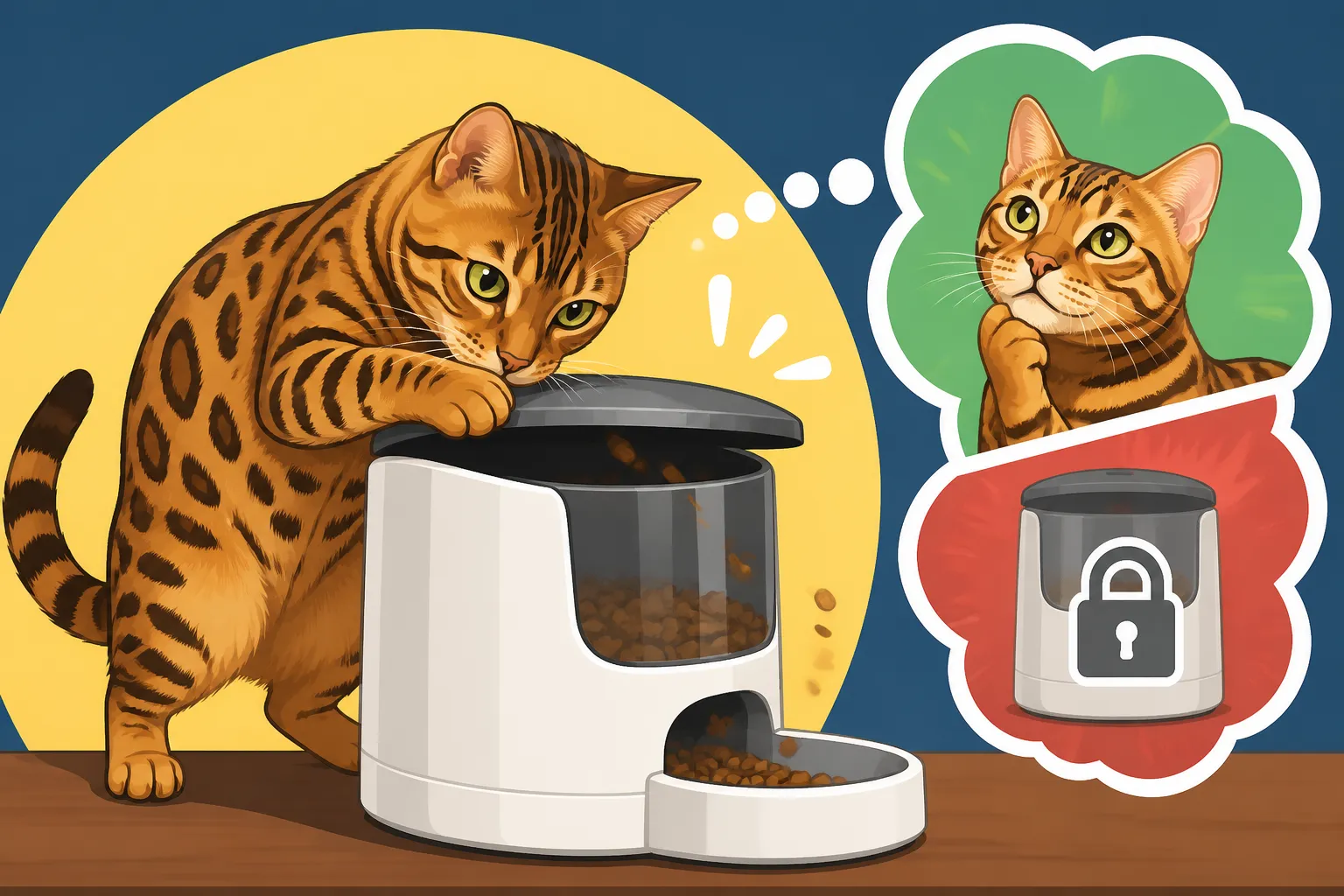
The latches on many timed feeders are designed for human convenience, not feline resistance. Think about it: a simple snap clip, a twist-lock lid, or even a magnetic closure. To a Bengal, these are elementary puzzles. Their dexterous paws, combined with sharp claws and strong jaws, can quickly learn to pry, twist, or chew at these weak points. I've heard stories of Bengals figuring out child-proof locks, so a plastic snap is often no match. They’ll work at it persistently, often ignoring other distractions if the scent of food is strong enough. It's a reminder of why A Bengal Cat Opens Cabinets, Doors and Drawers, and a feeder is just another type of cabinet to them.
The "Hunting" Instinct Applied to Feeders
Bengal cats retain a strong hunting instinct, and for an indoor cat, a timed feeder can become a substitute for prey. They might stalk it, pounce on it, bat at it, and engage in various behaviors meant to "subdue" their catch. This isn't just about getting food out; it's an expression of their natural drive. If the feeder makes noise, dispenses food unpredictably (or too predictably), or presents any kind of dynamic challenge, it can trigger this primal response. They might even try to "fish" kibble out of the dispenser chute with a paw, extending their reach far beyond what a manufacturer might have anticipated. This powerful instinct is also why A Bengal Cat Needs Almost No Grooming – they're always moving and cleaning themselves, much like their wild counterparts.
What to Look for in a Bengal-Proof Timed Feeder
So, how do you find a timed feeder that can stand up to such a clever, determined cat? It's about thinking like a Bengal and anticipating their moves. You need something built like a fortress for food.
Heavy Base and Anti-Slip Features
This is crucial. A feeder that can't be easily tipped or moved is your first line of defense. Look for models with a wide, heavy base, perhaps made of ceramic or metal, rather than flimsy plastic. Some feeders are designed with suction cups or rubberized feet that genuinely grip the floor. If you find a model you like that's still a bit too light, consider placing it on a non-slip mat or even securing it to a heavier base yourself. I've even seen owners use heavy-duty Velcro or non-toxic adhesives to secure the base to a sturdy piece of plywood, which then becomes much harder for a cat to move.
Secure, Complex Latch Systems
Forget simple clips. You need latches that require multiple steps, significant force, or even tools to open. Look for feeders that boast "chew-proof" or "tamper-proof" designs for their lid. Sometimes, this means a screw-down lid, a metal clasp, or a latch that requires pushing and twisting simultaneously. Some advanced feeders even incorporate magnets that are strong enough to prevent casual prying, or even pressure-activated buttons that are harder for a paw to manipulate. Think industrial-strength, not convenience-store plastic. When considering these, remember that some of these more robust options might be available through online retailers like Amazon, where you can often read extensive user reviews about their durability against clever pets.
Durable Materials and Tamper-Proof Design
A Bengal's claws and teeth are formidable tools when it comes to breaking and entering. Avoid feeders made of thin, brittle plastic that can be easily chewed through or cracked. Opt for thicker, more durable plastics, or even feeders with metal components where possible. Pay attention to seams and gaps in the design; these are often points of vulnerability. A truly Bengal-proof feeder will have a seamless design, especially around the food storage and dispenser chute, preventing paws from getting in or plastic edges from being chewed. The dispensing mechanism itself should be internal and well-protected, not an exposed paddle or wheel that can be easily manipulated from the outside.
Considering Manual vs. Automatic Engagement
Some feeders require a bit more than just programming. While fully automatic feeders are convenient, some models offer features that can make them harder to crack. For example, some feeders allow you to record a voice message, which can sometimes distract or startle a Bengal at feeding time, potentially deterring them from immediate tampering. Others have more complex dispenser chutes that are harder to 'fish' kibble out of. When choosing food for these feeders, keep in mind that kibble is usually the go-to for a timed feeder. For general kibble and feeder supplies, larger retailers like Chewy often have a wide selection, so you can compare different types and read reviews from other cat owners.
Strategies Beyond the Feeder to Manage a Clever Bengal
Even with the most robust feeder, a Bengal's intelligence means you need a multi-faceted approach. It’s not just about the device itself, but how you integrate it into their daily life. Managing their energy and mental stimulation is key.
Environmental Enrichment and Mental Stimulation
A bored Bengal is a destructive Bengal, and a focus on breaking into a feeder is often a symptom of under-stimulation. These cats thrive on engagement. Provide plenty of vertical space with tall Which Cat Tree a Bengal Cat Needs or wall-mounted shelves where they can climb and observe their territory from above. Incorporate regular, interactive play sessions with wand toys that mimic prey. I'm talking vigorous, tiring play that exhausts them both physically and mentally. This helps redirect their intense energy and hunting drive away from your feeder and towards appropriate outlets. Rotate toys regularly to keep things fresh and exciting. If they have interesting things to do and explore, the feeder becomes less of the main event.
Incorporating Puzzle Feeders
While timed feeders are for scheduled meals, puzzle feeders offer a fantastic way to make your Bengal "work" for their food throughout the day. These aren't meant to dispense entire meals automatically but to provide small rewards as your cat solves a challenge. This taps into their problem-solving instincts in a positive way. Start with simple puzzles and gradually introduce more complex ones. This makes mealtime an activity, not just a static event. If they're regularly engaged in these "hunts" for small portions of kibble, the urgency to crack the main feeder might decrease. You can find many varieties on sites like Amazon, ranging from simple rolling balls that dispense treats to elaborate multi-chamber puzzles.
The Role of Consistent Training and Routine
Bengals are incredibly trainable, often learning commands much like dogs. Consistency is paramount. Establish a predictable daily routine that includes play, training, and feeding times. If your Bengal learns that engaging with their puzzle toys or a dedicated play session leads to food being dispensed from the appropriate source at the appropriate time, they're more likely to adopt those behaviors. Use positive reinforcement: reward them for not tampering with the feeder, perhaps with praise or a different treat after the food has been dispensed correctly. You might even consider clicker training to reinforce desired behaviors, like waiting patiently or playing with their designated toys instead of attacking the feeder. This kind of consistent approach helps manage their high energy and intelligence. How Many Hours a Day a Bengal Cat Plays is a good indicator of how much mental and physical exercise they need to prevent destructive behaviors, including feeder-related mischief.
When it comes to outsmarting a Bengal, it's often a game of wits and persistence. By understanding their motivations, choosing the right equipment, and providing ample enrichment, you can turn a potential mealtime battle into a peaceful routine.
| Feeder Feature Category | Standard Feeder (Vulnerable) | Bengal-Proof Feeder (Recommended) |
|---|---|---|
| Weight & Stability | Lightweight, narrow base | Heavy, wide base; anti-slip feet |
| Lid Latching | Simple snap, twist, or magnet | Screw-down, metal clasp, multi-step |
| Material Durability | Thin, brittle plastic | Thick, durable plastic; metal parts |
| Dispenser Access | Exposed chute, easy to "fish" | Internal, protected, narrow chute |
| Overall Design | Gaps, seams, easy to pry | Seamless, tamper-resistant, robust |
Disclaimer
This article is for general informational purposes only and does not constitute professional advice. Laws, prices and regulations vary by location and change over time. Consult a qualified professional for guidance on your specific situation.