Why a Bengal Cat Looks So Muscular
A Bengal can look like a tiny athlete: broad through the shoulders, firm along the back, and ready to spring onto the highest shelf. That appearance comes from a combination of inherited body shape, visible muscle, movement, and a close-lying coat—not simply from being large. This guide explains what gives Bengals their muscular look and how to tell a fit build from excess weight.
Why a Bengal cat looks muscular
Its build is part of the breed’s appearance
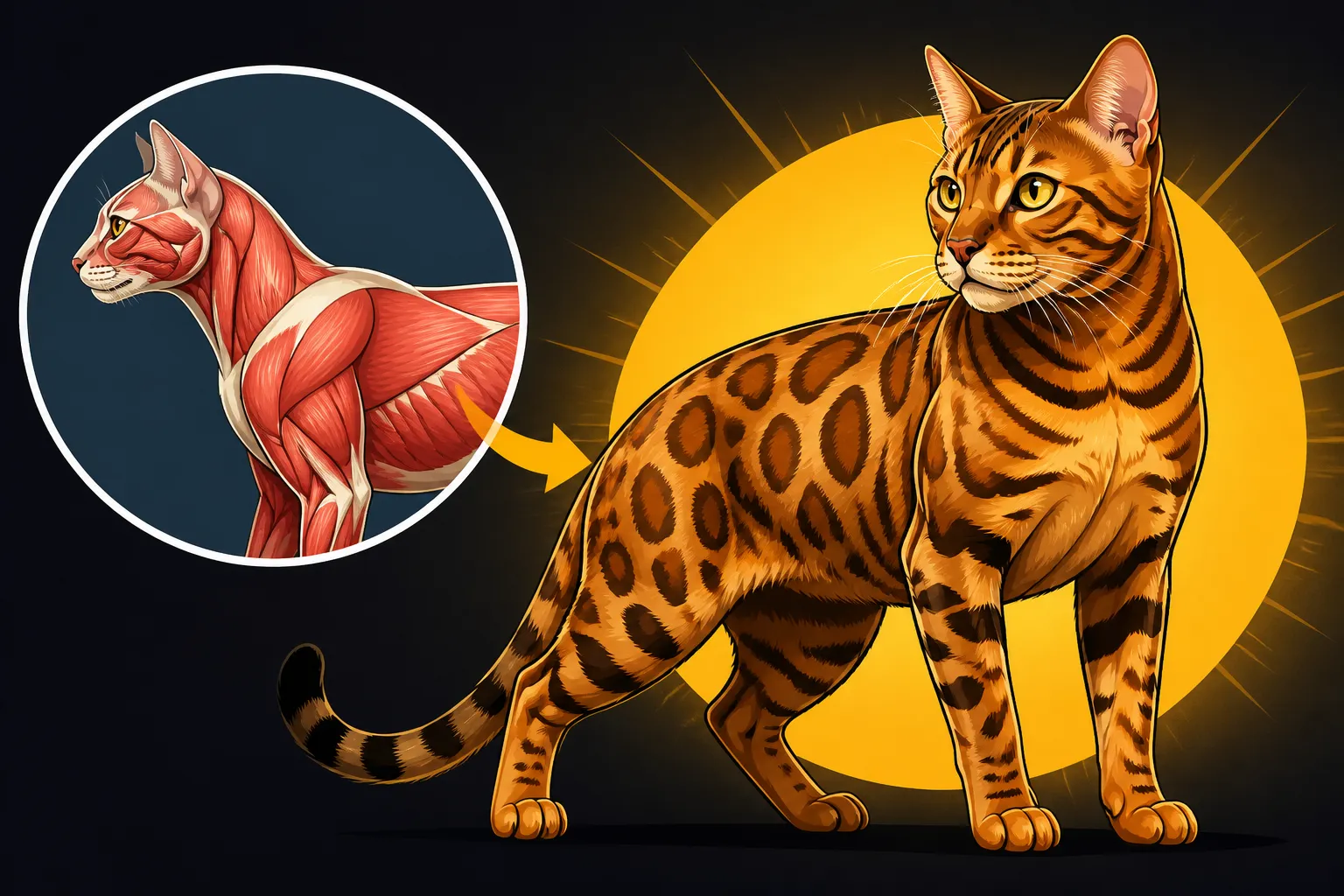
Bengals are generally described as athletic, muscular cats with a solid feel for their size. Their body can look powerful without being bulky: the outline is often long and balanced, with well-developed shoulders and hindquarters. That combination gives a Bengal a noticeably sturdy silhouette beside a finer-boned cat.
This is a breed tendency, not a guarantee that every Bengal will have the same shape. Individual cats vary with genetics, sex, age, diet, activity, and general health. A lean Bengal may look especially defined, while another healthy cat may be broader or softer around the edges. For more on typical proportions, see How Big a Bengal Cat Gets.
The coat makes the outline easy to see
A Bengal’s short, close-lying coat does little to disguise the shape underneath. On a fluffier cat, long fur can soften the outline of the shoulders and legs. A Bengal’s sleek coat tends to show the curve of the body more clearly, so even ordinary movement can make the cat appear sculpted.
The coat pattern can add to that impression. Strong contrast between the background color and spots or rosettes draws the eye along the body and highlights its length and shape. This can make a Bengal look more striking or athletic without meaning that it has more muscle than another cat of similar build.
How proportions and movement add to the effect
Hindquarters and posture create an athletic profile
Bengals may appear especially powerful at the back end. Their hind legs are often slightly longer than their front legs, a feature that can give the body a raised, spring-loaded look when the cat stands or walks. The shape is easier to notice when a Bengal is poised to jump, stretching, or moving with its weight shifting through the hips.
That silhouette can be mistaken for unusually large muscles, but proportions matter as much as muscle size. A cat standing tall with its back legs braced may look more imposing than it does curled up in a bed. Learn more about the rear-leg shape in Why a Bengal Cat's Hind Legs Are Longer.
Activity can help maintain visible conditioning
Many Bengals enjoy climbing, chasing toys, and exploring. Regular movement can help a cat maintain muscle and coordination, particularly when play involves running, jumping, and changing direction. If your Bengal launches onto a cat tree or races after a wand toy, you may see its shoulders and hindquarters working in a way that makes its athletic build especially noticeable.
Still, activity alone does not explain a Bengal’s appearance. Not every Bengal has the same exercise routine, and a cat that plays constantly is not automatically fitter than a quieter cat. A healthy adult’s shape reflects several influences, including inherited build and nutrition. For a closer look at the breed’s physical features, see What the Bengal Cat Standard Asks For.
How to tell muscle from excess weight
Look at body condition, not the number on the scale alone
A muscular cat can weigh more than expected for its frame, so the number on the scale does not tell the whole story. The useful question is whether the cat’s weight suits its individual body. A vet can assess body condition by looking and feeling, rather than judging weight in isolation.
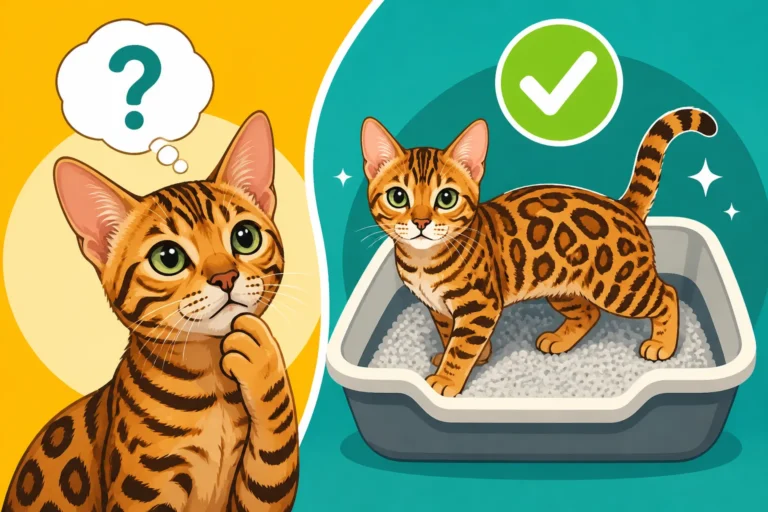
At home, gently feel along your cat’s sides. You should generally be able to feel the ribs beneath a light covering without pressing hard. From above, many cats have a visible waist behind the ribs; from the side, the abdomen may tuck up somewhat toward the hind legs. These are broad checks, not a substitute for a veterinary assessment. For more detail, see How to Tell Muscle From Fat on a Bengal Cat.
A comparison can help you decide what to observe, but it cannot diagnose a health problem:
| What you notice | More consistent with an athletic build | Worth discussing with a vet |
|---|---|---|
| Ribs | Easy to feel with light pressure | Difficult to feel beneath a thick layer |
| Waist from above | A slight narrowing behind the ribs | Little or no waist, or a widening abdomen |
| Belly from the side | A modest upward tuck may be visible | A rounded or sagging shape that is new |
| Weight over time | Fairly steady as the cat matures | A noticeable increase or decrease without explanation |
| Movement | Comfortable jumping, walking, and playing | New reluctance to move, weakness, or difficulty jumping |
Age, sex, and genetics affect the silhouette
A young Bengal may look lankier before its body fills out. Adult cats can differ in how broad or muscular they become, and males often carry more muscle on average than females. There is plenty of individual variation, though: a female can be powerfully built, and a male can be comparatively slim. Why a Male Bengal Cat Carries More Muscle and Why a Female Bengal Cat Stays Leaner explore those common differences.
Age also changes how a cat looks. A kitten’s proportions are not a reliable preview of its adult frame, and a senior cat may lose muscle even if its weight changes very little. If your cat’s shape changes, notice whether the change is gradual or sudden and whether its appetite, energy, grooming, or mobility has changed too. What a Muscular Bengal Cat Should Weigh can help put weight in context, but your vet is the best person to interpret your own cat’s build.
When a change deserves attention
A Bengal that has always been sturdy and moves comfortably may simply have a naturally athletic frame. A sudden change is different. New weakness, reduced activity, a swollen-looking abdomen, unexplained weight loss, or trouble jumping warrants a conversation with a veterinarian. Muscle loss can be easy to miss under a patterned coat, especially if you see your cat every day.
It can help to keep a simple record of weight and appearance. Weigh your cat in a consistent way, such as using the same scale and similar conditions, and note any meaningful changes rather than reacting to a single measurement. If you buy food through Chewy, its order history may help you check whether the food or feeding routine changed around the same time as your cat’s body condition. Bring any notes to the vet rather than trying to diagnose the cause yourself.
Supporting a healthy, athletic Bengal build
Feed for the individual cat, not the breed stereotype
A muscular appearance does not mean a Bengal needs an unusually large portion or a special “wild” diet. Food choice and serving size should suit the cat’s age, health, activity, and body condition. Follow the feeding guidance on the food as a starting point, then ask your vet whether the amount is appropriate for your cat.
If you are comparing foods at Chewy or another retailer, look at the full nutritional information and whether the product is appropriate for your cat’s life stage. Avoid changing foods repeatedly just to make a cat look leaner or more muscular. If a change is needed, your vet can help you make a suitable plan and transition gradually.
Encourage movement without trying to sculpt your cat
Play supports activity and gives a Bengal an outlet for energy, but it does not need to become a workout program. Short, engaging sessions with a wand toy, climbing opportunities, and food puzzles can encourage natural movement. Let your cat set the pace, and use toys safely rather than encouraging jumps from unstable furniture or high, risky surfaces.
If your Bengal has gained weight, avoid sharply reducing food without veterinary guidance. If it seems to be losing muscle, eating less, or tiring unusually quickly, arrange a checkup. When browsing enrichment toys through Chewy, focus on options that match your cat’s size and play style, and supervise toys with strings or small detachable parts. The goal is a comfortable, capable cat—not a particular look.
A Bengal’s muscular impression usually comes from its athletic proportions, visible conditioning, and sleek coat working together. The healthiest way to judge that appearance is to consider your cat’s body condition, behavior, and changes over time—not to compare it with a breed photo or a single number on the scale.
Disclaimer
This article is for general informational purposes only and does not constitute professional advice. Laws, prices and regulations vary by location and change over time. Consult a qualified professional for guidance on your specific situation.