Why a Bengal Cat’s Hind Legs Are Longer
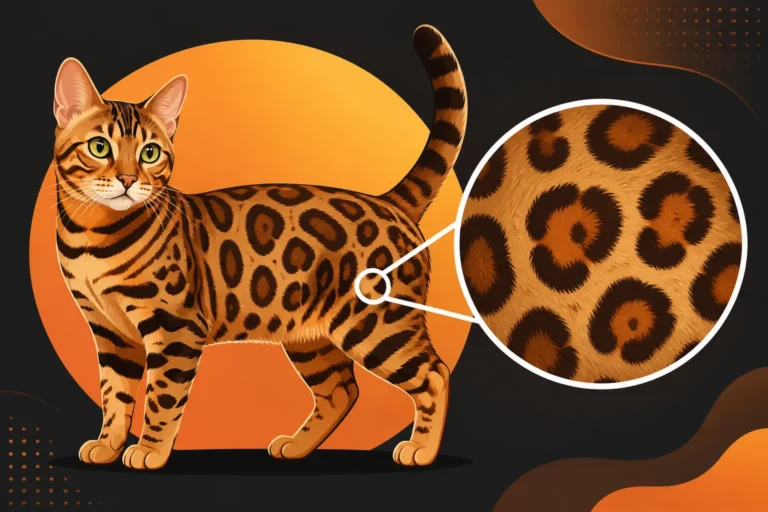
A Bengal’s rear end can look noticeably higher than its shoulders, especially when the cat is standing alert or preparing to jump. That shape is usually a normal feature of the breed, not a sign that something is wrong. This guide explains how Bengal hind legs are built, why they look longer, what the shape helps the cat do, and which changes deserve a vet’s attention.
What Bengal hind legs are supposed to look like
The rear legs are slightly longer than the front legs
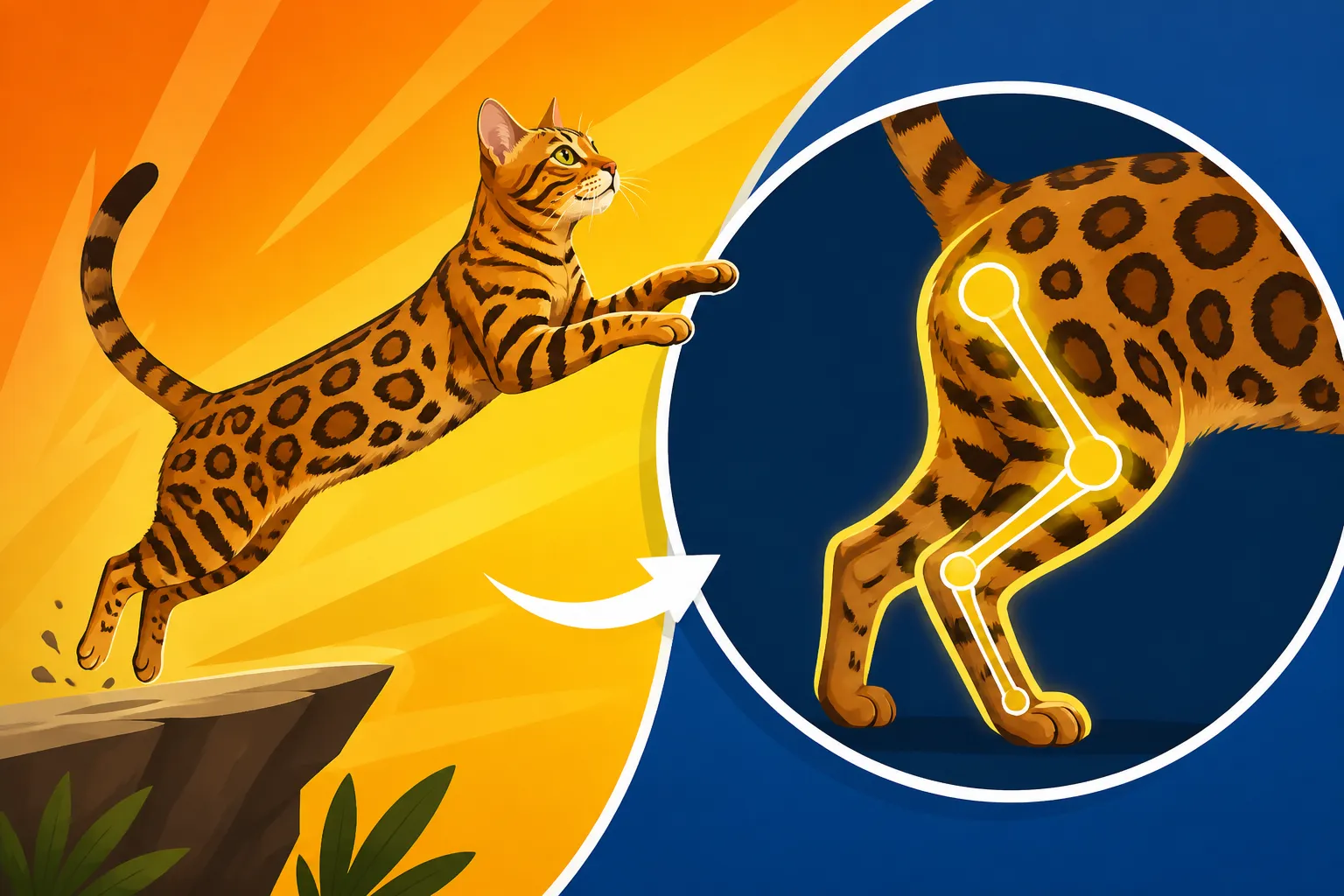
A Bengal’s hind legs are generally described as a little longer than its front legs. This creates a gentle rise from the shoulders toward the rump. It is not usually a dramatic slope: a healthy, well-proportioned cat should still look balanced, not as if it is standing on stilts or constantly crouching.
The difference is easier to notice when a Bengal stands side-on on a level floor. The back may sit a little higher, and the thighs can look especially substantial. When the cat walks, its body should move smoothly and evenly. A slight height difference is part of the overall silhouette; an obvious limp or uneven stride is not.
Leg length is only one part of the breed’s outline. The Bengal standard also describes a strong, muscular body, with the rear legs contributing to that athletic appearance. For more on the proportions judges look for, see What the Bengal Cat Standard Asks For. And if you are comparing overall body build, Why a Bengal Cat Looks So Muscular explains why a Bengal can appear compact and powerful rather than simply large.
Long-looking legs are about proportion, not just bone length
When people say a Bengal has “long hind legs,” they are usually describing how the rear half of the cat looks in relation to the front half. The visual effect comes from several features working together: the position of the pelvis, the shape of the back, the cat’s muscles, and how it stands on its toes.
Cats are digitigrade animals, which means they walk on their toes rather than placing the whole foot flat on the ground. The lower part of the hind leg and the hock—the joint that bends partway down the rear limb—also affect the outline. A standing Bengal may look taller at the rump because of its posture and body shape, even when its individual leg bones are not unusually long.
Age and condition can change the impression, too. A growing kitten may look temporarily out of proportion as different parts of the body develop at different rates. A lean adult’s legs may look more prominent than those of a heavier cat, while strong thigh muscles can make the rear legs seem especially robust. If you want a broader guide to development and proportions, How Big a Bengal Cat Gets and What a Bengal Cat Weighs offer useful context.
Breed shape varies from cat to cat
Not every Bengal has the same degree of rise at the rear. Some have a more noticeable difference between their shoulder height and rump; others look nearly level. Family lines, age, body condition, posture, and the individual cat’s build all influence the silhouette.
That variation does not automatically mean that one cat is better proportioned or healthier than another. Breed standards describe an ideal, but pet Bengals are individuals, and a small difference in appearance is not a diagnosis. A cat can have a subtle rise and be perfectly healthy, just as a cat with a strikingly athletic outline still needs routine care and observation.
It is also worth judging the cat while it is standing naturally. A Bengal stretching, reaching for a toy, or bracing before a leap may hold its body in a way that makes the hindquarters appear much higher. A single photograph can exaggerate the effect, particularly if the camera is low or close to the cat.
Why the shape supports an athletic cat
Powerful rear legs help with jumping and acceleration
The hind legs provide much of the force a cat uses to leap, sprint, and push off from a surface. A Bengal’s strong rear end is part of its athletic build, helping it launch onto a sturdy platform or change direction quickly during play. The shape may look especially pronounced when the cat gathers itself before jumping.
That strength does not mean every Bengal needs to be encouraged to leap from the highest surface available. Safe movement depends on the cat’s age, health, confidence, and the stability of the landing area. A young, energetic cat may happily spring onto a bookcase; an older cat with sore joints may need lower steps and easier access to favorite resting places.
If you are planning play around your Bengal’s athleticism, How High a Bengal Cat Can Jump can help set expectations without turning every room into a jumping challenge. Provide secure places to climb and land, and check that cat trees do not wobble. When browsing options on Chewy or another retailer, look for a stable base and platforms that suit your cat’s size rather than choosing a tree based on height alone.
A lifted rear end is not a promise of exceptional jumping ability
A Bengal’s body shape may support powerful movement, but it cannot predict exactly how high an individual cat will jump. Confidence, experience, motivation, weight, age, and joint health all matter. One cat may make a spectacular jump for a feather toy, while another prefers a series of shorter hops to reach the same spot.
Cats also make their own judgments about a landing. A surface that looks reachable to you may be slippery, unstable, or too narrow for your Bengal to feel safe. Avoid forcing a jump for a photo or repeatedly enticing a cat onto a high ledge. If it hesitates, offer a lower route, such as a stable stool or a series of secure shelves.
A practical setup gives the cat options. Place a low perch near a favorite window, use a sturdy cat tree for climbing, and leave clear space around places where the cat tends to leap down. If you are choosing a tree through Chewy, check the dimensions, platform spacing, and assembly instructions carefully; a tall structure is only useful if it stays steady when a muscular cat climbs it.
The legs do not mean the cat needs special exercise
Bengals are often energetic, but longer-looking hind legs do not create a special exercise requirement by themselves. What matters is the cat’s overall health and daily activity. Interactive play, climbing opportunities, and toys that encourage chasing can help a Bengal move in a controlled, enjoyable way.
Try short play sessions with a wand toy, letting your cat stalk, chase, and catch it. Give the cat time to pause between bursts rather than trying to keep it running continuously. Puzzle feeders can add mental work, while a secure climbing area offers movement at the cat’s own pace. Chewy is one place owners may browse for toys or climbing equipment, but the best choice is one that fits your home and your cat’s play style.
Normal proportions compared with signs of a problem
What a healthy gait generally looks like
A Bengal with ordinary, breed-typical proportions should be able to stand, walk, turn, and jump without persistent discomfort. Look for smooth movement and roughly even use of both hind legs. The cat should not consistently lift one paw, drag a foot, stumble, or shift its weight away from one side.
It is more useful to notice changes in your own cat than to compare its legs with a photo online. Does your Bengal still climb onto the sofa as usual? Does it avoid stairs it previously used? Has it started taking longer to stand up after resting? A change in routine can be an early clue that something is bothering the cat, even if the legs look normal.
Keep in mind that cats can hide pain. A Bengal may still eat, purr, or play briefly while moving less comfortably than usual. If the change is sudden, repeated, or getting worse, contact a veterinarian rather than assuming it is simply the breed’s body shape.
When leg shape or movement deserves a closer look
The normal difference between front and rear proportions should not cause pain or make walking difficult. Contact a veterinarian if you notice limping, reluctance to jump, stiffness, repeated slipping, sensitivity when a leg is touched, or an unusual change in how your cat holds its hindquarters. Sudden weakness or inability to use a limb needs prompt veterinary attention.
A kneecap that moves out of its normal position, known as patellar luxation, can affect a cat’s gait. It may cause intermittent limping or an unusual skipping step, although only a veterinary exam can determine what is happening. You can read more in Patellar Luxation in a Bengal Cat. Nerve or muscle problems can also affect how a cat places its paws; Distal Neuropathy in a Bengal Cat describes one condition that may alter movement.
Do not try to diagnose a problem by measuring leg length at home or repeatedly bending the joints to see whether the cat reacts. That can cause discomfort and will not identify the underlying cause. If you are concerned, take a short video of the cat walking naturally on a level surface and share it with the vet. A video can help show a pattern that is hard to reproduce during an appointment.
A sudden change matters more than a naturally high rump
A Bengal that has always had a slightly raised rear outline and moves comfortably is different from a cat whose posture has changed recently. New asymmetry, a tucked-up stance, a hunched back, or a reluctance to bear weight is more meaningful than a stable difference in body proportions.
Changes can follow a jump or fall, but they can also appear gradually. A cat that begins avoiding a favorite chair, pauses before climbing, or chooses a lower resting spot may be adapting to discomfort. These signs are worth discussing with a veterinarian, especially if they persist or are accompanied by changes in appetite, grooming, or mood.
When describing the issue, be specific: note when it began, whether one or both legs seem affected, and which activities have changed. Mention any recent falls or rough play if you saw them. This gives the veterinary team a clearer starting point than saying only that the legs look different.
How to support your Bengal’s movement at home
Make climbing safer without restricting normal activity
You do not need to remove every high perch from a Bengal’s life. Instead, make favorite routes stable and easy to use. Secure cat trees, keep shelves firmly attached to the wall, and avoid placing slippery objects where the cat tends to land. If a cat regularly jumps down from a tall surface, consider adding a lower intermediate platform.
For a kitten, keep the surroundings predictable while it learns to judge distances. For a senior cat or one with a known mobility issue, provide low-access beds, litter boxes with an easy entry, and food and water that do not require a difficult climb. Small adjustments can preserve independence without encouraging risky leaps.
If you are comparing ramps, steps, or perches on Chewy, check that they are appropriate for the cat’s weight and can be secured where they will be used. The product description is only one part of the decision: measure the available space and think about whether your Bengal will actually use that route. A well-placed low step can be more helpful than a complicated climbing setup.
Use observation, not forced testing
You do not need to test how far your Bengal can jump to know whether it is doing well. Watch ordinary movement during the day: getting up from a nap, walking across the room, climbing onto a familiar chair, and playing with a favorite toy. These everyday moments provide a more useful picture than a staged challenge.
If your Bengal moves comfortably, keep offering varied, safe opportunities for activity. Rotate toys, use short interactive play sessions, and provide scratching and climbing surfaces. If movement looks different, pause strenuous play and ask your veterinarian for advice rather than trying to “work through” a possible injury.
A brief note on your phone can help you track changes over time. Record when you first noticed a limp or reluctance to jump, whether it happens every day, and whether it appears after rest or activity. That information can help distinguish a long-standing body shape from a new mobility concern.
| What you notice | Often consistent with normal proportions | Worth discussing with a veterinarian |
|---|---|---|
| Rear appears slightly higher than shoulders | Stable appearance with comfortable movement | A new or increasing change in posture |
| Strong-looking thighs | Both sides appear similar and the cat moves normally | One side looks different or seems painful |
| Bengal jumps during play | Confident, controlled movement and normal landing | Hesitation, repeated missed landings, or reluctance to jump |
| Occasional pause before climbing | May reflect caution or preference | Persistent avoidance or stiffness |
| A different-looking step | A brief stretch or unusual pose | Repeated limp, dragging paw, wobbling, or weakness |
A Bengal’s hind legs can look longer because the rear end sits slightly higher and the breed has a strong, athletic build. That silhouette is usually normal when it has been consistent and the cat moves comfortably. Focus on changes in gait, posture, confidence, or activity—not appearance alone—and ask a veterinarian about new or persistent signs of discomfort.
Disclaimer
This article is for general informational purposes only and does not constitute professional advice. Laws, prices and regulations vary by location and change over time. Consult a qualified professional for guidance on your specific situation.