How to Tell Muscle From Fat on a Bengal Cat
It can be surprisingly tricky to tell if your sleek, active Bengal cat is at a healthy weight, or if those seemingly toned flanks are hiding a little extra padding. Their wild ancestry gives them a naturally athletic, lean appearance, which can mask subtle weight changes. This guide will walk you through the key indicators, both visual and tactile, to help you accurately assess your Bengal’s body condition, ensuring they stay healthy and agile for years to come.
Understanding the Bengal Cat's Naturally Athletic Build
Bengal cats are not your average couch potato housecats. They're built like miniature athletes, a direct inheritance from their Asian Leopard Cat ancestors. This means they naturally possess a more muscular, lean physique compared to many other domestic breeds. When you're used to seeing fluffier or rounder cats, a healthy Bengal can sometimes look almost skinny to the untrained eye, but that's often just their lean muscle mass showing through.
Their bodies are designed for agility, speed, and climbing, not for carrying excess weight. A truly healthy Bengal cat should feel solid and muscular, not squishy or overly soft. Think of a long-distance runner versus a powerlifter; a Bengal is more akin to the runner – sleek, powerful, and efficient. This unique build is why traditional "chunky but cute" standards for cat weight simply don't apply to them. It's crucial for their joint health, heart function, and overall energy levels that they maintain this athletic form. Anything that impedes their natural movement or puts strain on their active lifestyle can lead to health issues down the road. You'll notice their energy levels might dip, or they might not be as keen to jump to the highest cat tree if they're carrying extra pounds.
Visual Cues: What a Healthy Bengal Physique Looks Like
Assessing your Bengal's weight starts with a good, honest look. You want to observe their shape from several angles, paying close attention to contours that indicate muscle, bone, and fat distribution. This isn't just a quick glance; it's a careful observation from above, the side, and even from behind.
The Overhead View: Waistline and Shoulders
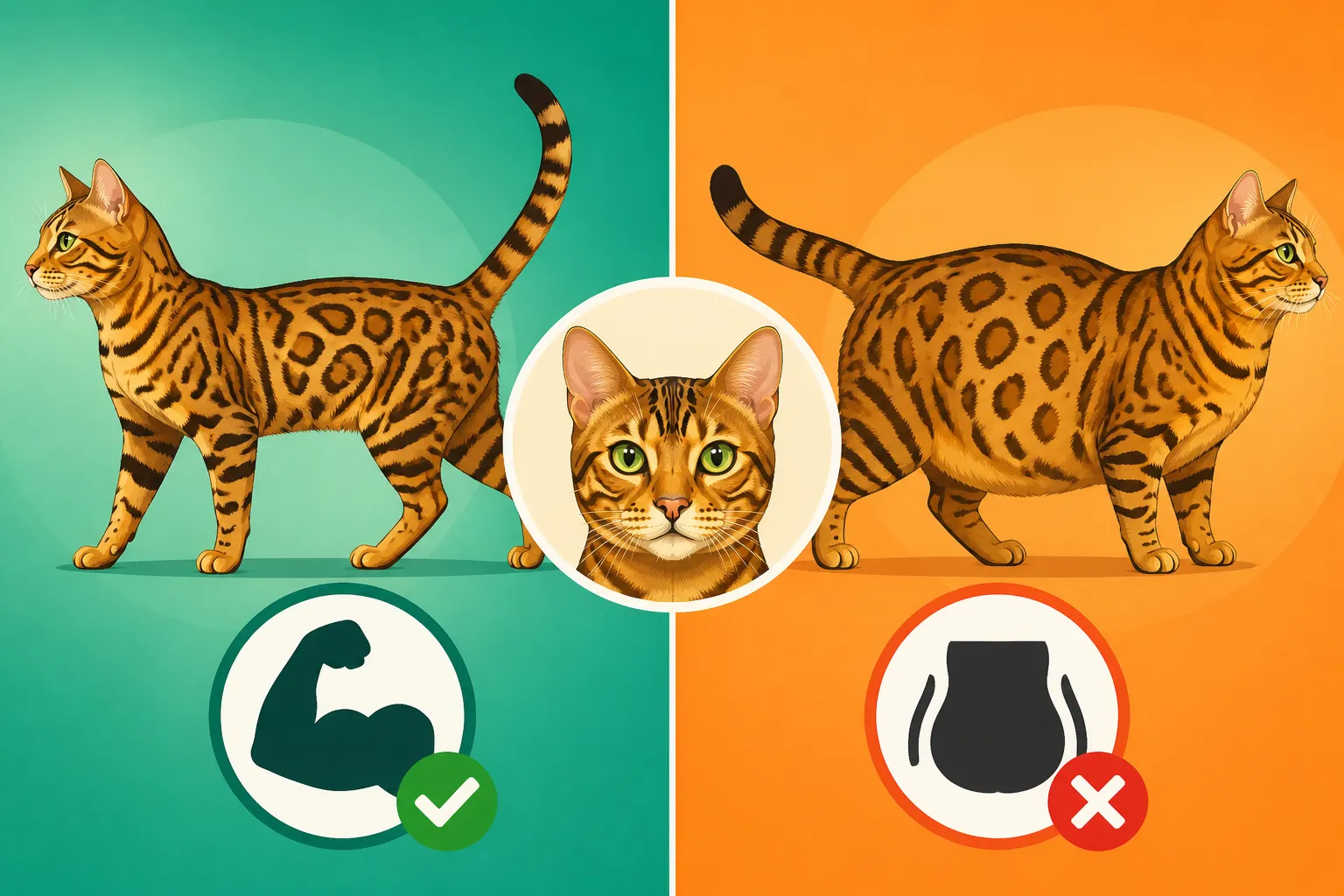
From directly above, your Bengal should have a distinct "waistline" between their ribcage and hips. This isn't necessarily an extreme hourglass figure, but a clear indentation should be present. If your cat looks more like a straight line or even bulges out at the sides, that's a red flag for excess weight. Their shoulders should also be visible but not overly prominent. You should see a gradual curve from their shoulders narrowing slightly towards their hips. Imagine the silhouette of a wild cat – powerful in the shoulders and chest, but tapering elegantly. If they look barrel-shaped or uniformly wide all the way down their body, it's time for some dietary adjustments and perhaps a bit more playtime. A good visual check from above can often be the first indicator that things are starting to trend in the wrong direction, especially if they are usually so active that you assume they're burning everything off.
The Side Profile: Abdominal Tuck and Ribs
When you look at your Bengal from the side, a healthy individual will display what's called an "abdominal tuck." This means that their belly area, just in front of their hind legs, should gently slope upwards. It shouldn't hang down, even slightly, nor should it be perfectly flat. A hanging belly is a definite sign of being overweight, often referred to as a primordial pouch, but if it's too pronounced and soft, it's fat. On the other hand, if the tuck is extremely dramatic and you can clearly see the outline of their ribs through their fur, they might be underweight. The ribs should be palpable but not starkly visible. A subtle curve of the ribcage, followed by that graceful tuck, is the ideal. This side profile is also where you can sometimes gauge the muscle definition in their hindquarters; healthy Bengals will have powerful, well-defined back legs. If you want to dive deeper into healthy weight for this breed, check out What a Muscular Bengal Cat Should Weigh.
Examining the Whited Tummy and Hindquarters
Another unique characteristic of many Bengal cats, especially those with good contrast, is their "whited tummy." This lighter underside should also exhibit good musculature and a firm feel, rather than being soft or jiggly. The powerful hindquarters are a hallmark of the Bengal, built for explosive jumps and agile movements. Look for defined muscles in their thighs. When they're standing, their legs should look strong and athletic, not like slender sticks or bulky columns. If these areas seem soft to the touch or lack definition, it could indicate a lower muscle-to-fat ratio than is healthy. This isn't about vanity; it's about ensuring their bodies are optimally prepared for the active lifestyle that makes Bengals so special. These visual checks are your first line of defense against creeping weight gain, allowing you to address issues before they become significant health concerns.
The Hands-On Approach: Palpating for Muscle and Fat
Visual assessment is a great start, but nothing beats getting your hands on your Bengal to really understand their body condition. Their dense, short coat can sometimes hide a multitude of sins, so touch is essential. This tactile examination is particularly useful for distinguishing between a truly lean, muscular cat and one that might just appear slender due to their short fur, but is actually carrying too much fat.
The Rib Test: Feeling for the Right Balance
The "rib test" is a classic method for gauging a cat's body condition. Gently run your fingers along your Bengal's sides, just behind their shoulder blades. You should be able to easily feel each individual rib, much like feeling the knuckles on your hand. However, you shouldn't be able to see the ribs without applying any pressure, nor should they feel sharp or protrude prominently. If you have to press firmly to feel the ribs, your cat is likely carrying too much fat. Conversely, if the ribs are extremely prominent and have very little cushioning over them, your Bengal might be underweight. The goal is to feel the distinct bumps of the ribs, with just a thin layer of muscle and fat covering them, making them feel smooth but distinct. This balance is key; it speaks volumes about their overall health and body composition. For a better understanding of their dietary needs, you might want to read Which Protein Percentage Suits a Bengal Cat.
Feeling the Spine and Hip Bones
Just as with the ribs, gently run your hand along your Bengal's spine, from neck to tail. You should be able to feel the individual vertebrae, but they shouldn't feel like a row of sharp knobs sticking out. There should be a slight layer of muscle and fat cushioning them. If the spine feels overly prominent and bony, your cat is likely too thin. If you can barely feel the vertebrae and it feels like a smooth, soft ridge, then they might be carrying too much weight. The same principle applies to the hip bones. When you gently cup their hips, you should be able to feel the hip bones with a minimal amount of padding over them. Again, they shouldn't be sharply protruding, nor should they be buried under layers of soft tissue. A healthy Bengal will have a firm, toned feel across their back and hips, indicating good muscle mass.
Assessing Muscle Mass in Legs and Back
Beyond just ribs and bones, focus on the overall firmness of your Bengal's body. Gently squeeze their hind legs, particularly the thighs. You should feel solid, dense muscle. Compare this to the feel of your own bicep when flexed; it should have that same kind of firm resistance. If their legs feel soft, flabby, or easily compressible, it suggests a lack of muscle tone, even if their weight seems "normal" on the scale. Similarly, the top of their back should feel firm and muscular, not soft or doughy. Remember, Bengal cats are renowned for their athleticism, and this should be reflected in their strong, well-developed musculature. If you're concerned about their overall fitness and how much exercise they need, consider browsing interactive toys on Amazon or looking at options for a cat wheel to encourage more activity. You might also find How Much Exercise a Bengal Cat Needs a Day helpful.
| Body Area | Underweight (Too Thin) | Ideal (Healthy) | Overweight (Too Fat) |
|---|---|---|---|
| Ribs | Clearly visible, very prominent, no fat cover | Easily palpable with slight fat cover, not visible | Hard to feel, covered by significant fat |
| Waistline | Exaggerated hourglass shape, severe indentation | Clearly visible indentation behind ribs | No waistline, broad or bulging |
| Abdominal Tuck | Very pronounced, often hollowed | Distinct upward slope from ribs to hind legs | Hanging belly, no tuck, often bulging |
| Spine/Hips | Easily visible and prominent, sharp to touch | Palpable with slight fat/muscle cover, not prominent | Hard to feel, buried under fat |
| Muscle Tone | Lacking, often feels stringy | Firm, dense, well-defined (especially hind legs) | Soft, flabby, lacks definition |
Why Maintaining a Healthy Weight in Your Bengal Cat Matters
Keeping your Bengal cat at an ideal weight isn't just about aesthetics; it's a critical component of their overall health, longevity, and quality of life. An overweight Bengal is at a significantly higher risk for a range of health issues that can dramatically impact their well-being and shorten their lifespan. This isn't a breed that tolerates extra pounds well due to their inherent athleticism and high energy demands.
Preventing Weight-Related Health Issues
Just like in humans, excess weight in cats puts a strain on virtually every bodily system. For Bengals, this can manifest as a heightened risk of conditions such as diabetes, which can require lifelong management and costly veterinary care. Joint problems, including arthritis, are also much more common in heavier cats, as their skeletal structure isn't designed to support extra load. This can lead to pain, reduced mobility, and a reluctance to engage in their beloved climbing and playing. Heart disease, though sometimes inherited in Bengals, can be exacerbated by obesity, as the heart has to work harder. Even something as simple as grooming becomes a struggle for an overweight cat, leading to matted fur and skin infections. If you're concerned about specific health issues, you might find information in HCM Is What Kills Bengal Cats Early or What PK Deficiency Does to a Bengal Cat helpful, though weight is a general health concern.
Ensuring Optimal Energy and Mobility
A healthy weight allows your Bengal to truly be a Bengal. These cats are known for their boundless energy, acrobatic leaps, and constant curiosity. An overweight cat will inevitably lose some of this natural zest. They might become less playful, more lethargic, and less interested in exploring their environment. This can lead to a vicious cycle where reduced activity further contributes to weight gain. Think about how much joy they get from racing around, climbing to the highest shelves, or engaging in a spirited game of fetch. Preserving their lean, muscular physique ensures they can continue to enjoy these activities without discomfort or limitation. If you're looking for quality food options to support their active lifestyle, high-protein, nutritionally balanced formulas can help manage weight.
The Role of Diet and Exercise
Maintaining a healthy weight for your Bengal is a team effort between you and your cat, primarily managed through appropriate diet and plenty of exercise. Their high energy levels mean they burn a lot of calories, but it's still possible to overfeed them, especially with calorie-dense treats or free-feeding dry kibble. Focus on a high-quality, high-protein diet that supports their muscle mass without adding unnecessary fillers. Discuss portion control with your vet, and consider feeding multiple smaller meals throughout the day to keep their metabolism active. How Much a Bengal Cat Eats to Fuel That Activity offers more insights on feeding. Exercise is non-negotiable for a Bengal; it’s not just a pastime, it’s a necessity. Daily interactive play sessions, the use of a cat wheel, and even leash training can provide the physical and mental stimulation they need to stay lean and healthy. If you’ve got an older Bengal, this is still important, as discussed in What Changes in a Bengal Cat After Ten. These conscious efforts will not only keep them fit but also strengthen the bond you share.
Disclaimer
This article is for general informational purposes only and does not constitute professional advice. Laws, prices and regulations vary by location and change over time. Consult a qualified professional for guidance on your specific situation.