Whether a PRA-b Carrier Bengal Cat Loses Sight
It's a terrifying thought: bringing home a beautiful, energetic Bengal cat only to worry if they'll eventually lose their precious sight. Many prospective and current Bengal owners grapple with anxiety over Progressive Retinal Atrophy (PRA-b), especially when they hear about "carriers." Let's get one thing straight right from the start: if your Bengal is a PRA-b carrier, they will not go blind from this specific genetic condition. This guide will delve into what being a carrier truly means and why their vision remains unaffected.
Understanding PRA-b in Bengal Cats: More Than Just a "Bad Eye Gene"
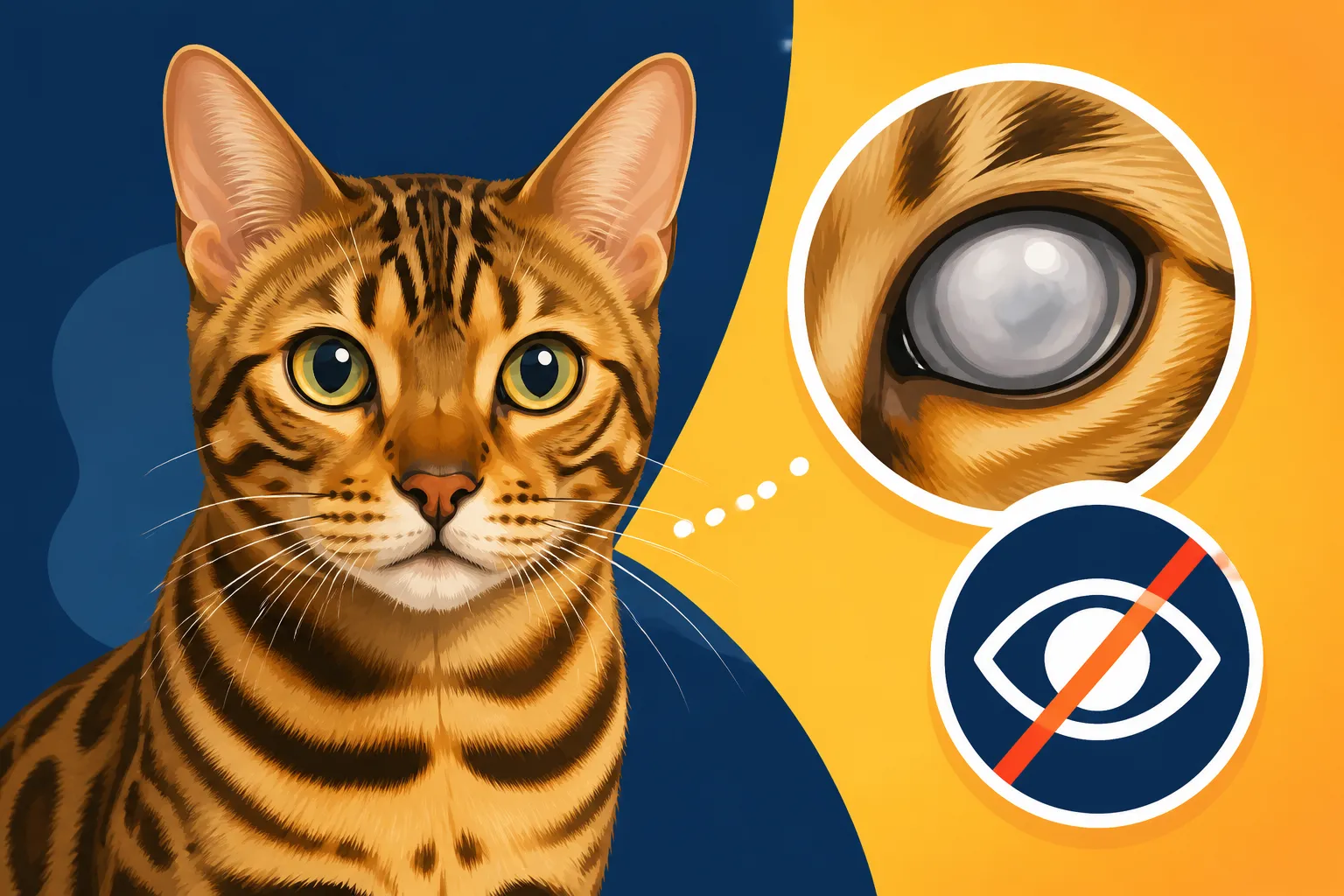
Progressive Retinal Atrophy, specifically the Bengal type (PRA-b), is one of those health concerns that every responsible Bengal cat owner or prospective owner absolutely needs to understand. It’s a hereditary eye disease that, in affected cats, causes the cells in the retina to degenerate over time, ultimately leading to complete blindness. The thought alone is heartbreaking, conjuring images of your vibrant, playful companion slowly losing their ability to navigate their world. But it's not a universal sentence for all Bengals, and certainly not for those identified as carriers.
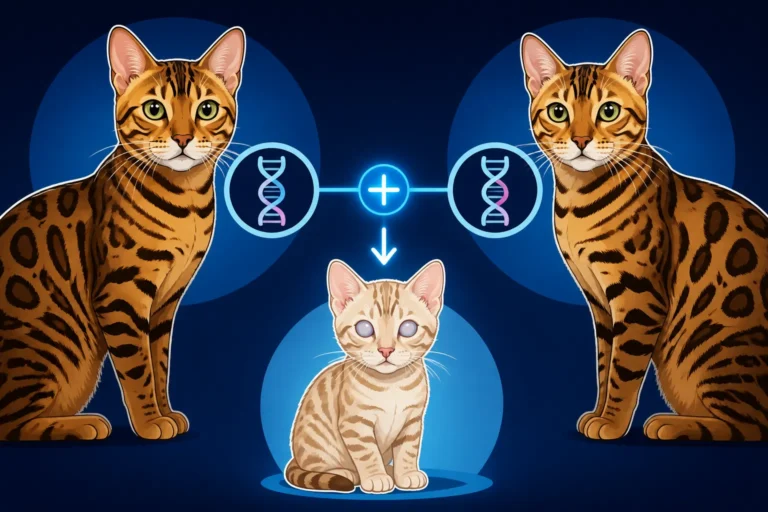
This condition is inherited in an autosomal recessive manner. What does that mouthful mean for us cat parents? It means that a cat must inherit two copies of the defective gene—one from each parent—to actually develop the disease and experience vision loss. Think of it like a puzzle. To complete the "affected" picture, you need both specific pieces. If you only have one, the picture doesn't form. This genetic mechanism is why we categorize Bengal cats into three distinct statuses regarding PRA-b:
- Clear: These cats have two healthy copies of the gene. They are completely free from the disease and cannot pass the defective gene on to their offspring. They're the genetic "all-clear" champions.
- Carrier: This is where the confusion often lies. A carrier cat has one healthy copy of the gene and one copy of the defective PRA-b gene. They carry the gene, which means they can pass it on, but they do not develop the disease themselves. Their healthy gene copy is sufficient to ensure their retinal cells function normally throughout their lives. This is a critical distinction that often gets overlooked, leading to unnecessary worry.
- Affected: These are the cats that have inherited two copies of the defective gene, one from each parent. Tragically, these are the cats that will suffer from progressive vision loss, eventually leading to blindness. The degeneration of their retina can start quite early, often manifesting in noticeable vision problems by the time they are one to two years old, though the age can vary. If you're wondering, you can learn more about how early a Bengal cat kitten's retina starts to degenerate and when vision loss becomes apparent.
It's natural to feel overwhelmed by genetic terms, but understanding these categories is paramount. The "carrier" status is often misinterpreted as a pre-cursor to the disease, when in fact, it's a completely different outcome from an affected cat.
The Genetic Reality: Why Carriers Don't Go Blind
Let's really dive into why a PRA-b carrier Bengal cat maintains perfect vision throughout its life. It all comes down to the fundamental principles of recessive inheritance. Imagine each gene as an instruction manual for a specific part of your cat's body. For PRA-b, there's an instruction manual for healthy retinal function and another, slightly faulty, manual that can lead to deterioration.
A carrier Bengal cat essentially has one perfectly good instruction manual and one faulty one. The healthy manual is fully capable of directing the production of all the necessary proteins and enzymes needed for normal retinal development and function. It's like having a car with a perfectly working engine and a spare, but faulty, engine in the trunk. You'll never need to use that faulty engine because the main one is doing its job flawlessly. The presence of that single functional gene copy is enough to prevent the disease from manifesting. The body doesn't need two good copies; one is perfectly adequate to keep those light-sensing cells in the retina healthy and thriving.
This means a carrier cat will experience no symptoms of PRA-b. They won't struggle with night vision, bump into furniture, or show any of the tell-tale signs of vision loss. Their eyes will function just as beautifully and sharply as a "clear" Bengal cat's eyes. You will likely never know they are a carrier without a specific DNA test, which is why genetic testing is so invaluable. If you're curious about the specifics, there's a lot to explore regarding which gene causes PRA-b in a Bengal cat.
The main implication of being a carrier, then, isn't about the cat's own health or vision, but about their potential role in breeding. While a carrier cat lives a normal, sighted life, they can pass that single defective gene copy to their offspring. This is where responsible breeding practices become crucial. The challenge arises when two carriers are bred together. If you've ever wondered how two carriers produce a blind Bengal cat, it's a 25% chance with each kitten in the litter. This knowledge empowers breeders to make informed decisions that safeguard the health of future generations.
The Crucial Role of Genetic Testing and Ethical Breeding
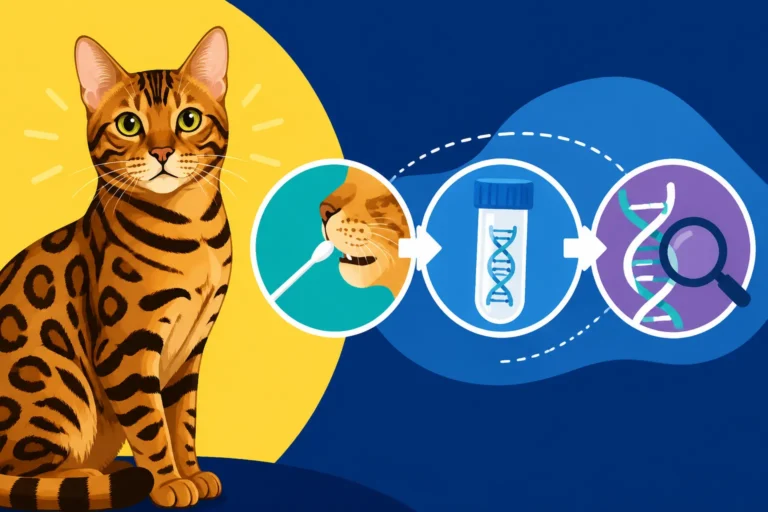
Given that PRA-b carriers show no outward signs of vision impairment, how do we identify them and ensure that this devastating disease isn't unknowingly passed down? The answer lies squarely with genetic testing. It's truly a cornerstone of responsible Bengal cat breeding and ownership. Reputable breeders understand that a simple cheek swab can provide invaluable information, determining whether a cat is clear, a carrier, or affected by PRA-b. Companies like Optimal Selection or UC Davis offer comprehensive genetic panels that include PRA-b, making it easy for breeders to get this vital information.
For breeders, this test is non-negotiable. Knowing a cat's PRA-b status allows them to plan pairings ethically. A carrier cat can absolutely be part of a breeding program, provided they are only bred with a cat that is "clear" for PRA-b. When a carrier is bred to a clear cat, statistically, half the kittens will be clear, and half will be carriers, but none will be affected. This is how breeders can maintain diverse genetics in their lines while still eliminating the risk of producing affected kittens. On the flip side, breeding two carriers together is a gamble with devastating odds. Each kitten born from such a pairing has a 25% chance of being affected and going blind, a 50% chance of being a carrier, and only a 25% chance of being clear. This is precisely why ethical breeders would never intentionally breed two PRA-b carriers together. The welfare of the kittens must always come first.
The importance of genetic testing extends to pet owners, too, though perhaps in a different way. While your pet Bengal may not need PRA-b testing if their parents were tested and found to be clear or if you know their status from the breeder, it’s good to understand the broader implications. When you're looking for a kitten, always ask the breeder to show you the PRA-b results for both parents. A transparent breeder will happily provide these certificates, often from a recognized lab. If a breeder hedges or can't provide documentation, it's a major red flag.
Here's a quick overview of the potential outcomes from different breeding pairs:
| Parent 1 Status | Parent 2 Status | Clear Offspring | Carrier Offspring | Affected Offspring |
|---|---|---|---|---|
| Clear | Clear | 100% | 0% | 0% |
| Clear | Carrier | 50% | 50% | 0% |
| Clear | Affected | 100% | 0% | 0% |
| Carrier | Carrier | 25% | 50% | 25% |
| Carrier | Affected | 0% | 50% | 50% |
| Affected | Affected | 0% | 0% | 100% |
(Note: Breeding an Affected cat is highly unethical and generally avoided by responsible breeders.)
Understanding these probabilities reinforces why testing is so vital. It’s an upfront investment that prevents immense heartbreak and suffering down the line. While pet insurance providers like Healthy Paws might cover unexpected illnesses and accidents, preventative genetic testing is truly the best defense against inherited conditions like PRA-b. A good insurance policy is certainly a wise choice for any Bengal cat owner, as it can help manage the costs of potential health issues that aren't preventable through breeding, like accidents or other unlinked diseases.
Living with a PRA-b Carrier Bengal Cat
If you've discovered your beloved Bengal cat is a PRA-b carrier, or you're considering adopting one with this status, take a deep breath and relax. As we've thoroughly discussed, a carrier Bengal cat will not lose its sight due to PRA-b. Their vision will remain perfectly normal throughout their entire life. This is perhaps the most important takeaway for any owner facing this information. You don't need to make any special accommodations for their vision, nor do you need to anticipate any future blindness related to this specific gene.
Your PRA-b carrier Bengal will enjoy the same wild antics, sharp focus on laser pointers, and precise jumps as any other Bengal. You'll still marvel at their ability to track a fly across the room or navigate your home in the dimmest light. This means your daily routine, play sessions, and environmental enrichment can remain exactly the same as for a non-carrier cat. There's no need to rearrange furniture, avoid certain toys, or worry about them bumping into things because of compromised eyesight from PRA-b. If your cat does show signs of vision problems, it would be due to an entirely different, unrelated condition, and would warrant an immediate vet visit, just as it would for any cat.
Ongoing care for a PRA-b carrier Bengal cat is exactly what you would expect for any healthy, active Bengal. This includes a high-quality diet, plenty of interactive playtime to satisfy their energetic nature, regular veterinary check-ups, and a stimulating environment with lots of vertical space. These cats thrive on engagement and activity, and their carrier status for PRA-b doesn't change their fundamental needs or abilities. If you're keen to ensure your Bengal cat lives a normal life, focusing on their overall well-being and enrichment is key.
During their routine wellness exams, your veterinarian will, of course, check their eyes as part of a comprehensive physical. However, there's no need for specialized eye exams specifically to monitor for PRA-b related issues if you know your cat is only a carrier. The focus should be on general eye health, watching for common feline eye conditions such as conjunctivitis, corneal ulcers, or cataracts that can affect any cat, regardless of their PRA-b status. It's always a good idea to maintain regular vet visits, typically yearly for younger cats and more frequently as they age, to catch any health concerns early. You might be interested in knowing what a Bengal cat's yearly bloodwork should cover to keep them in peak condition.
Ultimately, living with a PRA-b carrier Bengal means you have a wonderful, vibrant companion whose genetic status for this one specific condition will not impact their quality of life or their vision. You can continue to enjoy all the incredible traits that make Bengal cats so unique and cherished, free from the worry of PRA-b-induced blindness.
Disclaimer
Please remember that this article is for informational purposes only and should not be considered a substitute for professional veterinary advice. Always consult with a qualified veterinarian regarding your cat's specific health concerns and treatment options.