How Two Carriers Produce a Blind Bengal Cat
It’s truly one of the most heartbreaking things a Bengal cat owner can face: discovering your beloved, playful kitten is slowly losing its eyesight, often to the point of complete blindness. What makes this even more devastating is that the parents of such a kitten can appear perfectly healthy, showing no signs of vision problems themselves. This guide is here to shed light on how this silent, genetic battle unfolds and how two seemingly healthy Bengal cat carriers can, unfortunately, produce a blind kitten.
Understanding PRA-b and Its Impact on Bengal Cats
When we talk about blindness in Bengal cats, particularly the inherited kind, we're usually referring to Progressive Retinal Atrophy, specifically the PRA-b variant. This isn't just a general term for any eye problem; it's a specific genetic disease that gradually destroys the photoreceptor cells in a cat's retina, leading to irreversible blindness. It’s a condition that can catch many owners off guard because it doesn't typically show up at birth, but rather progresses over time.
The Genetic Culprit Behind Bengal Cat Blindness
At the heart of PRA-b is a specific gene mutation. To get a bit technical, it’s an autosomal recessive mutation of the CEP290 gene that causes PRA-b in a Bengal cat. This means that a cat needs to inherit two copies of the faulty gene – one from each parent – to actually develop the disease and become blind. If a cat only inherits one copy of the faulty gene and one healthy copy, they won't go blind themselves. Instead, they become what we call a "carrier," which is a crucial distinction we’ll explore further. It's truly why PRA-b is specific to the Bengal Cat. Without proper testing, a breeder might be completely unaware they have carriers in their breeding program, unknowingly perpetuating the risk.
The Gradual Decline of Vision
The progression of PRA-b is insidious, often starting subtly and worsening over months or even years. For Bengal cat kittens affected by PRA-b, their retina starts to degenerate typically around 7 to 12 weeks of age. This isn't a sudden event, but a slow erosion of their ability to see. Initially, you might notice your kitten becoming a little clumsier in dim light or hesitant in unfamiliar surroundings. This is often the first sign that their night vision is being compromised, as the rod cells in the retina, responsible for low-light vision, are usually affected first.
As the disease progresses, the cone cells, which handle daytime and color vision, also begin to degrade. This leads to a more noticeable decline in sight. Owners might observe their cat bumping into furniture, having trouble tracking toys, or becoming more reliant on their other senses. The age a Bengal cat is fully blind from PRA-b can vary, but many affected cats typically lose all functional vision by around two to three years of age, though some may retain some perception of light or shadows for a bit longer. It's a devastating journey for both the cat and its human companions, highlighting the importance of understanding the genetic underpinnings. You can read more about what PRA-b does to a Bengal cat's sight in detail.
The Science of Carrier Status and Autosomal Recessive Inheritance
This is where the concept of "carrier" becomes incredibly important. Many people assume that if a cat has a genetic disease, its parents must also have visible symptoms. But with autosomal recessive conditions like PRA-b, that's simply not the case, and it's precisely how two healthy-looking Bengal cats can produce a blind offspring.
What it Means to Be a Carrier
A Bengal cat that is a PRA-b carrier has one normal copy of the CEP290 gene and one mutated, or "affected," copy. Because they have that one normal copy, their bodies produce enough of the necessary proteins for proper retinal function. This means that a PRA-b carrier Bengal cat does not lose sight themselves; they typically have perfect vision throughout their lives. They show absolutely no symptoms of the disease. This is why it's so easy for carrier cats to go undetected without specific DNA testing. They can lead full, active lives, and you'd never know by looking at them that they carry this genetic secret.
The challenge arises when these outwardly healthy carriers are bred, as they can pass that single faulty gene copy to their offspring. This is where responsible breeding practices and genetic testing become non-negotiable for anyone involved in the Bengal cat community.
How Two Carriers Produce a Blind Bengal Cat
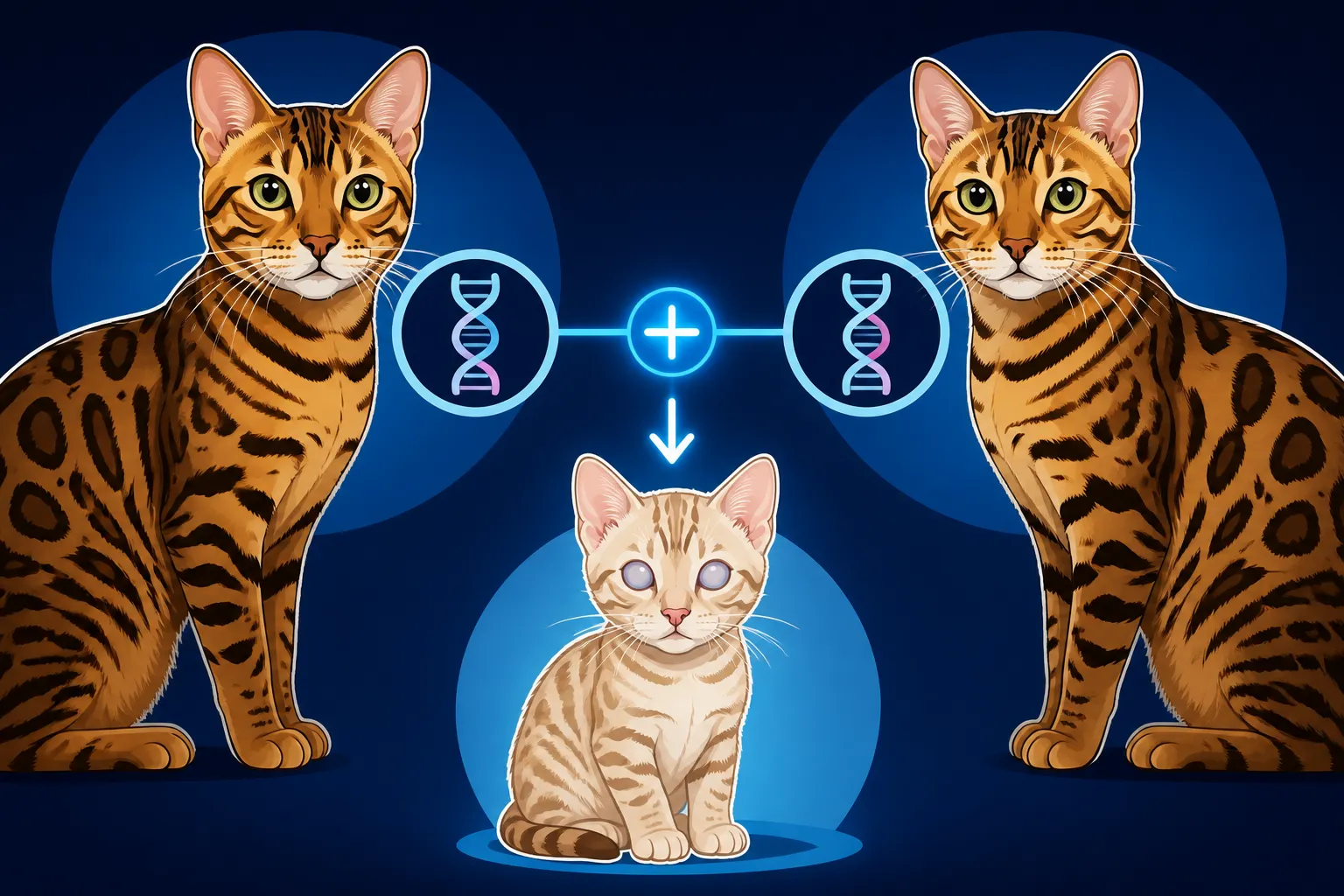
Now, let's get to the crux of the matter: the genetics of how two carriers can produce a blind Bengal cat. It all comes down to the principles of autosomal recessive inheritance. When two cats, both carriers of the PRA-b gene (meaning each has one normal and one affected gene copy), are bred together, there are four possible outcomes for each kitten in the litter:
- 25% Chance: Clear (Homozygous Normal): This kitten inherits a normal gene copy from both parents. It will not develop PRA-b and will not be a carrier.
- 50% Chance: Carrier (Heterozygous): This kitten inherits one normal gene copy from one parent and one affected gene copy from the other. Like its parents, it will not develop PRA-b but will be a carrier, capable of passing the gene on to its own offspring if bred.
- 25% Chance: Affected (Homozygous Affected): This kitten inherits an affected gene copy from both parents. With two copies of the faulty gene, it will develop PRA-b and will eventually go blind.
This statistical breakdown, often referred to as a Punnett square in genetics, illustrates why two healthy carriers can produce an affected kitten. Each time such a pairing occurs, there's that 25% chance for a kitten to be affected, which for a litter of four, statistically means one kitten could be born with PRA-b. It's not a guarantee, of course, as genetics can be a roll of the dice in individual litters, but the probability remains the same for each kitten born from such a pairing. It's a stark reminder of the hidden risks involved when breeders don't screen their breeding cats.
Here's a handy table to visualize the probabilities:
| Parent 1 Status | Parent 2 Status | Offspring Probabilities (per kitten) |
|---|---|---|
| Clear (NN) | Clear (NN) | 100% Clear |
| Clear (NN) | Carrier (NA) | 50% Clear, 50% Carrier |
| Clear (NN) | Affected (AA) | 100% Carrier |
| Carrier (NA) | Carrier (NA) | 25% Clear, 50% Carrier, 25% Affected |
| Carrier (NA) | Affected (AA) | 50% Carrier, 50% Affected |
| Affected (AA) | Affected (AA) | 100% Affected |
(N = Normal gene copy, A = Affected gene copy)
This table makes it clear that the pairing of two carriers is the most common scenario for producing affected kittens when neither parent shows symptoms. It truly underlines why whether two PRA-b carrier Bengal cats should be bred is such a critical question for ethical breeders.
The Prevalence of Carriers in the Breed
It might surprise you to learn just how many Bengal cats carry PRA-b. While exact percentages can fluctuate, historical data and ongoing testing suggest that a significant percentage of Bengal cats carry the PRA-b mutation. Early testing indicated that how many Bengal cats carry PRA-b could be as high as 15-20% in some populations before widespread screening became common. This prevalence makes the risk of unknowingly breeding two carriers together quite high if DNA testing isn't diligently performed.
This high carrier rate initially existed because, as mentioned, carriers show no signs of the disease themselves. Without a specific DNA test, there was no way for breeders to identify them, leading to the unintentional spread of the gene through breeding lines. This historical context emphasizes why genetic testing is not just a recommendation but a necessity today for maintaining the health of the breed.
The Crucial Role of Genetic Testing and Responsible Breeding
Given the devastating potential of PRA-b, genetic testing has become the most powerful tool in preventing its occurrence. Responsible breeding practices hinge entirely on knowing the genetic status of your cats.
How the PRA-b DNA Test Works
The good news is that there’s a simple, reliable DNA test available for PRA-b. How the Bengal cat PRA-b DNA test works is straightforward: it typically involves a buccal swab, meaning a simple swab taken from the inside of your cat's cheek. This sample, containing cells with your cat's DNA, is then sent to a specialized veterinary genetics laboratory for analysis. Laboratories like Optimal Selection (through Wisdom Panel) or UC Davis Veterinary Genetics Laboratory are common choices for this kind of testing. They analyze the DNA to determine if your cat has two normal copies of the CEP290 gene (clear), one normal and one affected copy (carrier), or two affected copies (affected).
This test is incredibly accurate and can be performed at any age, even on young kittens. It’s an indispensable tool for breeders who want to ensure they are making informed decisions about their breeding pairs. The cost of these tests is relatively low, especially when considering the potential heartbreak and expense of caring for a blind cat. Many pet insurance providers, like Healthy Paws, will cover the costs of diagnostic tests if symptoms arise later, but proactive genetic screening is something a breeder covers upfront.
The Breeder's Responsibility and Transparency
For any reputable Bengal cat breeder, DNA testing for PRA-b isn't optional; it's a fundamental part of their health protocol. A responsible breeder will test all their breeding cats to determine their PRA-b status (clear, carrier, or affected). They will then use this information to make responsible breeding decisions, ensuring that no two carriers are ever bred together.
This often means that a Bengal cat breeder must show a Bengal cat's PRA-b result for their breeding animals. Transparency is key. They should be willing to provide documentation of these tests for both parents of a kitten, verifying that at least one parent is clear of the PRA-b gene. This ensures that even if one parent is a carrier, no kitten can inherit two copies of the affected gene and therefore will not develop PRA-b. They might produce carrier kittens, but never affected ones.
This commitment to genetic health helps guarantee that the kittens they produce will have the best chance at a long, healthy life with full vision. It’s a sign of a breeder who prioritizes the well-being of their cats and the future of the breed over profit. It’s also a point to discuss with your vet about potential future health costs and how pet insurance, such as through Healthy Paws, can help manage these if unforeseen conditions arise.
Life with a Blind Bengal Cat: Adaptation and Care
While the goal is always to prevent PRA-b through responsible breeding, sometimes, despite best efforts or due to unforeseen circumstances, a Bengal cat might develop vision loss. It’s important to remember that a blind cat can still live a wonderfully rich and fulfilling life with the right support and environment.
Helping a Blind Bengal Cat Cope
Bengal cats are incredibly resilient and adaptable creatures, and this holds true for those with vision impairment. How a blind Bengal cat copes is often astonishing to new owners; they rely heavily on their other heightened senses – hearing, smell, and touch – to navigate their world. You’ll be amazed at how quickly they map out their home environment in their minds. They develop a "whisker-sense" that helps them detect objects and changes in their surroundings.
The key to their successful adaptation lies in consistency and a stable environment. Avoid frequently rearranging furniture or placing new obstacles in their path, especially during the initial adjustment period. Establish clear pathways and stick to them. Providing sensory cues, such as different textures of rugs or subtle scents in certain areas, can also help them orient themselves. A blind cat learns to trust its surroundings, and your steady hand as their guide.
Rearranging Your Home for Safety and Navigation
To best support a blind Bengal cat, a few thoughtful modifications to your home can make all the difference. How to rearrange a home for a blind Bengal cat involves creating a safe, predictable, and enriching environment.
- Consistency is King: As mentioned, keep furniture in place. If you absolutely must move something, do it slowly and gently guide your cat around the new arrangement until they've re-mapped it.
- Safety First: Block off any dangerous areas like open stairwells (with gates), ensure fireplaces are screened, and put away any sharp or fragile objects that could cause injury if bumped. Cover sharp corners on furniture with child-safe protectors.
- Sensory Markers: Consider placing different textured mats or rugs near important areas like food bowls, water stations, and litter boxes. This provides tactile cues.
- Sound and Scent: Engage their other senses. Use toys that make noise, or place a slightly scented pad near their bed. Be consistent with vocal cues when approaching them so you don't startle them.
- Secure Outdoor Access: If your Bengal cat enjoys time outdoors, a secure catio is essential. Never allow a blind cat to free-roam outside, as they are incredibly vulnerable to predators, traffic, and getting lost.
- Litter Box Location: When it comes to bodily functions, how a blind Bengal cat finds the litter box becomes second nature once they've established their mental map. Keep the litter box in an easily accessible, consistent location. Consider using a larger, open litter box so they don't feel enclosed or disoriented.
With patience, love, and a bit of thoughtful preparation, a blind Bengal cat can truly thrive and enjoy the twelve to sixteen years a Bengal cat gets. While the initial diagnosis of PRA-b can be overwhelming, knowing that these incredible cats can adapt beautifully offers a great deal of comfort. Having a robust pet insurance plan, like one from Healthy Paws, can also provide peace of mind for covering ongoing veterinary care, eye checks, or any unexpected health issues that may arise, allowing you to focus on your cat's well-being.
Disclaimer
The information provided in this article is for educational purposes only and is not intended as a substitute for professional veterinary advice. Always consult with a qualified veterinarian for any health concerns or before making any decisions about your pet's care.