What Saddle Thrombus Does to a Bengal Cat
Few experiences are as instantly terrifying for a Bengal cat owner as witnessing their vibrant, agile companion suddenly collapse in pain, unable to use their hind legs. This horrifying scenario is often the result of saddle thrombus, a devastating blood clot that cuts off blood flow to the lower body. Understanding this critical condition, often linked to underlying heart disease, is paramount for every Bengal parent, as swift action can make a difference in a situation where every second counts.
Understanding Saddle Thrombus and its Connection to Heart Disease
Saddle thrombus, medically known as Feline Aortic Thromboembolism (FATE), is a heartbreaking and often sudden health crisis that can affect any cat, but it holds a particular and concerning prevalence within the Bengal cat community due to their genetic predisposition to certain heart conditions. It's not just a blood clot; it's a catastrophic blockage that can change a cat's life, or end it, in an instant.
The Anatomy of a Thromboembolism
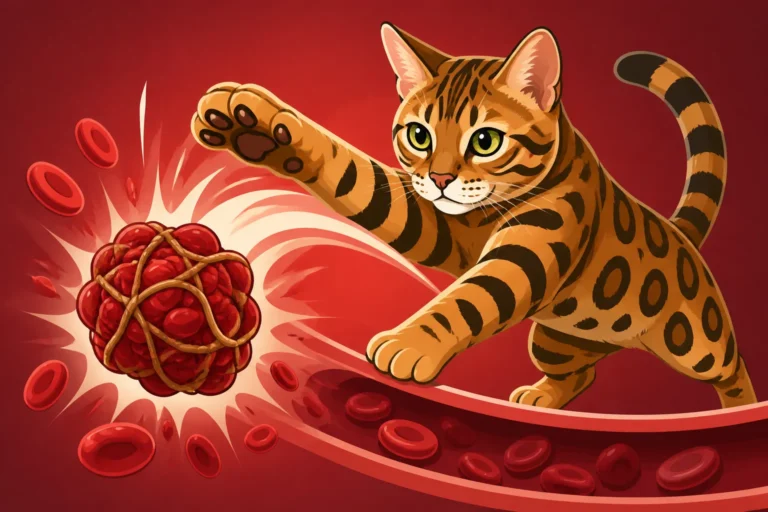
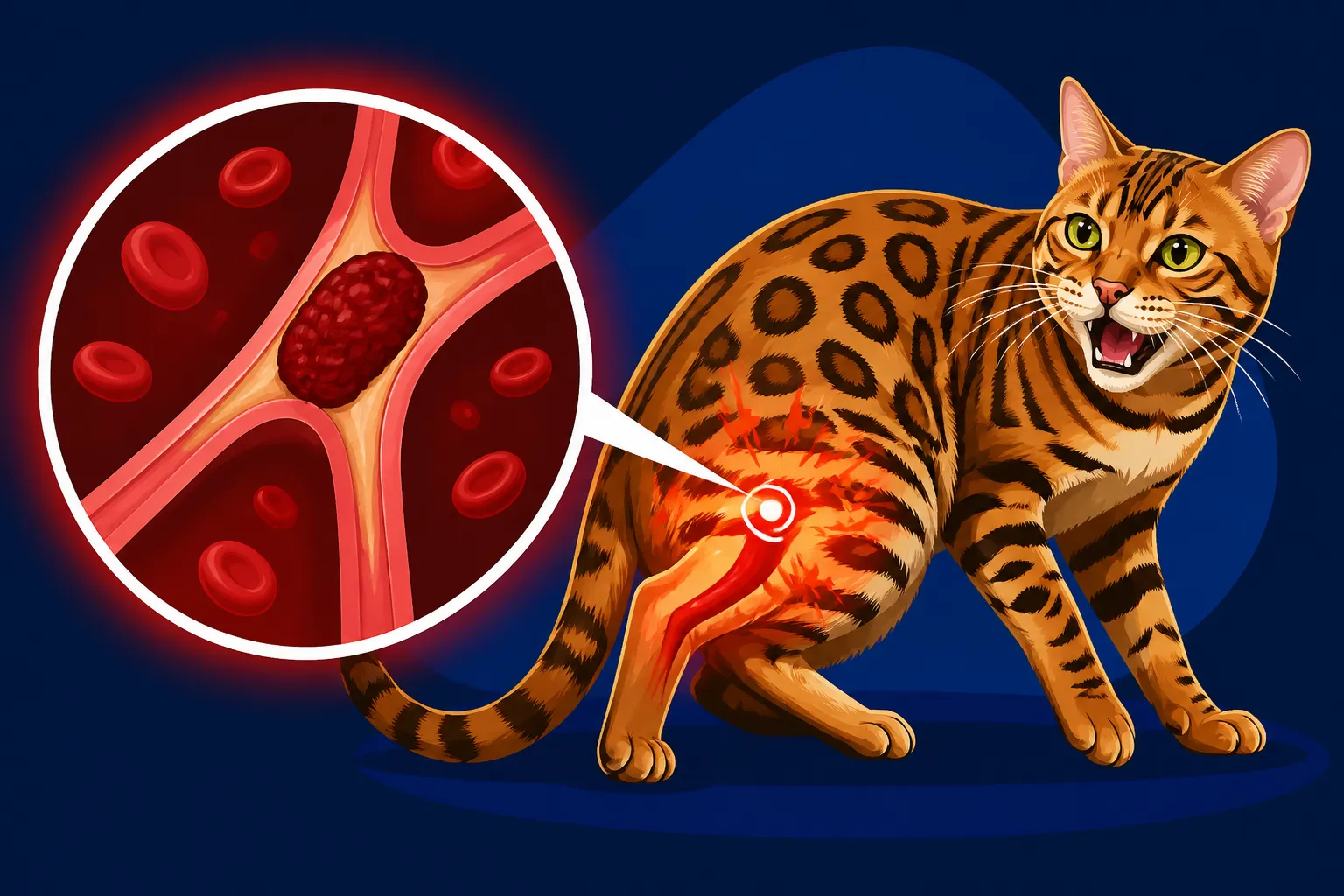
Imagine the body's main highway for blood, the aorta, running down your cat's spine. Just before it splits into two smaller roads leading to each hind leg, there's a fork in the road, known as the aortic bifurcation. This is the "saddle" where a blood clot (thrombus) most commonly lodges, effectively blocking blood flow to both hind limbs. When this happens, the muscles and nerves in the legs are starved of oxygen and nutrients, leading to intense pain and rapid paralysis. It's akin to a sudden, severe stroke in the legs.
The clot itself doesn't just appear out of nowhere. It's typically formed in the heart, specifically in the left atrium, which becomes enlarged and dysfunctional due to underlying heart disease. In a healthy heart, blood flows smoothly and rhythmically. But with certain conditions, the blood can become stagnant or turbulent in areas, especially within an enlarged atrium, creating perfect conditions for a clot to form. Once formed, this clot can then break off (becoming an embolus) and travel through the bloodstream until it gets stuck in a narrower vessel, most often the aortic saddle. The pain is excruciating because the nerves in the limbs are screaming for blood, and the muscles are seizing up. Your cat will likely vocalize loudly, yelp, or scream, which is profoundly distressing to witness. The affected limbs will also feel cold to the touch due to the lack of circulation, and you might not be able to feel a pulse in the femoral artery in the groin region.
Hypertrophic Cardiomyopathy: The Silent Precursor
For Bengal cats, the most common underlying cause for saddle thrombus is Hypertrophic Cardiomyopathy (HCM). This is a primary disease of the heart muscle where the walls of the left ventricle, the main pumping chamber, become abnormally thickened. This thickening reduces the heart's ability to pump blood effectively and also limits the amount of blood the ventricle can hold, leading to a backup of blood into the left atrium, causing it to enlarge. You can learn more about how devastating this condition is in our article, HCM Is What Kills Bengal Cats Early.
This enlarged, sluggish left atrium is the perfect breeding ground for blood clots. The blood doesn't move as freely, increasing the chance of cells clumping together and forming a thrombus. When a piece of this thrombus breaks free and travels through the arterial system, it can become lodged in narrower vessels, like the aortic saddle, leading to the acute crisis we call saddle thrombus. It’s a terrifying cascade of events that starts with a heart muscle problem that might show no outward signs for years. This is why knowing What HCM Does to a Bengal Cat's Heart is so incredibly important for Bengal owners. While not every cat with HCM will develop a saddle thrombus, those with significant atrial enlargement are at a much higher risk, making proactive screening and management of HCM crucial.
Recognizing the Acute Signs of Saddle Thrombus in Your Bengal
One of the most devastating aspects of saddle thrombus is its sudden and dramatic onset. There are often no subtle warnings leading up to the event, making it incredibly shocking for owners. Your Bengal cat, typically a whirlwind of energy, can go from playful to paralyzed in a heartbeat.
The Sudden, Devastating Onset of Hind Limb Paralysis
The most classic and unmistakable sign of saddle thrombus is the abrupt onset of severe pain and paralysis, typically affecting one or both hind legs. Imagine your Bengal cat, full of beans and perhaps chasing a toy, suddenly letting out a piercing yowl or scream. They might collapse, dragging their back legs uselessly behind them. It's not just weakness; it's a complete inability to move them. The pain is intense, and your cat will be visibly distressed, panting, vocalizing, and trying desperately to move away from the agony.
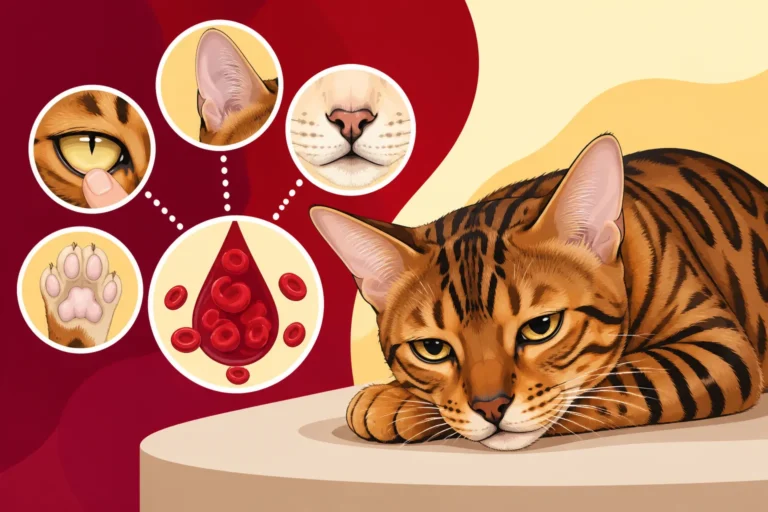
When you touch the affected hind legs, they will feel noticeably cold compared to their front paws or the rest of their body. This chilling coldness is a direct result of the blood supply being cut off. You might also notice that the paw pads or nail beds have a bluish or purplish tint, indicating a lack of oxygenated blood. If you're able to, feeling for a pulse in the femoral artery on the inside of their thigh will often reveal no pulse, or a very faint one, in the affected limbs. This sudden, agonizing event is an immediate veterinary emergency, requiring instant action. It’s crucial to remember that Bengal cats are incredibly stoic animals, often masters at hiding pain or discomfort until a condition becomes severe. For this reason, even subtle changes in behavior that precede such an event should be taken seriously, as they might be early indicators of underlying issues.
Subtle and Atypical Presentations to Watch For
While hind limb paralysis is the hallmark, saddle thrombus can sometimes present in slightly less typical ways. Occasionally, a smaller clot, or one that lodges higher up or in a different arterial branch, might only affect one leg, or cause a less severe lameness rather than full paralysis. Your cat might limp, drag a toe, or simply seem unusually weak in one limb. It could even affect a forelimb, though this is much less common.
Beyond the limb-specific signs, you might observe general signs of extreme distress that are indicative of an underlying cardiovascular crisis. These can include rapid, shallow breathing, open-mouth breathing (a huge red flag in cats), or an extreme lethargy and unresponsiveness. Some cats might develop an acute cough if their heart disease has progressed to congestive heart failure. These more generalized signs of distress often go hand-in-hand with the severe pain of a clot. It’s important for Bengal owners to be acutely aware of Signs a Bengal Cat Has Heart Disease in general, as even vague symptoms like decreased activity or a subtle cough could be precursors to a critical event like saddle thrombus. Any sudden change in your Bengal's demeanor or physical ability warrants immediate veterinary attention.
| Symptom Category | Typical Presentation of Saddle Thrombus | General Signs of Illness/Distress (Could pre-date clot) |
|---|---|---|
| Onset | Sudden, often without warning | Gradual or subtle, often missed |
| Pain | Severe, acute, often vocalized | Variable, often hidden |
| Mobility | Hind limb paralysis (one or both) | Decreased activity, reluctance to jump, mild lameness |
| Limb Feel | Cold to the touch, especially hind paws | Normal temperature |
| Pulse | Absent or weak in femoral artery of hind limbs | Normal |
| Paw Color | Bluish/purplish tint | Normal pink |
| Breathing | Rapid, open-mouth breathing, labored | Sometimes rapid or shallow if heart disease is advanced |
| Behavior | Extreme distress, agitation, hiding | Lethargy, decreased appetite, reclusive |
Navigating Emergency Treatment and Long-Term Management
If you suspect your Bengal cat is suffering from saddle thrombus, there is no time to waste. This is an absolute emergency, and the outcome often depends on how quickly veterinary care can be accessed.
The Critical First Hours: Emergency Veterinary Care
When your Bengal cat experiences saddle thrombus, the priority is pain management and stabilizing them. The pain from restricted blood flow to the limbs is excruciating, so the first thing your vet will do is administer powerful pain medication. They will also provide oxygen therapy, intravenous fluids, and monitor vital signs closely. Diagnosis is often made based on the characteristic clinical signs, but imaging like ultrasound might be used to confirm the clot's location and assess the severity of the underlying heart disease.
Treatment options vary and are complex. One approach involves thrombolytic drugs, which aim to dissolve the clot. However, these drugs carry significant risks, including bleeding and reperfusion injury, where the sudden rush of blood back into previously starved tissues can cause further damage and even kidney failure. Another common strategy is to use anticoagulant medications, such as clopidogrel (Plavix), to prevent further clot formation and allow the body's natural processes to slowly break down the existing clot, which can take days or weeks. Surgical removal of the clot is rarely successful and carries very high risks. This is why many vets focus on pain control, supportive care, and preventing future clots. Owners often face incredibly difficult decisions in these moments, weighing the prognosis, the cat's suffering, and the high cost of intensive care. It's during these unexpected and costly emergencies that pet insurance, such as a comprehensive plan from Healthy Paws, can be an absolute lifeline, allowing you to focus on your cat's care rather than the overwhelming financial burden.
Life After a Clot: Prognosis, Recurrence, and Ongoing Care
Sadly, even with aggressive treatment, the prognosis for a cat suffering from saddle thrombus is often guarded to poor. Survival rates for the initial event are typically low, ranging from 30% to 50%. For those who do survive, the journey is far from over. Nerve damage to the hind limbs can result in permanent weakness, partial paralysis, or an altered gait, requiring extensive physical therapy and modifications to their living environment. Imagine needing to teach your once agile Bengal how to navigate their world again, perhaps with a wheeled cart or special litter box setups.
The underlying heart disease, HCM, remains. This means that survivors will require lifelong medication to manage their heart condition and prevent future clot formation. This usually includes anticoagulants like clopidogrel, and other heart medications discussed in Which Medication a Bengal Cat With HCM Takes. Recurrence rates are unfortunately very high; a cat that has had one saddle thrombus is at significant risk of having another. Regular veterinary check-ups and ongoing monitoring of their heart health are absolutely essential. This includes consistent echocardiograms, which are detailed in our articles When a Bengal Cat Should Have Its First Echo and How Often a Bengal Cat Needs an Echo. The quality of life for a survivor can vary greatly, depending on the extent of nerve damage and how well the underlying HCM can be managed. It's a testament to their fighting spirit, but it is a lifelong commitment for their owners, profoundly impacting How Long a Bengal Cat Lives After an HCM Diagnosis.
The Bengal Cat's Unique Vulnerability and Proactive Measures
Understanding why Bengal cats are particularly susceptible to conditions like saddle thrombus is key to responsible ownership and proactive health management. It’s a breed-specific challenge that owners must acknowledge.
Why Bengal Cats Face a Higher Risk
The heightened risk of saddle thrombus in Bengal cats stems almost entirely from their well-documented predisposition to Hypertrophic Cardiomyopathy (HCM). While HCM can affect any cat breed, and even mixed breeds, it's particularly prevalent in certain pedigreed cats, with Bengals being right at the top of that list, alongside breeds like Maine Coons and Ragdolls. This genetic component means that HCM can sometimes manifest at a younger age in Bengals, or progress more aggressively, increasing the chances of the severe atrial enlargement that paves the way for clot formation. The specific genetic mutations that cause HCM in Bengal cats are still being researched, and unlike some other breeds, there isn't a single definitive gene test for Bengal HCM. This genetic lottery means that even seemingly healthy Bengals from good lines can develop the condition, emphasizing the need for ongoing vigilance. This also highlights why Why There Is No Bengal Cat HCM Gene Test is such a critical piece of information for breeders and owners alike. The breed’s vigorous activity levels might also, in some hypothetical scenarios, put an added strain on a compromised heart, though the direct link to clot formation is primarily due to the internal cardiac changes.
Proactive Steps: Screening, Monitoring, and Prevention
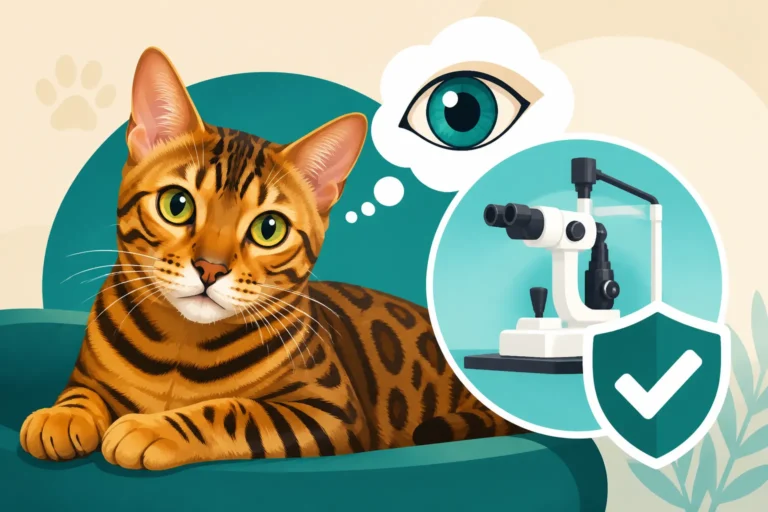
Given the Bengal cat's inherent vulnerability, proactive measures are not just recommended, they are essential. The most powerful tool we have against HCM and, consequently, saddle thrombus, is regular cardiac screening via echocardiogram. A board-certified veterinary cardiologist uses ultrasound to visualize the heart, measure its chambers, assess blood flow, and detect any thickening of the heart walls or enlargement of the atria. This screening should begin early, ideally by one year of age, and be repeated annually or biennially, depending on the vet's recommendation and the cat's individual risk factors. This vigilant screening is part of What a Bengal Cat Breeder Should Have Tested before breeding. If HCM is detected, medication can often be prescribed to help manage the condition, slow its progression, and reduce the risk of clot formation.
Beyond screening, general health monitoring is vital. Pay close attention to any subtle changes in your Bengal's behavior or energy levels. Are they less keen to play, jumping less, or breathing heavier after exertion? While Bengals are known for their activity, a sudden or gradual decrease could signal an underlying issue. Maintaining a healthy weight and providing a high-quality diet are also important for overall cardiac health, though they won't prevent HCM on their own if there's a genetic predisposition. For owners who adopt a Bengal, especially an older one or one from an unknown background, it’s wise to discuss a baseline cardiac evaluation with their vet. Even without a direct genetic test, proactive screening offers the best chance to detect HCM early, allowing for intervention that can improve prognosis and potentially prevent life-threatening complications like saddle thrombus, allowing your cherished Bengal to enjoy as much of The Twelve to Sixteen Years a Bengal Cat Gets as possible. Ultimately, these preventative steps are key to avoiding the sudden tragedy that saddle thrombus represents and contribute to ensuring a longer, healthier life, making responsible pet ownership and potentially a reliable pet insurance provider like Healthy Paws, invaluable.
Disclaimer
This article is intended for informational purposes only and should not be considered a substitute for professional veterinary advice. Always consult with a qualified veterinarian for any health concerns or before making any decisions related to your Bengal cat's care.