How Much Wildlife a Bengal Cat Kills
It's a common worry for anyone considering a Bengal cat, or even for those who already share their home with one of these magnificent creatures: how much havoc might their wild ancestry wreak on the local wildlife? The truth is, that incredible energy and stunning appearance come hand-in-hand with a powerful, innate drive to hunt. This guide will delve into the reality of a Bengal's hunting instincts, what kinds of animals they might target, and most importantly, practical strategies to protect local wildlife while keeping your energetic companion happy and stimulated.
Understanding the Bengal Cat's Instinctive Drive to Hunt
When you look into the intelligent, often mischievous eyes of your Bengal cat, you're seeing a direct link to the wild. Unlike many domestic breeds that have had generations to dilute their predatory nature, the Bengal cat carries the legacy of its wild ancestor, the Asian Leopard Cat, much more visibly, both in appearance and behavior.
The Asian Leopard Cat Legacy in Miniature
The Bengal cat's direct lineage from the Asian Leopard Cat (ALC) isn't just about their stunning rosetted coat or their lean, muscular physique; it's profoundly embedded in their behavioral patterns. The ALC is a small, solitary hunter, perfectly adapted to stalk and capture prey in its natural habitat across Asia. This means that every Bengal cat, even those many generations removed from their wild ancestor, inherits a powerful set of predatory instincts. They are born with an exceptional prey drive, incredibly keen senses, and a physical prowess that makes them formidable hunters.
This isn't just "playful swatting" at a toy; it's a hardwired sequence of behaviors: stalk, chase, pounce, kill. Many new Bengal owners are surprised by the sheer intensity of this drive. It’s not something they can simply "train out" of their cat because it's as fundamental as breathing. They possess incredible agility, explosive speed, and a natural stealth that allows them to move through grass or underbrush almost silently. Their strong hind legs, which give them that distinctive "wild cat" gait, are perfect for powerful leaps onto unsuspecting prey. When you see your Bengal intensely focused on a dust bunny or a buzzing fly, you're witnessing generations of honed hunting prowess at work, albeit on a much smaller scale.
Why Domesticated Prey Drive Differs from Wild Survival
It's crucial to understand that for a Bengal cat living in a domestic home, this intense prey drive isn't usually about survival. Your Bengal is likely well-fed, comfortable, and adored. Their wild ancestors hunted to eat, to survive another day. Our Bengals, however, often hunt for sport, for mental and physical stimulation, or simply because the opportunity presents itself and their instincts take over. This can be frustrating, even heartbreaking, for owners who find "gifts" of deceased birds or small mammals on their doorstep.
The ecological impact of even one highly efficient predator like a Bengal cat can be significant, especially in areas with vulnerable wildlife populations. A well-fed cat still hunts; hunger is only one motivator. The thrill of the chase, the mental engagement, and the satisfaction of a successful hunt are powerful rewards in themselves. This means that simply providing ample food won't deter a Bengal from pursuing a squirrel or a bird that wanders into their territory. It's a fundamental part of The Bengal Cat Is the Most Active Cat You Can Own, and that activity often translates to hunting whenever given the chance.
The Types of Wildlife a Bengal Cat Is Prone to Hunting
Given their innate hunting prowess, Bengal cats are opportunistic predators, meaning they'll go after almost any small creature that triggers their prey drive. Their incredible athleticism and keen senses make them highly effective hunters of various species.
Small Mammals: Rodents, Rabbits, and Squirrels
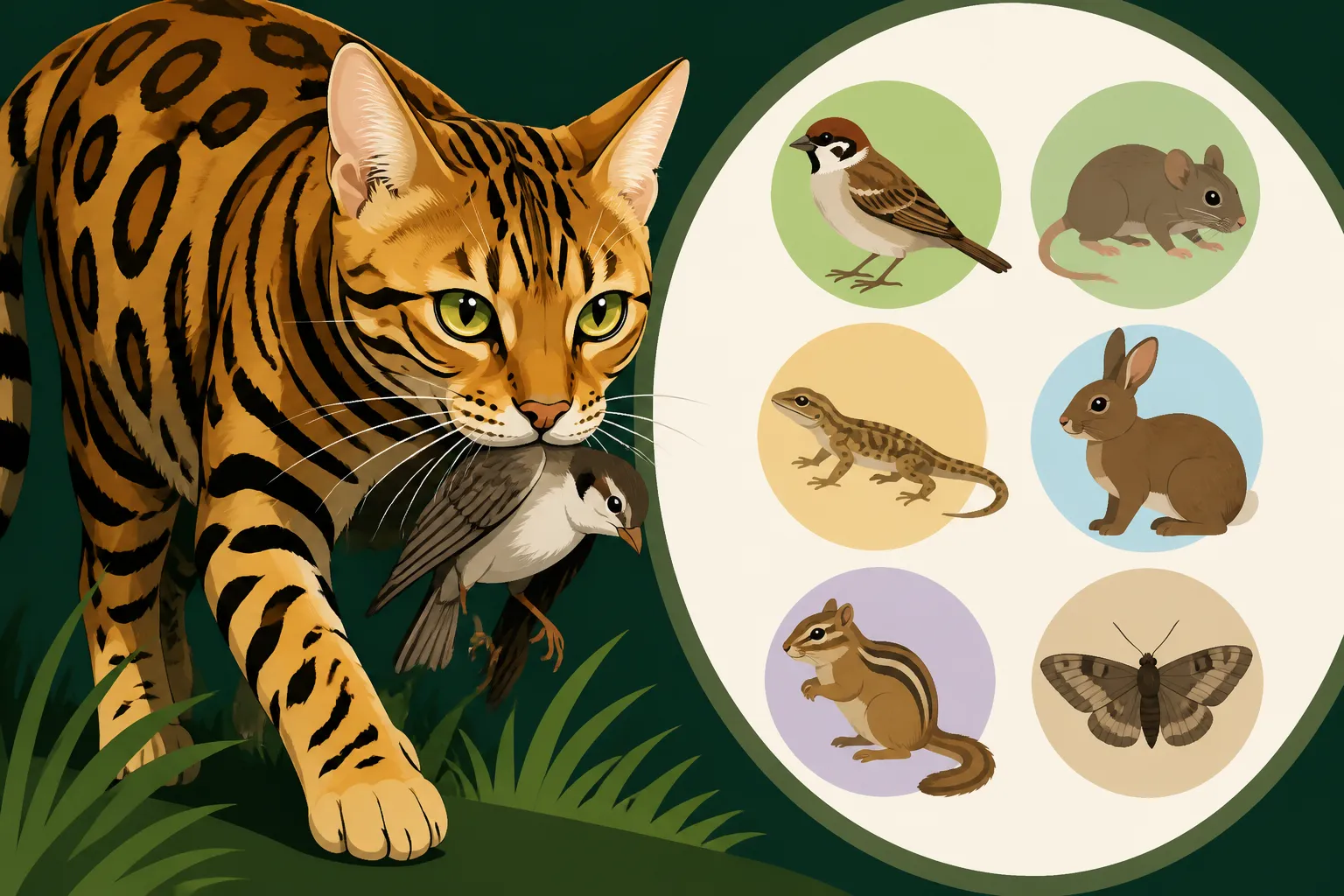
When it comes to small mammals, Bengal cats are exceptionally adept. Mice, voles, and shrews are often at the top of their target list, their quick movements and scurrying sounds irresistible to a hunting cat. Many an owner has woken to find a small rodent left as a "present" at their bedroom door, a testament to their cat's natural skill. Rabbits, even young ones, can also fall prey, particularly if they are slow or easily cornered. The Bengal's speed and pouncing ability allow them to quickly overcome such prey. Squirrels, with their agile movements and habit of darting up trees, provide a more challenging, and therefore often more engaging, hunt for a Bengal.
Their excellent hearing allows them to detect the rustle of a mouse in the leaves or the chatter of a squirrel from a surprising distance. Their powerful leg muscles allow them to launch themselves with incredible force. The unfortunate reality is that a Bengal's presence in a garden can quickly diminish local small mammal populations, especially if those populations are already under pressure. This is a common and often upsetting realization for new Bengal owners who are not prepared for just how effective their sleek companion can be.
Birds: From Sparrows to Larger Fowl
Birds are another primary target for Bengal cats. Sparrows, finches, robins, and even larger ground-feeding birds like doves are all vulnerable. Their quick movements and flight patterns can trigger an immediate chase response. Bengal cats are also quite capable climbers, and while they might not scale a tall tree for a nest, they can certainly reach birds nesting in lower bushes or those that have fallen to the ground as fledglings. The sheer speed with which a Bengal can launch itself from a crouch is astonishing, often catching birds before they can take flight.
For many people, the sight of a cat with a bird is particularly distressing. The impact on local bird populations, especially during nesting season when young birds are most vulnerable, is a significant concern. A Bengal cat's patience in stalking and its explosive pounce make it an incredibly efficient bird hunter, and even a single cat can contribute to a decline in garden bird numbers. It highlights why understanding and managing this behavior is so important for responsible pet ownership.
Reptiles, Amphibians, and Even Insects
While perhaps less commonly brought indoors as "presents," Bengal cats will also readily hunt reptiles, amphibians, and even larger insects. Lizards, newts, and certain frogs can become targets, their erratic movements providing ample stimulation for a curious and predatory cat. Even seemingly insignificant prey like large crickets, moths, or grasshoppers can engage a Bengal in a focused hunt. For them, it’s all part of the game.
This can sometimes lead to dangerous situations for the cat if they encounter venomous insects or amphibians with toxic skin secretions. While many common garden insects and small reptiles are harmless, some can cause an upset stomach or worse if ingested. The hunting instinct doesn't differentiate between safe and unsafe prey; it only sees movement and opportunity. So, beyond the welfare of the wildlife, there's also a safety consideration for your adventurous Bengal.
Strategies to Mitigate a Bengal Cat's Impact on Wildlife
Recognizing your Bengal's strong hunting drive is the first step; the next is implementing strategies to minimize their impact on local wildlife. It's about finding a balance that satisfies your cat's natural instincts while protecting the creatures around your home.
The Power of Indoor Living and Secure Outdoor Enclosures (Catios)
Without a doubt, the most effective way to prevent your Bengal cat from hunting wildlife is to keep them safely indoors. This might sound restrictive, especially for a breed known for its energy, but it is the ultimate protection for both your cat and local ecosystems. An indoor Bengal cannot hunt a bird, a squirrel, or a mouse. However, an indoor life for a Bengal means you need to step up your game when it comes to enrichment. Otherwise, you risk a bored Bengal, and a bored Bengal can be destructive.
For those who feel their Bengal needs some taste of the outdoors, a "catio" is an incredible solution. A catio is a secure, outdoor enclosure that allows your cat to experience fresh air, sunshine, and the sights and sounds of nature without posing a threat to wildlife or being exposed to outdoor dangers. They can range from small window boxes to elaborate, multi-level structures with climbing shelves and tunnels. Many excellent pre-fabricated catio kits are available online, or you can find materials on platforms like Amazon to build your own custom setup. Why a Catio Is the Answer to a Bengal Cat explains just how beneficial these can be. Ensuring the catio is escape-proof is paramount, as a Bengal's intelligence and agility mean they can exploit even small weaknesses.
High-Quality Enrichment and Play to Satisfy Instincts
Since keeping your Bengal indoors largely removes the opportunity for natural hunting, it's absolutely vital to redirect that powerful prey drive into appropriate, stimulating play. This isn't just a suggestion; it's a necessity for a Bengal's mental and physical well-being. Without sufficient enrichment, a Bengal will find its own "prey," which often means your furniture, curtains, or even your ankles!
Invest in a variety of interactive toys. Wand toys that mimic birds or rodents are fantastic for engaging their chase, pounce, and "kill" sequence. Puzzle feeders, which require your cat to work for their treats, can simulate the mental challenge of a hunt and keep their clever brains busy. Laser pointers can be fun, but always end a laser play session with a tangible toy they can "catch" to prevent frustration. Rotate toys regularly to keep things interesting. Providing ample vertical space through tall Which Cat Tree a Bengal Cat Needs or wall-mounted shelves allows them to satisfy their climbing instincts and survey their "territory" from above, mimicking a wild cat's vantage point. Sites like Amazon offer a huge selection of durable, engaging toys specifically designed for active cats. This kind of robust play is essential for How Much Enrichment a Bengal Cat Actually Needs.
Harness Training and Supervised Outdoor Adventures
Another excellent way to provide safe outdoor exposure and satisfy your Bengal's adventurous spirit is through harness training and supervised walks. How to Leash Train a Bengal Cat can be a truly rewarding experience for both you and your cat, transforming walks into exciting exploration sessions. Unlike allowing them to roam freely, a harness and leash give you complete control, ensuring they can't dart after a bird or squirrel.
Start harness training early, ideally when they are kittens, to get them accustomed to the gear. Choose a comfortable, escape-proof harness designed for cats; many pet supply stores and online retailers like Amazon offer a good selection. Begin with short sessions indoors, gradually increasing the time and moving to quiet outdoor areas. Always keep your Bengal on a leash when outside, even in seemingly secure areas, as their powerful instincts can kick in unexpectedly. This allows them to explore safely, sniff new scents, and get some fresh air without harming local wildlife.
Bell Collars and Other Deterrents (With Caveats)
Bell collars are a popular tool some owners use to try and reduce their cat's hunting success. The theory is that the bell's sound warns prey, giving them a chance to escape. While some studies suggest bell collars can reduce bird predation by a small margin, their effectiveness is often debated. They don't always prevent successful hunts, especially against fast-moving prey like rodents, or if the cat learns to move so slowly the bell doesn't ring.
Furthermore, some cat experts argue that bell collars can be a source of constant irritation and stress for a cat, as their hearing is much more sensitive than ours. Imagine having a tiny bell constantly ringing next to your ear all day! If you do opt for a bell collar, ensure it's a quick-release safety collar that will unclip if your cat gets snagged. Other deterrents, like brightly colored "bird-safe" collars, are also available, which are thought to make cats more visible to birds. However, none of these methods are foolproof, and they should never be seen as a substitute for keeping your Bengal indoors or in a secure enclosure if wildlife protection is a primary concern.
Understanding the Environmental and Ethical Considerations
Beyond the immediate frustration of finding a dead mouse, there's a broader picture to consider when it comes to Bengal cats and wildlife: their ecological impact and the ethical responsibility we bear as pet owners.
The Ecological Impact of Domestic Cat Predation
It's a stark reality that domestic cats, including Bengals, are a significant contributor to wildlife mortality worldwide. Studies consistently show that free-roaming cats kill billions of birds and small mammals annually. While one cat's impact might seem negligible, the cumulative effect of millions of domestic cats in a given region can devastate local populations, especially species that are already vulnerable or declining. This isn't about blaming the cat; it's simply a recognition of their natural, highly efficient predatory nature meeting a fragile ecosystem.
This ecological impact is a serious concern for conservationists and highlights the responsibility we have as pet owners to manage our animals' interactions with the natural world. Responsible pet ownership for a Bengal cat extends beyond providing food and shelter; it includes understanding and mitigating their potential harm to wildlife. This is why discussions around How Long a Bengal Cat Would Survive Outdoors often lean heavily towards keeping them safely contained, not just for their safety, but for the safety of other animals.
Balancing a Bengal Cat's Needs with Wildlife Protection
Navigating the desire to give your Bengal a rich, stimulating life and the need to protect wildlife can feel like a tightrope walk. Many owners want their cats to experience the joy of the outdoors, yet they are equally distressed by the thought of their beloved pet harming other creatures. The good news is that these two desires are not mutually exclusive.
By prioritizing indoor living combined with secure outdoor access like a catio, you can provide your Bengal with an incredibly enriching life that satisfies their natural instincts for climbing, exploring, and observing, all while ensuring local wildlife remains safe. Similarly, structured play sessions that engage their hunting drive, combined with supervised leash walks, offer controlled outdoor adventures. This approach provides peace of mind, knowing your Bengal is safe from cars, diseases, and fights, and that local bird and small mammal populations are safe from your natural-born hunter. It truly is a win-win for everyone involved, fostering harmonious coexistence between your extraordinary cat and the natural world around your home.
| Strategy | Effectiveness for Wildlife Protection | Benefits for Bengal Cat | Considerations |
|---|---|---|---|
| Indoor Only | Highest | Safest from outdoor hazards, longer lifespan | Requires significant indoor enrichment, potential for boredom if not managed well |
| Secure Catio | High | Fresh air, sensory stimulation, safe sunbathing | Cost of installation, needs to be escape-proof, still relies on indoor enrichment |
| Harness & Leash Walks | High (with supervision) | Exploration, exercise, mental stimulation, bonding | Requires training and consistent effort, only effective when actively supervised |
| High-Quality Indoor Play | High (redirects instincts) | Mental & physical stimulation, stress relief | Requires owner dedication, continuous rotation of toys, understanding cat's needs |
| Bell Collar | Low to Moderate | May reduce bird catches slightly | Can be stressful for the cat, not effective for all prey, does not prevent all hunts |
Disclaimer
This article is for general informational purposes only and does not constitute professional advice. Laws, prices and regulations vary by location and change over time. Consult a qualified professional for guidance on your specific situation.