How to Leash Train a Bengal Cat
The idea of taking your adventurous Bengal cat out for a stroll might sound like a dream, or perhaps a slightly terrifying fantasy. Many Bengal owners grapple with the desire to give their energetic, curious companions safe outdoor enrichment without risking their safety or letting their wild side run amok. This comprehensive guide is here to demystify the process, offering realistic, empathetic advice on how to successfully leash train your Bengal cat, turning those outdoor dreams into a safe and fun reality.
Understanding Why Leash Training a Bengal Cat is Different
Let's be real, a Bengal isn't your average tabby. Their ancestry gives them a unique set of instincts and physical capabilities that make leash training both incredibly rewarding and, at times, a bit more challenging than with other breeds. It’s crucial to go into this understanding what makes them tick.
The Bengal's Innate Drive for Exploration
At its core, a Bengal cat carries the spirit of its wild ancestor, the Asian Leopard Cat. This isn't just about their stunning looks; it's deeply ingrained in their behavior. These cats have an insatiable curiosity and a powerful instinct to explore, hunt, and climb. They are not content to just gaze out a window; they want to be out there, investigating every scent, rustle, and shadow. This innate drive is precisely why leash training can be so beneficial, offering a controlled outlet for their natural inclinations that simply staying indoors can't fully satisfy.
This exploratory urge means your Bengal will approach a leash walk more like a miniature expedition than a casual stroll. They'll want to sniff every blade of grass, scale any reachable tree trunk (if you let them, and are prepared!), and observe everything around them with intense focus. Understanding this allows you to manage expectations and tailor your training approach. You're not teaching them to heel like a dog; you're teaching them to explore safely with you. Their intelligence, which is quite remarkable, also plays a huge role here; they'll quickly figure out patterns and consequences, so consistency in your training is key.
Ignoring this inherent need for exploration can lead to boredom and destructive behaviors indoors. Providing safe, structured outdoor time through leash walks is an incredible form of enrichment. It taps into their primal instincts in a way that truly satisfies them, offering novel experiences, fresh air, and new challenges. When they’re able to engage with the world outside, even on a leash, it fulfills a fundamental part of their being, leading to a happier, more well-adjusted feline friend.
Bengal Energy Levels and Focus
If you live with a Bengal cat, you know they're not lounging around for hours on end, dreaming the day away. These cats are absolute bundles of energy, often zooming through the house at top speeds, climbing to the highest points, and engaging in intense play sessions. This high energy is fantastic for keeping you entertained, but it also means that their capacity for sustained focus during initial training might be different from what you'd expect from a less active cat. You can read more about How Active a Bengal Cat Is to understand just how much energy we're talking about.
When you start leash training, this energy can manifest as extreme excitement, making it difficult for them to concentrate on the task at hand. They might pull, dart, or become easily overstimulated by the novelty of the outdoors. Training sessions need to be short, engaging, and frequent to hold their attention before they get bored or overwhelmed. Think of it as channeling a tiny, spotted hurricane; you need to guide its direction, not try to stop it outright. Their bursts of energy also mean they might have periods of intense focus followed by sudden distractions, so your patience will be tested.
Unlike some other domestic breeds that might quickly grasp the concept of walking politely, a Bengal's boundless vigor often means they're more interested in the destination (and every single fascinating thing along the way) than the journey itself. This isn't a flaw; it's just who they are. You'll learn to anticipate their sudden lunges towards a rustling bush or their attempts to climb a nearby tree. The goal isn't perfect obedience, but rather a safe and enjoyable partnership where you can both explore the world together, albeit on their terms sometimes!
Safety First: Why Free-Roaming is Not an Option
As much as we want our Bengals to experience the great outdoors, letting them free-roam without supervision is simply not an option for their safety, or the safety of local wildlife. While their wild ancestry might suggest they'd thrive outdoors, domestic cats, even those with a wild streak like the Bengal, face immense dangers in an uncontrolled environment. Cars are a primary concern, as cats often don't understand traffic. Predators like coyotes, foxes, or even aggressive dogs can pose a serious threat, especially in suburban or rural areas.
Beyond immediate dangers, free-roaming cats are also at a higher risk of contracting diseases from other animals, getting into fights, or simply becoming lost and unable to find their way home. A Bengal's striking appearance can also make them targets for theft, a heartbreaking reality we never want to face. Leash training provides the perfect compromise: it allows your Bengal to satisfy their profound need for outdoor stimulation and exploration in a controlled manner, with you as their protector and guide. This way, you can introduce them to new sights, sounds, and smells without putting them at undue risk.
It's also important to remember that even the most well-trained, leash-savvy Bengal can slip their harness or get spooked by an unexpected loud noise. This is why a microchip is absolutely essential, even for cats that spend all their time indoors or only go out on a leash. Should the unthinkable happen and your Bengal does get separated from you, a microchip greatly increases the chances of a happy reunion. You can learn more about Why a Bengal Cat Should Be Microchipped to understand its importance. Think of leash training not as confining your cat, but as providing a safe, enriching gateway to the world they're so eager to discover.
Essential Gear for Leash Training Success
Before you even think about stepping outside, gathering the right equipment is non-negotiable. With an active and clever cat like a Bengal, quality and fit are paramount. Skimping here can lead to frustrating escapes or even injury.
Choosing the Right Harness for a Bengal Cat
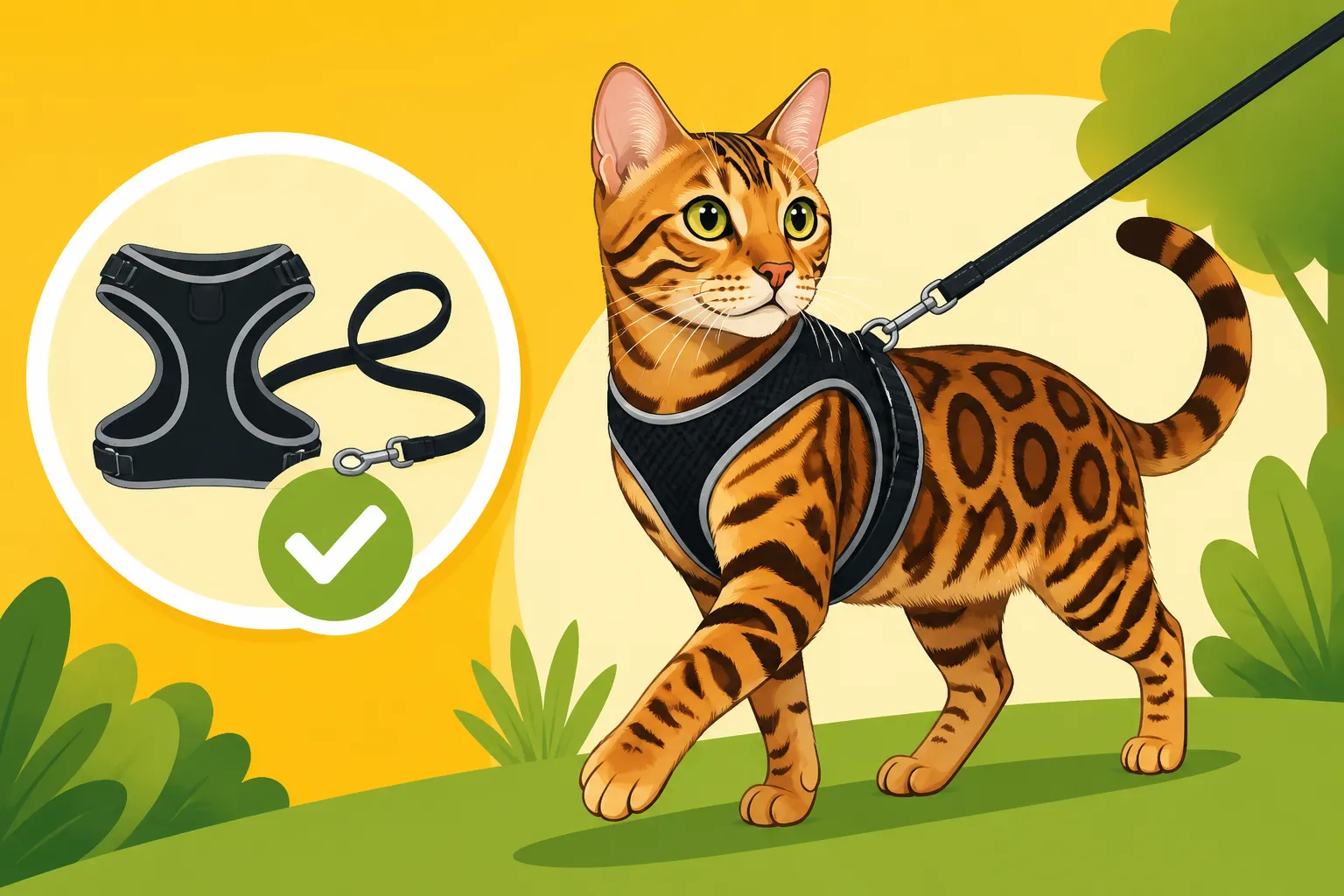
This is arguably the most critical piece of equipment you'll buy for leash training your Bengal. Bengals are notorious escape artists; if there's a way out of a harness, they'll find it. A standard H-style harness, which might work fine for a calmer cat, is often insufficient for a determined Bengal. Instead, you'll want to look for a more secure, escape-proof design. Vest-style harnesses, which distribute pressure more evenly across the chest and back, or figure-8 harnesses that cinch slightly when a cat pulls, are generally better options. The key is to find one that your Bengal cannot wiggle out of, even when they put their mind to it. You can explore a variety of options on platforms like Amazon, reading reviews specifically from other Bengal owners can be super helpful in finding a good fit.
Fit is everything. The harness should be snug, allowing only two fingers to comfortably slide underneath any strap. If it's too loose, they'll back out of it in seconds. If it's too tight, it will be uncomfortable and could restrict their movement or breathing. Pay close attention to the neck and girth measurements, as Bengals often have slender necks but muscular chests. Always measure your cat carefully before purchasing. Some harnesses also offer multiple adjustment points, which can be invaluable for getting that perfect, custom fit.
Beyond fit, consider the material. You want something durable enough to withstand a Bengal's antics but also breathable and comfortable, especially if you plan on longer walks or live in a warmer climate. Nylon or mesh materials are common and generally hold up well. Avoid anything that feels flimsy or has weak buckles. Remember, a simple collar is absolutely inadequate and dangerous for leash walking a cat; it can easily slip off or, worse, cause injury to their delicate neck if they pull suddenly. For more detailed advice, check out Which Harness Fits a Bengal Cat.
Selecting the Perfect Leash
Once you have the harness sorted, the leash itself is the next important consideration. For a Bengal, you'll want a lightweight yet sturdy leash that offers you control without feeling like you're dragging an anchor. A standard 6-foot nylon or fabric leash is generally an excellent starting point. This length provides enough room for your cat to explore a bit ahead of you and sniff around, but still keeps them close enough for you to react quickly if needed.
Avoid anything too long, like a 10 or 15-foot leash, especially when you're just starting out. Too much slack can make it difficult to control your Bengal if they suddenly dart into a dangerous situation or get tangled. Retractable leashes are also a big no-go in the beginning. While they seem appealing for giving your cat more freedom, the inconsistent tension and the potential for the leash to snap back or get wrapped around your cat (or you!) can be startling and unsafe for both of you. You need consistent, predictable control during these early learning stages.
Look for a leash with a comfortable handle for you, as you'll be holding onto it quite a bit. A sturdy clip that securely fastens to the harness D-ring is also essential. Double-check that the clip isn't flimsy or prone to accidentally opening. While you might gravitate towards flashy designs, functionality and safety should always take precedence when choosing a leash for your adventurous Bengal.
Treats and Toys: Your Best Training Allies
Positive reinforcement is the cornerstone of successful animal training, and with a Bengal cat, high-value treats and engaging toys are your secret weapons. These aren't just snacks; they're powerful motivators that create positive associations with the harness, the leash, and the entire outdoor experience. Think about what your Bengal absolutely adores. Is it a specific brand of tuna flake? A particular freeze-dried salmon? Whatever it is, save these special treats exclusively for training sessions to maximize their impact.
During the initial harness acclimation and first outdoor excursions, these treats will be invaluable for rewarding calm behavior, encouraging movement, and distracting from potential stressors. A small, soft treat that can be eaten quickly is ideal, as it won't interrupt the flow of training for too long. You might even consider carrying a small pouch or bag to keep them easily accessible.
Beyond treats, a favorite wand toy or a small, portable toy can also be a fantastic asset. If your Bengal gets a bit overwhelmed or needs a moment to refocus outdoors, a quick play session with a familiar toy can help redirect their energy and remind them that this is a fun, positive experience. For instance, if they freeze up or get fixated on something inappropriate, waving a feather wand can often snap them out of it and get them moving again. Using a combination of delicious treats and stimulating toys ensures you have a versatile toolkit to keep your Bengal engaged, motivated, and happy throughout their leash training journey.
The Step-by-Step Leash Training Process
Leash training a Bengal cat isn't a race; it's a marathon of patience, consistency, and positive reinforcement. Rushing any step can lead to setbacks, so take it slow and celebrate every small victory.
Acclimating to the Harness Indoors
This is where the journey truly begins, and it's perhaps the most critical stage. You wouldn't want to be thrown into a new, potentially restrictive outfit and immediately dragged outside, right? Neither does your Bengal. Start by simply introducing the harness in a calm, familiar indoor environment. Let your cat sniff it, rub against it, and investigate it on their own terms. You can leave it near their food bowl or favorite sleeping spot for a few days so it becomes a normal part of their environment, rather than a scary new object.
Once they seem comfortable with its presence, gently place the harness on them. For the very first few times, put it on for just a minute or two, distracting them immediately with a high-value treat or a favorite toy. The goal is to make the harness appear and disappear quickly, always associated with something positive. Never force it or try to wrestle them into it; this will only create negative associations and make future attempts harder. If they seem stressed, take it off and try again later, keeping the sessions extremely short.
Gradually increase the time they wear the harness, always under your supervision. Let them walk around the house, play, and even eat with it on. This helps them get used to the feeling of it. Some Bengals might initially flop over dramatically or walk like they're wearing invisible weights – this is normal! Ignore the dramatics and only reward when they're standing or moving calmly. The moment they seem annoyed or agitated, take the harness off. The aim is for the harness to become a non-event, something they barely notice, because they know good things happen when it's on.
Introducing the Leash and Indoor Practice
Once your Bengal is completely comfortable wearing the harness around the house for extended periods, it's time to introduce the leash. Attach the lightweight leash to the harness while your cat is relaxed and wearing the harness. For the first few times, let them simply drag the leash around the house under close supervision. This helps them get used to the feel of something trailing behind them, and the gentle tug if it catches on something. Never leave them alone with the leash dragging, as it could get tangled and cause panic or injury.
After they're unfazed by the trailing leash, pick up the other end. Now, you'll begin to practice walking with them indoors. Remember, you're not walking a dog; you're following your cat's lead. Allow them to explore a room, gently guiding them with the leash. When they move forward, praise them and offer a treat. If they stop or try to go somewhere you don't want, use a gentle, consistent pressure on the leash, rather than a hard tug, to redirect them. As soon as they move in the desired direction (even a step), release the pressure and reward. This teaches them that releasing pressure is the reward.
Use a consistent verbal cue, like "walkies" or "let's go," right before you start moving. Keep these indoor practice sessions short and positive, ending before your cat gets bored or frustrated. The goal here is to establish the rhythm of walking together and for your Bengal to associate the leash with positive experiences and exploration, even within the confines of your home. This foundational practice makes the transition to the outdoors much smoother.
First Outdoor Adventures: Safe and Short
The moment of truth! When your Bengal is a pro at indoor leash walking, it's time for their first foray outside. Choose a quiet, safe outdoor space for these initial adventures. A securely fenced backyard is ideal, or a very secluded park or quiet green space where there are minimal distractions and no barking dogs or loud noises. The fewer external stimuli, the better for their first experience. This is crucial for their confidence and making sure they don't get overwhelmed.
Keep these first excursions incredibly short—think 5 to 10 minutes, max. The goal isn't a long walk, but a positive introduction to the outdoor world. Let your Bengal set the pace. They'll likely dart, pause, sniff everything, and maybe even freeze up. This is all normal. Allow them to investigate their surroundings, reinforcing good behavior with praise and treats. Don't try to force them to "walk" in a straight line like a dog; instead, let them wander, explore, and simply be a cat outdoors. If they try to climb something unsafe, gently redirect them.
Pay close attention to their body language. Are their ears flattened? Are they crouched low, trying to hide? These are signs they might be overwhelmed or scared. If so, calmly pick them up (if they tolerate it) and take them back inside, ending the session on a positive note with a treat. Always finish the outdoor adventure with praise and a high-value treat, reinforcing that the experience was positive. Over time, as their confidence grows, you can gradually extend the duration and explore slightly more stimulating environments. Remember, patience and positive experiences are the keys to a happy and successful outdoor explorer. You might be surprised at How Long Leash Training a Bengal Cat Takes, but it's worth it!
Overcoming Common Leash Training Challenges
It wouldn't be a Bengal cat if there weren't a few delightful challenges along the way, right? Leash training can present some quirks, but with understanding and the right approach, you can navigate them.
The "Floppy Cat" or "Statue Cat" Syndrome
Ah, the classic feline protest! Many cats, especially when first introduced to a harness and leash, will react by dramatically flopping onto their side, refusing to move, or becoming completely stiff and statue-like. It’s their way of saying, "What IS this foreign object on my body, and I refuse to cooperate!" This can be frustrating for us humans who are eager to get going, but it's a very normal and common response. Your Bengal isn't being stubborn just to spite you (usually!), they're genuinely uncomfortable or confused by the sensation.
The worst thing you can do here is to pull or drag them. This will only increase their fear and aversion to the harness and leash. Instead, respond with calm reassurance. Get down to their level, speak in a soothing voice, and try to entice them to move with those high-value treats. Hold a treat just out of reach, encouraging them to take a single step forward. The moment they move, even an inch, reward them lavishly. If they're completely unresponsive, try shortening the session. Take the harness off, play with them, and try again a little later or the next day.
Sometimes, the harness might simply be ill-fitting or too bulky for their comfort. Double-check that it's snug but not restrictive. If the flopping continues despite all efforts, it might be worth trying a different style of harness altogether. Remember to always end the session on a positive note, even if it’s just for one successful step. Consistency and infinite patience are your best friends in overcoming the floppy cat syndrome, gradually teaching your Bengal that movement in the harness brings rewards, not discomfort.
Distractions and Overstimulation Outdoors
The world is a vibrant, exciting place, and for an alert, intelligent Bengal cat, it's also a constant source of distraction. Birds chirping, squirrels darting, rustling leaves, a distant dog bark, or even the scent of another animal can quickly send your Bengal into a state of hyper-focus or overstimulation. What might seem like a calm environment to you could be a sensory overload for them. This can lead to sudden lunges, freezing, or even attempts to escape the harness as they react to their environment.
To tackle this, always start your outdoor adventures in low-distraction environments, as mentioned before. Your quiet backyard, a very secluded patch of grass, or even a quiet time of day in a familiar area are ideal. As your Bengal gains confidence and experience, you can gradually introduce them to slightly more stimulating environments. If they become fixated on a bird or squirrel, use a high-value treat to lure their attention back to you. A consistent "look at me" command, practiced indoors first, can be invaluable here. The moment they break their focus and look at you, reward them.
It's crucial to recognize when your Bengal is becoming overstimulated. Signs might include flattened ears, dilated pupils, a twitching tail, excessive vocalization (chirping or low growls), or a refusal to move. When you see these signs, it's usually a cue that it's time to end the walk and head back to the safety and calm of home. Pushing them past their comfort level can create negative associations with outdoor adventures. Remember, the goal is positive exposure and enrichment, not to conquer every outdoor challenge immediately. Slowly, they will learn to navigate the exciting world with you as their anchor.
The Escape Artist Bengal
This is perhaps the biggest concern for any Bengal owner attempting leash training: the very real possibility of an escape. Bengals are known for their athleticism, agility, and determination. If they feel confined or panicked, they will use every ounce of their wild cleverness to wriggle out of a harness, and it can happen surprisingly fast. Losing your precious Bengal outdoors is a nightmare scenario, which is why prevention is worth a pound of cure.
The first line of defense, as always, is a properly fitted, escape-proof harness. Revisit Which Harness Fits a Bengal Cat if you have any doubts. Ensure it's snug but comfortable, with no gaps they can slip through. Vest-style harnesses often offer more security than simple H-harnesses. Always double-check all buckles and straps before heading out. Beyond the equipment, constant vigilance is key. Never, ever leave your Bengal unsupervised for even a second while they are leashed outdoors. A sudden loud noise, a darting squirrel, or an approaching dog could trigger a panic response, and that's when escapes are most likely to occur.
It can also be helpful to practice some "escape drills" indoors. While holding the leash, gently (and I mean gently) try to pull the harness over their head or body as if they were trying to back out. If it comes off easily, you know you need a tighter fit or a different harness style. It’s better to discover a faulty fit in the safety of your living room than on a busy street. If an escape does happen, stay calm, call their name, and try to lure them back with treats or their favorite toy. But truly, the best approach is to prevent the escape in the first place through meticulous gear choice and unwavering supervision.
Maximizing Leash Walking Benefits and Safety
Leash walking for your Bengal is more than just a novelty; it's a powerful tool for enrichment and bonding. To make the most of it, it's important to integrate it thoughtfully into their routine and always prioritize their well-being.
Integrating Leash Walks into Daily Enrichment
For a breed as intelligent and active as the Bengal, daily enrichment isn't a luxury; it's a necessity. Leash walks are a fantastic way to meet this need, providing a rich tapestry of new sensory experiences that indoor life simply can't replicate. The fresh air, different textures underfoot, and the ever-changing sights and smells are incredibly stimulating for their keen senses. This mental and physical workout is crucial for preventing boredom, which, as many Bengal owners know, can lead to destructive behaviors indoors. After a good outdoor adventure, you'll often find your Bengal much calmer and more content at home. You can learn more about How Much Exercise a Bengal Cat Needs a Day and how leash walks contribute.
Leash walking perfectly complements other forms of enrichment you might already be providing. Think of it as another arrow in your quiver, alongside cat wheels, puzzle feeders, and interactive playtime. By offering a variety of activities, you ensure your Bengal remains stimulated and engaged. Consistency is also key here; regular walks help your Bengal become more comfortable and confident outdoors, turning what might start as a daunting experience into an eagerly anticipated part of their routine. They'll start to associate the harness and leash with exciting adventures, further strengthening their bond with you as their adventure buddy.
Moreover, these excursions offer invaluable opportunities for socialisation, albeit controlled. Exposure to different environments, distant sounds, and even other people (from a safe distance) can help your Bengal become more well-adjusted and less prone to fear or anxiety in new situations. It truly contributes to a holistic approach to their well-being, enhancing their physical health, mental acuity, and emotional stability.
Recognizing Limits and Environmental Hazards
While leash walks are incredibly beneficial, it's vital to remember that your Bengal is still a cat, and an adventurous one at that, with certain limitations and vulnerabilities. Not every day is a walking day, and you need to be the smart one who makes that call. Weather conditions are a primary consideration: extreme heat can lead to heatstroke, especially given their activity levels, and freezing temperatures can cause hypothermia or frostbite on their sensitive paw pads. Always check the forecast and consider their comfort level. If it's too hot or too cold for you to be comfortable, it's definitely too hot or cold for your Bengal.
Beyond the weather, be acutely aware of environmental hazards. This includes dangerous plants (many common garden plants are toxic to cats), areas where pesticides or herbicides might have been sprayed, and of course, other animals. Unpredictable dogs, feral cats, or even wildlife like raccoons or coyotes can pose a threat. Always have an escape route or a plan to scoop your cat up quickly if danger approaches. For longer walks, especially in warmer weather, always carry water to ensure your Bengal stays hydrated.
Sometimes, your cat's limits are internal. A Bengal might simply not be in the mood, or they might be feeling slightly unwell. Learn to read their cues. If they're reluctant to put on the harness, seem unusually lethargic, or show signs of stress once outside, it's okay to call off the walk and try another time. Their well-being should always come first. Being a responsible leash walker means knowing when to push a little and when to simply retreat and try another day.
The Future of Your Bengal's Outdoor Adventures
Successful leash training opens up a whole new world of possibilities for you and your Bengal. It transforms them from an indoor observer to an active participant in outdoor life, albeit safely within your control. This bond-building activity can lead to incredible shared experiences. Imagine exploring safe hiking trails together, where your Bengal can climb and sniff to their heart's content, or even visiting pet-friendly establishments where their striking appearance and confident demeanor will surely turn heads. Many Bengals genuinely enjoy venturing beyond the backyard, and with proper training, you can even explore How Well a Bengal Cat Hikes.
However, even with extensive training and experience, it's important to maintain a realistic perspective. Your Bengal is still a cat, and their instincts are strong. Always be prepared for the unexpected—a sudden loud noise, an unforeseen distraction, or a moment of panic. Maintaining control of the leash and being vigilant about their surroundings should always be your top priorities. The goal is to provide enrichment, not to push them into situations where they or others might be at risk.
While leash training offers unparalleled outdoor access, it's not the only way to satisfy your Bengal's adventurous spirit. For times when you can't supervise a walk, or simply want to offer them constant outdoor access, a "catio" (a secure outdoor enclosure) is an excellent alternative. It allows them to enjoy fresh air, sunshine, and the sounds of nature without the need for a leash or direct supervision. You can learn more about Why a Catio Is the Answer to a Bengal Cat for a deeper dive into this great option. Ultimately, successful leash training is about enhancing your Bengal's life, strengthening your bond, and giving them the vibrant, enriched existence they deserve.
| Training Stage | Key Goal | Location | Recommended Duration | Essential Items |
|---|---|---|---|---|
| Harness Acclimation | Comfort with harness | Indoors (quiet, familiar) | 5-15 minutes, multiple x | Harness, high-value treats |
| Leash Introduction | Moving with harness & leash | Indoors (safe, low-distraction) | 10-20 minutes, daily | Harness, lightweight leash, treats, toys |
| First Outdoor Try | Positive outdoor exposure | Quiet backyard, secluded green space | 5-10 minutes, daily | Harness, leash, treats |
| Progressive Walks | Exploring varied, calm environments | Local park, nature trail (quiet) | 20-60 minutes, regular | Harness, leash, treats, water, carrier |
Disclaimer
This article is for general informational purposes only and does not constitute professional advice. Laws, prices and regulations vary by location and change over time. Consult a qualified professional for guidance on your specific situation.