How to Teach a Bengal Cat to Sit
You've brought home a Bengal, and you're quickly discovering that these aren't your average couch potatoes. They're intelligent, inquisitive, and, let's be honest, often feel like they're running on rocket fuel. Trying to teach a Bengal cat something as seemingly simple as "sit" can feel like wrangling a miniature leopard on a sugar rush, but it's absolutely possible and incredibly rewarding! This guide is here to walk you through the process, helping you harness that vibrant Bengal energy into a fun, bonding experience that teaches them a foundational trick.
Understanding Your Bengal Cat's Learning Style
Before we dive into the "how-to," it's crucial to understand why your Bengal operates the way they do. These cats are unique, and approaching training with that in mind will save you a lot of frustration and lead to much greater success.
Why Bengals Excel at Learning Tricks
Let's face it, your Bengal isn't just a pretty face; they're a furry little Einstein with boundless energy. Their lineage traces back to the Asian Leopard Cat, and that wild intelligence and drive for exploration are still very much present. This isn't a breed content to simply nap in a sunbeam all day (though they do enjoy a good snooze after an intense play session!). Bengals thrive on mental stimulation and physical activity. They love to solve problems, whether it's figuring out how to open a cabinet door, dismantle a "cat-proof" toy, or, yes, learn a new trick.
This high intelligence is precisely why they excel at learning commands and tricks. They're not just performing a rote action; they're genuinely engaging their minds. They enjoy the challenge, the interaction, and especially the reward that comes with success. Think of trick training not as a chore, but as another outlet for their immense energy and cleverness, much like a good puzzle feeder or a vigorous session with a wand toy. They crave that interaction and mental workout. If you're wondering How Intelligent a Bengal Cat Is, just watch them for an hour – you'll quickly see that calculating gaze and agile mind at work.
The Importance of Positive Reinforcement
If you've ever tried to force a cat to do anything, you know it's a losing battle. And with a Bengal, that battle will be lost even faster, and probably with a few well-placed scratches or a haughty glare for your efforts. Bengals, like all cats, respond best to positive reinforcement. This means rewarding the behavior you want to see, rather than punishing or scolding the behavior you don't.
Why does this work so well for Bengals? Because they're incredibly sensitive to their environment and your emotions. A negative interaction can quickly sour their desire to participate, making them wary and uncooperative. On the other hand, a positive, reward-based approach makes training a fun game for them. They associate the command and action with something pleasant – a tasty treat, enthusiastic praise, or a few minutes of their favorite play. This builds trust and strengthens your bond, turning training into a cooperative effort rather than a confrontation. It's about showing them what to do, not telling them what not to do.
Setting Up for Success: Environment and Tools
Before you even utter the word "sit," you need to prepare your training environment and gather your essential tools. This might sound overly formal for a cat, but trust me, it makes a huge difference, especially with a high-energy Bengal.
First, choose a quiet, low-distraction area in your home. This might be a spare room, a hallway, or even a corner of your living room when other pets or family members aren't around. The goal is to minimize anything that could pull your Bengal's attention away from you and the task at hand. Remember, these cats are easily stimulated, and a bird outside the window or a dog trotting by can completely derail a session.
Next, you'll need high-value treats. These aren't just any old kibble; these are the treats your Bengal goes absolutely wild for. Think small pieces of cooked chicken, salmon, or a soft, smelly commercial treat they adore. Break them into pea-sized pieces so you can give many rewards without overfeeding. You want something irresistible that motivates them instantly. For a wide variety of options, you can usually find excellent high-value cat treats on Amazon that your Bengal will love.
Finally, consider using a clicker. A clicker is a small device that makes a distinct, consistent sound. It acts as a "marker" that tells your cat precisely the moment they performed the desired action. Because the click is always the same, it's much clearer than your verbal "good job!" which might vary in tone. You'll pair the click with a treat, so your cat learns that the click means a reward is coming. Clickers are inexpensive and incredibly effective for clear communication in animal training. Again, a simple search on Amazon will bring up many affordable and effective clickers. Using a clicker helps your Bengal understand exactly what they did right, speeding up the learning process. If you want to dive deeper into this tool, you can read more about How to Clicker Train a Bengal Cat.
Step-by-Step: Teaching "Sit" with Lure and Reward
Alright, it's time to put theory into practice! Teaching "sit" is one of the most straightforward tricks to begin with, and it lays the groundwork for many others. Remember, patience and consistency are your best friends here.
Getting Started with Luring
The first step in teaching "sit" is called "luring." This means using a treat to guide your Bengal into the desired position. It bypasses the need for physical manipulation, which most cats detest, and allows them to perform the action willingly.
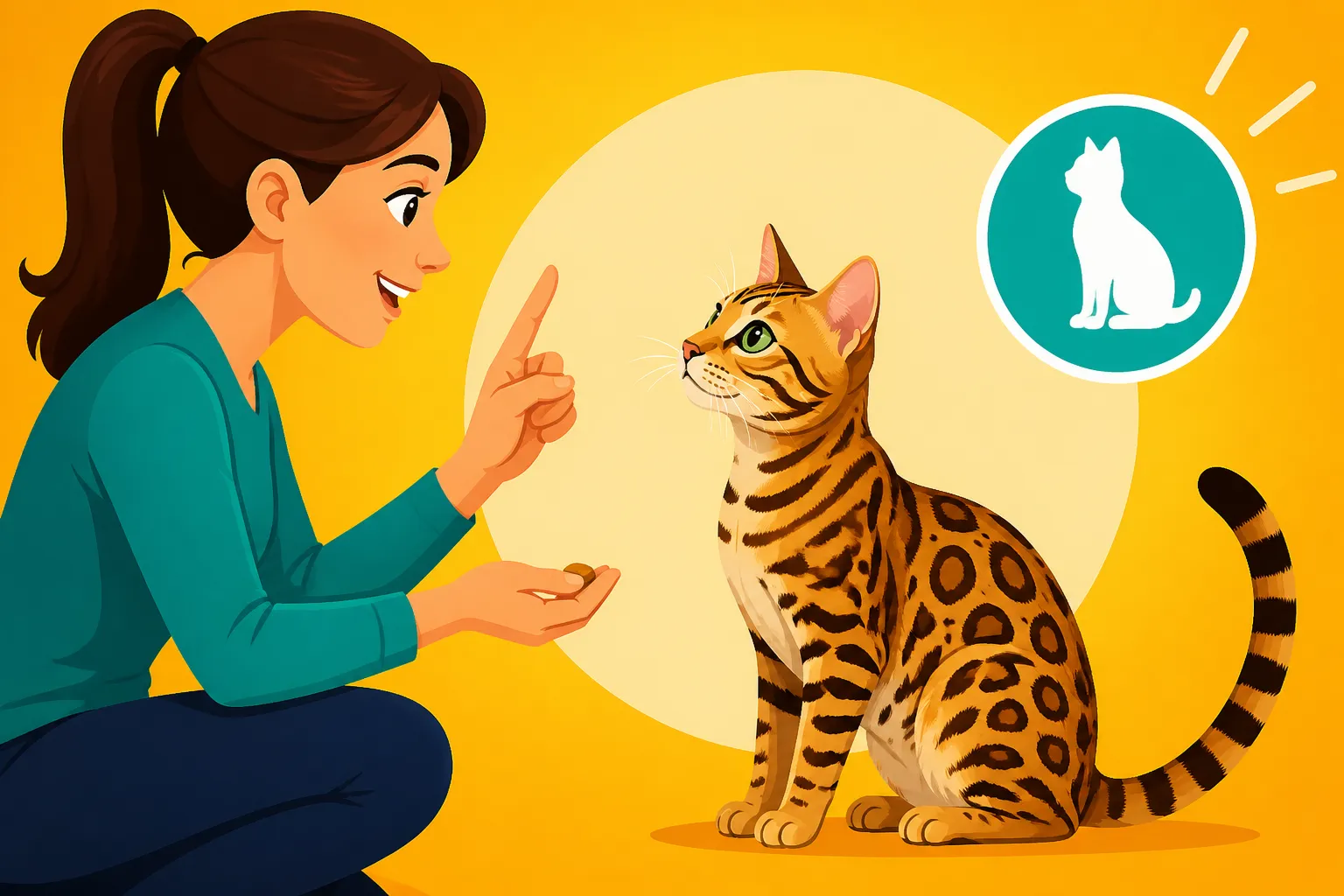
Start by holding a high-value treat between your thumb and forefinger, close to your Bengal's nose. Let them sniff it, getting their attention and making them eager. Now, slowly move the treat upwards and slightly backward, over their head, towards their tail. As you do this, their nose will follow the treat. To keep their eyes on the prize, their bottom will naturally start to lower until they eventually sit down. The moment their rear touches the ground, click your clicker and immediately give them the treat.
Repeat this several times in short bursts. Don't worry if they don't get it perfectly the first few times. Some Bengals might try to stand on their hind legs or back up. If they do, just reset, bring the treat back to their nose, and try the movement again, perhaps slightly faster or with a different angle. The key is to make the treat movement so appealing that sitting becomes the easiest way to get to it. Keep sessions short – literally 5-10 repetitions – and always end on a positive note. You might find that your Bengal wants to play for How Many Play Sessions a Bengal Cat Needs throughout the day, so incorporate these short training bursts into their regular activity schedule.
Adding the Verbal Cue and Clicker
Once your Bengal is reliably sitting when you lure them with the treat, it's time to introduce the verbal cue and solidify the clicker association. This is where the magic really starts to happen, as they begin to connect a sound with an action.
As your Bengal is about to perform the "sit" action during the lure, say "Sit" clearly and calmly. Say it just before they sit, not while they're sitting or after. The sequence should be: verbal cue ("Sit") -> lure movement -> cat sits -> click -> treat. The timing is critical here. You want the word "sit" to predict the action and the click to mark the exact moment of success.
Continue practicing this sequence. With each successful repetition, your Bengal will start to understand that the word "sit" means to lower their bottom, which then earns them a click and a treat. If they seem confused, go back to just luring for a few repetitions to rebuild their confidence, then reintroduce the verbal cue. Consistency in your voice and timing is paramount. Remember, these intelligent cats pick up on patterns quickly, so make the pattern clear and predictable.
Fading the Lure and Generalization
The goal isn't for your Bengal to sit only when you have a treat in your hand and move it over their head. The goal is for them to sit on command. This is where "fading the lure" comes in.
Once your Bengal is sitting reliably with the verbal cue and lure, start making the lure movement smaller and less obvious. Instead of moving the treat directly over their head, perhaps just make the hand motion without the treat for a few repetitions. Eventually, you'll reduce the lure to just a slight hand gesture or even just the verbal cue alone. When they sit on command with minimal or no lure, click and treat immediately.
Once they've mastered "sit" in your designated training spot, it's time for "generalization." This means practicing the trick in different locations around your home. Start in slightly busier areas, gradually introducing more distractions. Practice in the living room, then the kitchen, then perhaps near a window. Each time you change the environment, your Bengal might need a little reminder or a slightly more obvious lure at first, and that's perfectly normal. They need to learn that "sit" means "sit," no matter where they are. This builds their confidence and reinforces the command's meaning in various contexts. Remember, for a Bengal, every new environment is an exciting new exploration, so having them focus will take some effort.
Common Challenges and Troubleshooting
Let's be realistic: training a Bengal cat isn't always a smooth, straight path. There will be days when your little leopard decides "not today, human," and that's okay! Understanding common hurdles and how to navigate them is key to staying motivated and helping your Bengal succeed.
When Your Bengal Just Won't Cooperate
There are days when your Bengal might look at you, look at the treat, and then decide that sniffing the dust bunny under the sofa is a far more pressing engagement. It happens! There are several reasons why your Bengal might suddenly become uncooperative.
One common reason is distraction. Bengals are highly aware of their surroundings, and a sudden noise, a shift in light, or even just an interesting smell can break their focus. If they're constantly looking around, it's a sign the environment might be too stimulating, or the session is too long.
Another factor could be motivation. Are your treats high-value enough? Maybe they're tired of the same old thing. Try switching up your treat rotation to keep things exciting. Sometimes, they might just not be in the mood. Pushing them when they're not receptive will only lead to frustration for both of you. If your Bengal consistently ignores you or walks away, it's often a good idea to end the session gracefully. Trying to force them will damage your bond and make future sessions harder. Just remember that Bengals, with their incredible energy, can sometimes get distracted, or simply have too much energy to focus, so consider giving them a run on their wheel or an intense play session before trying to train.
Dealing with Distractions
Distractions are probably the biggest enemy of successful Bengal cat training. Their keen senses and natural curiosity mean they're constantly processing information from their environment. A flicker of movement, a distant sound, or a novel scent can pull their attention away in an instant.
To combat this, always start training in the quietest, least stimulating environment possible. This allows your Bengal to focus solely on you and the task. As they become more proficient with the "sit" command, gradually introduce minor distractions. For example, have a family member sit quietly in the room, or play some soft background music. If your cat gets distracted, simply take a step back to a less distracting environment, or make your lure more obvious, until they regain focus.
If you notice a specific distraction always derails your sessions, try to minimize it. Close curtains, turn off the TV, or ensure other pets are in a different room. You want to make it as easy as possible for your Bengal to succeed, especially in the early stages. Remember, the goal is to generalize the behavior, but that comes after a solid foundation is built in a distraction-free zone.
Keeping Training Sessions Fun and Short
This is perhaps the most crucial piece of advice for training a Bengal: keep it short and make it fun! Bengals have incredible stamina for play, but their attention span for formal "lessons" is much shorter than their boundless energy might suggest.
Aim for training sessions that last no more than 5-10 minutes, perhaps even shorter if your Bengal is a kitten or easily bored. It's much better to have several very short, successful sessions throughout the day than one long, frustrating one. Think of it like a quick game rather than a rigorous class. When you notice your Bengal's attention waning, or if they start to get fidgety or look away, that's your cue to end the session. Always try to end on a positive note, with a successful "sit" and a big reward, even if it's the last thing you do. This leaves them wanting more and eager for the next session.
If you try to push them past their attention limit, you risk them becoming bored, frustrated, or simply walking away. This can create negative associations with training, making it harder in the long run. By keeping it light, fun, and brief, you'll ensure that training remains a positive, enriching experience that strengthens your bond and keeps your intelligent Bengal engaged. If you're looking for other ways to engage their minds, explore options like Whether a Puzzle Feeder Tires a Bengal Cat or What a Bored Bengal Cat Chews to satisfy their innate curiosity.
Beyond "Sit": Expanding Your Bengal's Trick Repertoire
Learning "sit" is just the beginning of a wonderful journey into trick training with your Bengal. Once they've mastered this foundational command, a whole new world of interaction and mental stimulation opens up for both of you.
Building on Success with Other Tricks
"Sit" is fantastic because it teaches your Bengal the basic concept of responding to a verbal cue and a hand signal for a reward. This understanding makes it much easier to teach other tricks. Think of it as opening the door to their amazing potential.
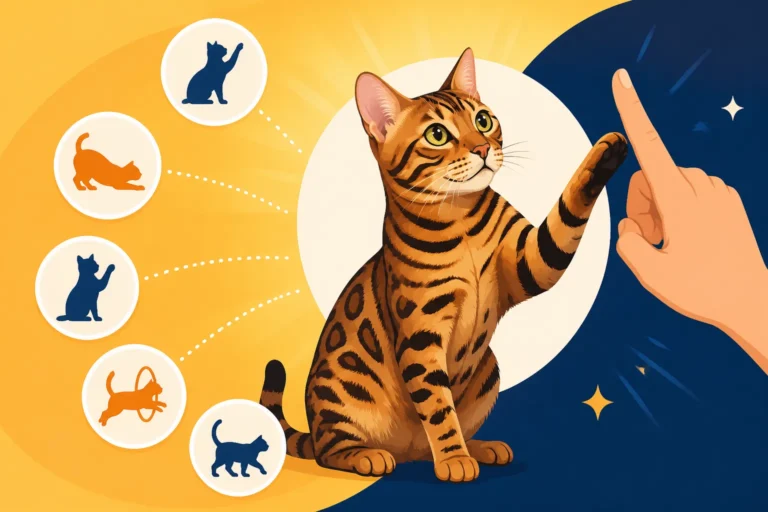
Once "sit" is solid, you can move on to other simple behaviors. "Come" is another incredibly useful command, especially for their safety, and it can be taught using similar lure-and-reward techniques. You can discover how rewarding it is to have your Bengal come to you on command by reading How to Teach a Bengal Cat to Come. "Paw" or "shake" is also relatively easy, as many cats naturally offer a paw when trying to get attention. You can capture this natural behavior and add a cue.
More advanced tricks might include "stay," "spin," "fetch," or even navigating an agility course! The key is to break down each new trick into small, achievable steps, just like you did with "sit." Each new success builds your Bengal's confidence and reinforces their desire to learn, making them even more eager for the next challenge. Remember, Which Commands a Bengal Cat Learns Fastest will vary from cat to cat, so pay attention to what your Bengal enjoys and picks up easily.
The Benefits of Training for Your Bengal
Trick training isn't just about showing off your clever cat (though that's certainly a fun bonus!). It offers a wealth of benefits for your Bengal's overall well-being.
Firstly, it provides incredible mental stimulation. Bengals are highly intelligent, and without adequate mental challenges, they can become bored, which often leads to destructive behaviors. Learning and performing tricks gives their active minds a much-needed workout, preventing boredom and channeling their energy positively.
Secondly, it strengthens the bond between you and your cat. Training sessions are focused, positive interactions where you're working together towards a common goal. This builds trust, communication, and mutual respect. Your Bengal learns to look to you for direction and reward, and you learn to better understand their body language and motivations.
Finally, trick training can be a fantastic way to manage their boundless energy. While it doesn't replace physical exercise, mental engagement is just as tiring and fulfilling for a Bengal. After a good training session, you might find your typically high-octane cat actually settling down for a nap! This can be especially helpful if you're concerned about How Long a Bengal Cat Copes Alone or see Signs a Bengal Cat Is Bored.
Recommended Training Aids and Resources
To keep your Bengal engaged and continue expanding their skills, consider incorporating various training aids and resources into your routine.
Clickers: As mentioned earlier, a clicker is an invaluable tool for precise communication. If you haven't got one already, a quick search on Amazon will show you many options. They're cheap, effective, and will be your best friend for teaching any new trick.
High-Value Treats: Keep a variety on hand to prevent your Bengal from getting bored with the same flavors. Experiment with different textures and tastes to find what truly motivates them. Small, soft, and smelly treats are generally the most effective. For a diverse selection, check out the cat treat section on Amazon. You'll quickly discover Which Treats a Bengal Cat Will Work For.
Interactive Toys and Puzzle Feeders: While not directly for trick training, these items complement it beautifully by providing ongoing mental enrichment. Puzzle feeders, especially, encourage problem-solving and can be a great way to "warm up" your Bengal's brain before a training session. Many high-quality interactive toys and puzzle feeders are readily available on Amazon and are essential for a Bengal cat household.
By consistently engaging your Bengal cat's mind and body through trick training and enriching play, you're not just teaching them to sit; you're nurturing a happy, well-adjusted, and wonderfully clever companion.
Disclaimer
This article is for general informational purposes only and does not constitute professional advice. Laws, prices and regulations vary by location and change over time. Consult a qualified professional for guidance on your specific situation.