What a Leopardette Was Before It Was a Bengal Cat
It's quite common for new Bengal cat enthusiasts, or even seasoned owners, to stumble across older terminology when researching their beloved spotted companions. You might see references to something called a "Leopardette" and scratch your head, wondering if it's a different breed entirely or just a quirky nickname. It can certainly be confusing to reconcile this historical name with the sleek, domestic Bengal we know today. This guide will clear up that mystery, diving deep into the origins of the "Leopardette" and explaining its crucial, yet often misunderstood, place in the fascinating history of the Bengal cat breed.
The Early Conception of a "Leopardette"
Before the Bengal cat was officially recognized and named, the idea of creating a domestic cat with the striking appearance of its wild ancestor, the Asian Leopard Cat (ALC), was a powerful driving force for pioneering breeders. This initial vision, this aspiration to combine the untamed beauty of the jungle with the loving nature of a housecat, often led to the informal term "Leopardette" being used. It wasn't a formal breed name, but rather a descriptive moniker that encapsulated the essence of what these early hybrids represented.
The Vision of a Mini Leopard Companion
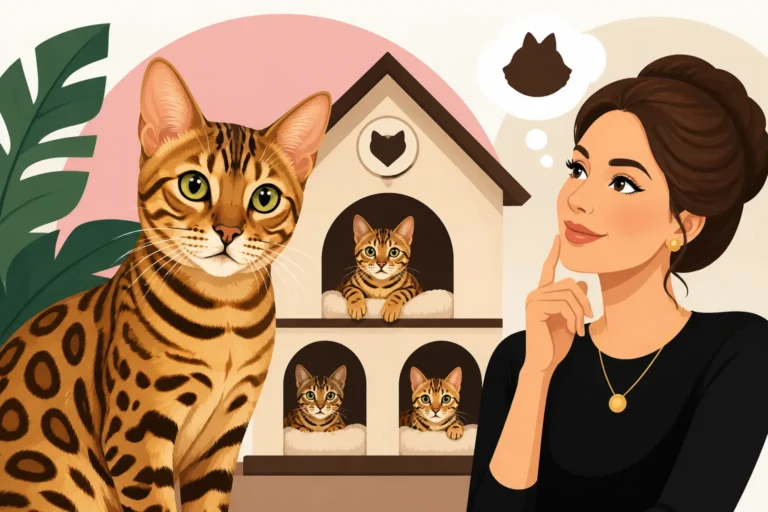
Imagine the allure: a pet that looked like it had just stepped out of the wild, with its distinctive rosetted coat and athletic build, yet possessed the docile temperament suitable for a family home. This was the dream that fueled the creation of these early "Leopardettes." Breeders weren't just trying to make a pretty cat; they were attempting a delicate balance of aesthetics and personality, something truly unique in the feline world. They wanted to capture the wildness in appearance without the wildness in behavior, a challenge that required immense dedication and understanding of both domestic and wild cat genetics. It was a groundbreaking endeavor, pushing the boundaries of what was thought possible in cat breeding at the time.
The very concept of a "Leopardette" spoke to a desire for exoticism that could be tamed. People were captivated by the idea of living with a creature that carried the visual hallmarks of a jungle predator but would happily curl up on their lap. This aspirational image guided much of the initial selection and breeding decisions. Every kitten born was evaluated not just for health, but for how closely it approximated this ideal of a miniature leopard, both in its coat pattern and its burgeoning personality. It was a quest for a living, breathing piece of art that could also be a cherished family member.
Hybridization Efforts and the Asian Leopard Cat's Influence
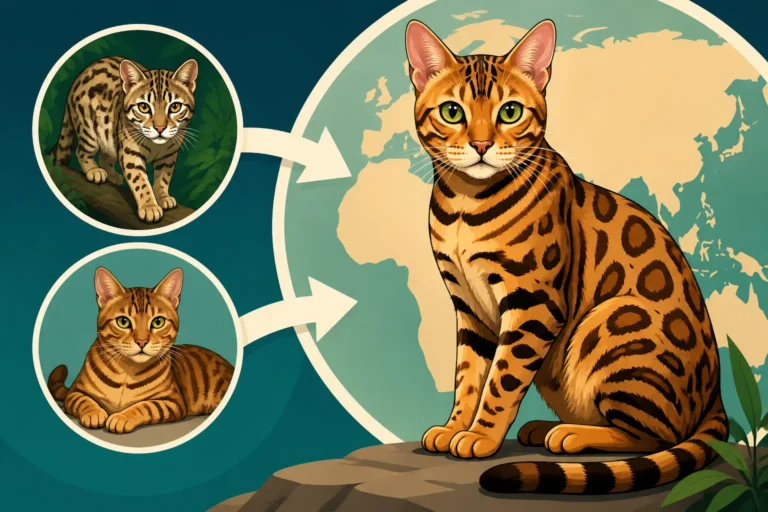
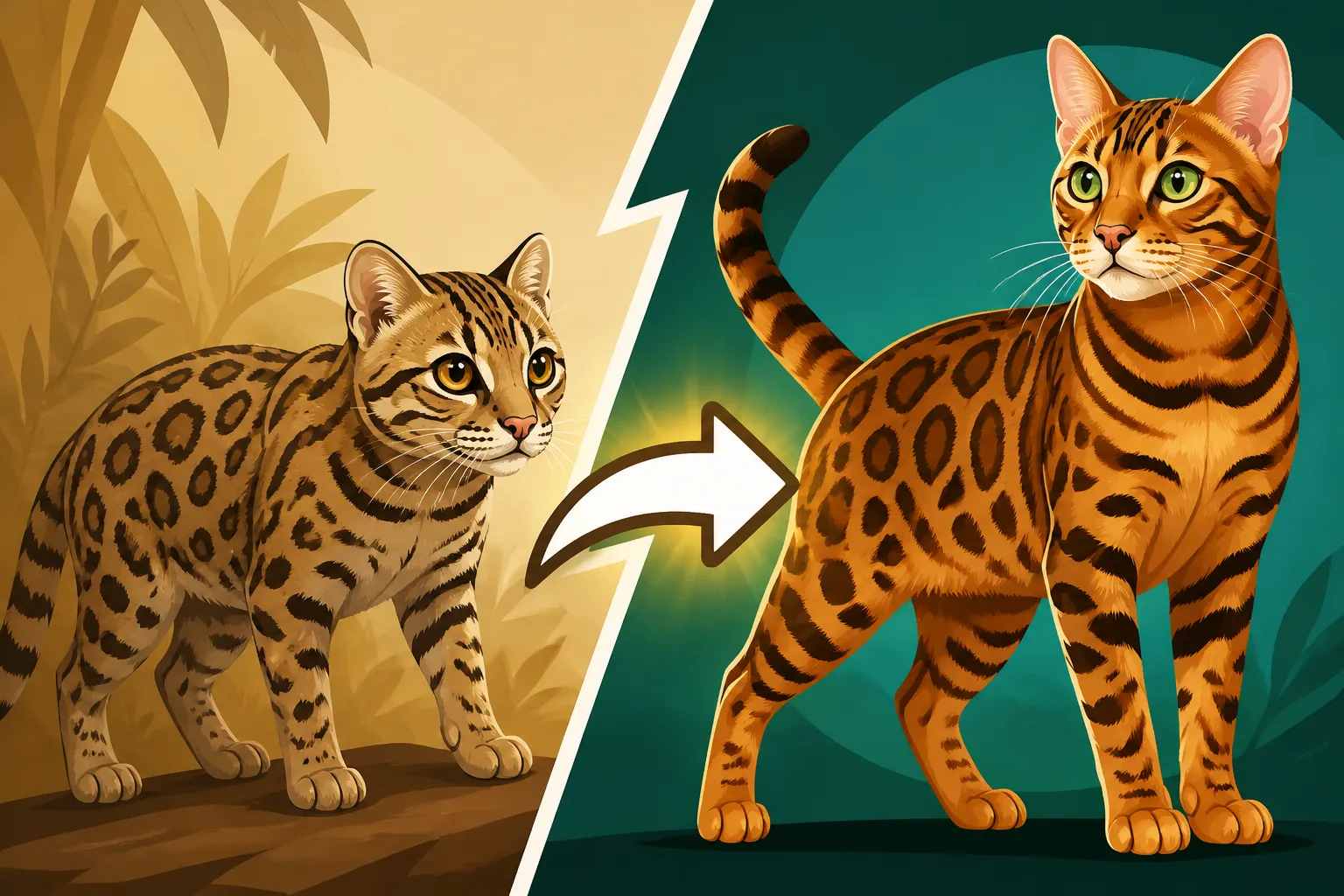
At the heart of the "Leopardette" concept lay the Asian Leopard Cat (Prionailurus bengalensis), a small, nocturnal wild cat native to Southeast Asia. The initial crossbreeding experiments began with these beautiful, untamed felines and various domestic cat breeds. This was a complex and often unpredictable process. The first generation (F1) offspring, direct crosses between an ALC and a domestic cat, were truly wild animals in many respects. They often retained much of the ALC's natural caution, fear of humans, and specific dietary and environmental needs. These F1s were the closest thing to a "Leopardette" in its rawest form.
The challenges of working with F1 "Leopardettes" were significant. They were often not amenable to typical domestic living, could be highly territorial, and often did not use a litter box consistently. It required extraordinary dedication from breeders like Jean Mill, who is widely credited with playing a pivotal role in the breed's development. Her early efforts, even before the official name of Bengal Cat was adopted, were instrumental in understanding how to move these hybrids toward a more domestic temperament. You can read more about Who Jean Mill Was to the Bengal Cat to understand her immense contribution. These F1s, while visually stunning, were far from the cuddly companions people envisioned. They were, however, the essential bridge to the domestic cat we know today.
"Leopardette": A Name Reflecting Early Aspirations
The informal name "Leopardette" wasn't chosen lightly; it was a descriptor that vividly communicated the ambitious goals of the early breeding programs. It conveyed the aspiration to create a cat that embodied the grace, beauty, and wild patterning of a leopard, but in a diminutive, more approachable form suitable for companionship. This name captured the imagination of those who first encountered these extraordinary hybrids.
Capturing the Wild in Miniature
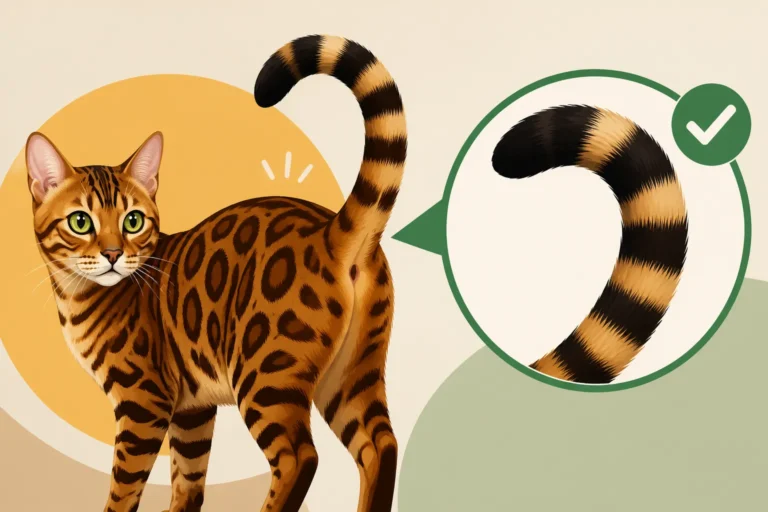
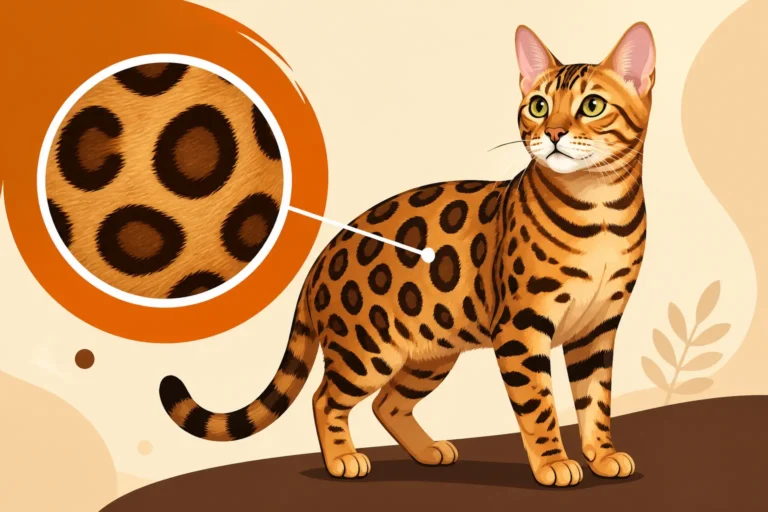
The core appeal of the "Leopardette" was its striking resemblance to a wild leopard. Breeders focused intently on preserving and enhancing the distinct rosetted and spotted patterns, the short, plush pelt, and the powerful, athletic build that screamed "jungle cat." This wasn't just about superficial markings; it was about the entire aesthetic – the large, captivating eyes, the strong jawline, and the small, rounded ears that differentiate them from typical housecats. The name "Leopardette" perfectly encapsulated this goal: a little leopard, a mini version of a magnificent wild animal.
Every breeding decision during this "Leopardette" phase was scrutinized for its potential to bring out these desired wild characteristics. They looked for high contrast in patterns, clear definition of rosettes (which were still developing in terms of consistency), and the rich, warm tones often seen in the wild. Breeders might spend countless hours observing how the markings developed in kittens, hoping to see those elusive "paw print" or "donut" rosettes emerge. The drive to perfect this wild look in a domestic package was paramount, and the name "Leopardette" served as a constant reminder of that primary objective. This commitment to the wild appearance is still a cornerstone of the breed standard today, decades later.
Early Challenges in Temperament and Generations
While the visual aspect was key, the "Leopardette" journey was fraught with challenges, particularly concerning temperament. The F1, F2, and even F3 generations often exhibited behaviors more akin to their wild ancestors than their domestic parents. This could include shyness, a strong prey drive, vocalizations different from typical housecats, and a general wariness of strangers. Early breeders spent considerable effort in socializing these "Leopardettes" from a very young age, handling them constantly to foster trust and domestic behaviors.
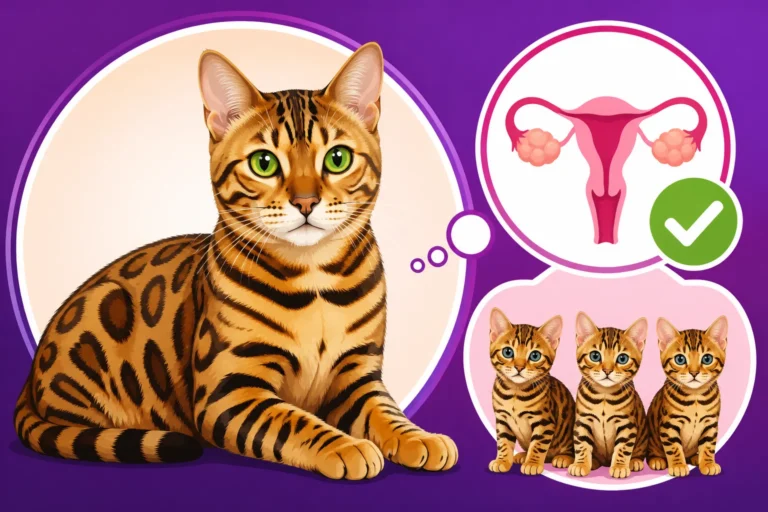
One significant hurdle was the fertility issue in early-generation males. F1 to F3 males were often sterile, meaning they could not reproduce, which complicated breeding programs and slowed down the process of creating more domestic-tempered cats. This meant that only female F1s, F2s, and F3s could carry on the lineage directly, and breeders relied heavily on finding fertile F4 and later generation males. These fertility challenges were a constant source of frustration but also drove innovative breeding strategies. Understanding F1 to SBT: How a Bengal Cat's Generation Is Counted helps clarify why these early generations presented such unique difficulties for breeders striving for that "Leopardette" ideal. It wasn't just about looks; it was about creating a viable, healthy, and emotionally stable lineage.
| Early Breed Concept | Wild Ancestor | Key Traits Desired | Primary Challenges |
|---|---|---|---|
| Leopardette | Asian Leopard Cat (ALC) | Wild appearance, domestic temperament | Early generation fertility issues, wild behaviors, extensive socialization |
The Official Shift to "Bengal Cat"
The transition from the informal "Leopardette" to the official "Bengal Cat" marked a pivotal moment in the breed's history. It signified a move from experimental hybridization to a recognized, standardized breed within the cat fancy. This change wasn't just about a name; it represented the formal acceptance and stabilization of the breed's characteristics and genetic lineage.
When Formal Recognition Became Essential
As more and more of these "Leopardette" hybrids were produced, and as breeders worked diligently to refine their temperaments and appearances, the need for formal recognition became increasingly clear. An informal term, no matter how descriptive, simply wouldn't suffice for a burgeoning breed. Registration bodies like The International Cat Association (TICA) play a crucial role in standardizing breeds, setting clear guidelines for appearance, health, and lineage. Without an official name and a breed standard, "Leopardettes" couldn't be shown, pedigrees couldn't be formally tracked, and their future as a distinct breed would remain uncertain. This desire for legitimacy and global acceptance drove the movement towards a proper name.
The process of gaining recognition involved demonstrating consistency in traits across multiple generations and proving that the cats bred true to type. This required meticulous record-keeping, health screening, and careful selection. The "Leopardette" had to prove itself as more than just a curiosity; it had to show that it was a consistent, reproducible breed with its own unique identity. This period was incredibly exciting, as breeders could finally see the fruits of their labor gaining widespread acknowledgment within the cat community.
The Influence of the Asian Leopard Cat's Scientific Name
The name "Bengal Cat" was ultimately chosen, a direct nod to its wild ancestor, the Asian Leopard Cat, whose scientific name is Prionailurus bengalensis. This choice was both logical and fitting, cementing the breed's origin story within its very name. It acknowledged the wild heritage while simultaneously distinguishing it as a distinct domestic breed. It also helped to differentiate it from other spotted domestic cats that might resemble the "Leopardette" but lacked the ALC lineage.
This decision to use "Bengal" was a smart move for several reasons. It conveyed the exotic roots of the cat while still giving it a formal, dignified name suitable for a recognized breed. It allowed for easier classification and discussion within the broader cat community, moving beyond a charming but unofficial descriptor. TICA Accepted the Bengal Cat in 1986, which was a massive milestone. This formal acceptance under the "Bengal Cat" name paved the way for the breed to flourish, gain popularity, and spread across the globe, allowing enthusiasts worldwide to appreciate these stunning feline companions. Even today, responsible breeders continue to emphasize the importance of understanding the breed's history and genetic background, often ensuring their kittens are properly registered and their ancestry is documented, much like you'd see detailed information on a reputable online pet supply store like Chewy for specific breed needs.
The Enduring Legacy of the Early "Leopardette" Era
Even though the name "Leopardette" is no longer in official use for the breed, its influence is undeniably woven into the very fabric of the modern Bengal cat. The early experiments, challenges, and triumphs under that informal moniker laid the groundwork for the magnificent animals we cherish today. Without that initial, ambitious vision, the Bengal cat might never have existed.
How Early Traits Shaped the Modern Bengal Cat
The relentless pursuit of the "Leopardette" ideal—a domestic cat with a wild appearance—fundamentally shaped the Bengal cat breed standard. From the striking rosetted patterns to the athletic physique, every characteristic admired in today's Bengal can be traced back to those early aspirations. Breeders painstakingly selected for cats with clear, vibrant markings, a short, plush coat often referred to as a "pelt," and a powerful, agile body that mirrors their wild ancestors. You can definitely feel that connection to the wild when you watch a Bengal cat climb or play, just as their early "Leopardette" ancestors would have.
Even the glitter gene, which gives the Bengal cat's coat a unique, iridescent sheen, was an accidental but celebrated discovery that became a hallmark of the breed, though it wasn't explicitly part of the initial "Leopardette" vision. These foundational traits, honed over generations, are why a Bengal cat's coat feels like nothing else, often described as silk or velvet. The dedication to these unique physical attributes is a direct legacy of the "Leopardette" era, where appearance was paramount. This has also led to specific grooming and care considerations, and owners often find themselves looking for brushes suitable for a "pelt" coat on sites like Chewy.
Remembering the Pioneers and the Wild Ancestor
The story of the "Leopardette" is intrinsically linked to the dedicated individuals who dared to dream of a domesticated wild cat. Jean Mill, in particular, stands out as a visionary whose persistence and passion brought the Bengal cat from concept to reality. Her pioneering work in the 1960s and 70s, long before the breed had its official name, involved navigating complex genetics, overcoming fertility issues, and painstakingly socializing early-generation hybrids. She received some of Willard Centerwall's leukemia research cats, which were also early hybrids, proving that multiple lines contributed to the developing breed. Her contributions are foundational to Where the Bengal Cat Comes From.
Beyond the human pioneers, we must also remember the Asian Leopard Cat itself. This beautiful wild feline, the genetic bedrock of the Bengal, lends its untamed grace and captivating patterns to every Bengal cat alive today. The wild beauty is always just beneath the surface, a constant reminder of the breed's exotic origins. Understanding the unique needs of a Bengal cat, from its high-energy play to its vocal nature, often involves appreciating this wild ancestry, which was the very essence of the "Leopardette" concept. It's a testament to the success of these early efforts that we can now enjoy these incredible cats as cherished, albeit incredibly active, members of our families. Even with their domestic nature, they still demand stimulating environments and high-quality nutrition, things often found through dedicated pet suppliers like Chewy.
Disclaimer
This article is for general informational purposes only and does not constitute professional advice. Laws, prices and regulations vary by location and change over time. Consult a qualified professional for guidance on your specific situation.