What a Bengal Cat’s Tail Should Look Like
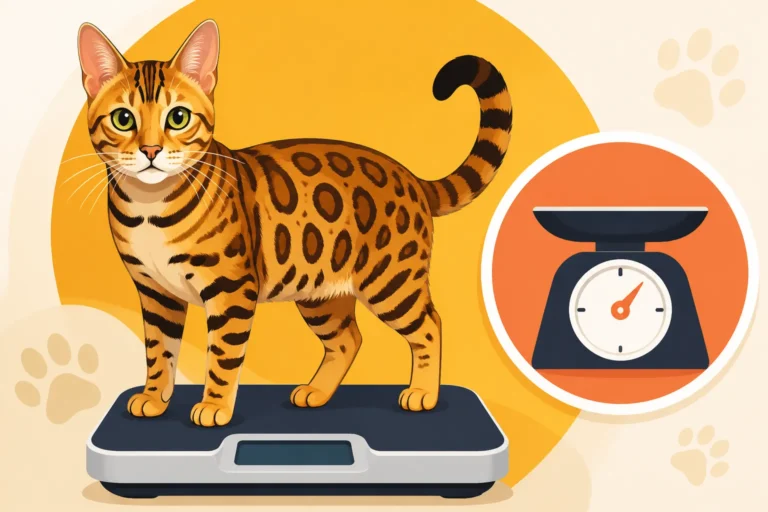
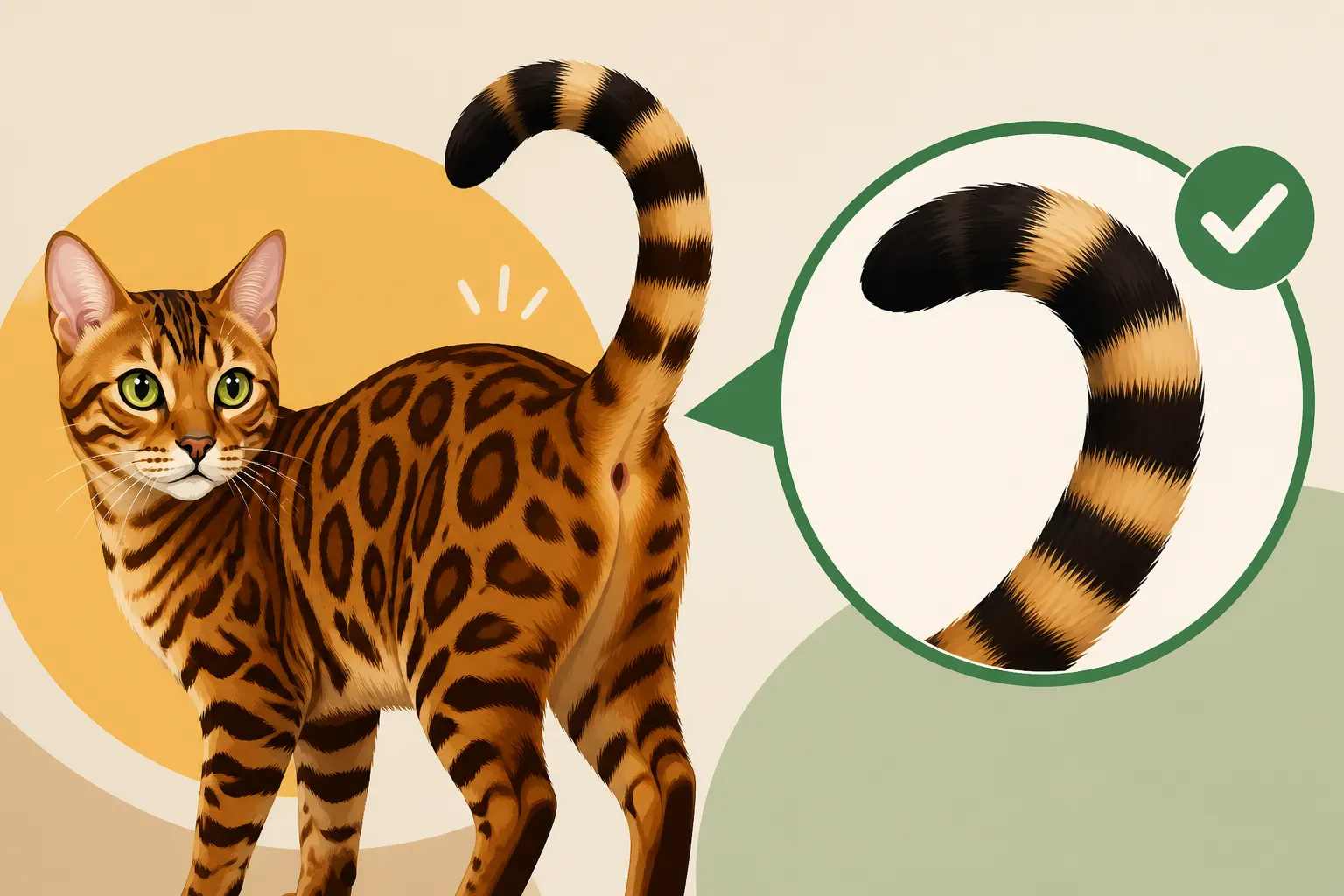
A Bengal’s tail should look strong, medium in length, and thick at the base, narrowing gently to a rounded tip. Its markings may be spotted, rosetted, or ringed, but color and pattern vary. If your cat’s tail looks suddenly swollen, painful, bent, or bare, that is a different concern from ordinary breed variation. This guide explains what to expect and when to ask a vet.
The Bengal cat tail shape and proportions
Length, thickness, and tip
A Bengal’s tail is usually medium in length and sturdy rather than fine or whip-like. It should fit the cat’s long, athletic outline without looking oversized or unusually short. The base is typically thick, then tapers gradually toward a rounded tip. That solid shape can be especially noticeable when a Bengal is standing alert, walking, or holding its tail out behind it.
The tip is rounded, not sharply pointed. Coat pattern and color can make it seem more or less distinct, but the basic outline should still look smooth. A tail that is naturally a little shorter or longer than another Bengal’s is not automatically a problem; individual cats vary. What matters more is the overall proportion and whether the tail moves comfortably.
Breed standards describe an ideal, not a rule that every pet cat must match perfectly. If you are comparing your cat with a show photo, remember that pose, camera angle, coat markings, and age can change how long or broad the tail appears. For a broader look at the expected build, see What a Bengal Cat Looks Like by the Standard and What the Bengal Cat Standard Asks For.
How a Bengal carries its tail
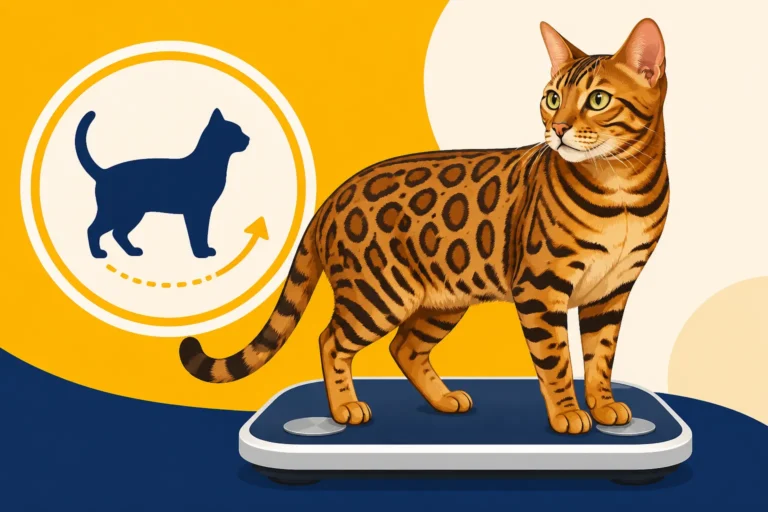
A relaxed Bengal may carry its tail level with its back, gently lowered, or curved at the end. When excited or greeting someone, it may lift the tail upright, sometimes with a small curl at the tip. Those positions are ordinary forms of feline body language, not features that determine whether a tail is the “right” shape.
Watch how the tail moves rather than expecting it to stay in one pose. A comfortable cat should be able to lift, lower, and move it naturally. A tail held unusually still, tucked tightly, or guarded when touched may signal discomfort, particularly if that behavior is new. Avoid repeatedly bending or pulling the tail to test it; a gentle visual check is safer, and a veterinarian can examine it if you are worried.
How age and body condition affect appearance
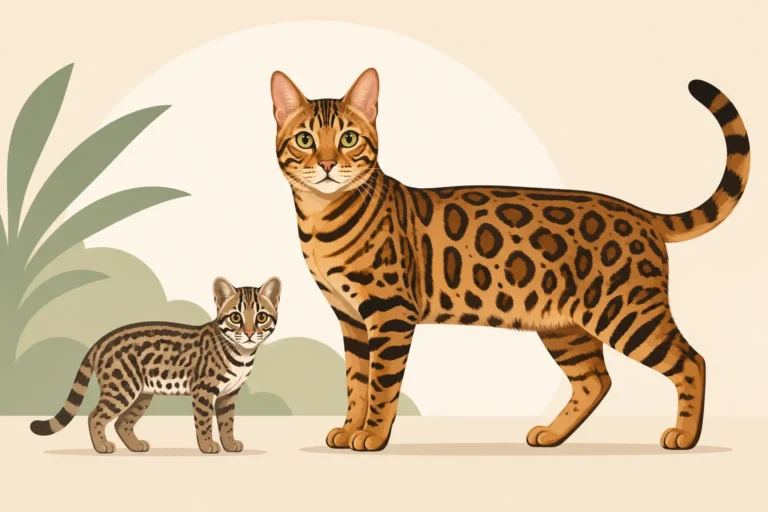
A Bengal kitten’s tail can look out of proportion while the rest of its body is growing. Kittens go through lanky stages, and their coat pattern may also look less defined for a time. As the cat matures, the tail generally appears more balanced with the body. You can explore the breed’s broader growth pattern in When a Bengal Cat Reaches Full Size.
Weight can change how the tail looks, too. A cat that has gained weight may have a less defined outline around the base, while a very lean cat may make the tail seem more prominent. Don’t assess weight from the tail alone. Look at the whole body, feel gently along the ribs, and ask your veterinarian whether your cat’s condition is appropriate.
Bengal tail markings and color
Spots, rosettes, and rings
Bengal tails often have visible markings, but there is no single pattern that every cat must display. You may see spots, broken stripes, rosettes, or darker bands that resemble rings. The markings can be more obvious along the sides or top of the tail, while the underside may look lighter. Some cats have crisp contrast; on others, the pattern blends more softly into the background color.
A rosette is a pattern made of darker markings around a lighter center. On a tail, those markings may be smaller or less dramatic than the rosettes on the body. To understand the difference between spots and rosettes elsewhere on the coat, see What a Rosette Is on a Bengal Cat. Patterns can also shift in apparent contrast as the coat changes from kittenhood to adulthood.
Tail-tip color varies with the Bengal’s coat color and pattern. Brown Bengals often have a dark, sometimes black-looking tip. Snow and other color varieties can have different shades of dark marking. Rather than expecting every tail tip to match a photograph, compare it with the cat’s overall coat pattern and color. Which Colors a Bengal Cat Comes In and What a Snow Bengal Cat Is explain some of the variation.
| Tail feature | What you may commonly see | What to keep in mind |
|---|---|---|
| Length | Medium length relative to the body | Individual cats vary; photos can distort proportions |
| Shape | Thick at the base, tapering to a rounded tip | A smooth outline matters more than exact measurements |
| Markings | Spots, rosettes, broken bands, or rings | Pattern and contrast vary among Bengals |
| Tip | Often darker than the surrounding coat | The shade depends on the cat’s color variety |
| Movement | Flexible, with changes in position and posture | A sudden change or apparent pain deserves attention |
Why color can make the tail look different
A Bengal’s base coat and markings affect how clearly the tail’s pattern shows. On a high-contrast coat, dark rings or spots may stand out. On another cat, the markings may be subtle, especially in certain lighting or when the fur is lying flat. A silver or charcoal coat can create a different visual impression from a warm brown coat, even when the tail’s underlying shape is similar. For more on the charcoal variety, see What a Charcoal Bengal Cat Is.
Light also plays tricks. A tail viewed in shadow can seem darker and thicker, while a bright overhead light may wash out markings. Phone cameras can exaggerate perspective if the tail is close to the lens. If you are trying to compare your cat’s appearance over time, take photos from a similar distance and angle, in steady natural light, rather than relying on one close-up.
When a tail’s appearance may need attention
Natural variation versus a possible injury
A Bengal may have a tail that differs slightly from the ideal breed description without being unhealthy. A mild curve that has always been present, a less distinct pattern, or a tail that looks a little shorter than a friend’s cat may simply be individual variation. If your cat moves comfortably and the appearance has not changed, a difference in shape alone is not necessarily an emergency.
A sudden change is more important. Swelling, a new kink, a wound, bleeding, or a tail that hangs limply can follow an injury and should be assessed by a veterinarian. So should signs of pain, such as flinching, growling, hiding, or resisting normal handling around the tail. Cats can conceal discomfort, so a noticeable change in movement or behavior is worth taking seriously even if the tail looks mostly normal.
Do not try to straighten a kink, massage a swollen area, or apply human ointment. Those actions can worsen an injury or expose your cat to ingredients that are unsafe for pets. Keep your cat calm and limit rough play while arranging veterinary advice. If you need to travel, a secure carrier makes handling safer; you can find carriers through pet retailers such as Chewy, but choose one that fits your cat and allows comfortable movement.
Hair loss, crusting, and skin changes
A Bengal tail should have a coat that appears continuous, though the amount of visible hair and the way it lies can differ from cat to cat. A small patch of hair loss, scabs, persistent redness, or greasy-looking skin is not simply a tail-pattern variation. Possible causes range from irritation to parasites or other skin problems, and a veterinarian is best placed to identify what is going on.
Try not to scrub the area or apply a scented wipe before an examination. If there is debris on the coat, ask your vet what cleaning method is appropriate. Pet-safe grooming supplies are available from retailers such as Chewy, but a product being sold for pets does not mean it is suitable for every skin problem. If the skin is sore or broken, get veterinary guidance before using anything.
Take a clear photo if the area is changing, and note when you first noticed it, whether your cat is licking or chewing the tail, and whether appetite or activity has changed. That history can help the vet distinguish a long-standing coat feature from a developing issue. Keep the photo in context: lighting can make healthy dark markings look like spots of irritation, and irritation can be hard to see beneath patterned fur.
Kinks, short tails, and other unusual shapes
A tail that has always had a slight bend may be a harmless individual feature, but it is not possible to diagnose the cause from appearance alone. A kink that appears suddenly, becomes more pronounced, or seems painful deserves attention. Likewise, a naturally short-looking tail should be considered alongside the cat’s history, movement, and veterinary examination rather than judged against a breed photo.
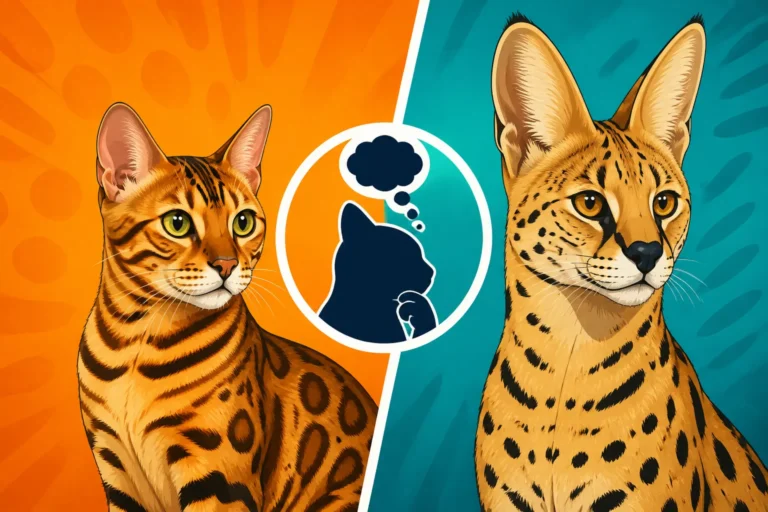
If you are choosing a Bengal kitten, ask the breeder about any unusual tail shape and whether it has been present since birth. Request clear, unedited photos and ask whether a veterinarian has examined the kitten. A responsible breeder should be able to discuss the kitten’s health honestly, not dismiss every concern as a special Bengal trait. For context on how Bengal features compare with another spotted breed, see How a Bengal Cat Differs From an Ocicat.
How to check your Bengal’s tail at home
Make a simple visual check
A brief visual check during ordinary petting is usually enough. Look at the tail from the base to the tip and notice its outline, coat coverage, and movement. Check whether the cat seems comfortable when the tail moves naturally. There is no need to inspect it repeatedly or hold it in an awkward position.
If your Bengal enjoys being brushed, use a soft brush or grooming glove lightly along the coat rather than tugging at the tail. Bengals generally have short coats that need relatively little grooming, but a gentle routine can help you notice changes. A suitable grooming tool is easy to find at pet shops, including Chewy; choose a soft option and stop if your cat dislikes the sensation. More about the coat itself is covered in Why a Bengal Cat's Coat Lies So Flat.
Keep your notes practical. Record whether a change is new, whether it affects one spot or the whole tail, and whether your cat is licking, hiding, or moving differently. This is more useful than trying to decide at home whether a tail meets a show standard.
Know when to call the veterinarian
Contact a veterinarian if the tail suddenly changes shape, becomes painful, swells, develops a wound, or cannot move as usual. Ask for advice about persistent hair loss, scabs, itching, or repeated chewing as well. A veterinarian can examine the area and decide whether further assessment is needed.
If your cat is otherwise comfortable and the tail has always looked the same, bring up your question at the next routine checkup. A clear photo from the side and from above can help show its natural shape. If the concern is new or your cat seems distressed, do not wait for a routine appointment simply because the markings make the change hard to see.
Disclaimer
This article is for general informational purposes only and does not constitute professional advice. Laws, prices and regulations vary by location and change over time. Consult a qualified professional for guidance on your specific situation.