How Glitter Looks on a Snow Bengal Cat
Many prospective Bengal cat owners dream of that stunning, wild look, often focusing on rosettes or marbling, but sometimes overlook a truly magical trait: the "glitter" that makes their coat shimmer. This subtle, yet captivating, characteristic becomes even more enchanting on a Snow Bengal, where the lighter canvas allows the sparkle to truly pop. If you're wondering how this unique genetic trait manifests on a Snow Bengal's pale, often ice-blue or creamy coat, and why it looks so different from a traditional brown Bengal, you've come to the right place. This guide will delve into the mesmerizing world of Bengal cat glitter, specifically exploring its appearance and impact on the beautiful Snow varieties.
The Unique Brilliance of the Bengal Cat's Coat
Bengal cats are celebrated for their exotic appearance, and rightly so. Their patterns are unlike any other domestic breed, directly inheriting traits from their wild ancestor, the Asian Leopard Cat. But beyond the spots and swirls, there's a shimmering quality that elevates their beauty, particularly noticeable on certain color variations. This isn't just a shiny coat; it's a structural phenomenon that makes each Bengal unique.
What Defines a Bengal's Pelt-Like Coat
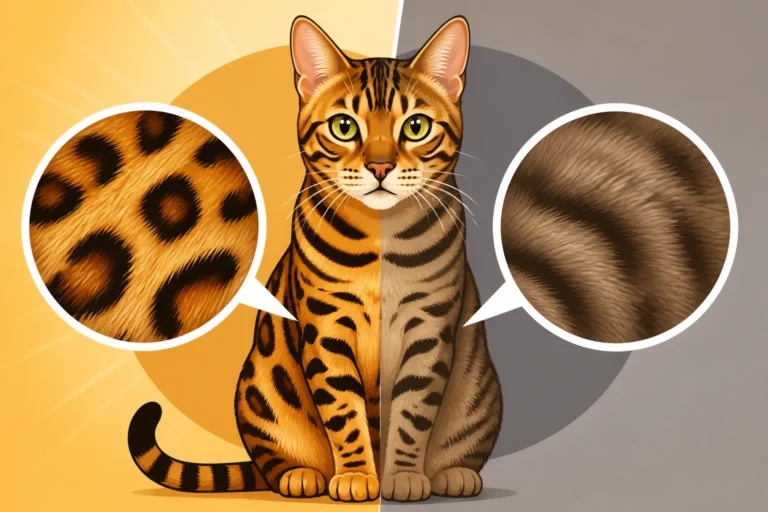
Unlike many domestic cats with fluffy, thick fur, a Bengal's coat is often described as feeling more like a pelt or even silk. This isn't just an aesthetic description; it reflects a genuine difference in the hair shaft structure and density. Their fur is remarkably short, dense, and lies close to the body, contributing to that sleek, wild appearance. When you run your hand over a Bengal's coat, you often feel a luxurious smoothness that’s distinct from a typical housecat's fluffier texture. This "pelted" quality is one of the hallmarks of the breed standard.
This unique coat texture is a direct inheritance from the Asian Leopard Cat, which evolved in warmer climates and didn't require the dense undercoat common in many domestic breeds. This evolutionary advantage means less shedding for you and a distinctly soft feel against your skin. The absence of a thick, woolly undercoat also contributes to the definition and clarity of their patterns, allowing each rosette or marble to stand out sharply against the background color.
The lack of a heavy undercoat is also why many people, perhaps mistakenly, believe Bengal cats are hypoallergenic. While no cat is truly hypoallergenic, the reduced shedding and different dander distribution due to their coat structure can indeed be less irritating for some allergy sufferers. Why People Think a Bengal Cat Is Easier on Allergies delves deeper into this common misconception, but the fact remains that their coat is truly special, almost self-cleaning in its texture and density.
The Phenomenon of Bengal Glitter
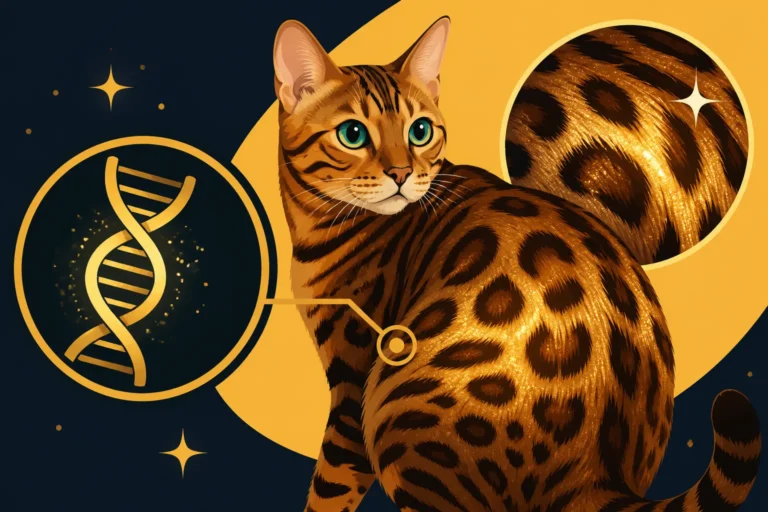
Now, let's talk about the magic: glitter. This isn't literal glitter sprinkled on their fur; it's an inherent genetic trait that causes their hair shafts to be hollow and translucent, rather than opaque. This translucency allows light to penetrate the hair shaft and reflect back, creating a sparkling, iridescent effect. It's like thousands of tiny prisms embedded in their fur, catching and refracting light in a dazzling display. Not every Bengal cat has glitter, but it’s a highly prized trait among breeders and enthusiasts.
The glitter gene is what gives many Bengal cats that ethereal, almost gold-dusted appearance, especially on brown Bengals. It’s a shimmer that seems to come from within the coat, rather than just a surface sheen. When you see a Bengal with good glitter in direct sunlight, it’s truly breathtaking – it looks as if they've been sprinkled with fairy dust. This is why it's often a significant factor in a Bengal cat's show quality and desirability. What the Glitter Gene Does to a Bengal Cat explains the genetic mechanism behind this captivating trait in more detail.
Interestingly, the glitter often becomes more apparent as the cat matures. While some kittens may show hints of it, the full effect typically develops as their adult coat comes in and their "fuzzies" clear. It's also something that breeders strive to preserve and enhance through careful selection, as it's a key feature that makes a Bengal's appearance so exotic and unique.
The "Snow" Canvas: Lynx, Mink, and Sepia
Snow Bengals are a striking variation of the breed, characterized by their lighter, cream to ivory background colors and often captivating blue eyes (in the case of Lynx Points). There are three main types of Snow Bengals, each with subtle differences in their base color and points, all stemming from specific temperature-sensitive albino genes.
First, we have the Seal Lynx Point Bengal. These are the lightest of the snows, often born pure white or very light cream, developing their pattern as they mature. Their defining feature is their brilliant blue eyes, a direct result of the gene that creates their pointed coloration, similar to a Siamese. Their patterns are typically a pale brown or seal color, contrasting beautifully with their light body. What a Seal Lynx Point Bengal Cat Is offers a comprehensive look at this stunning variation.
Next is the Seal Mink Bengal. Minks are a combination of the Lynx Point gene and the Sepia gene. They have a slightly darker base coat than Lynx Points, often a creamy ivory or light tan, and their patterns are more pronounced, appearing in varying shades of medium brown. Their eye color can range from aqua to green, often displaying a captivating blend of both. They represent a beautiful intermediate step in the snow spectrum, showcasing both depth and lightness. What a Seal Mink Bengal Cat Is further elaborates on their unique characteristics.
Finally, we have the Seal Sepia Bengal. These are the darkest of the Snow Bengals, possessing two copies of the Sepia gene. Their background color is a rich cream, tan, or even light golden brown, with dark brown patterns that offer a strong contrast. Their eyes are typically green or gold, lacking the blue hue of the Lynx Point. Despite being the "darkest" snow, they still maintain a distinct luminescence that sets them apart from brown Bengals. What a Seal Sepia Bengal Cat Is dives deeper into the specific traits of this beautiful variation. Each of these snow variations provides a unique canvas upon which the glitter gene can perform its magic.
The Magic of Glitter on a Snow Bengal Cat
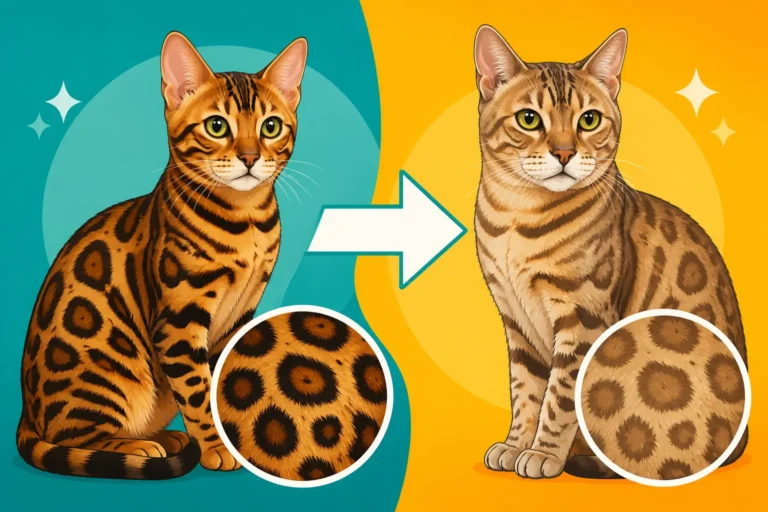
When the translucent, light-refracting hair shafts of the glitter gene combine with the pale, luminous coats of a Snow Bengal, something truly special happens. The effect is different, yet equally breathtaking, to the glitter seen on a traditional brown Bengal. It’s not just a surface shine, but an internal glow that seems to emanate from the cat's very essence.
How Translucent Hair Shafts Interact with Pale Pigment
The "glitter" effect, as we discussed, comes from the hollow, translucent nature of the individual hair shafts. On a brown Bengal, these translucent shafts allow light to interact with the underlying warm pigments, creating a golden, shimmering appearance. However, on a Snow Bengal, the game changes entirely. The pale, often cool-toned pigments (or lack thereof, in the case of Lynx points) create a different backdrop.
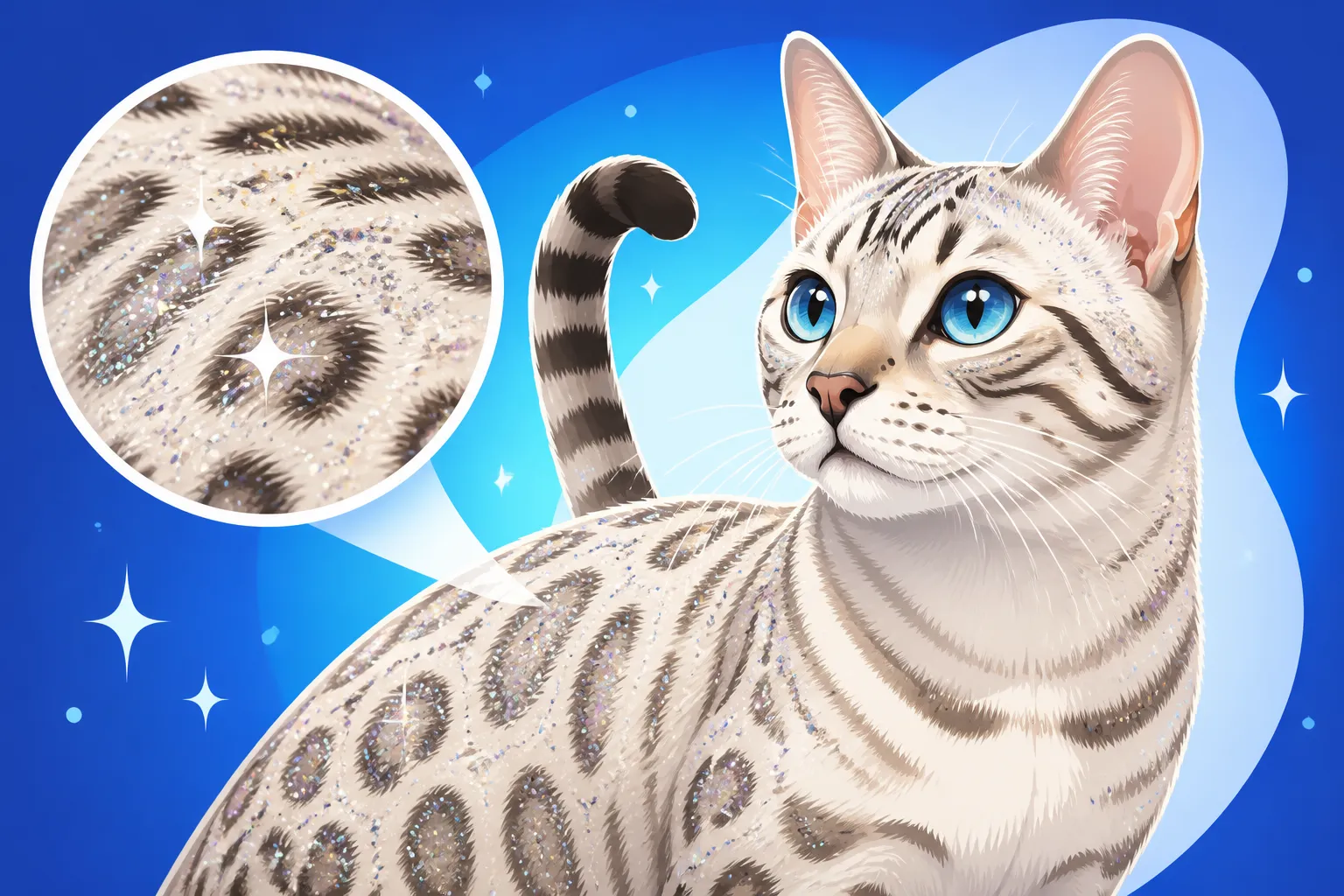
Instead of a golden sparkle, the glitter on a Snow Bengal often appears as an icy shimmer, a silvery-white gleam, or even a soft, pearl-like luminescence. The translucency of the hair shafts allows more ambient light to pass through and reflect off the very pale or unpigmented core of the hair, enhancing the brightness of the coat rather than just adding a colored sparkle. It's less about adding a color of sparkle and more about amplifying the coat's inherent luminosity, making it seem almost incandescent.
This unique interaction means that a Snow Bengal with strong glitter can appear to glow from within, especially in certain lighting conditions. The subtle dance of light across their pale fur can be truly mesmerizing, turning a beautiful cat into a living, breathing work of art. It accentuates the pristine quality of their snow-white or creamy base, giving it an otherworldly dimension that’s highly sought after.
Visual Manifestations: Icy Shimmer and Pearl-Like Sheen
The visual impact of glitter on a Snow Bengal is distinct and captivating. On a Seal Lynx Point, with their almost white background, the glitter often presents as a sparkling, icy sheen. Imagine fresh snow on a sunny day, catching countless tiny diamonds of light – that's the kind of ethereal shimmer you can expect. It enhances the crispness of their white areas and makes their subtle patterns seem to float across their body with an almost phosphorescent quality.
For Seal Mink Bengals, with their slightly warmer, creamier tones, the glitter can lean towards a soft, pearl-like luster. It's a delicate shimmer that adds depth and richness to their ivory coat, making it look incredibly luxurious. The sparkle isn't as overtly "icy" as on a Lynx Point, but it's still distinct from the golden glitter of a brown Bengal. Instead, it adds a soft, warm glow that complements their overall coloration beautifully.
On a Seal Sepia Bengal, where the background is a deeper cream or tan, the glitter might appear as a more subdued, yet still striking, silvery or pale gold dust. It adds a sophisticated gleam to their richer base, providing a beautiful contrast to their dark patterns. In all Snow Bengals, regardless of their specific shade, the glitter acts to enhance the clarity and brilliance of their coat, making them truly stand out.
| Snow Bengal Type | Base Coat Color | Eye Color Range | Glitter Appearance |
|---|---|---|---|
| Seal Lynx Point | Pure white to light cream | Blue | Icy, silvery sparkle; highly luminous |
| Seal Mink | Creamy ivory to light tan | Aqua, green, or gold | Soft, pearl-like luster; warm, subtle glow |
| Seal Sepia | Rich cream to golden tan | Green or gold | Silvery or pale gold shimmer; adds sophisticated gleam |
How Lighting Affects the Perception of Glitter
Just like a diamond's sparkle depends on the light hitting its facets, a Snow Bengal's glitter truly comes alive under specific lighting conditions. In bright, natural sunlight, the effect is most pronounced. Each translucent hair shaft acts like a tiny fiber optic, catching the sun's rays and scattering them, making the entire cat appear to sparkle. It's a dynamic shimmer that changes as the cat moves, revealing new angles of light reflection.
Indoors, under soft, ambient lighting, the glitter might be less dramatic but still present. It often manifests as a subtle sheen, making the coat appear exceptionally healthy and vibrant rather than overtly sparkly. Under direct artificial light, such as a spotlight or strong indoor lamp, the glitter can again become very noticeable, almost like fine iridescent powder sprinkled over their fur. This variable appearance adds to the mystique of the glitter gene; you might see your cat in a different light every day.
This sensitivity to light is why it's so important to see a Bengal cat in various lighting conditions if you're assessing its glitter. A cat that looks merely shiny indoors might absolutely gleam in the garden on a sunny day. This inherent variability is part of the charm and wonder of the glitter gene. Whether Glitter Fades in a Bengal Cat addresses concerns about the longevity of this trait, assuring owners that the sparkle is a permanent fixture of their cat's genetics.
Caring for a Glittering Snow Bengal Coat
While the glitter gene itself doesn't require special care, maintaining a Snow Bengal's overall coat health is crucial to ensuring that their beautiful shimmer always looks its best. A healthy cat with a well-nourished coat will naturally display its glitter more prominently and beautifully. The good news is, Bengal coats are generally very low maintenance.
Minimal Grooming Requirements for Bengals
One of the many joys of owning a Bengal cat is their remarkably low grooming needs. Their short, dense, pelt-like coat sheds minimally compared to most domestic breeds, and they are excellent self-groomers. You won't find yourself constantly battling a house full of cat hair, which is a huge bonus! How Little a Bengal Cat Sheds for a Shorthair goes into why their shedding is so manageable.
Because their fur lies so flat and has minimal undercoat, it rarely mats or tangles, even if they're particularly active. Regular brushing, perhaps once a week with a soft brush or grooming glove, is usually more for bonding and removing any loose hairs rather than a necessity. Many Bengals even enjoy the attention! For a truly fuss-free approach, products available on Amazon like a gentle rubber curry brush can be perfect for stimulating their skin and distributing natural oils without irritating their sensitive skin.
Beyond brushing, routine care such as nail trims, ear checks, and occasional dental care are far more critical for a Bengal's overall health than extensive coat grooming. Their sparkling coat will largely take care of itself, as long as the cat is healthy inside.
Enhancing Natural Shine Through Diet and Health
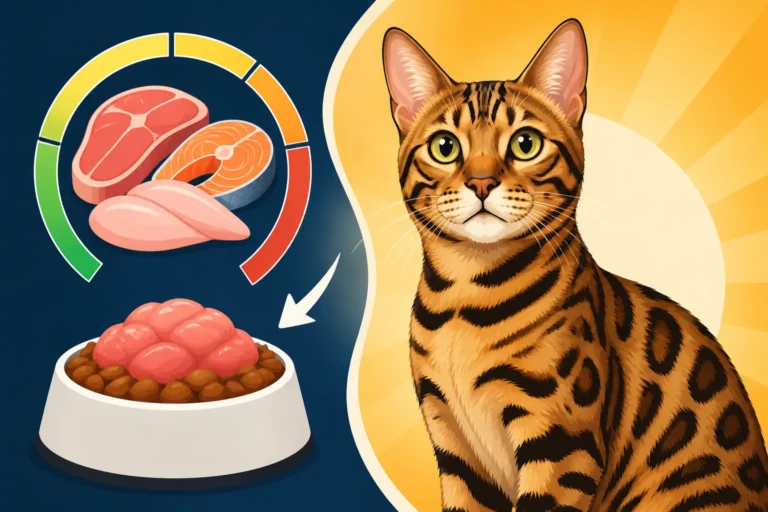
The old adage "you are what you eat" holds true for our feline friends, especially when it comes to coat health. A shimmering, glittery coat is a strong indicator of a healthy cat. Therefore, the best way to ensure your Snow Bengal's glitter shines brightly is to provide them with a high-quality, species-appropriate diet. Bengals, being highly active and descendants of wild felines, thrive on a diet rich in animal protein. Which Protein Percentage Suits a Bengal Cat explains the specific dietary needs of this energetic breed.
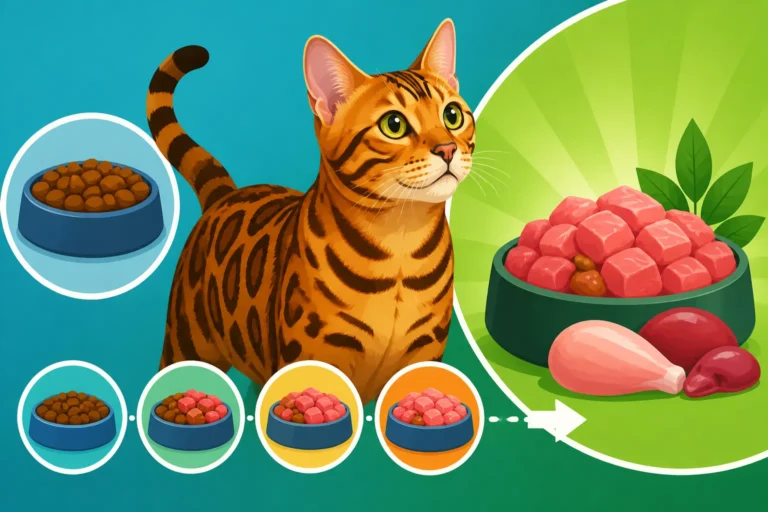
Look for cat foods with real meat as the first ingredient and a high protein content. Many owners opt for premium kibbles, wet foods, or even raw diets to meet these requirements. Fresh, human-grade cat food can significantly contribute to a lustrous coat and overall vitality. Adequate intake of essential fatty acids, such as Omega-3 and Omega-6, is also crucial for skin and coat health. These can be found in quality cat foods or supplemented with fish oil, which you can find readily on Chewy.
Beyond diet, regular veterinary check-ups are essential to catch any underlying health issues that could affect coat quality. Parasites, skin conditions, or systemic illnesses can all dull a cat's coat, making their glitter less apparent. Ensuring your Bengal is up-to-date on vaccinations and preventative care will contribute to their dazzling appearance as much as any specific grooming routine.
Protecting the Coat and Preventing Dullness
While a Bengal's coat is relatively robust, there are a few things you can do to protect its natural brilliance. First, minimize exposure to harsh chemicals or irritants. If your cat gets dirty, a gentle, cat-specific shampoo is usually sufficient, but Bengals rarely need full baths thanks to their self-grooming habits and water affinity. Why a Bengal Cat Loves Water illustrates how they often take care of their own bathing needs!
Environmental factors can also play a small role. Prolonged exposure to intense sunlight can sometimes subtly alter coat pigments over time, though it rarely affects the glitter itself, which is a structural characteristic. Providing shaded areas, especially if your Bengal enjoys time in a catio, can help preserve their pristine snow coloring. What to Put in a Bengal Cat's Catio provides ideas for making their outdoor space comfortable and safe.
Finally, ensuring your Bengal is free from stress is important. A happy, well-adjusted cat is a healthy cat, and health always translates to a more vibrant coat. Regular play, mental enrichment, and a stable environment will support their overall well-being, allowing their inherent glitter to shine through beautifully on their stunning snow-white or creamy canvas.
Disclaimer
This article is for general informational purposes only and does not constitute professional advice. Laws, prices and regulations vary by location and change over time. Consult a qualified professional for guidance on your specific situation.