How Little a Bengal Cat Sheds for a Shorthair
One of the most common worries potential cat parents have, especially those with allergies or who just dread constant cleaning, is shedding. You might love the idea of a beautiful, active Bengal cat, but worry that their short coat means they'll leave a trail of fur everywhere. Well, I'm here to tell you that the Bengal cat is surprisingly low-shedding for a shorthair breed, and understanding why will definitely put your mind at ease. This guide will walk you through the unique aspects of their coat, what minimal shedding really looks like, and how to keep your home as fur-free as possible.
Understanding the Bengal Cat's Unique Coat
When you first pet a Bengal cat, you'll immediately notice something different about their coat. It's not like the soft, fluffy fur of a domestic shorthair you might be used to. There's a certain sleekness, an almost wild silkiness that really sets them apart. This isn't just a fancy way of describing their looks; it's a fundamental difference that impacts everything from grooming to, yes, how much they shed.
The "Pelted" Feel
Many people describe a Bengal cat's coat as feeling like a "pelt" rather than traditional fur. And honestly, that's spot on. It's incredibly soft, almost velvety, and lies very close to their body. When you run your hand over it, you'll find it incredibly smooth, with minimal resistance. This isn't just a tactile sensation; it's a structural characteristic that distinguishes them. Their individual hair shafts are often shorter and finer than many other shorthaired breeds, contributing to this distinct texture. It’s part of what makes them so captivating to touch and look at. They don’t have that thick, plush feel that some cats do, which means less material to potentially shed into your environment. You can read more about this unique characteristic in A Bengal Cat's Coat Is a Pelt, Not Fur.
Lack of a Dense Undercoat
One of the biggest reasons for a Bengal cat's surprisingly low shedding is their minimal undercoat. Many cat breeds, especially those originating from colder climates, have a thick, woolly undercoat to provide insulation. This undercoat is often the primary source of shedding, as it cycles out to make way for new growth or adjusts for seasonal temperature changes. Bengal cats, with their wild ancestry tracing back to the Asian Leopard Cat, evolved in warmer regions. Their coat adapted to be sleek and less insulating, which means they simply don't have that dense, fluffy layer underneath their topcoat. Without a significant undercoat, there's just less hair to fall out. This is a game-changer when it comes to living with a cat, as you won't find those tell-tale tufts of undercoat floating around your home. For a deeper dive, check out Why a Bengal Cat Has Almost No Undercoat.
Wild Ancestry Influence
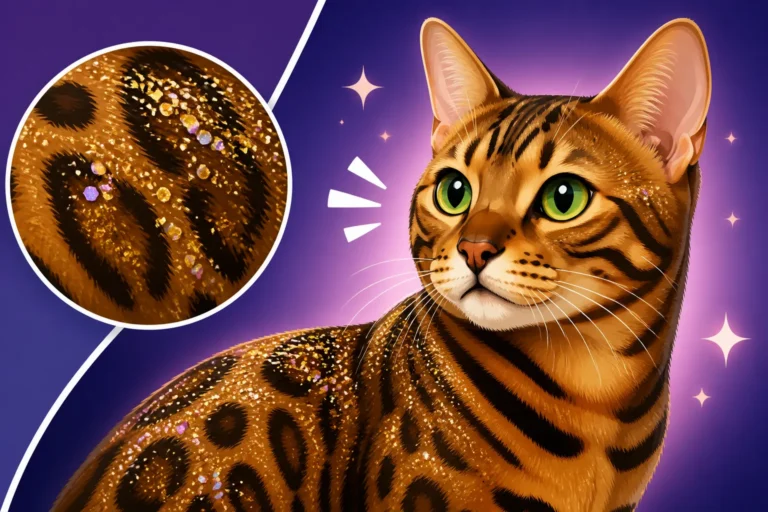
The direct influence of their wild ancestor, the Asian Leopard Cat, is paramount here. These wild cats require a coat that allows for agility, protection from the elements without overheating, and camouflage. A heavy, shedding coat would be a hindrance in their natural habitat. Therefore, the Bengal cat inherited many of these desirable coat traits, including the fine texture and the reduced undercoat. This genetic legacy means their coats are designed for efficiency and sleekness, not for piling up on your furniture. It's truly fascinating how generations of selective breeding maintained this characteristic, making them not just beautiful but also quite practical for indoor living, especially for those who appreciate a cleaner home environment. The "glitter gene," which gives their coats a shimmering appearance, also contributes to the fine, smooth texture, making the hair less prone to snagging and breaking off. Understanding What the Glitter Gene Does to a Bengal Cat can further illuminate this unique trait.
The Science Behind the Low Shedding
While the feel and appearance of a Bengal's coat are obvious, the reasons behind its low-shedding nature go deeper, right down to the biology of their hair follicles and growth cycles. It's not magic, but rather a fascinating interplay of genetics and evolutionary adaptation.
Hair Follicle Structure
The structure of a Bengal cat's hair follicles plays a significant role in their minimal shedding. Unlike many other breeds where follicles might produce multiple hairs of varying thicknesses (a common trait in cats with dense undercoats), Bengal cats tend to have follicles that produce a single, fine, guard hair or very few secondary hairs. These individual hairs are strong and resilient, adhering well within the follicle. This robust attachment, combined with the finer diameter of the hair itself, means fewer hairs are naturally released during the shedding cycle. Imagine a tightly woven fabric versus a loosely knit one; the Bengal's coat is more like the former, holding its threads together firmly.
Hair Growth Cycle
All mammalian hair goes through a growth cycle: anagen (growth), catagen (transition), and telogen (resting/shedding). What's different about the Bengal cat is the duration and synchronization of these cycles. Their anagen phase, the active growth period, tends to be longer, meaning hairs stay attached to the follicle for a greater period. Additionally, their telogen phase, when hairs are released, is often less synchronized across the entire coat. Instead of large sections of hair being released all at once (which is what causes heavy shedding "seasons" in many breeds), Bengal cats shed their individual hairs more gradually and sparsely. This results in a continuous, but very light, release of hair rather than noticeable clumps or excessive fur accumulation around your home.
Environmental Factors' Role
It's also worth noting that an indoor lifestyle often influences shedding patterns. Cats that live indoors are typically exposed to more consistent temperatures and light cycles, which can desynchronize seasonal shedding. For a Bengal cat, already genetically predisposed to low shedding, this controlled environment further minimizes dramatic seasonal changes in their coat. While an outdoor cat might experience heavier sheds in spring and fall to adapt to temperature swings, an indoor Bengal's shedding is often a steady, almost imperceptible trickle. Of course, individual factors like climate control in your home can play a small part, but the primary driver remains their unique genetic makeup.
Managing the Minimal Shedding
Even with their low-shedding coats, Bengal cats still benefit from a little care. The good news is, it's typically far less involved than grooming other breeds, leaving you more time for play and cuddles!
Grooming Needs or Lack Thereof
You'll be delighted to know that your Bengal cat's grooming routine is likely to be incredibly low maintenance. Because they have such a fine, short coat with minimal undercoat, regular brushing is often more for bonding and health checks than for removing vast amounts of loose hair. A quick brush once or twice a week with a soft rubber curry brush or a grooming glove is usually all that's needed. This helps to distribute natural skin oils, remove any stray hairs, and simply keep their coat looking its best. They rarely get tangles or mats, which is a huge relief for owners who've struggled with long-haired breeds. For specific tips on tools, consider checking out Which Brush a Bengal Cat Will Tolerate. It’s truly one of the perks of Bengal ownership – less time grooming, more time admiring that gorgeous pelt!
Diet and Skin Health
What your Bengal cat eats directly impacts the health and quality of their coat, and by extension, their shedding. A high-quality diet rich in animal protein and essential fatty acids (like Omega-3 and Omega-6) is crucial. These nutrients support healthy skin and a strong, lustrous coat, minimizing excessive shedding caused by poor nutrition. Look for foods that list meat as the first ingredient and avoid fillers that offer little nutritional value. Many Bengal owners swear by certain brands available at retailers like Chewy or specialty pet stores, ensuring their cats get the best start. If your Bengal has a sensitive stomach, which some do, a specific diet can also help keep their coat in top condition. We discuss dietary needs further in The High Protein Argument for a Bengal Cat and How Much a Bengal Cat Eats to Fuel That Activity.
Cleaning Your Home
While Bengal cats shed minimally, they still shed some hair, just like all living creatures. You'll likely notice the occasional stray hair on dark clothing or furniture. The good news is that because the hairs are typically fine and short, they tend not to cling as stubbornly or form as many tumbleweeds as the fur from heavier-shedding breeds. A regular vacuuming schedule, especially in areas where your Bengal likes to nap, will usually suffice. For quick clean-ups, a lint roller or a damp cloth works wonders on upholstery. You won't typically need heavy-duty de-shedding tools for your furniture, but a good quality vacuum cleaner is always a worthwhile investment for any pet owner.
Dispelling Misconceptions and Allergy Claims
The topic of shedding often goes hand-in-hand with discussions about allergies. It's important to clarify what "low-shedding" truly means for a Bengal cat and manage expectations, especially for those sensitive to feline allergens.
"Hypoallergenic" Myth
Let's address this head-on: no cat breed is truly 100% hypoallergenic. The main allergen in cats isn't fur itself, but a protein called Fel d 1, which is found in their saliva, skin dander, and urine. When cats groom themselves, they spread this protein onto their fur, which then sheds into the environment. However, some breeds, including Bengal cats, are often touted as "hypoallergenic" because they produce less Fel d 1 protein, and their low-shedding coats distribute less of it. While this can mean a Bengal cat is better tolerated by some allergy sufferers, it doesn't mean they are entirely allergen-free. It's always a good idea for individuals with allergies to spend time with a Bengal cat before committing to adoption to see if they have a reaction. The question of Whether the Bengal Cat Hypoallergenic Claim Holds Up is a complex one, but their low shedding certainly helps reduce allergen dispersal.
Comparing to Other Breeds
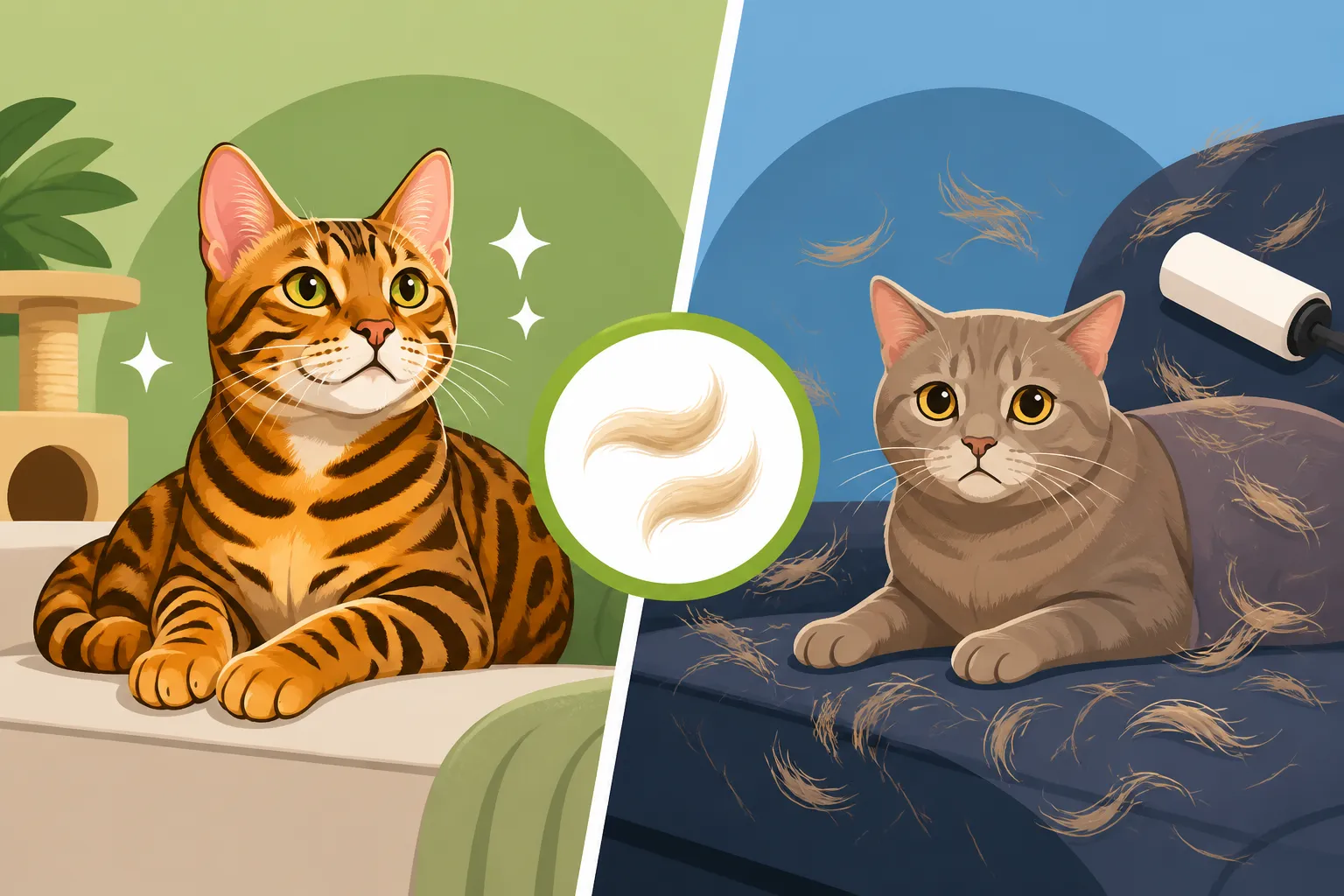
When we say a Bengal cat sheds little "for a shorthair," it's important to put that into perspective. Compared to breeds like a British Shorthair or even many domestic shorthairs, the difference is noticeable. Breeds with dense, plush coats often shed significantly more, especially during seasonal changes, resulting in more visible fur around the house and on clothing. Bengal cats, with their fine, pelt-like coat and minimal undercoat, produce far less visible hair. Imagine the difference between wearing a finely woven silk scarf versus a chunky wool sweater; the silk leaves fewer fibers behind. This makes them a popular choice for those who want the companionship of a cat without the constant battle against shedding fur. It's not just an aesthetic preference; it's a practical benefit that many Bengal owners truly appreciate.
| Shedding Level | Coat Type | Typical Breeds | Grooming Frequency (to manage shedding) |
|---|---|---|---|
| Very Low | Single, fine coat; minimal undercoat | Bengal, Sphynx (no fur), Cornish Rex, Devon Rex | Once a week (or less) |
| Low to Moderate | Short, dense coat; some undercoat | Siamese, Russian Blue, Oriental Shorthair | Once or twice a week |
| Moderate | Standard domestic shorthair; double coat | Domestic Shorthair, American Shorthair, Bombay | Two to three times a week |
| Moderate to High | Long/medium coat; dense undercoat | Maine Coon, Persian, Ragdoll, Norwegian Forest Cat | Daily to several times a week |
Seasonal Changes and Other Factors
While Bengal cats are known for their minimal shedding, it's not entirely static. Like all living creatures, their bodies respond to various internal and external cues, which can cause slight fluctuations in their coat.
Minor Seasonal Sheds
Even with their reduced undercoat and efficient hair cycles, Bengal cats aren't entirely immune to seasonal changes. You might notice a very slight increase in shedding during spring as they lighten their coat for warmer weather, and perhaps a tiny bit more in autumn as they prepare for cooler temperatures. However, these "shedding seasons" are often so subtle that many owners barely notice them. Unlike other breeds that might leave significant piles of fur, a Bengal's seasonal shed usually just means a few more hairs on your furniture than usual, easily managed with a quick brush. This is part of their natural biological rhythm, a gentle ebb and flow rather than a dramatic transformation.
Stress and Health Impacts
A cat's coat is often a good indicator of their overall health and emotional state. If your Bengal cat suddenly starts shedding more than usual, it could be a sign of stress or an underlying health issue. Stress, such as a change in environment, a new pet, or even just feeling unsettled, can sometimes trigger increased shedding. Similarly, nutritional deficiencies, parasites, skin allergies, or other medical conditions can also affect coat health and lead to excessive hair loss. If you notice a significant change in your Bengal's shedding pattern, accompanied by other symptoms like lethargy, changes in appetite, or skin irritation, it's always best to consult your veterinarian. They can help identify the cause and recommend the appropriate treatment or dietary adjustments. We touch on general health in What a Bengal Cat Weighs and How Long a Bengal Cat Lives on Average.
Aging Coat Changes
As Bengal cats get older, just like people, their bodies undergo various changes, and their coat is no exception. An aging Bengal cat might experience subtle shifts in the texture or density of their coat. The "pelted" feel might become slightly less pronounced, and while still minimal, they could shed a tiny bit more than they did in their prime. Their overall activity levels also naturally decrease as they age, which means their metabolic rate might slow down, indirectly influencing coat turnover. This is a normal part of the aging process and generally nothing to worry about. Keeping them on a high-quality senior diet and ensuring regular vet check-ups can help maintain their coat health as they gracefully enter their golden years. For more on this, you might find Caring for a Bengal Cat Past Ten helpful.
Disclaimer
This article is for general informational purposes only and does not constitute professional advice. Laws, prices and regulations vary by location and change over time. Consult a qualified professional for guidance on your specific situation.