Whether Raw Feeding Is Safe for a Bengal Cat
It's completely understandable to feel overwhelmed when you start researching diets for your active, wild-looking Bengal cat. One topic that sparks a lot of passionate debate is raw feeding, and many Bengal owners are left wondering if it's truly safe or just a risky fad. This guide will dive deep into the safety aspects of a raw diet for your Bengal, exploring the benefits, the genuine concerns, and how to approach it thoughtfully if you choose this path.
The Allure and Apprehension of Raw Feeding for Bengal Cats
The idea of feeding a raw diet to our feline companions, especially a breed as close to its wild roots as the Bengal, can be incredibly appealing. We want to give them the very best, something that mirrors what their ancestors would have eaten. Yet, with all the enthusiasm, there's also a significant undercurrent of worry, and for good reason.
Why Owners Consider Raw Diets for Their Bengals
For many Bengal cat owners, the decision to explore raw feeding stems from a desire to provide a diet that feels more "natural" and biologically appropriate. Bengals are known for their incredible energy and lean, muscular builds, and it's easy to imagine their wild ancestors, the Asian Leopard Cats, thriving on a diet of freshly caught prey. This often leads owners to believe that a raw diet, composed of muscle meat, organs, and bone, might offer superior nutrition compared to highly processed kibble. They often hope for benefits like a shinier coat, improved dental health, more energy (if that's even possible for a Bengal!), and better digestive health. Given that many Bengal cats have notoriously sensitive stomachs, as we discuss in Why a Bengal Cat's Gut Is So Sensitive, finding a diet that agrees with them is a top priority for countless owners.
Furthermore, there's a strong argument, often championed by breeders, regarding the high protein needs of these athletic cats. The discussions around The High Protein Argument for a Bengal Cat frequently lead to raw feeding as a primary solution. Owners see their Bengals as mini-predators, and a diet mimicking their evolutionary prey seems like the most logical choice to fuel their unique physique and boundless activity. They might notice their Bengal is just not thriving on commercial kibble, perhaps still having intermittent loose stools or a lacklustre coat, and turn to raw as a potential solution for these nagging issues.
The Core Concerns and Risks Associated with Raw Feeding
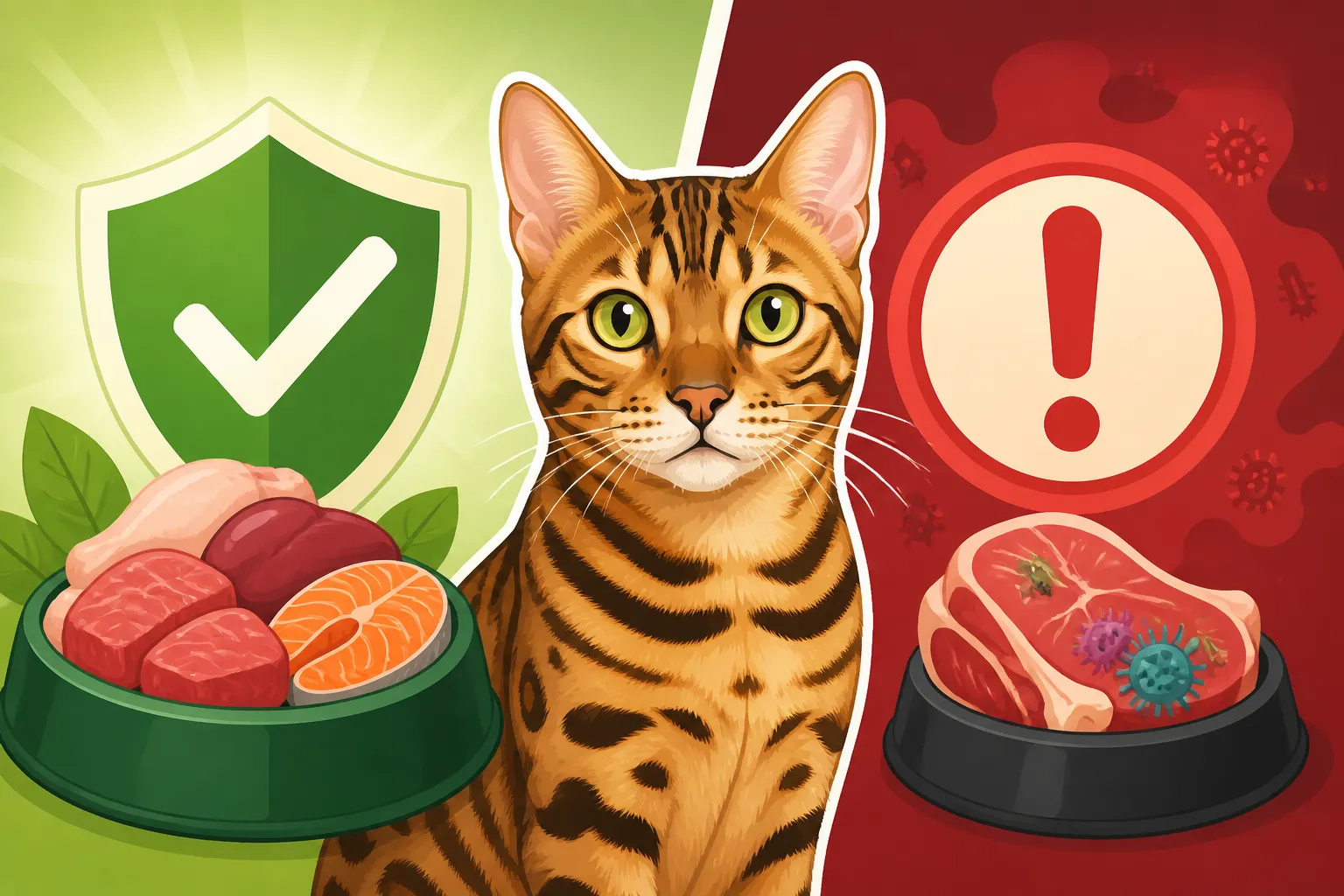
Despite the compelling arguments for raw feeding, it's crucial to acknowledge the very real, often serious, concerns that come with it. The primary worry revolves around bacterial contamination. Raw meat can harbor pathogens like Salmonella, E. coli, Listeria, and Clostridium, which can cause severe gastrointestinal illness in both cats and humans. While cats have a naturally acidic stomach and a shorter digestive tract that can often process some bacteria more efficiently than humans, they are not immune to these pathogens. Kittens, senior cats, and those with compromised immune systems are particularly vulnerable. Imagine the distress of seeing your normally vivacious Bengal suddenly lethargic, vomiting, or suffering from severe diarrhea – a scary prospect for any cat parent.
Beyond bacterial risks, there are significant nutritional challenges. Crafting a "complete and balanced" raw diet is far more complex than simply tossing a piece of raw chicken into a bowl. A diet that lacks the correct ratios of calcium to phosphorus, or is deficient in essential vitamins and minerals like taurine, can lead to serious long-term health problems. Bones, while a natural part of a prey diet, can also pose risks if fed incorrectly. Cooked bones are brittle and can splinter, causing internal damage, but even raw bones can be a choking hazard or cause dental fractures if not appropriately sized and monitored. It’s a delicate balance to get right, and a mistake could have lasting consequences for your beloved feline.
Navigating the Nutritional Complexities of a Raw Diet
The journey into raw feeding isn't just about choosing raw meat; it's about becoming a nutritionist for your cat. This means understanding not just what to feed, but how much and in what proportions to ensure your Bengal gets everything they need to thrive.
Understanding the "Complete and Balanced" Equation
Achieving a nutritionally complete and balanced raw diet is perhaps the most challenging aspect of raw feeding. Cats, as obligate carnivores, have specific dietary requirements that differ significantly from humans or even dogs. For example, they need a higher amount of protein and fat, and crucially, they cannot synthesize certain nutrients, like taurine, from other amino acids. A deficiency in taurine can lead to serious heart problems (HCM) and retinal degeneration, highlighting just how critical it is to get this right.
A truly balanced raw diet typically follows a "prey model" or a "BARF" (Biologically Appropriate Raw Food) model. The prey model aims to replicate the nutritional content of a whole prey animal, usually consisting of about 80% muscle meat, 10% edible bone, 5% liver, and 5% other secreting organs. The BARF model is similar but often includes small amounts of fruits, vegetables, and supplements, although many raw feeders argue that these are not strictly necessary for an obligate carnivore. The exact ratios are crucial; for instance, too much bone can lead to constipation or a calcium-phosphorus imbalance, while too little can lead to bone density issues. This is why discussions in communities often ask What a Raw Diet Involves for a Bengal Cat and focus heavily on these ratios.
Many commercial raw foods are formulated to be complete and balanced, offering a much simpler approach for owners. These are often available frozen or freeze-dried from various pet suppliers, including popular online stores like Chewy and Amazon. If you choose to prepare homemade raw meals, you must be meticulous in your calculations and ingredient sourcing. You might need to add specific supplements to ensure all micronutrient requirements are met, particularly if you're unable to source a full range of organs. Neglecting these details could easily lead to nutritional deficiencies over time, slowly impacting your Bengal's long-term health.
The Importance of Sourcing and Handling Raw Ingredients
The safety of your Bengal's raw diet begins long before the food ever reaches their bowl – it starts with responsible sourcing and rigorous handling. Where you get your raw ingredients from makes a huge difference. Opting for human-grade meat from reputable butchers or grocery stores is a good starting point, as these sources are subject to stricter safety regulations than feed-grade meats. Avoid discount or “bargain” meats that may have been handled poorly or are past their prime. Some owners even buy pre-prepared raw grinds from companies that specialize in pet food, which can offer greater peace of mind regarding quality and safety.
Once you have your ingredients, proper handling is paramount to prevent bacterial contamination and cross-contamination in your home. Treat raw meat for your cat exactly as you would raw meat for human consumption. This means:
- Separate cutting boards and utensils: Dedicate specific tools for raw pet food preparation, distinct from those you use for your family's meals.
- Thorough cleaning: Immediately wash all surfaces, bowls, and utensils that come into contact with raw meat using hot, soapy water.
- Cold storage: Store raw meat frozen until ready to use, and thaw it slowly in the refrigerator, never on the counter.
- Short shelf life: Once thawed, raw food should be used within a day or two and never left out at room temperature for extended periods.
It's a lot of extra work, and a simple lapse in hygiene could mean a sick cat or, worse, a sick family member. The concerns about bacterial transfer are valid, which is why diligent practices are non-negotiable for raw feeders.
Mitigating Risks and Ensuring Safety in Raw Feeding
Choosing to feed a raw diet means taking on the responsibility of minimizing risks. This isn't just about the food itself, but also about the environment in which it's prepared and consumed, and how you monitor your Bengal's response.
Practical Steps for Safe Preparation and Storage
When preparing raw meals, think of your kitchen as a sterile operating room – almost. The goal is to minimize any opportunity for bacteria to spread. Start by dedicating a specific area or counter space for raw food prep, if possible. Use gloves if you're handling large quantities or if you have any cuts on your hands. After measuring and mixing, immediately seal any unused raw ingredients in airtight containers or bags and return them to the coldest part of your refrigerator or freezer.
Serving the food also requires attention. Use clean, non-porous bowls (stainless steel or ceramic are ideal) that can be easily sanitized. Don't leave raw food sitting out for more than 15-20 minutes, especially in warmer climates. Bengals, being the mischievous creatures they are, might try to hide uneaten portions for later, creating a bacterial breeding ground. Any uneaten food should be promptly discarded. If your Bengal doesn't finish their meal, don't just put it back in the fridge for the next feeding; it's safer to toss it. This level of caution can feel excessive at first, but it quickly becomes routine, and it's your best defense against foodborne illnesses.
Monitoring Your Bengal's Health on a Raw Diet
Even with the most meticulous preparation, ongoing vigilance is key. When you transition your Bengal to a raw diet – a process that should be gradual and carefully managed, as detailed in How to Transition a Bengal Cat to Raw – you need to pay close attention to their stool, energy levels, and overall demeanor. Stool consistency is a big indicator: you're looking for firm, well-formed stools. Any sudden changes, like persistent diarrhea or constipation, warrant immediate investigation. This could signal a bacterial issue, an imbalance in the diet (like too much bone), or simply that the diet isn't agreeing with your cat.
Regular veterinary check-ups are more important than ever. Your vet can perform fecal tests to check for parasites or bacterial overgrowth, and blood work can monitor overall health and detect any subtle nutritional deficiencies before they become serious problems. Don't assume that because your Bengal is eating a "natural" diet, they don't need regular medical oversight. Be prepared to have an open and honest conversation with your veterinarian about your chosen feeding method, even if they aren't personally proponents of raw feeding. A good vet will work with you to ensure your cat's health, regardless of your dietary choices.
| Aspect | Conventional Commercial Diet (Kibble/Wet) | Raw Diet (Homemade/Commercial) |
|---|---|---|
| Nutritional Balance | Formulated to be complete; check AAFCO statements | Requires meticulous formulation or trusted commercial brands |
| Bacterial Risk | Low if stored properly | Higher if not sourced, prepared, and handled correctly |
| Cost | Varies widely; generally lower for kibble | Often higher due to quality ingredients and potential supplements |
| Preparation Time | Minimal | Significant for homemade; minimal for pre-made |
| Dental Health | Kibble often falsely advertised for cleaning; wet food can be neutral | Can be improved with appropriate raw bone inclusion |
| Digestion | Can be challenging for sensitive guts; some ingredients may cause issues | Can improve digestion for some; risk of upset from pathogens |
| Storage | Easy to store at room temperature | Requires refrigeration/freezing; short shelf life once thawed |
Making an Informed Decision for Your Bengal Cat
Deciding whether raw feeding is safe and suitable for your Bengal is a deeply personal choice, and one that should be made after careful consideration of all factors, not just the glowing testimonials.
Consulting with Professionals and Reputable Resources
Before embarking on a raw feeding journey, it's vital to seek advice from a variety of reliable sources. Start with your veterinarian. While some vets may be hesitant or even against raw diets due to the inherent risks, a good vet will be willing to discuss your goals and help you mitigate risks. They can offer insights into your individual Bengal's health needs, which tests might be beneficial, and what signs of illness to watch out for. Don't be discouraged if your vet expresses caution; they have your cat's best interests at heart.
Beyond your vet, consult with board-certified veterinary nutritionists. These specialists have advanced training in animal nutrition and can help you formulate a balanced homemade raw diet if that's your preference, or guide you toward reputable commercial raw options. There are also many well-established online communities and books dedicated to raw feeding, but exercise caution and critically evaluate the information. Look for resources backed by scientific understanding of feline nutrition, not just anecdotal evidence. A reputable Bengal breeder, particularly if they raw feed their own cats, might also be a valuable resource, as they often have extensive practical experience and can guide you on aspects like Whether a Raw Diet Suits a Bengal Cat's Gut.
Balancing Benefits with Potential Drawbacks
Ultimately, the safety of raw feeding for your Bengal cat boils down to a careful weighing of the perceived benefits against the very real potential drawbacks and risks. On the one hand, a well-prepared, nutritionally balanced raw diet can offer advantages like excellent hydration (especially important for cats who don't drink enough water), improved coat condition, better dental health (from chewing on appropriate bones), and potentially better weight management due to higher protein and lower carb content. For some Bengals with chronic digestive issues, a carefully crafted raw diet can sometimes be the key to finally firming up those loose stools.
However, the commitment required is significant. You need to be prepared for the time investment in sourcing, preparing, and cleaning. You need to be hyper-aware of food safety protocols to protect both your cat and your household. The financial cost can also be higher than premium kibble, especially if you're buying human-grade meats and supplements, as discussions on Whether a Raw Diet Costs More for a Bengal Cat often reveal. And there's always the underlying risk of bacterial contamination or nutritional imbalance, even with the best intentions.
For many, the peace of mind offered by a high-quality, vet-approved commercial wet or dry food might outweigh the intensive effort and inherent risks of raw feeding. If you're passionate about raw feeding, ensure you do it right. Thorough research, commitment to hygiene, and regular veterinary oversight are non-negotiable foundations for keeping your Bengal safe and healthy on a raw diet.
Disclaimer
This article is for general informational purposes only and does not constitute professional advice. Laws, prices and regulations vary by location and change over time. Consult a qualified professional for guidance on your specific situation.