Why a Bengal Cat Burns More Than Other Cats
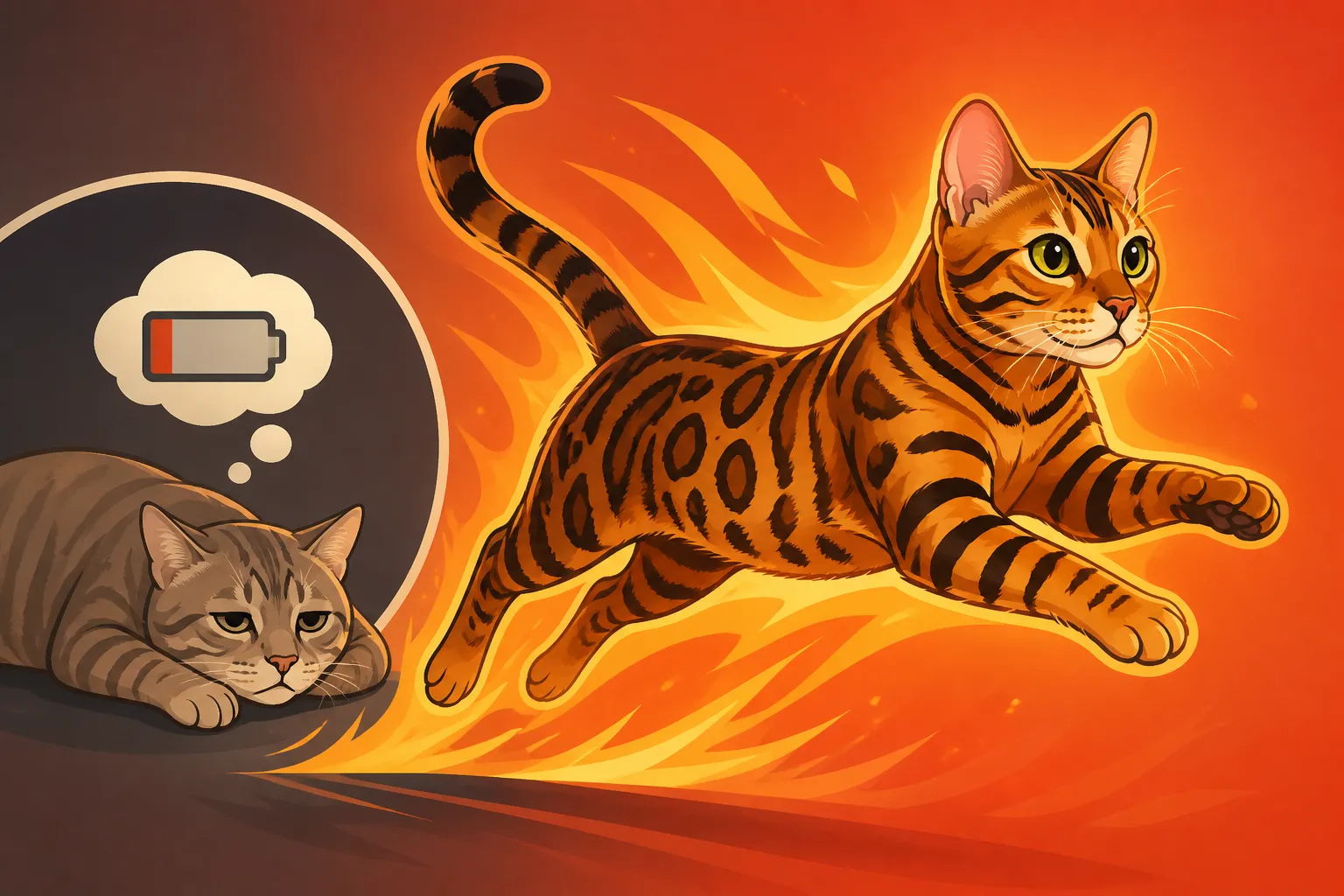
If you've ever owned a Bengal cat, you know they're not just a pretty face with striking spots; they're veritable energy powerhouses. It can be bewildering to witness their relentless zoomies, seemingly endless play sessions, and insatiable appetites, often leaving owners wondering why their Bengal cat burns through calories at a rate that would humble an Olympic athlete. This guide will unravel the fascinating reasons behind your Bengal's turbocharged metabolism, helping you understand how their wild heritage and unique physiology drive their exceptional energy demands.
The Legacy of the Wild: How Ancestry Fuels a Bengal's Metabolism
It's impossible to talk about a Bengal cat's energy levels without delving into their roots. Unlike most domestic cat breeds, which have been selectively bred for centuries purely for companionship and aesthetic traits, the Bengal cat has a relatively recent and direct connection to a wild ancestor: the Asian Leopard Cat (ALC). This foundational genetic input profoundly shapes their physiological makeup and, consequently, their metabolic rate.
The Asian Leopard Cat Connection
The Asian Leopard Cat is a small, solitary, nocturnal wild furball native to the forests of Asia. These are not creatures of leisure; they are constantly on the move, hunting small prey, navigating complex terrains, and perpetually alert to their surroundings. Their survival depends on quick reflexes, agility, and a lean, muscular build that allows for bursts of speed and incredible climbing prowess. When the first Bengal cats were created by crossing these wild beauties with domestic felines, many of these core survival traits were passed down, even through subsequent generations.
While your Bengal cat might be an F4 or later generation, far removed from their direct wild ancestor, those genes still whisper loud and clear. They retain an innate drive to move, explore, and "hunt" (even if it's just a feather wand). This is not just a learned behavior; it's hardwired. This constant, instinctive readiness to engage with their environment demands a higher baseline energy expenditure than a cat whose ancestors spent generations primarily as pampered lap companions. It's truly remarkable how much of the original What an Asian Leopard Cat Is Behind Every Bengal Cat remains evident in our modern-day Bengals.
Built for Agility and Power
Take a moment to truly look at your Bengal. Notice their sleek, powerful physique. Bengals are typically lean, long-bodied cats with surprisingly dense musculature. Their hind legs are often slightly longer than their front, giving them that characteristic "stalking" gait and an incredible spring for jumping. This isn't the chunky, plush build of some other popular breeds; the Bengal is a finely tuned athlete, designed for speed and agility.
Muscle tissue, even at rest, burns more calories than fat tissue. A Bengal's high muscle-to-fat ratio means their body is constantly working harder, metabolically speaking, just to maintain itself. Compare this to a domestic shorthair, who might have a more varied body type, often carrying more fat and less dense muscle. Their baseline caloric needs would naturally be lower. This athletic build isn't just for show; it's a testament to a body engineered for constant activity and a higher caloric turnover to sustain that power.
Unstoppable Energy: The Bengal's Daily Calorie Consumption
It's one thing to have the genetic blueprint for high energy; it's another to see it in action every single day. Bengal cats aren't just a little more active; they are often in perpetual motion, turning every corner of your home into an elaborate playground and every interaction into a potential game. This high level of physical and mental engagement directly translates to a significant calorie burn.
Perpetual Motion and Play Drive
A Bengal cat's day is a blur of activity. They don't just "play" in short bursts; they often engage in extended, intense play sessions that would leave many other cats gasping. They're natural fetch players, retrieving toys with dog-like enthusiasm, and they can chase a laser pointer or feather wand for what feels like an eternity. This isn't gentle swatting; it's full-body engagement – pouncing, leaping, rolling, and sprinting. Their hunting instincts are incredibly strong, turning even a crinkly ball into formidable prey.
Moreover, Bengals are highly intelligent, and a bored Bengal is a destructive Bengal. They actively seek out challenges and stimulation, whether it's solving a puzzle feeder or figuring out how to open a cabinet. This mental exertion, combined with their physical prowess, means they are consistently burning calories at a high rate. If you've ever tried to keep up with your Bengal, you'll understand why they need more fuel! It's not uncommon for them to demand several How Many Play Sessions a Bengal Cat Needs throughout the day, each one a mini-marathon.
Mastering the Vertical World
If there's one thing a Bengal loves as much as a good chase, it's climbing. These cats are not content to stay on the floor; they crave vertical space. From scaling the tallest cat tree to leaping onto bookshelves, refrigerators, and even door frames, they view their environment as a multi-level gymnasium. This constant upward and downward motion requires immense strength, balance, and coordination, all of which demand significant energy.
Consider the physics: every jump and climb is an act of defying gravity, engaging multiple muscle groups intensely. Their powerful hind legs, a direct gift from their wild ancestors, allow them to spring to impressive heights. How High a Bengal Cat Can Jump can be truly astonishing. This isn't just a casual hop; it's an explosive movement that burns a lot of fuel. Providing ample vertical enrichment, like tall cat trees and wall shelves, isn't just for their enjoyment; it's essential for them to express these natural behaviors, and in doing so, they maintain their high caloric output.
Metabolic Demands: Why More Calories Are a Necessity
Beyond the visible activity, there are intrinsic metabolic reasons why a Bengal cat's body demands more fuel. Their physiological makeup and the efficiency of their internal systems are geared towards a higher energy output, necessitating a more calorie-dense diet.
The Engine Under the Hood
A Bengal's lean, muscular build means their resting metabolic rate (RMR) is inherently higher. Even when your Bengal is seemingly napping, their body is processing nutrients and maintaining muscle mass at a faster rate than a less muscular cat. Think of it like a sports car versus a regular sedan: even at idle, the sports car's engine might be tuned to run a bit hotter and consume more fuel.
Furthermore, Bengal cats typically have a short, dense coat, often described as a "pelt," with very little undercoat. While this reduces shedding, it means they might rely more on their internal furnace and activity to regulate their body temperature, especially in cooler environments. Their active lifestyle generates heat, but maintaining that internal warmth can be another factor contributing to their energy expenditure. When a Bengal is less active, for example, as they age, you might notice Why an Old Bengal Cat Loses Muscle First, which can impact their metabolic rate and lead to a need for adjusted caloric intake. All these factors combine to mean that How Many Calories a Bengal Cat Burns is consistently higher than you might expect for their size.
Nutritional Support for a High-Octane Lifestyle
The direct consequence of a Bengal's high metabolism and intense activity is a crucial need for a diet that can adequately support it. You simply cannot fuel a high-performance engine with low-grade fuel and expect it to run optimally. Bengals require nutrient-dense food that provides sustained energy and supports their lean muscle mass.
This isn't about feeding them more food volume necessarily, but ensuring the food they do eat is packed with the right kind of energy. High-quality animal protein is paramount, as it provides the essential amino acids needed for muscle repair and maintenance. Fats are also a concentrated source of energy, crucial for sustaining their activity levels throughout the day. Skimping on quality or calories can lead to a Bengal feeling perpetually hungry, losing muscle condition, or even seeking out inappropriate food sources due to unmet nutritional needs. It's a fundamental aspect of their care that Whether a Bengal Cat Really Needs High Protein Food isn't just a trend, but a biological imperative.
Optimizing Your Bengal's Diet to Match Their Energy
Understanding why your Bengal cat burns more calories is only half the battle; the other half is knowing how to meet those significant energy demands effectively and healthily. It's not just about tossing more kibble in a bowl; it's about strategic feeding, quality ingredients, and intelligent enrichment.
Quantity and Quality: Feeding the Beast
When feeding a Bengal cat, the mantra should always be "quality over quantity," though often, you'll find you need a good amount of both. Given their high metabolism and constant activity, a Bengal often requires more calories per pound of body weight than a less active domestic cat. However, simply increasing the portion size of a low-quality food can lead to digestive upset or, paradoxically, still leave them undernourished if the calories are empty.
Focus on premium cat foods that list real meat (chicken, turkey, beef, fish) as the first ingredient, and ideally, multiple meat sources within the top few. Avoid fillers like excessive grains, corn, or soy, which offer little nutritional value to a carnivore like your Bengal. Many owners find success with specialized high-protein formulas. Brands found on platforms like Chewy offer a wide selection of these high-quality options, making it easier to compare nutritional profiles and reviews. Some owners even explore fresh food options, which can provide highly digestible nutrients tailored to an active feline. Remember, the goal is to provide sustained energy and support muscle, so don't be shy about checking the calorie content and working with your vet to determine the ideal How Much to Put Down for a Bengal Cat at Each Meal.
Meal Timing and Frequency
Free-feeding, where a bowl of kibble is left out all day, might seem convenient, but it's rarely the best approach for a high-energy Bengal. While they burn a lot of calories, even Bengals can become overweight if constantly grazing on dense kibble, especially if their activity levels dip or they have a particularly efficient metabolism. More importantly, smaller, more frequent meals can better suit their digestive system and energy needs.
Think about their wild ancestors: they would eat multiple small prey items throughout the day. Mimicking this natural pattern by offering 2-4 smaller meals can help stabilize their blood sugar, provide a steady supply of energy, and prevent them from feeling overly hungry between feedings. This approach can also reduce the likelihood of overeating at one sitting and keeps their metabolism ticking along. This is why Why a Bengal Cat Does Better on Three Meals is often recommended by experienced Bengal owners and breeders.
The Right Nutritional Balance
Beyond just calories, the macronutrient balance is critical. Bengal cats thrive on diets with a high percentage of animal-based protein, moderate fat, and very low carbohydrates. Aim for foods with protein levels in the 35-45% range, and fat around 15-25%. These ratios closely align with the dietary needs of a true carnivore and support their muscular physique. Which Protein Percentage Suits a Bengal Cat can vary slightly based on individual activity and age, but always lean towards higher.
While dry kibble is convenient, incorporating wet food is highly beneficial for Bengal cats. Wet food provides crucial hydration, which many cats don't get enough of from dry food alone, and can be more palatable and satiating. It also tends to be lower in carbohydrates than many kibble formulas. For an extra layer of engagement and to slow down fast eaters, consider using puzzle feeders. These ingenious devices make your Bengal "work" for their food, simulating hunting and providing mental stimulation, further channeling their energy. You can find a vast array of engaging puzzle feeders and interactive toys on platforms like Amazon. Despite their high energy, it’s still possible for Whether a Bengal Cat Can Get Fat, especially as they get older or if their diet isn't balanced with their exercise.
| Aspect of Diet | Bengal Cat Recommendation | Reason for Bengal Cat |
|---|---|---|
| Protein Level | High (35-45% of calories) | Supports dense muscle mass, high energy expenditure |
| Fat Level | Moderate (15-25% of calories) | Concentrated energy source for sustained activity |
| Carbohydrate Level | Low (<10% of calories) | True carnivores, poor carb digestion, risk of empty calories |
| Meal Frequency | 2-4 small meals per day | Mimics natural hunting, stabilizes blood sugar, consistent energy |
| Food Type | High-quality wet food, often supplemented with dry or raw | Hydration, nutrient density, digestibility for active gut |
| Caloric Density | Higher than average domestic cat (per lb of body weight) | Fuels high metabolism and intense, continuous activity |
Disclaimer
This article is for general informational purposes only and does not constitute professional advice. Laws, prices and regulations vary by location and change over time. Consult a qualified professional for guidance on your specific situation.