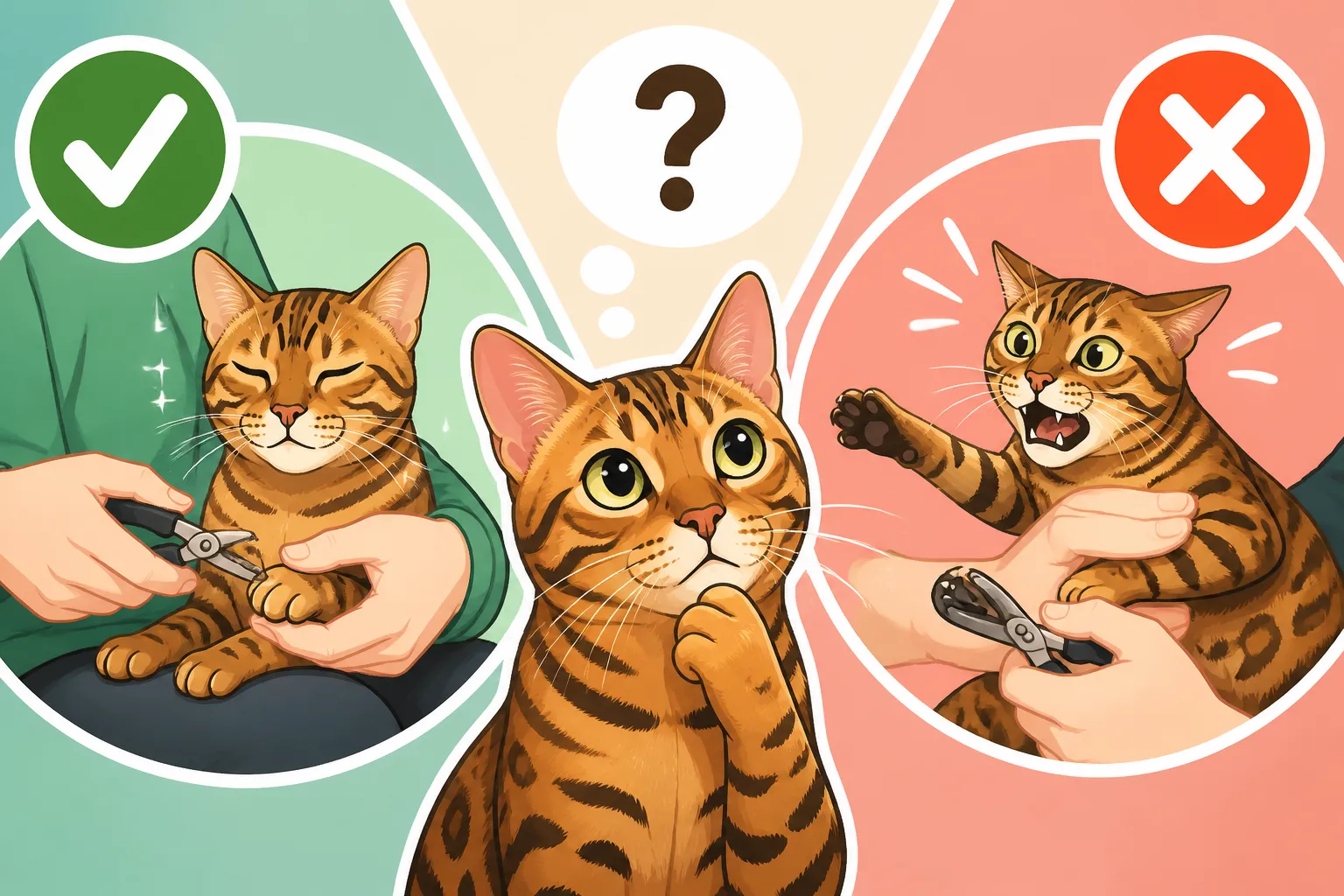
Whether a Bengal Cat Sits for a Nail Trim
If you're a Bengal cat owner, you know the drill: catching your energetic, whip-smart furball for anything less than a play session can feel like wrangling a miniature wildcat. The idea of getting them to "sit still" for something as invasive as a nail trim often seems like a pipe dream, leaving many of us with scratched hands and frayed nerves. This guide is here to walk you through the realistic expectations and practical strategies for managing your Bengal's claws, whether they're a stoic sitter (rare!) or a squirming escape artist (much more likely!).
The Bengal Cat's Natural Inclination: Why Stillness Is a Challenge
Let's be real: expecting a Bengal cat to calmly "sit" for a nail trim is often setting yourself up for disappointment, especially if you haven't conditioned them from kittenhood. These aren't your average couch potato kitties. Bengal cats are renowned for their incredible energy, intelligence, and a strong sense of independence, traits inherited from their wild Asian Leopard Cat ancestors. This means their natural inclination is often to resist restraint and explore, rather than to patiently endure a procedure they find uncomfortable or scary.
Understanding the Bengal's High Energy and Instincts
Bengals are incredibly active animals, often described as having an "always on" switch. They love to climb, jump, run, and play, and they burn a lot of calories doing it. This high-octane lifestyle means they're constantly moving, constantly alert, and generally not keen on being held down or restricted. Their instincts scream "fight or flight" when they feel trapped, and a nail trim can absolutely trigger that response. Think about it from their perspective: something is clamping down on their sensitive paws, often in a way they can't predict or understand. It's not malice; it's instinct. It’s why The Bengal Cat Is the Most Active Cat You Can Own is a fundamental truth for any owner.
Furthermore, their wild ancestry means they're not naturally programmed to be passive. While domestication has certainly mellowed them, that spark of the wild remains. They are keenly aware of their surroundings and any perceived threats. A nail trim, particularly if done incorrectly or without proper preparation, can feel like a genuine threat to their autonomy and safety. This is why a calm, quiet environment and a gentle approach are paramount; trying to force the issue will almost always backfire, creating a negative association that makes future trims even harder.
The Role of Sensitivity in Nail Trimming
Cats' paws are incredibly sensitive. They use them for balance, grip, hunting, and exploring their world. Each claw has a quick, which is a blood vessel and nerve ending, and cutting into it is painful and can be quite frightening for a cat. Even if you're careful, the act of holding their paw, extending the claw, and clipping can feel intensely vulnerable to them. Bengals, with their heightened senses and awareness, might be even more sensitive to this invasion of their personal space.
The quick is usually visible as a pinkish area within the translucent claw, especially on lighter-colored claws. On darker claws, it's much harder to see, increasing the risk of accidentally cutting it. This fear of pain, whether from a past "quick" incident or simply an inherent wariness, contributes significantly to their resistance. They remember unpleasant experiences, and this memory can make them wary long before you even pick up the clippers. Understanding this sensitivity helps us approach nail trims with the empathy and caution our Bengals deserve.
The Art of Conditioning: Training Your Bengal for Nail Trims
Given their nature, the best approach to nail trims with a Bengal cat isn't about brute force or hoping they'll "sit." It's about patience, positive reinforcement, and a gradual conditioning process. The earlier you start, the better, but it's never too late to try to improve your Bengal's tolerance.
Starting Young: Kittenhood Conditioning
If you're bringing home a Bengal kitten, you've got a fantastic opportunity to set them up for success. Start early, even before their claws genuinely need trimming. The goal isn't to trim nails at first, but to get them comfortable with having their paws handled.
Begin by gently touching their paws while they're relaxed, perhaps during a cuddle session or when they're sleepy. Just a light touch, then a treat or some praise. Gradually, increase the intensity: gently hold a paw, then gently press on a toe bean to extend a claw for a second. Always keep it positive and short. The moment they show discomfort, stop, wait a bit, and try again later. The key is to associate paw handling with good things – tasty treats, gentle praise, or a favorite toy. Brands like Chewy offer a wide array of high-value treats that can be incredibly motivating for a Bengal, whether freeze-dried chicken or salmon bits.
Once they tolerate paw handling, introduce the clippers. Don't use them yet! Just let them see and sniff the clippers. Tap the clippers together so they hear the sound. Again, reward for curiosity or calm behavior. Slowly, combine the steps: handle a paw, extend a claw, bring the clippers near (but don't clip), then reward. This desensitization process, done consistently over days or weeks, can make a world of difference.
Positive Reinforcement and High-Value Treats
Positive reinforcement is your most powerful tool. Every tiny step in the right direction should be rewarded. This means praise, gentle petting, and especially those high-value treats that your Bengal absolutely adores. If they tolerate you touching a paw for a few seconds, treat! If they let you extend one claw, treat! If you manage to clip just one nail without a fuss, treat!
Consistency is crucial. Aim for short, frequent sessions rather than long, stressful ones. Even if you only manage to clip one nail per session initially, that's a win. Gradually, you can work up to more. Some owners find that a distraction technique works wonders. For example, smearing a small amount of wet food or a lickable treat on a plate or a lick mat (you can find these easily on Amazon) and letting them focus on that while you quickly clip a few nails. This changes the entire dynamic, turning a dreaded chore into a slightly less dreaded, treat-fueled event. Remember, for an active cat that thrives on enrichment, a puzzle feeder filled with a small amount of their favorite food can also be a positive association.
Choosing the Right Tools and Environment
The right tools and a calm environment are vital.
- Clippers: There are different types of cat nail clippers: scissor-style, guillotine-style, and even grinders. Many Bengal owners find the scissor-style clippers the easiest to use and least intimidating for their cats. Make sure they are sharp; dull clippers can crush the nail, causing pain and splintering. Which Clippers Suit a Bengal Cat can provide more detail, but generally, a good quality, sharp scissor-style clipper is a safe bet.
- Lighting: Good lighting is essential to clearly see the quick, especially if your Bengal has darker claws.
- Environment: Choose a quiet time and place where your Bengal is relaxed and there are no distractions. Avoid noisy areas or times when other pets or children might interrupt. Some cats prefer being held in a towel (a "purrito") for a sense of security, which can reduce flailing. Others do better simply held gently on your lap.
| Clipping Strategy | Description | Best For |
|---|---|---|
| Gradual Desensitization | Slowly introducing paw touches, clippers, and the clipping action over days/weeks, rewarding calm behavior at each step. | Kittens, anxious cats, or those new to nail trims. Requires significant patience. |
| Distraction Method | Providing a high-value treat (e.g., lickable paste, wet food on a mat) during the trim to occupy the cat's attention. | Food-motivated cats, quick trims, or when a full conditioning process isn't feasible immediately. |
| "Purrito" Wrap | Gently wrapping the cat in a towel, leaving one paw exposed at a time, to restrict movement and provide a sense of security. | Cats who struggle with full-body restraint, but don't mind light pressure. Ensure it's not too tight or distressing. |
| Team Effort | One person gently holds and distracts (with treats/pets), while the other quickly clips the nails. | Highly energetic or wiggly cats, where one person might struggle alone. Requires coordination and trust between people. |
Practical Tips for the Actual Nail Trim
So, you've done your best with conditioning, but the moment of truth still feels daunting. There are specific strategies you can employ to make the actual clipping session as smooth and stress-free as possible for both you and your Bengal.
The "Less is More" Approach
With a Bengal, or any cat that resists, less is often more. Don't try to clip all twenty nails in one go, especially if they're already stressed. Your primary goal is to keep the experience positive, or at least neutral. If you can only manage one or two claws before your Bengal starts to get antsy, that's perfectly fine. Stop, reward them generously, and try again later that day or the next.
Consistency over quantity is the mantra here. Regular, short sessions where you clip just a few nails will build a much better long-term relationship with nail trims than infrequent, prolonged battles that leave everyone traumatized. Remember, their claws grow surprisingly fast, so frequent maintenance is key anyway. Why a Bengal Cat's Claws Outrun the Clippers is a real issue, and staying on top of it with small, manageable trims is better than letting them get too long.
Holding Your Bengal Gently But Firmly
This is where many owners struggle. You need to hold your Bengal securely enough that they can't injure themselves or you, but not so tightly that they feel panicked and trapped. A gentle but firm grip is the goal.
- Positioning: Some owners find success by holding their Bengal facing away from them, cradled in one arm, with their back against the owner's chest. This allows access to the paws while making the cat feel somewhat secure. Others prefer sitting on the floor with the cat in their lap.
- The "Purrito": As mentioned, wrapping your Bengal snugly in a towel, leaving only the paw you're working on exposed, can be very effective. This limits their ability to wriggle and scratch and can provide a sense of comfort for some cats. Make sure the towel isn't too tight and that they can still breathe easily.
- Minimize Restraint Time: Be as quick and efficient as possible. The less time your Bengal spends being restrained, the less stressful the experience will be. Have your clippers and treats ready before you even pick up your cat.
What to Do If You "Quick" Your Bengal
It happens to the best of us, especially with dark-clawed Bengals where the quick is hard to see. If you accidentally cut into the quick:
- Don't Panic: Your cat will react, likely with a yelp and a pull-back. Stay calm.
- Apply Styptic Powder: Have styptic powder (available at pet stores or Amazon) on hand. It's a miracle worker for stopping minor bleeding quickly. Apply a small pinch directly to the bleeding nail and apply gentle pressure. If you don't have styptic powder, cornstarch or flour can work in a pinch, but styptic powder is designed for this purpose.
- Offer Comfort and Reassurance: Once the bleeding stops, comfort your cat. Give them a special treat and plenty of praise. Don't try to do any more nails in that session. You want to avoid creating a severe phobia.
- Learn from the Experience: Next time, be even more cautious, especially with that particular paw or claw. Err on the side of clipping too little rather than too much. Just taking off the very tip is often enough.
When to Seek Professional Help and Alternatives
Despite your best efforts, some Bengals simply won't tolerate nail trims at home. And that's okay! It doesn't make you a bad pet parent. Sometimes, the stress for both cat and owner isn't worth it, and professional help is the best solution.
Visiting the Veterinarian or Professional Groomer
Veterinarians and professional cat groomers are experienced in handling all sorts of feline personalities, including the most spirited Bengals. They have techniques and tools that might make the process smoother, or at least quicker, than you can manage at home.
- Veterinarian: Your vet's office is often the first stop. Vets and vet techs are skilled in safely restraining cats and performing nail trims. They can also assess your cat's overall health and provide advice tailored to your Bengal's specific temperament. If your cat is particularly anxious or aggressive, your vet might even suggest mild sedatives or calming supplements for future trims, though this is usually a last resort.
- Professional Groomer: Many cat-specific groomers (make sure they are cat groomers, not just dog groomers) also offer nail trimming services. They often have dedicated quiet spaces and specialized equipment to make the experience as low-stress as possible. Look for groomers with certifications or specific experience with active breeds like Bengals.
While these services come with a cost, the peace of mind and reduced stress for both you and your cat can be invaluable. Scheduling regular appointments, say every 4-6 weeks, ensures their nails stay at a healthy length without you having to battle them at home.
Scratching Posts and Environmental Enrichment
While professional help is great, consistent environmental enrichment at home plays a crucial role in maintaining healthy claws and reducing the need for frequent trims. Bengals need to scratch; it's a natural behavior for stretching, marking territory, and removing the outer sheath of their claws.
- Plenty of Scratching Opportunities: Provide a variety of scratching posts and surfaces. Bengals often prefer tall, sturdy posts that allow them to fully stretch their bodies. Sisal rope, cardboard, and even wood are popular materials. Offer both vertical and horizontal options. For such an active breed, you might need more scratching posts than you think. How Many Scratching Posts a Bengal Cat Household Needs is often more than one!
- High-Quality Scratchers: Cheap, flimsy scratchers won't cut it for a powerful Bengal. They need something robust that won't wobble or fall over, or they'll quickly lose interest and opt for your sofa instead. Invest in durable options, perhaps from a pet supply retailer like Chewy, to ensure they get proper use.
- Encourage Use: Make scratching enticing. Place posts in prominent areas where your Bengal likes to hang out or near furniture they've targeted. Use catnip spray or dangle toys near the posts to encourage interaction.
- Claw Caps (as a last resort): For truly destructive scratchers who won't tolerate trims, soft claw caps are an option. These are tiny vinyl covers glued onto your cat's nails, effectively blunting them. They need to be replaced every 4-6 weeks as the nail grows. While they don't solve the underlying issue of nail length, they can protect your furniture. However, always consult with your vet before using them, as some cats find them irritating.
- Never Declaw: It's important to reiterate that declawing is a serious, painful surgical procedure that involves amputating the last bone of each toe. It's widely considered inhumane and unethical, and many veterinarians refuse to perform it. It can lead to long-term pain, behavioral issues, and is increasingly banned in various regions. Why a Bengal Cat Should Never Be Declawed is a crucial piece of information for any Bengal owner.
Ultimately, while some Bengal cats might eventually tolerate a nail trim with extensive conditioning and patience, few will truly "sit" for it like a docile pet. The expectation should be managing their active nature and providing the safest, least stressful experience possible, even if it requires a little help from the pros.
Disclaimer
This article is for general informational purposes only and does not constitute professional advice. Laws, prices and regulations vary by location and change over time. Consult a qualified professional for guidance on your specific situation.