What a Blue Bengal Cat Is
A blue Bengal cat can look almost silver in bright daylight and deep charcoal in a dim room, which makes it easy to mistake the color for a different breed or coat pattern. The key is that “blue” describes a diluted gray coat color, not blue eyes or a separate breed. This guide explains the genetics, appearance, breed-standard status, and what to ask before choosing one.
What blue means in a Bengal cat
Blue is a coat color, not a separate Bengal type
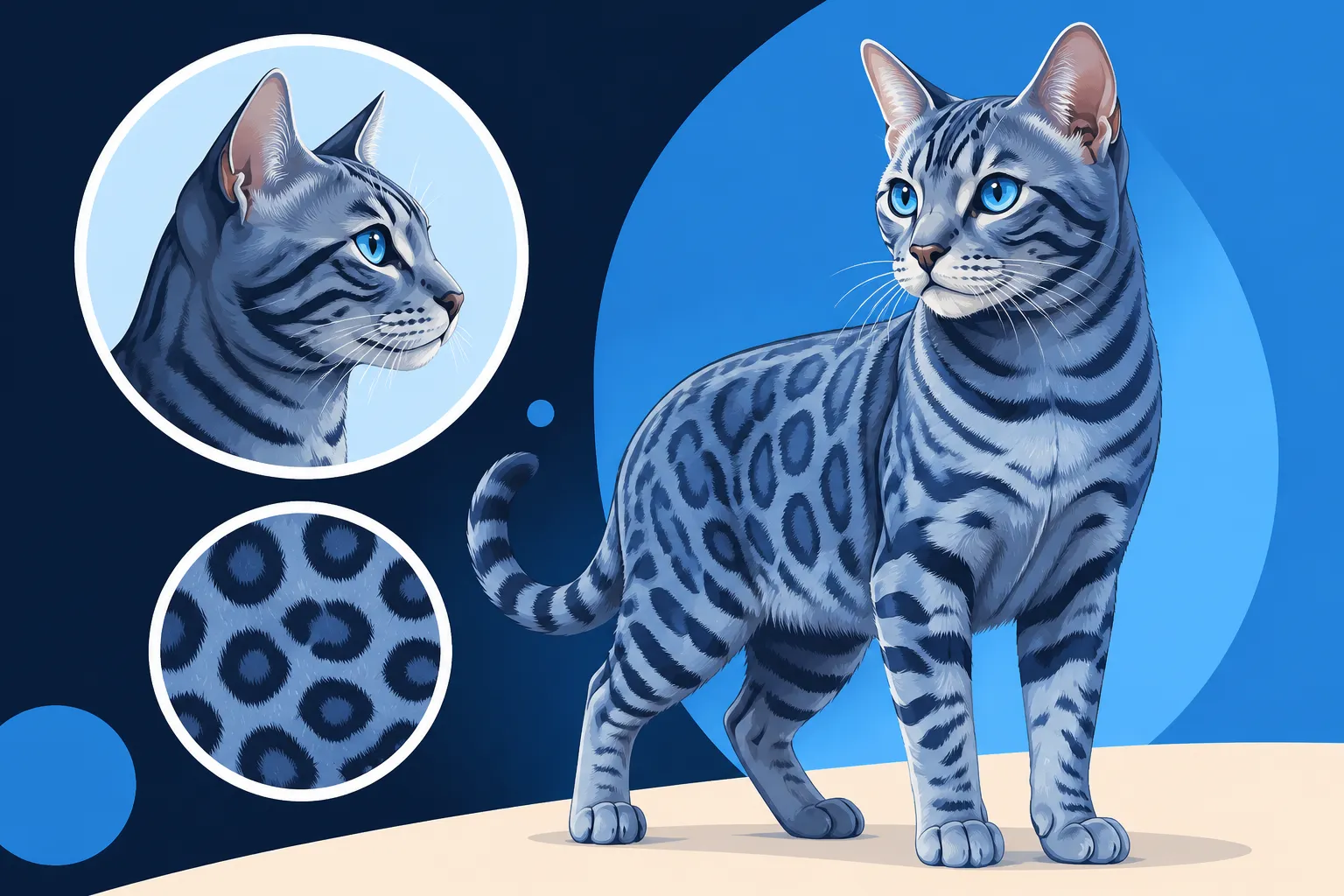
A blue Bengal is a Bengal cat with a dilute version of dark pigmentation. The coat usually appears slate gray, blue-gray, or charcoal-gray rather than the warm brown tones many people picture when they think of a Bengal. The term “blue” is a traditional cat-color description; it does not mean the cat’s fur is literally bright blue.
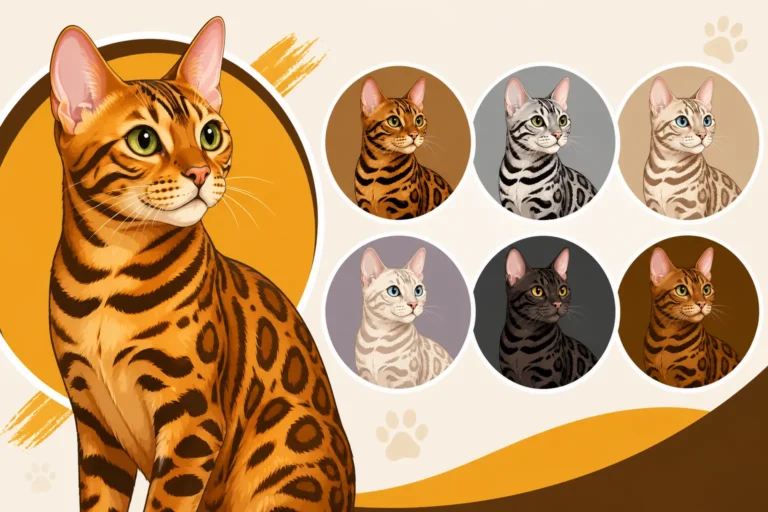
The Bengal’s distinctive pattern can still be present. A blue Bengal may have spots, rosettes, or marbled markings, with the markings appearing darker or more defined against the diluted background color. The precise contrast varies from cat to cat. Some coats look softly shaded, while others have a stronger difference between the ground color and pattern.
Blue is also not the same thing as a snow Bengal or a silver Bengal. Snow Bengals have color-point genetics that affect their coat and often their eye color. Silver Bengals have a different appearance, with a pale or silvery background and darker markings. To compare those looks, see What a Snow Bengal Cat Is and What a Silver Bengal Cat Is.
How dilution creates the blue-gray appearance
In cats, dilute coloring is associated with a recessive genetic variant that affects how pigment is distributed along the hair. A cat generally needs to inherit the relevant dilute variant from both parents to show a dilute coat color. A cat that inherits only one copy may carry the variant without looking blue itself.
That means two cats that appear non-blue can sometimes produce a blue kitten if both carry the dilute variant. Conversely, a blue-looking kitten is not something a breeder can reliably promise just by pairing cats that look similar. The parents’ genetic makeup matters, and appearance alone does not reveal every hidden trait they carry.
This is one reason to ask a breeder how they describe the kitten’s color and what documentation supports that description. A label in an advertisement is not a genetic test or a guarantee of show eligibility. If color matters to you, ask for a written explanation of the kitten’s registration color and how the breeder determined it.
Blue does not mean blue eyes
A blue Bengal’s coat color does not automatically determine its eye color. Eye color depends on other genetic influences, and a blue-gray coat is not a promise of vivid blue eyes. A kitten’s eyes can also change as it matures, so a very young kitten’s eye color may not be its adult color.
This distinction helps avoid confusion when browsing listings. Some people use “blue Bengal” to describe coat color, while others may be searching for a Bengal with blue eyes. Those are different characteristics. If eye color is important, ask what the breeder expects the kitten’s adult eyes to look like, while remembering that predictions are not absolute guarantees.
How to recognize a blue Bengal
Look for the Bengal pattern as well as the color
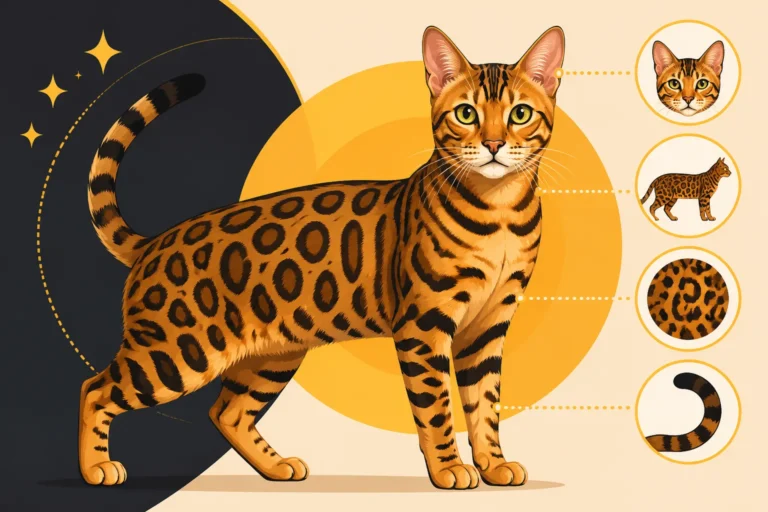
Color alone does not make a cat a Bengal. Look at the overall appearance: a blue Bengal should still show the Bengal’s patterned coat, whether that pattern is rosetted, spotted, or marbled. Rosettes are markings with a darker outline and a lighter center; spots are more solid, while marbling forms flowing swirls. The pattern can be subtle in a dilute coat, especially in certain lighting.
A quick glance at a photo can be misleading. Camera exposure, indoor lighting, and editing can make gray look silver, cream, or nearly black. Ask to see natural-light photographs and, if possible, video of the kitten moving around. Seeing the cat in more than one setting can help you judge the coat’s actual tone and the visibility of its markings.
For a closer look at pattern terminology, read What a Rosette Is on a Bengal Cat. If you are comparing patterns more generally, Which Colors a Bengal Cat Comes In and What a Bengal Cat Looks Like by the Standard can help put coat color into context.
Compare blue with other gray-looking coats
Blue-gray coloring can occur in many domestic cats, so a gray spotted cat is not automatically a Bengal. Some domestic shorthairs have spots or stripes, and mixed-breed cats can have striking coats that resemble a Bengal’s. Coat color and pattern are not enough to prove pedigree.
A registered pedigree from a reputable breeder is more useful than a visual guess. If you are considering a cat from a shelter or rescue, it is usually more sensible to describe what you can observe—such as “gray spotted domestic shorthair”—unless reliable pedigree information is available. The guide Whether a Spotted Domestic Shorthair Is a Bengal Cat explains why appearance alone can’t establish breed.
It is also worth looking beyond the coat. Ask about the cat’s temperament, health history, socialization, and daily needs. A beautiful blue-gray pattern may catch your eye, but it will not tell you whether the cat is comfortable with children, accustomed to indoor life, or a good match for your household.
A practical comparison of Bengal coat terms
| Coat description | What it generally refers to | What to remember |
|---|---|---|
| Blue Bengal | A diluted gray or blue-gray coat color | “Blue” describes color, not eye color |
| Silver Bengal | A pale, silvery-looking background with darker markings | Silver is not simply another name for blue |
| Snow Bengal | A color-point Bengal type with a lighter coat appearance | Snow coloring has different genetic influences |
| Brown Bengal | A warm-toned Bengal color with dark markings | The exact shade and contrast vary |
| Spotted or rosetted Bengal | A coat pattern rather than a color | A pattern by itself does not prove pedigree |
These terms describe different aspects of appearance. Color and pattern work together, but they are not interchangeable. A cat can have a particular color and a particular pattern, and the same pattern may look quite different across colors.
Breed standards, registration, and buying questions
Is blue an accepted Bengal show color
Blue Bengals may exist as cats with Bengal ancestry, but recognition in a breed standard is a separate question from whether a color can occur. Many commonly discussed Bengal standards focus on specific accepted color categories, and dilute blue may not be accepted for championship competition under a particular registry’s rules. Standards can differ, so check the organization named on the cat’s registration papers rather than relying on a general online description.
A breeder may still describe a kitten as a blue Bengal even if the color is not eligible for a show class. That does not, by itself, tell you whether the cat is healthy, well cared for, or a suitable companion. It does mean you should distinguish between “a Bengal with a blue coat” and “a Bengal whose color is accepted for showing under this registry.”
If showing or breeding matters to you, ask the breeder to identify the relevant registry and explain how the kitten will be registered. You can also compare the breeder’s answer with Every Bengal Cat Color the Registries Accept. Clear, specific answers are more useful than vague claims such as “rare show blue” without paperwork or an explanation of the rules.
Questions to ask a breeder
Before placing a deposit, ask the breeder to describe the kitten’s color and pattern in writing. Find out whether “blue” is the registered color, a casual description, or a predicted adult appearance. Ask to see the kitten’s registration information and the relevant parent records, and make sure the documents match the kitten and breeder you are dealing with.
It is also reasonable to ask whether the breeder intentionally selects for dilute coloring and how that fits into their broader breeding priorities. Color should not be treated as a substitute for health screening, appropriate socialization, or thoughtful placement. Ask what health information is available for the parents, what veterinary care the kitten has received, and what support the breeder provides after the kitten goes home.
Be wary of pressure to pay quickly because a color is supposedly “one of a kind” or “impossible to find again.” A distinctive coat can be appealing, but urgency is not evidence of responsible breeding. Take time to review the contract, registration details, health records, and the breeder’s answers before making a decision.
Price and the “rare color” claim
A blue coat may be marketed as rare, but “rare” does not automatically mean healthier, better quality, or more valuable as a companion. A seller’s price can reflect many factors, including location, pedigree, breeder practices, and what is included in the adoption or purchase arrangement. Avoid treating coat color alone as a reliable guide to quality.
Ask what the quoted amount covers, what records you will receive, and whether there are any restrictions in the contract. For a broader look at the factors that can influence price, see Why Bengal Cat Prices Range So Widely. A transparent breeder should be willing to discuss costs without using the kitten’s color to discourage reasonable questions.
Once you have chosen a cat, blue coloring does not call for a special diet or a special grooming routine. You will still need ordinary cat essentials: suitable food, litter, scratching surfaces, toys, and a carrier. If you shop online through Chewy, use the product details to check that an item fits your cat’s size and needs rather than assuming a “Bengal” label means it is automatically appropriate.
Caring for a blue Bengal cat
Coat care is much like care for other Bengals
The blue coat does not need dye, whitening products, or color-enhancing treatments. Routine grooming is generally straightforward for a short-haired Bengal: occasional brushing or a grooming glove can help collect loose hair and give you a chance to check the skin. Avoid products that promise to intensify or maintain a coat color unless your veterinarian has recommended a specific product for a medical reason.
A calm, gradual introduction makes grooming easier. Let the cat investigate the brush, offer a brief gentle stroke, and stop before the experience turns into a struggle. If you are ordering grooming tools from Chewy, choose a soft option intended for short-haired cats and introduce it slowly. A Bengal that dislikes handling may do better with very short sessions and rewards than with an attempt to complete a full grooming routine all at once.
Use grooming time to notice changes, not to judge whether the coat looks “blue enough.” New bald patches, persistent itching, scabs, or a sudden change in coat condition deserve attention. Those are health or skin concerns, not signs that the cat needs a cosmetic color treatment.
The coat color does not change the cat’s everyday needs
Blue Bengals need the same thoughtful care as other Bengals. They benefit from play, climbing opportunities, scratching surfaces, clean litter boxes, and predictable interaction. A striking coat can make people focus on appearance, but daily life is shaped much more by the cat’s personality, routine, and environment.
If you are preparing your home, start with sturdy equipment and safe enrichment rather than buying items solely because they are marketed for a particular color or breed. Chewy can be one place to compare basics such as litter supplies, toys, and carriers, but check the size, materials, and cleaning instructions for each item. A tall, stable scratching post may be more useful than a decorative accessory that matches the cat’s coat.
Food should be chosen for the individual cat’s age, health, and body condition, not because the coat is blue. Keep fresh water available, follow veterinary advice about diet, and make changes gradually. When shopping through Chewy, compare the actual nutrition information and product format instead of relying on labels that promise a special diet for Bengal coloring.
A blue Bengal is, at heart, a Bengal with a dilute gray-toned coat. The color can be striking, but the most useful questions are still about pedigree, registration, health, temperament, and the care the cat will need in your home.
Disclaimer
This article is for general informational purposes only and does not constitute professional advice. Laws, prices and regulations vary by location and change over time. Consult a qualified professional for guidance on your specific situation.