What a Silver Bengal Cat Is
It's incredibly frustrating when you're trying to understand the nuances of a specific Bengal cat characteristic, like their coat color, and all you get are vague descriptions or technical jargon that doesn't really explain what you're seeing. Many people hear "silver Bengal" and picture a solid grey cat, but the reality is so much more intricate and beautiful, and often misunderstood. This guide will cut through the confusion and explain exactly what a silver Bengal cat is, its unique genetic makeup, and what makes it truly special.
Understanding the Silver Factor in Bengal Cats
The term "silver" in Bengal cats isn't just a descriptive color; it's a specific genetic factor that affects the cat's base coat color. Unlike some breeds where silver might imply a solid grey, in Bengals, it's about the absence of warmth, allowing the underlying pattern to shine through in stunning, cool tones. This genetic modifier works by inhibiting the production of pheomelanin, which is the red or yellow pigment in a cat's fur.
The Genetic Basis of Silver
At its heart, the silver gene in Bengals is a dominant gene, often denoted as 'I' for inhibitor. What this means is that if a Bengal cat inherits even one copy of this gene, it will express the silver coloration. It effectively "washes out" or inhibits the warm, rufousing tones (the reddish or yellowish hues) that would otherwise be present in the coat. So, instead of a warm brown base with dark rosettes, you get a cool, silvery-white or grey base with striking black or dark grey markings. This is quite different from simply having a light brown coat, as the underlying red pigments are actively suppressed.
Imagine a painter's palette. A traditional brown Bengal starts with a rich, warm canvas. The silver gene, however, is like adding a special chemical that strips away all those warm undercurrents, leaving a crisp, cool background. This is why you'll often hear breeders talk about "clear coats" when referring to silvers – they lack the muddy, brownish tones that can sometimes detract from the pattern. The silver factor doesn't change the pattern itself, just the background color.
How the Silver Factor Transforms Other Colors
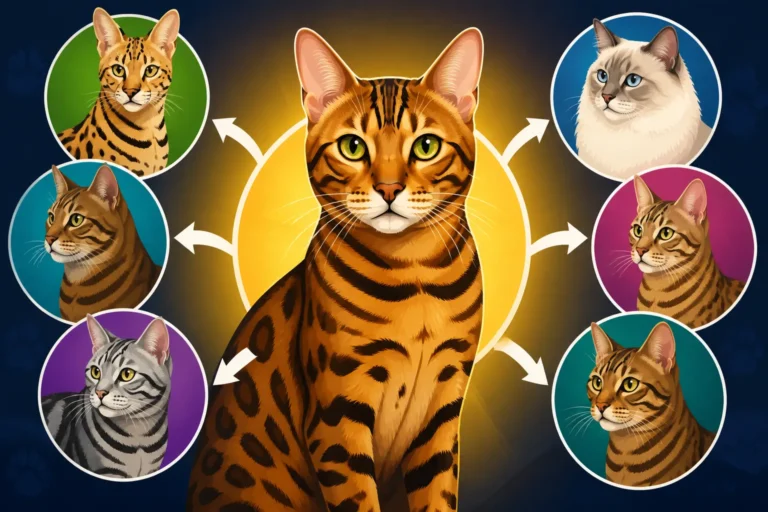
What's really fascinating about the silver gene is how it interacts with the Bengal's other base colors. It doesn't just create a 'silver' cat in a singular sense. Instead, it takes whatever base color the cat would normally have – brown, snow (seal lynx, mink, or sepia), or even blue – and infuses it with silver. For example, a brown Bengal that also carries the silver gene becomes a silver Bengal. A snow lynx point Bengal with the silver gene becomes a silver lynx point. The silver essentially acts as a modifier, giving a cool, frosted appearance to the existing color.
This interaction is why you can see such a variety within the "silver" category. A silver charcoal Bengal, for instance, will have an even more dramatic contrast due to the charcoal gene's darker, richer black markings and mask, now set against a stunning silvery-grey body. It’s not just one color; it’s a spectrum of coolness, each permutation creating a visually unique and often breathtaking Bengal. The depth of the silver can also vary, from a pale, almost white silver to a darker, steel-grey tone, depending on the cat's specific genetics and how strongly the inhibitor gene is expressed.
The Distinctive Appearance of a Silver Bengal
When you encounter a silver Bengal, their appearance often stops you in your tracks. They possess an almost ethereal quality, with their shimmering coats and sharp contrasts. It's not just the absence of warmth; it's the specific way their patterns are highlighted against the cool background that makes them so captivating.
Coat Color and Pattern Clarity
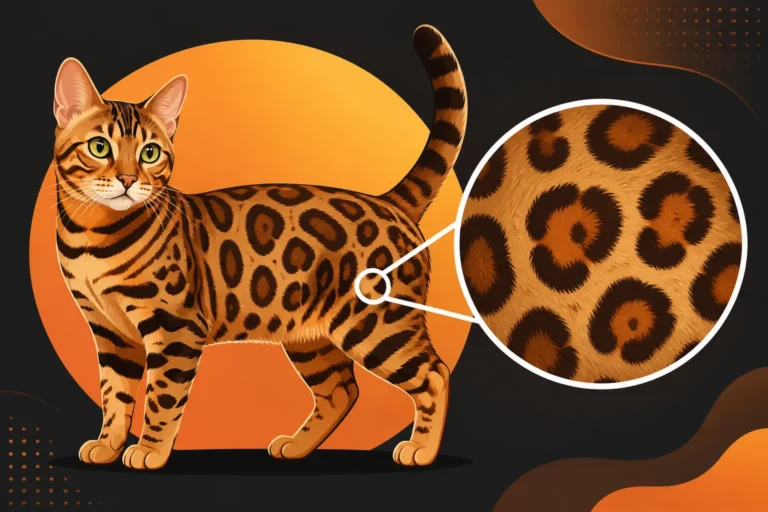
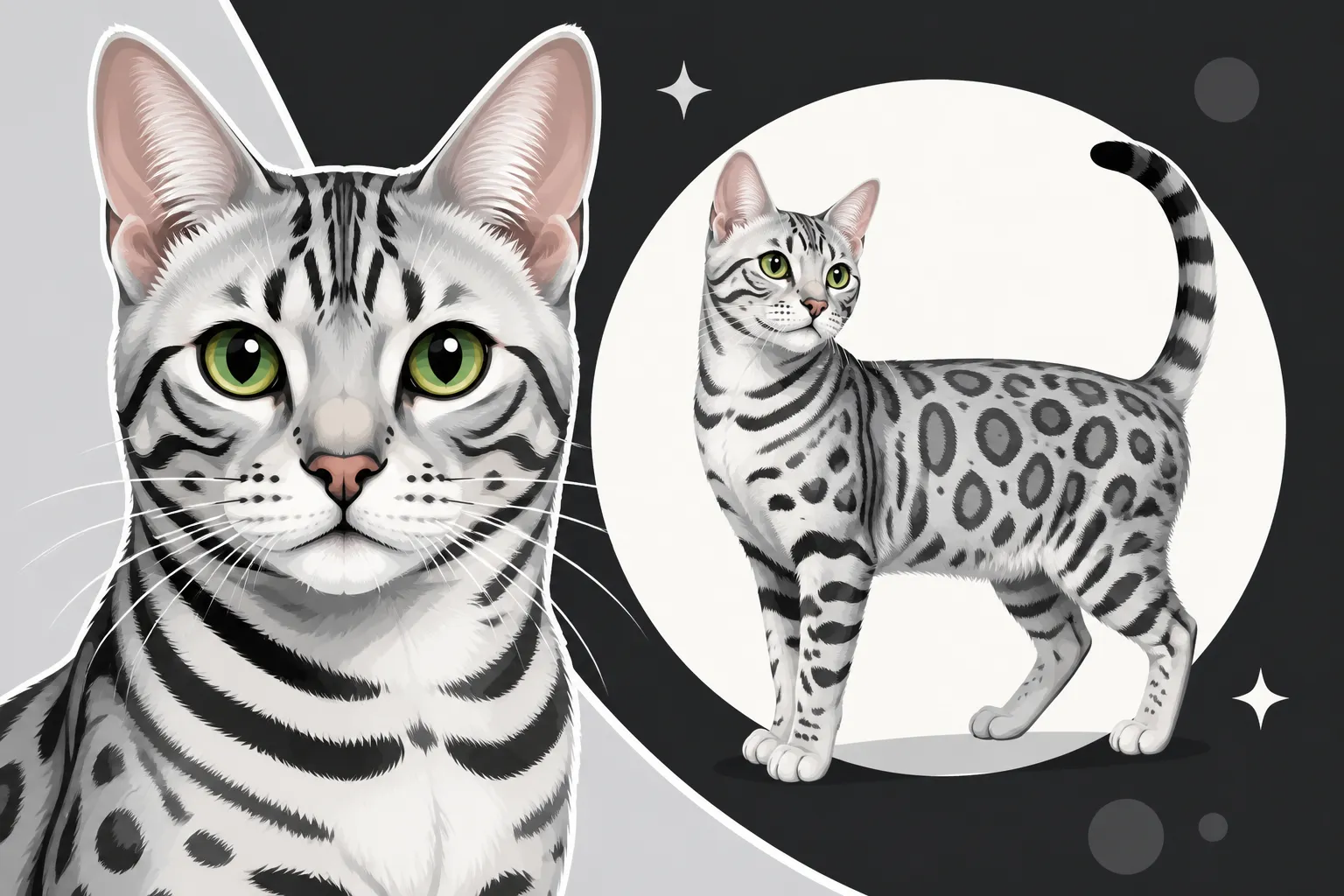
The hallmark of a silver Bengal is its stunning base coat color, which ranges from a light, almost white silver to a darker, steely grey. What’s crucial is the clarity of this silver. A truly good silver Bengal will have a very clean, bright background, devoid of any undesirable brownish or yellowish "tarnishing" or "rufousing." The markings—whether they are rosettes, spots, or marbling—will be a stark, deep black or dark grey, creating an incredibly high-contrast effect. This sharp contrast is what makes the silver pattern pop, appearing almost painted onto the cat's coat.
Think of it like a black and white photograph, but with shades of silver instead of just pure white. The rosettes, which can be arrowhead, paw print, or donut, are often incredibly defined. This clarity is highly prized by breeders and enthusiasts alike, as it truly showcases the wild ancestry of the Bengal. When a silver Bengal is in prime coat, it can look like a miniature wild cat caught in a winter forest, their markings stark against a snowy backdrop. The unique feel of their pelt-like coat, often mentioned in discussions about A Bengal Cat's Coat Is a Pelt, Not Fur, only enhances this striking visual.
Eye, Nose, and Paw Pad Pigmentation
While the coat is the most obvious feature, other physical traits also play a role in defining a silver Bengal. Their eye color typically follows the standard Bengal range, which means you'll usually see shades of green or gold/yellow. However, with the snow silver variations (like a silver seal lynx point), you would expect brilliant blue eyes. This provides another layer of striking contrast against the cool coat. The intensity and clarity of the eye color are often enhanced by the overall cool tones of the face.
The nose leather of a silver Bengal should ideally be a dark brick red, often outlined in black, or simply black. Any pinkish tones could suggest a lack of pigment, which isn't characteristic of a true silver. Similarly, their paw pads should be dark, usually black or a very dark brown. These small details contribute to the overall impression of a well-pigmented, well-defined silver Bengal, ensuring that the cool tones extend beyond just the fur itself. It's all part of the harmonious presentation of this unique color.
How Silver Bengals Mature
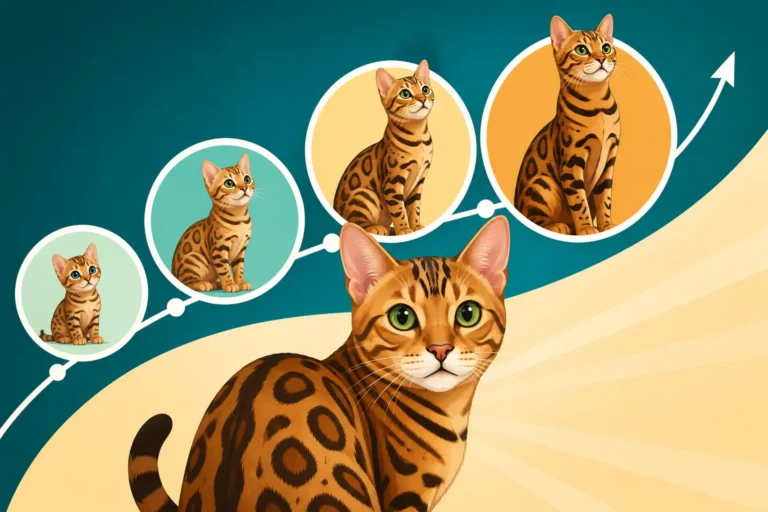
One aspect that often surprises new owners is how a silver Bengal's coat can evolve during its kittenhood and into adulthood. Like all Bengal kittens, silvers go through what's known as the "fuzzies" stage, where their patterns become somewhat obscured by longer, softer guard hairs. This is a natural camouflage mechanism inherited from their wild ancestors, making them harder to spot in the wild. During this time, a silver kitten might look a bit dull or muted, and the striking contrast might not be fully evident.
However, as they mature, typically clearing around 4-6 months of age, those fuzzies recede, and the true glory of the silver coat begins to emerge. The background brightens, the markings darken and sharpen, and the glitter (that shimmering effect on the coat) becomes more pronounced. A mature silver Bengal will display a much clearer, more vibrant silver and black pattern than they did as a tiny kitten. It's a transformative process, and patience is key to witnessing their full beauty. This maturation also applies to the depth of their glitter, as discussed in How Glitter Looks on a Silver Bengal Cat.
Silver vs. Other Bengal Colors: A Comparison
Distinguishing between Bengal coat colors can be tricky, especially with variations that might appear similar at first glance. The silver gene introduces a unique coolness that sets it apart from the warm hues of brown Bengals and the creamy bases of snow Bengals. Understanding these differences is key to appreciating the silver's distinct beauty.
Silver vs. Brown Bengal
The most straightforward comparison is between a silver Bengal and a traditional brown Bengal. A brown Bengal's base coat is, as the name suggests, a rich, warm shade of brown, ranging from golden to reddish-brown. Their spots or rosettes are typically black or dark brown, creating a beautiful contrast against the warm background. You'll see a lot of warmth, often described as "rufousing," in their coats. This warmth is what the silver gene actively inhibits.
A silver Bengal, on the other hand, lacks this warmth entirely. Its base coat is a cool, silvery-white or grey, with absolutely no red or yellow tones. The contrast is often more dramatic in a silver, with deep black markings standing out sharply against the icy backdrop. Think of a brown Bengal as a sun-drenched jungle cat and a silver Bengal as a creature of twilight, almost shimmering under moonlight. This fundamental difference in pigment is what truly defines the silver.
Silver vs. Snow Bengal (Lynx, Mink, Sepia)
This is where it gets a bit more nuanced, as both silver and snow Bengals can have pale, cool-toned coats. However, they are genetically distinct. Snow Bengals come in three main variations: Seal Lynx Point, Seal Mink, and Seal Sepia, each derived from the Siamese/Burmese dilution genes. They all have a creamy or ivory base coat, but the key difference lies in their pigment and eye color.
- Seal Lynx Point Bengals: These are the lightest of the snows, with a creamy white or ivory body, clear markings (often dark brown or black), and striking blue eyes. The points (ears, mask, tail, legs) are typically darker. A silver lynx point Bengal combines this dilution with the silver gene, resulting in an even whiter, crisper body color and often darker, more defined charcoal-grey or black points, while still retaining those piercing blue eyes.
- Seal Mink Bengals: These have a slightly darker, warmer cream base coat than lynx points, with richer brown markings. Their eyes are typically aqua (a blue-green blend). A silver mink Bengal would have a cooler, more silvery-cream base and darker, more defined markings, still with aqua eyes.
- Seal Sepia Bengals: These are the darkest of the snows, with a warm, sandy to light brown base coat and dark brown markings. Their eyes are usually gold or green. A silver sepia Bengal would display a cooler, grey-toned base, with dark, sometimes black, markings, retaining the gold or green eye color.
The main takeaway is that snow Bengals always carry some form of the pointed gene, which impacts their overall pigment intensity and often eye color. Silver Bengals, even the silver snows, gain their coolness from the inhibitor gene, which strips out warmth from whatever base color they already have. The easiest visual differentiator, if you're not looking at a silver snow, is the lack of blue eyes in a non-snow silver Bengal, and the distinct lack of creaminess in the base coat compared to a snow.
Here's a quick comparison table:
| Feature | Brown Bengal | Silver Bengal | Snow Bengal (General) |
|---|---|---|---|
| Base Coat | Warm, golden, reddish-brown | Cool, silvery-white to steel grey | Creamy, ivory, sandy, light brown |
| Markings | Black/dark brown, good contrast | Dark black/dark grey, high contrast | Brown/dark brown, can be muted to defined |
| Eye Color | Green, gold, amber | Green, gold, amber (unless a silver snow) | Blue (Lynx), Aqua (Mink), Green/Gold (Sepia) |
| Underlying Gene | No silver inhibitor gene, full pheomelanin | Dominant inhibitor gene (I) | Siamese/Burmese dilution genes (cs/cb, cb/cb, cs/cs) |
| Warmth | High rufousing/warm tones | No rufousing, very cool tones | Variable creaminess, less warmth than brown |
Other Unique Silver Combinations: Charcoal and Blue
Beyond the standard brown and snow comparisons, the silver gene can also combine with other fascinating Bengal genetics to create even more unique appearances. Two notable examples are the silver charcoal Bengal and the rare silver blue Bengal.
A Silver Charcoal Bengal is a particularly striking combination. The charcoal gene intensifies the black pigmentation, giving the cat a darker overall appearance, often with a "Zorro mask" on its face and a dark cape on its back. When the silver gene is added to this, you get an incredibly dramatic contrast: a brilliant, light silver to steely grey base coat, with exceptionally rich, dark black markings, mask, and cape. The effect is breathtaking, almost appearing sketched in charcoal against a frosty background. The depth of color and definition of the pattern are often unparalleled.
Then there's the incredibly rare Silver Blue Bengal. The blue gene is a recessive dilution gene that turns black pigment into a slate grey or blue-grey. When this is combined with the silver gene, the result is a cat with a cool, silvery-blue-grey base coat and blue-grey markings. This is a truly unique and subtle coloration, distinct from the more common silvers. Because both blue and silver are modifiers, finding a cat that expresses both beautifully can be quite a rare treat, and these cats have an almost smoky, iridescent quality. Each of these combinations showcases the versatility and beauty that the silver gene brings to the Bengal breed.
Finding and Caring for a Silver Bengal Cat
Bringing any Bengal cat into your home is a commitment, and a silver Bengal is no exception. Their stunning looks don't change the fundamental needs of this active and intelligent breed. When you're searching for a silver Bengal, it's vital to prioritize health and temperament, just as you would with any other color variation.
What to Look for in a Reputable Breeder
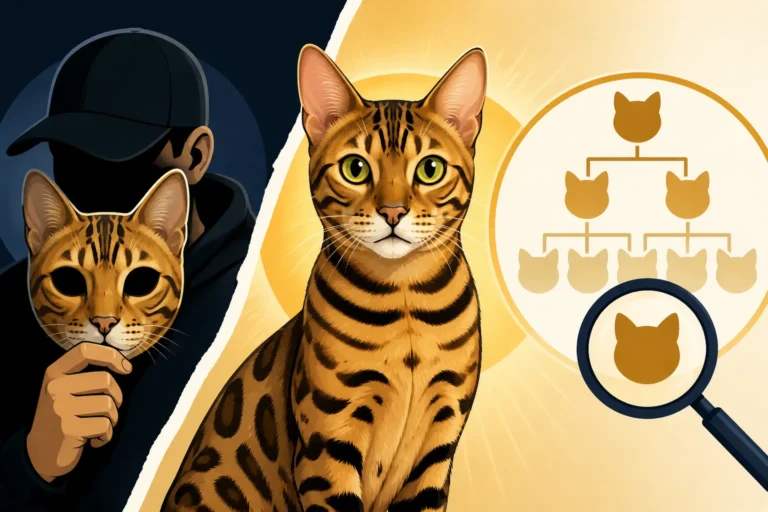
Finding a reputable breeder is paramount, regardless of the color you're seeking. For a silver Bengal, specifically, you'll want a breeder who understands the genetics behind the silver factor and can produce clear, untarnished coats with excellent contrast. Ask to see the pedigree of the kitten's parents and inquire about their health testing. A good breeder will be transparent about their breeding program and happy to show you documentation. They should be testing for common Bengal health issues, such as HCM and PK deficiency. You can learn more about this by checking out What a Bengal Cat Breeder Should Have Tested and HCM Is What Kills Bengal Cats Early.
A truly ethical breeder will also focus on the temperament of their cats, ensuring their kittens are well-socialized and accustomed to human interaction. A silver coat might be beautiful, but a shy or aggressive cat, no matter how pretty, will not make a good pet. Look for a clean cattery, healthy-looking kittens, and a breeder who asks you plenty of questions too – it shows they care about where their kittens are going. Don't be afraid to ask about their experience specifically with silver lines and what kind of genetic testing they do to ensure a clear silver coat.
Cost Considerations for a Silver Bengal
The price of a Bengal kitten can vary widely depending on many factors, and color certainly plays a role. Generally, unique or highly sought-after colors and patterns, like certain types of rosettes or, yes, clear silver coats, might command a higher price. Silver Bengals, especially those with exceptional clarity and contrast, are often considered premium. You can expect the cost to reflect the breeder's investment in genetic testing, health clearances, showing their cats, and the overall quality of their breeding program.
Remember, the initial purchase price is just the beginning. The lifetime cost of owning a Bengal cat is significant. Beyond the purchase, factor in high-quality food (often a high-protein diet, which you can find readily on sites like Chewy), vet care, vaccinations, toys, and enrichment. While a silver coat itself doesn't inherently make a Bengal more expensive to maintain, a breeder might price it higher due to its aesthetic appeal and the specific genetic pairing required to produce it. For a deeper dive into financial planning, check out What a Bengal Cat Costs Over Its Lifetime.
General Care Tips for Your Silver Bengal
Caring for a silver Bengal isn't fundamentally different from caring for any other Bengal, but it’s worth reiterating their specific needs. These cats are incredibly active and intelligent, so they require a great deal of mental and physical stimulation. This means plenty of interactive playtime, puzzle toys (many great options are available on Chewy), and vertical climbing spaces like tall cat trees. Without adequate enrichment, a bored Bengal can quickly become a destructive Bengal.
Their short, pelt-like coats are surprisingly low-maintenance. They shed very little and typically don't require extensive brushing, as their coat doesn't mat. However, regular nail trims are essential, as their claws grow fast and are incredibly sharp. A good scratching post is a must-have, and often multiple are needed to satisfy their scratching instincts and save your furniture. Keeping an eye on their diet is also important, as Bengals can have sensitive stomachs, and a high-quality, often wet-food-based diet is usually recommended. Why a Bengal Cat's Gut Is So Sensitive provides more insight into this.
Finally, socialization is ongoing. Bengals thrive on interaction with their human families. They are known for being vocal and demanding of attention. Whether it's playing fetch, going for a leash walk, or simply cuddling on the sofa, your silver Bengal will want to be an integral part of your life. Their gorgeous coats are just one aspect of their incredible personalities.
The Genetics Behind the Silver Bengal Coat
The beauty of a silver Bengal isn't just skin deep; it's a fascinating interplay of genetics that results in their distinctive cool-toned appearance. Understanding the science behind it can deepen your appreciation for these magnificent cats.
The Inhibitor Gene and Melanin Production
The primary player in creating a silver Bengal is the dominant inhibitor gene, often denoted as 'I'. This gene has a remarkable effect: it inhibits the production of pheomelanin, which is the red and yellow pigment found in a cat's fur. Think of it this way: all cats produce two types of melanin – eumelanin (which creates black and brown colors) and pheomelanin (which creates red and yellow colors). The inhibitor gene specifically targets and suppresses the pheomelanin.
What this means for a Bengal is that if it would normally have a warm, golden-brown base coat (due to pheomelanin), the inhibitor gene reduces or eliminates that warmth. The eumelanin (black pigment) is largely unaffected, which is why the Bengal's dark markings remain strong and distinct. Instead of a warm brown background, you get a silvery-white or grey backdrop, against which the black patterns stand out sharply. It essentially acts as a switch, turning off the warm tones without turning off the dark ones. This is also what creates the striking "glitter" effect in many Bengals, where the individual hair shafts appear translucent and reflect light. What the Glitter Gene Does to a Bengal Cat explores this further.
Dominant Inheritance and Breeding Considerations
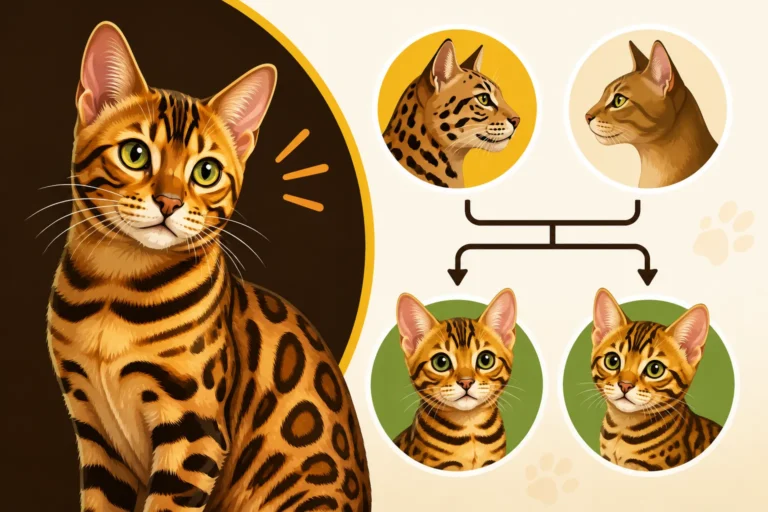
Since the inhibitor gene is dominant, a Bengal cat only needs to inherit one copy of it from either parent to express the silver coloration. This makes it relatively straightforward for breeders to produce silver kittens. A cat can be homozygous (II) for the silver gene, meaning it has two copies, or heterozygous (Ii), meaning it has one copy. Both II and Ii cats will appear silver.
For breeders, understanding this dominant inheritance is crucial. Breeding a silver Bengal (Ii or II) to a non-silver Bengal (ii) will result in a certain percentage of silver kittens. Breeding two silver Bengals can produce silver kittens, and if both parents are heterozygous (Ii), there's a chance of non-silver kittens as well. Reputable breeders use genetic testing and careful pairing to ensure they are producing healthy kittens with desirable coat qualities, including clear silver coloration. They are actively trying to improve the clarity of the silver, avoiding any residual "tarnishing" that can sometimes appear in less clear lines.
Avoiding "Tarnishing" and Ensuring Clarity
One of the biggest challenges and goals for breeders of silver Bengals is to achieve a truly "clear" silver coat, free from what's often called "tarnishing" or "rufousing." Tarnishing refers to undesirable warm, yellowish, or brownish tones that can still creep into the silver background, making it look less crisp and vibrant. While the inhibitor gene reduces pheomelanin, its expression isn't always 100% perfect, and other polygenes (multiple genes working together) can influence the final shade and clarity.
A dedicated silver Bengal breeder will select breeding cats that consistently produce kittens with the clearest possible silver backgrounds and intense black markings. This often involves careful observation of kittens as they mature and selecting future breeding stock based on these desirable traits. While you might find a silver Bengal kitten that looks a bit "muddy" or tarnished, a top-quality silver will have that brilliant, cool clarity that is so highly prized. It's a continuous effort to refine the genetics and enhance the striking beauty of this color.
Disclaimer
This article is for general informational purposes only and does not constitute professional advice. Laws, prices and regulations vary by location and change over time. Consult a qualified professional for guidance on your specific situation.