Why F4 Is the Line Between Wild and Domestic Bengal Cats
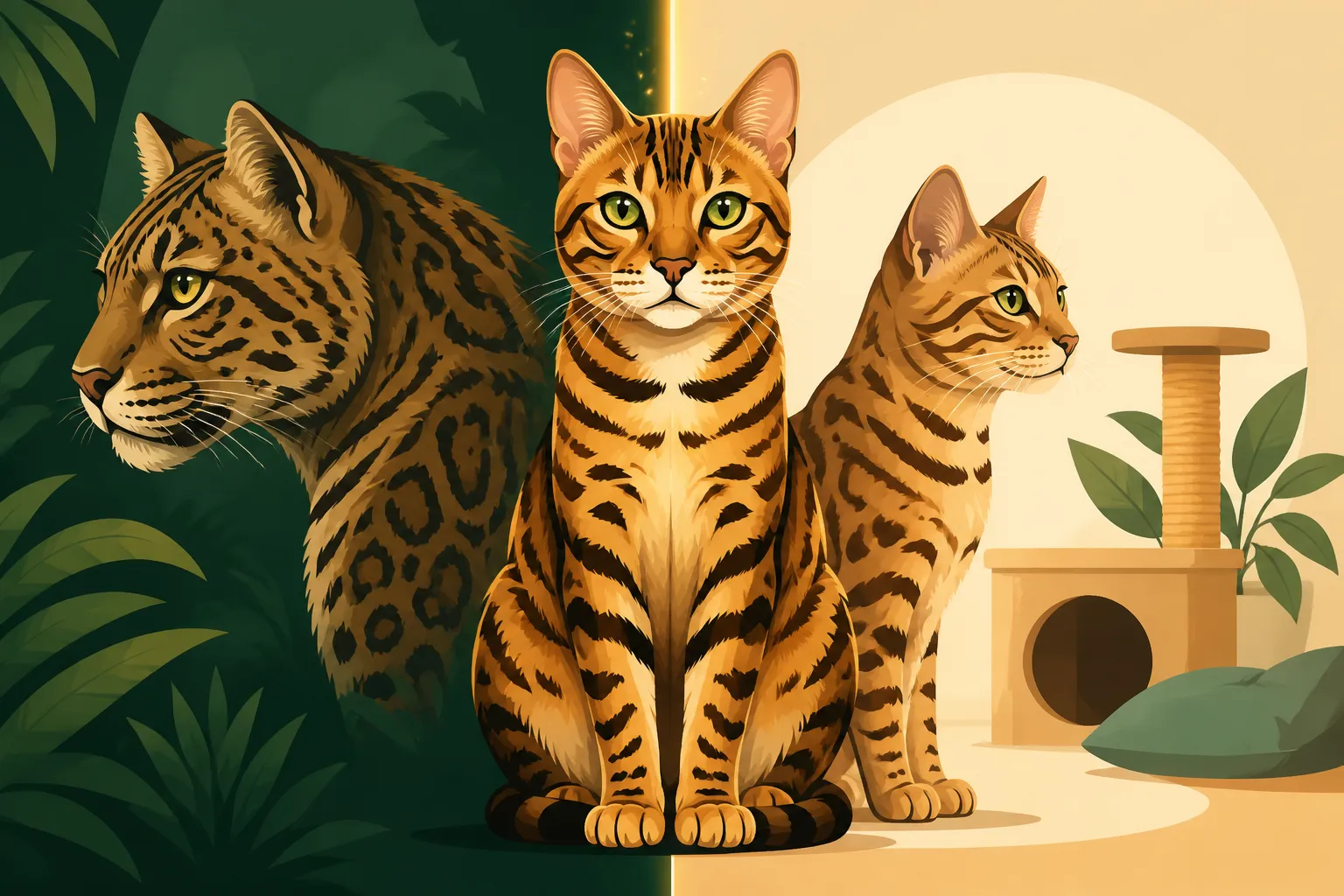
An F4 Bengal may look strikingly wild, so it is easy to assume its generation number tells you exactly how wild it is. It doesn’t. The F4 label describes a place in the pedigree, not a guaranteed temperament, percentage of wild DNA, or legal status. This guide explains what the boundary means—and what to check before bringing a Bengal home.
What F4 Means in a Bengal Cat Pedigree
How the filial generations are counted
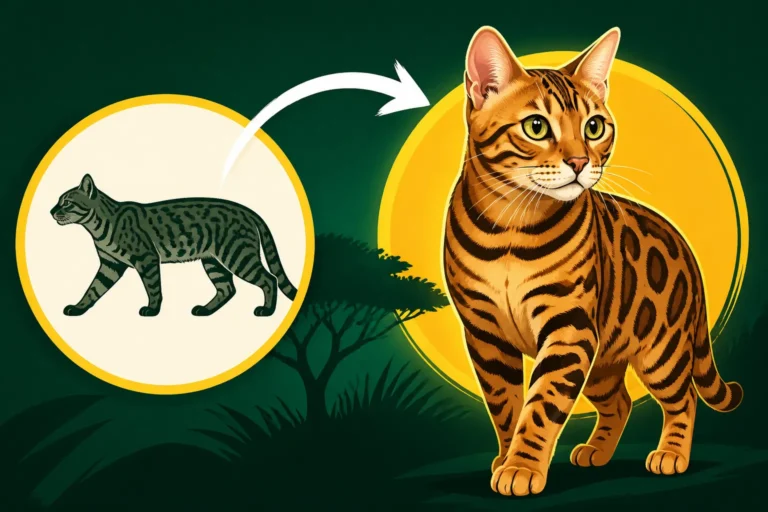
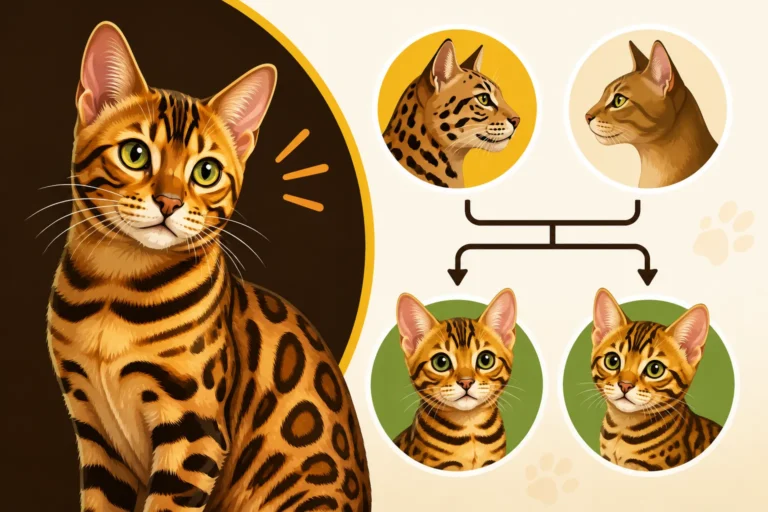
The Bengal breed began with crosses between domestic cats and the Asian leopard cat, a small wild felid. In a simplified pedigree, the first offspring from that cross is called F1. An F1 bred to a domestic cat may produce F2; later generations are counted in the same broad way. By F4, the cat is several generations removed from the original wild ancestor.
That shorthand is useful, but it can be confusing. Breeders, registries, and local laws may use generation terminology in different ways. A pedigree’s recorded parents and grandparents are more informative than a number quoted in an advertisement. For a fuller explanation of the labels, see How a Bengal Cat's Generation Is Counted and F1 to SBT: How a Bengal Cat's Generation Is Counted.
In general, F1, F2, and F3 describe earlier generations closer to the original cross. F4 describes a later generation, but it does not mean that the Bengal has no Asian leopard cat ancestor. It means that ancestor is farther back in the recorded family tree. The distinction matters when someone casually describes an F4 as “just like a regular house cat” or, at the opposite extreme, suggests that it behaves like a wild animal. Neither conclusion follows from the label alone.
Why F4 is often treated as a domestic-breed threshold
F4 is commonly discussed as a dividing line because later-generation Bengals are generally regarded as domestic cats for ordinary ownership and breed purposes. They are bred across generations for domestic life, and their day-to-day needs are those of highly active companion cats—not wild felids.
That does not mean every registry uses “F4” and “SBT” as interchangeable terms. SBT is a pedigree designation used by cat registries, and its requirements depend on the recorded lineage and the registry’s rules. A cat may be described informally as F4 without that automatically establishing a particular registration status. Read What SBT Means in a Bengal Cat if you are comparing the terms.
This threshold can also sound more absolute than it is. F4 is a helpful shorthand for a later generation, not a biological switch that suddenly changes a cat from wild to tame. The cat’s ancestry, breeding history, early handling, individual personality, and home environment all contribute to the animal you meet.
What F4 Does and Does Not Tell You
It is not an exact wild-DNA percentage
People often expect the F number to reveal precisely how much Asian leopard cat ancestry an individual Bengal carries. It cannot do that. In a simplified sequence where each generation is bred to a domestic cat, the expected contribution from the original wild ancestor is halved each time: an F1 averages about half, an F2 about a quarter, an F3 about an eighth, and an F4 about one-sixteenth.
Those are expected averages, not a measurement of an individual cat’s DNA. Inheritance is not a perfect, evenly divided handoff. A kitten receives a particular mix of genetic material from its parents, so two cats with the same generation label can inherit different portions of their ancestors’ DNA. The generation number is a description of pedigree distance, not a test result.
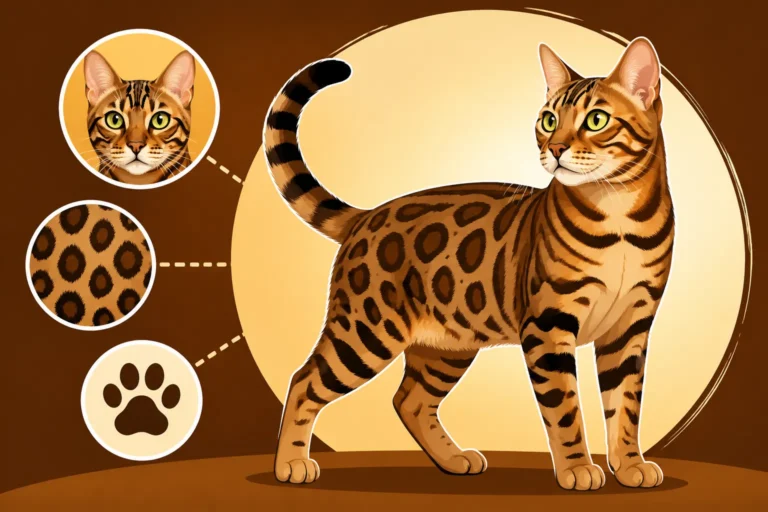
It also cannot tell you exactly what a Bengal will look like. Coat pattern, athletic build, and expressive features are shaped by selective breeding over time, and those traits do not neatly correspond to a simple percentage of wild ancestry. A dramatic rosette pattern does not prove that a cat is an early generation. For context on the earlier labels, see What F1 Means in a Bengal Cat and What F2 and F3 Mean in a Bengal Cat.
It does not guarantee temperament or suitability
An F4 Bengal is not automatically calm, easygoing, or suited to every household. Bengals from later generations can be energetic, curious, vocal, persistent, and remarkably good at turning a closed cupboard into a puzzle. Some settle happily into a predictable indoor routine; others need substantial daily play, climbing space, and interaction to stay content.
The reverse is true too: a generation label alone cannot tell you that a cat will be difficult. A well-socialized Bengal with a thoughtful introduction to its home may adapt beautifully, while an individual cat of any generation can struggle with stress, boredom, or abrupt changes. Ask the breeder or rescue about the specific cat’s behavior, not just the generation.
When comparing a kitten with an adult, ask how the cat responds to ordinary household experiences: visitors, household sounds, being handled, other pets, and time alone. A realistic discussion of the breed’s needs is more useful than promises that a particular generation is “easy.” For a broader family-fit discussion, see Which Bengal Cat Generation Suits a Family and How an Early Generation Bengal Cat Behaves Differently.
| What the F4 label may indicate | What it does not establish |
|---|---|
| The cat is several generations removed from the original wild ancestor | An exact amount of wild ancestry in that individual |
| The cat is a later-generation Bengal in a pedigree | A guaranteed temperament or activity level |
| The cat may fall beyond some commonly used early-generation distinctions | That the cat is legal everywhere |
| The cat may be eligible for certain registry classifications if its pedigree meets their rules | That the cat automatically has SBT registration |
Why F4 Does Not Settle Legal or Registration Questions
Laws can draw the line differently
Some places regulate hybrid cats by generation, while others use different definitions or apply rules to Bengals as a whole. Local requirements may be set at state, provincial, county, or city level, and they can change. Even where F4 is commonly treated as a domestic generation, do not assume that the label alone proves you can own the cat without restrictions.
Before committing to a kitten, check the rules that apply to your exact address and the cat’s documented lineage. If you rent, review the lease and ask the landlord for written approval; a pet policy may treat a Bengal differently from an ordinary domestic shorthair. For a practical overview of the issue, see Which Bengal Cat Generation Most States Draw the Line At and How to Check Your State's Bengal Cat Law.
This is especially important if you plan to move, travel, or cross a border with the cat. A breeder’s verbal assurance that “F4 is legal” may not answer the question for your municipality or destination. Keep the pedigree and registration records, and confirm the relevant rules with the appropriate local authority before making plans.
Pedigree paperwork matters more than a sales description
Ask to see the kitten’s pedigree or registration documentation and have the breeder explain how they are using the F4 label. Check which generations are actually recorded and whether the paperwork supports the description. If the seller says the kitten is SBT, ask which registry issued or recognizes that classification and what the pedigree shows.
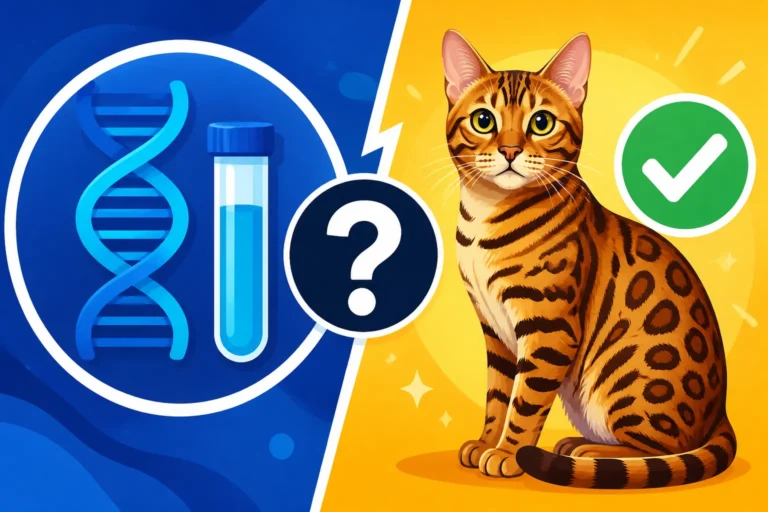
A DNA test is not a simple substitute for a pedigree when you need to establish a Bengal’s exact generation. Breed ancestry tests and generation records answer different questions, and a test should not be treated as proof of a legal classification unless the relevant authority says it is acceptable. A clear paper trail is particularly useful if your housing provider, insurer, or local rules ask for documentation.
Notice how the breeder handles questions. A responsible breeder should be comfortable explaining terminology, showing records, and discussing health screening and socialization. Be cautious if the explanation relies on urgency, refuses to show paperwork, or treats “F4” as a magic guarantee of temperament or legality. The broader pedigree distinctions are covered in How to Find a Bengal Cat's Generation on Its Pedigree.
Choosing an F4 Bengal for Your Home
Evaluate the individual cat and its needs
If you are considering an F4 Bengal, start with the life you can realistically offer. Think about how much time you have for interactive play, whether your home has safe vertical space, and how the cat will manage when you are away. A Bengal may be a poor match for a household expecting a quiet cat that entertains itself all day, regardless of whether its pedigree says F4 or SBT.
Ask to meet the kitten’s mother, if possible, and observe how the kittens respond to people and everyday activity. Ask what they eat, how they have been introduced to household sounds, and what support the breeder provides after the kitten goes home. If you are adopting an adult, ask about its established routine, social preferences, and any known behavior concerns. Specific answers are more meaningful than broad claims about the generation.
Plan for a gradual transition. Keep the kitten’s first room calm, provide familiar food and litter, and let the cat explore at its own pace. If you need to gather supplies, a retailer such as Chewy may be one option for finding the same food or litter the breeder has been using; the key is to avoid changing everything at once. Sudden food changes can upset a cat’s stomach, while an unfamiliar litter setup may add stress during an already big adjustment.
Prepare for a domestic cat with plenty of energy
Later-generation Bengals are domestic companions, but many still have a strong need for stimulation. Schedule active play with wand toys, offer sturdy climbing options, and rotate toys so the environment does not become stale. Puzzle feeders can add a small problem-solving task to mealtimes, though they are not a replacement for interaction.
Bengals can also be inventive. A cat that learns how to open a cupboard may keep trying long after you have moved its treats. Secure food, cleaning products, medications, and fragile objects; make sure windows and exterior doors are secure; and provide appropriate scratching surfaces. A well-prepared home helps channel curiosity rather than relying on punishment after the cat gets into trouble.
For the first few weeks, keep supplies and routines consistent. Chewy can be convenient for reordering familiar food or litter if that is how you prefer to shop, but follow the breeder’s or veterinarian’s guidance when changing products. If a change is needed, transition gradually and monitor appetite, stool, and energy. Chewy is simply one possible place to source routine supplies, not a substitute for advice from a veterinarian who knows your cat.
The most useful question is not “Is an F4 wild or domestic?” It is “What does this cat’s documented history, individual temperament, and care needs mean for my household?” F4 is a helpful pedigree marker and often a practical dividing line in discussions of Bengal generations. It is not a guarantee about behavior, legal status, or an individual cat’s exact ancestry. Ask for records, verify local rules, and choose based on the cat in front of you.
Disclaimer
This article is for general informational purposes only and does not constitute professional advice. Laws, prices and regulations vary by location and change over time. Consult a qualified professional for guidance on your specific situation.