Whether a Savannah Is Related to the Bengal Cat
A Savannah and a Bengal can both have spotted coats, athletic bodies, and a reputation for being unusually energetic, so it is easy to assume they are closely related. They are not the same breed, and one was not developed from the other. This guide explains what they share, where their ancestry differs, and why their needs and ownership rules can vary.
Are Savannah and Bengal cats related
They are both domestic cat hybrid breeds
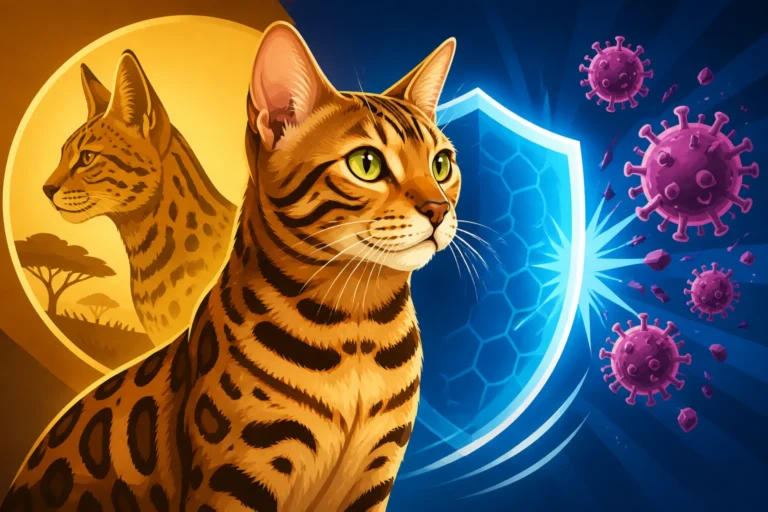
The Savannah and Bengal are related in a broad sense: both breeds were developed through crosses involving domestic cats and wild feline species. But that does not mean a Savannah is a kind of Bengal, or that Bengals descend from Savannahs. Their defining wild ancestors are different, and their breed histories developed along separate paths.
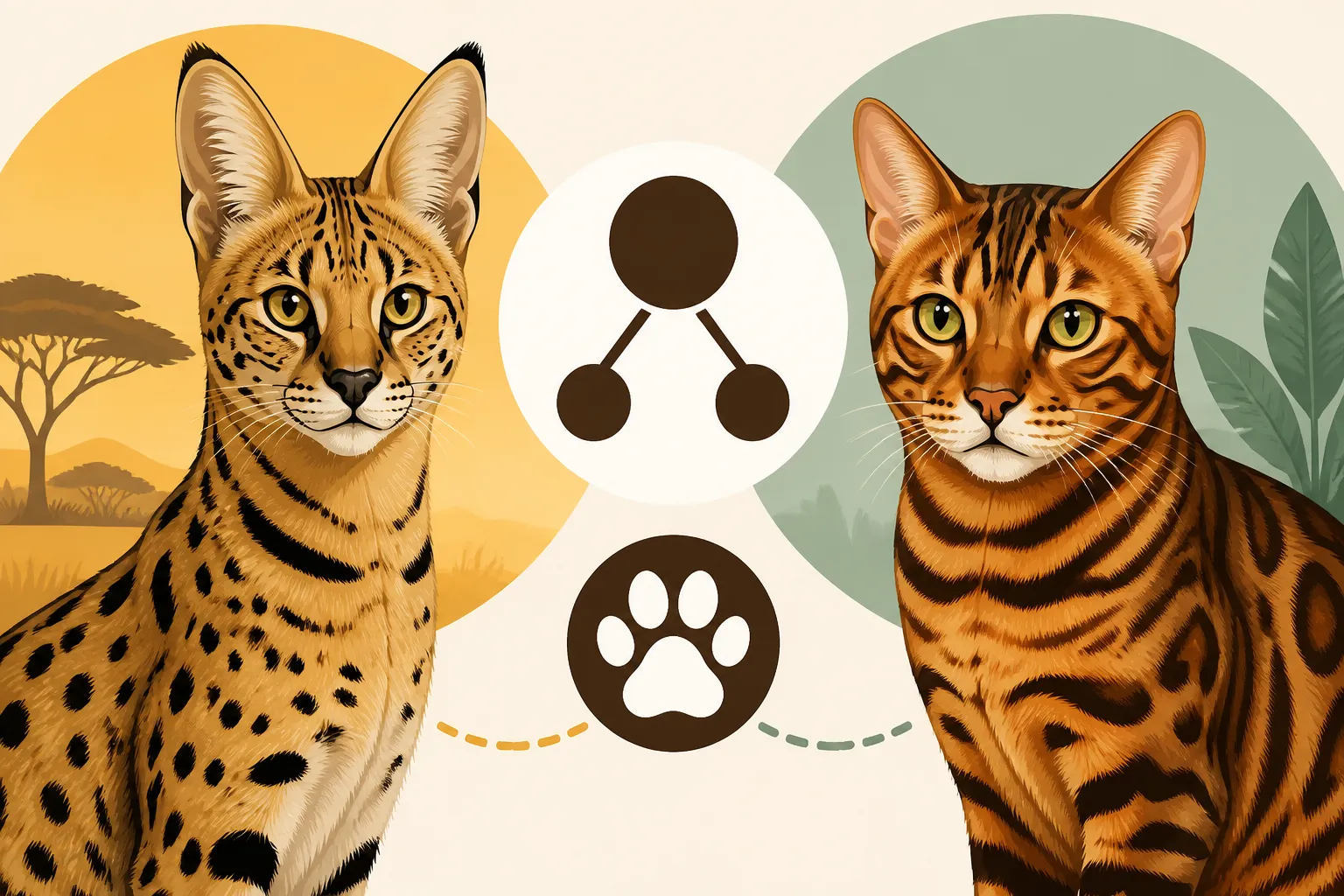
A Bengal’s wild ancestor is the Asian leopard cat, a small wild cat native to parts of Asia. A Savannah’s wild ancestor is the serval, a long-legged African wild cat. Those different starting points help explain why the breeds can look quite different even though both may have bold spots and a striking, “wild” appearance. You can read more about Where the Bengal Cat Comes From and What the Bengal Cat's Wild Ancestor Is Like for background on the Bengal’s origins.
There is, of course, domestic-cat ancestry in both breeds. Domestic cats contributed traits to each breeding program, and all domestic cats share a common species background. But that commonality is not the same as a direct breed relationship. The clearest short answer is: Savannahs and Bengals are separate breeds with different wild ancestors, although both have hybrid origins.
Their names and appearance can cause confusion
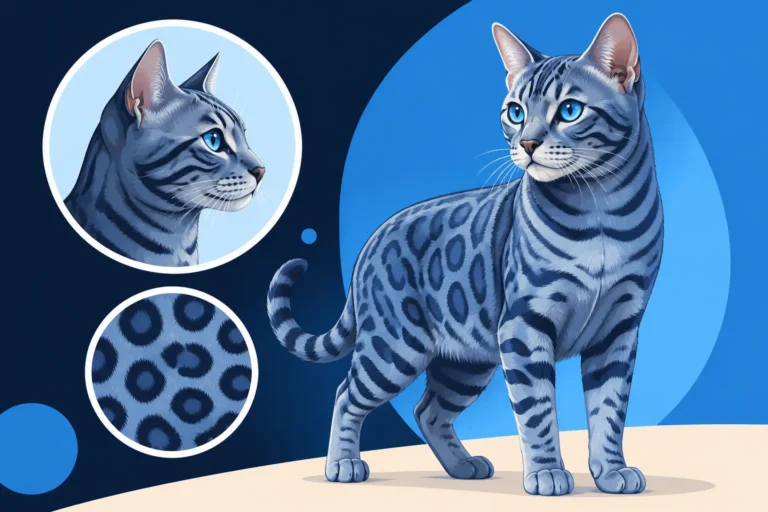
The confusion makes sense. A brown Bengal may have dark rosettes that resemble spots, while a Savannah often has large, distinct spots. Both can be lean, muscular, curious, and active. In a quick photo, especially one without a size reference, their coats can seem similar enough that people mistake one for the other.
Appearance alone is not a reliable way to identify either breed. Bengals come in several recognized colors and patterns, including rosetted and marbled coats. Savannahs are commonly associated with spotted coats, long legs, large ears, and a tall, rangy silhouette. Individual cats still vary, and a spotted domestic shorthair can resemble either breed without having the ancestry or pedigree of one.
The word “hybrid” can also blur the distinction. It describes a cat with ancestry from a cross involving a wild species; it does not mean all hybrid breeds are interchangeable or closely related. For a visual comparison, see How to Tell a Bengal Cat From a Savannah. If you are looking at a cat whose background is uncertain, appearance can suggest possibilities, but it cannot establish breed or generation on its own.
The different wild ancestors behind each breed
Bengal cats trace back to the Asian leopard cat
The Bengal breed was developed using domestic cats and the Asian leopard cat, whose scientific name is Prionailurus bengalensis. The breed’s name echoes that scientific name, but a modern Bengal is a domestic cat breed, not an Asian leopard cat. Generations of selective breeding shaped the Bengal’s appearance and temperament.
That history matters because a Bengal’s spots do not mean it has a recent wild ancestor. Many pet Bengals are several generations removed from the original wild crosses. Breeders work toward cats with domestic temperaments and breed-standard features, while maintaining the distinctive coat patterns that attract people to Bengals.
If you are trying to understand the terminology, Which Scientific Name the Bengal Cat's Ancestor Carries explains the name behind the Asian leopard cat. It is also worth separating ancestry from day-to-day behavior: a cat’s energy, confidence, and social needs depend on the individual, its breeding, and its experiences, not just on a wild ancestor in its family tree.
Savannah cats trace back to the serval
The Savannah breed was developed from domestic cats crossed with servals. Servals are African wild cats with notably long legs, large ears, and a spotted coat. Those features can be reflected in Savannah cats, especially in early generations, although the appearance of an individual cat depends on its ancestry and generation.
Because the serval is a different species from the Asian leopard cat, Savannahs and Bengals have distinct wild-cat roots. A Savannah is not a Bengal with longer legs, and a Bengal is not a Savannah with a different coat pattern. Their shared category is hybrid-origin domestic breeds, not a shared breed lineage.
The differences can also shape practical expectations. An early-generation hybrid may have needs and behaviors that differ from those of a later-generation domestic cat. However, no single description fits every cat. A responsible breeder or rescue organization should be able to explain the animal’s background and what its particular temperament and care needs are likely to involve.
| Feature | Bengal | Savannah |
|---|---|---|
| Wild ancestor | Asian leopard cat | Serval |
| Typical coat impression | Rosettes, spots, or marbling | Often large, dark spots |
| Breed relationship | Separate breed with its own history | Separate breed with its own history |
| What a similar appearance proves | Nothing conclusive about ancestry | Nothing conclusive about ancestry |
| What to check when researching a specific cat | Pedigree, generation, breeder or rescue records | Pedigree, generation, breeder or rescue records |
What generation means and why it matters
Generation labels refer to ancestry, not a breed swap
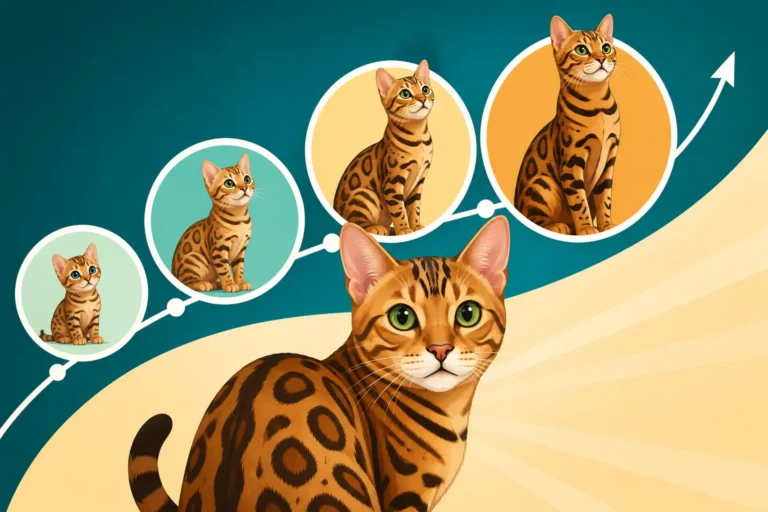
Hybrid cats are often described by generation. In Bengal terminology, F1 generally refers to a first-generation cross involving an Asian leopard cat, while F2 and F3 refer to later generations. The exact family tree is more informative than treating an F-number as a complete description of a cat’s personality. For a clearer explanation, see What F1 Means in a Bengal Cat and What F2 and F3 Mean in a Bengal Cat.
Savannahs also use generation labels, but those labels refer to serval ancestry in the Savannah’s family tree. A Bengal’s F-number is not interchangeable with a Savannah’s. The number does not create a relationship between the breeds; it describes how many generations separate a cat from its respective wild ancestor under the relevant breeding convention.
Later-generation cats are generally further removed from the original wild cross, but generation alone does not guarantee a particular temperament, size, or level of activity. Early-generation cats can be more challenging for inexperienced owners, and individual variation is substantial. Ask for the pedigree and a plain-language explanation rather than relying on a label alone.
Registration and pedigree are more useful than coat pattern
A cat’s pedigree can help confirm whether it is a Bengal, a Savannah, or neither. Registration documents may record breed and ancestry, but it is sensible to ask what the paperwork actually establishes and whether the breeder can explain the generations in the family tree. See How to Find a Bengal Cat's Generation on Its Pedigree for a closer look at Bengal records.
A dramatic spotted coat is not proof of either breed. Domestic shorthairs can have spotted or patterned coats, and mixes may retain a striking appearance without having documented Bengal or Savannah ancestry. If a seller claims a cat is a particular breed or generation, ask for records rather than making a decision based on photos or informal descriptions.
This is especially important before adopting or buying, because the claimed breed can affect expectations about care, housing, and local rules. Laws sometimes treat early-generation hybrids differently from later-generation cats, and requirements can vary by country, state, or city. Check the rules where you live rather than assuming a Bengal and a Savannah are handled identically.
Choosing between a Bengal and a Savannah
Compare the individual cat, not just the breed label
If you are deciding between these breeds, start with the life you can realistically offer. Both may be energetic and curious, but individual cats differ in how much interaction they seek, how they respond to visitors, and how well they cope with being alone. Ask a breeder or rescue about the specific cat’s behavior, daily routine, health history, and experience with children or other animals.
Think beyond the appeal of a wild-looking coat. Can you provide regular play, climbing opportunities, secure windows and doors, and veterinary care? A tall cat tree, puzzle feeders, and sturdy toys can make a home more engaging. When comparing supplies, Chewy is one retailer where owners may look at options such as carriers, scratching posts, and enrichment toys; the important thing is choosing equipment that suits the individual cat and your home.
Also consider whether the cat’s size, strength, and activity level fit your household. A confident, high-energy cat can be wonderful company, but it may also open cabinets, climb shelves, or demand interaction at inconvenient moments. That is not a breed defect; it is a practical mismatch if the household expected a low-maintenance lap cat.
Plan for care, safety, and legal requirements
Before bringing either breed home, confirm the cat’s generation and check local ownership rules. Restrictions can depend on the cat’s ancestry, the location, and how authorities define or document hybrid animals. If you are moving, traveling, or renting, verify relevant requirements ahead of time. Do not assume a rule that applies to one breed automatically applies to the other.
Make the home safe for an active cat: secure screens, put away small objects that could be swallowed, and provide appropriate scratching and climbing outlets. A well-fitted carrier is useful for routine veterinary visits, and a gradual introduction to new rooms or pets can prevent an already stimulating transition from becoming overwhelming. Chewy may be a convenient place to compare basic home and travel supplies, but product choice should follow your veterinarian’s and the cat’s needs rather than its breed label.
Finally, ask about health screening and what support is available after adoption. A thoughtful breeder should be willing to discuss health history, socialization, the parent cats, and the specific kitten’s temperament. A rescue may not know every detail of a cat’s early history, but it can often share observed behavior and medical records. For Bengals, Whether Bengal Cats Are Still Bred From Wild Cats offers useful context on how modern breeding differs from the breed’s origins.
The practical takeaway is simple: Savannahs and Bengals are not directly related as breeds, and one is not a type of the other. They share a broad hybrid-breed category, but the Bengal traces to the Asian leopard cat while the Savannah traces to the serval. When assessing a particular cat, rely on its records, individual behavior, and your local rules—not just the spots.
Disclaimer
This article is for general informational purposes only and does not constitute professional advice. Laws, prices and regulations vary by location and change over time. Consult a qualified professional for guidance on your specific situation.