Whether an Early Generation Bengal Cat Is Housetrained
An early-generation Bengal may use a litter box reliably, but that does not automatically mean the cat is fully housetrained in every home or comfortable with every routine. F1, F2, and F3 cats can differ in temperament, confidence, and adaptation needs. This guide explains what housetraining involves, what to ask a breeder, and how to make a new home easier to navigate.
What housetrained means for an early-generation Bengal
Litter-box use is only one part of housetraining
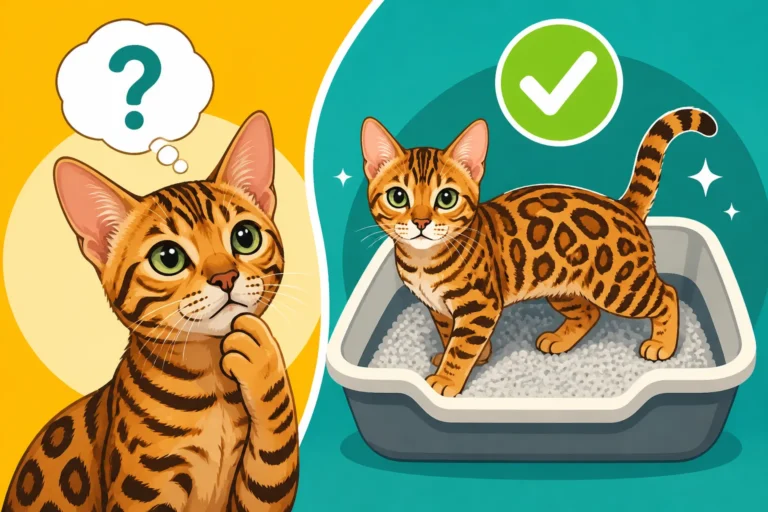
When people ask whether an early-generation Bengal is housetrained, they usually mean, “Will this cat use a litter box rather than toileting around my home?” That is a sensible concern, but the answer depends on the individual cat, its early experience, and the environment you provide. A kitten that uses a box consistently in its breeder’s home may need time to adjust after a move.
Housetraining can also refer more broadly to settling into household routines: knowing where to eat, sleep, scratch, and retreat; tolerating ordinary indoor activity; and being comfortable with people. A cat may be excellent with the litter box but still hide from visitors, call at night, or react strongly to unfamiliar sounds. Those behaviors do not necessarily mean the cat has not been litter-trained.
It helps to separate learned habits from temperament and adjustment. Litter-box use is a behavior that can be encouraged with a suitable setup and consistent access. Confidence in a new household develops over time, and an early-generation Bengal may need more careful, gradual introductions than a cat already accustomed to busy domestic life. For background on the generation labels, see What F1 Means in a Bengal Cat and What F2 and F3 Mean in a Bengal Cat.
Generation is useful context, not a guarantee
“Early generation” generally refers to cats closer in pedigree to the Asian leopard cat ancestor than later-generation Bengals. The label can offer context about ancestry, but it does not predict every detail of an individual cat’s behavior. Two cats from the same generation can have very different personalities, and their upbringing matters enormously.
Ask what the kitten has actually experienced, rather than relying on an F-number as a shortcut. Has it used a litter box independently? Which litter and box style did it use? Was it raised indoors with everyday household sounds? How did it respond to being handled, separated briefly from its littermates, or introduced to new rooms? Concrete answers tell you more about likely transition needs than a general claim that a cat is “already trained.”
Early-generation behavior and domestic routines can vary, so the breeder’s records and observations are valuable. A useful overview is How an Early Generation Bengal Cat Behaves Differently. If you are comparing generations as possible pets, Which Bengal Cat Generation Suits a Family can help frame the broader question of household fit.
What to ask before bringing one home
Get specific details about the kitten’s litter routine
Ask the breeder to describe the kitten’s current setup in practical terms. Find out where the boxes are placed, whether they are open or covered, how many are available, what litter is used, and how often the kitten uses them. Ask whether the kitten has had any accidents, and if so, what was happening at the time. A direct, thoughtful answer is more useful than a simple yes.
If possible, keep the first setup familiar. Changing the litter type, box style, location, and household routine all at once can make it harder for a new cat to find its bearings. You can usually make changes gradually after the cat is settled. Retailers such as Chewy may carry a range of litter and box supplies, but the most important thing at first is to recreate what the cat already knows, not to buy a completely different setup because it looks convenient.
Ask how the kitten behaves when it needs to go. Does it walk to the box independently, or does someone place it there after meals and naps? Does it prefer privacy? Has it used more than one box location? These details help you decide whether the kitten has a reliable habit or has simply been successful in a tightly managed environment.
Check the pedigree and the breeder’s expectations
A breeder should be willing to explain the cat’s generation and provide appropriate pedigree information. Registration documents can help establish lineage, but they do not prove that a cat is litter-trained or suited to a particular household. For help understanding the paperwork, see How to Find a Bengal Cat's Generation on Its Pedigree and What SBT Means in a Bengal Cat.
Ask what support the breeder offers after the kitten moves. A responsible breeder should be able to discuss the kitten’s routine, known challenges, and transition plan without dismissing your questions. If the answer is simply that all Bengals are naturally clean or that the kitten will “figure it out,” ask for more detail. Cats are individuals, and a smooth transition is easier when both sides have realistic expectations.
Also ask whether the breeder recommends any specific handling or housing arrangements for that generation and individual cat. Do not assume that a kitten accustomed to one home will immediately cope with an open-plan apartment, young children, other animals, or a noisy renovation. A careful introduction plan can prevent stress-related setbacks before they start.
| What to ask | Why it matters | Helpful first step |
|---|---|---|
| Which litter and box style does the kitten use? | Familiar conditions can make the transition easier. | Set up a similar box and litter before arrival. |
| Has the kitten had any accidents? | Patterns may point to a routine or setup issue. | Ask when and where accidents happened. |
| How many boxes are available now? | The kitten may be used to having easy access. | Provide accessible boxes in quiet locations. |
| How does the kitten respond to household noise? | Stress and unfamiliarity can affect settling in. | Start the kitten in a calm, smaller space. |
| What support is available after adoption? | Early guidance can help resolve routine problems. | Keep the breeder’s advice and records handy. |
Helping an early-generation Bengal settle in
Set up a small, calm starting area
Instead of giving a new cat access to the whole home immediately, prepare one quiet room with food, water, a resting place, hiding spots, scratching options, and a litter box placed away from food and water. This gives the cat a manageable territory and makes it easier for you to notice whether the box is being used. Keep the room secure and remove hazards such as loose cords, open windows, and small objects that could be swallowed.
Give the cat time to explore at its own pace. Some cats investigate quickly; others hide and emerge when the room is quiet. Avoid carrying the cat repeatedly to the box unless there is a specific reason to do so. Instead, make the box easy to find and allow the cat to use it privately. You can gently show the locations of resources, then let the cat choose when to approach them.
Once the cat is eating, resting, and using the box comfortably, expand access a little at a time. If the cat seems overwhelmed or begins avoiding the box, reduce the space again and review the setup. Extra litter, a scoop, and cleaning supplies can be useful to have ready; a retailer such as Chewy may be one place owners look for routine supplies. The priority is still a quiet, clean, predictable environment.
Keep the routine steady and watch for stress
For the first several days, keep feeding times, room access, and household activity as predictable as possible. Offer calm interaction rather than insisting on contact. A cat that is hiding or vocalizing may need more time, a more secure retreat, or a slower introduction to household members. Avoid punishing accidents: punishment can increase fear and does not teach a cat where the box is.
Clean any accident thoroughly with an appropriate pet-accident cleaner so lingering odor does not encourage the cat to return to the same spot. Review whether the box is easy to reach, clean, and in a quiet location. If the cat is avoiding a covered or high-sided box, try a simple, accessible option. Chewy and other pet retailers sell different box styles and cleaning supplies, but make one change at a time so you can tell what helps.
A sudden change in litter-box habits should not automatically be treated as a training problem. Pain, urinary trouble, digestive upset, or stress can affect toileting. Contact a veterinarian if the cat strains, cries, passes very little urine, has blood in the urine, repeatedly visits the box without producing much, or develops a persistent change in bowel habits. Difficulty urinating can be urgent, particularly in a male cat, so do not wait for a behavior plan to solve a possible medical issue.
Common housetraining problems and what to do
Accidents after a move
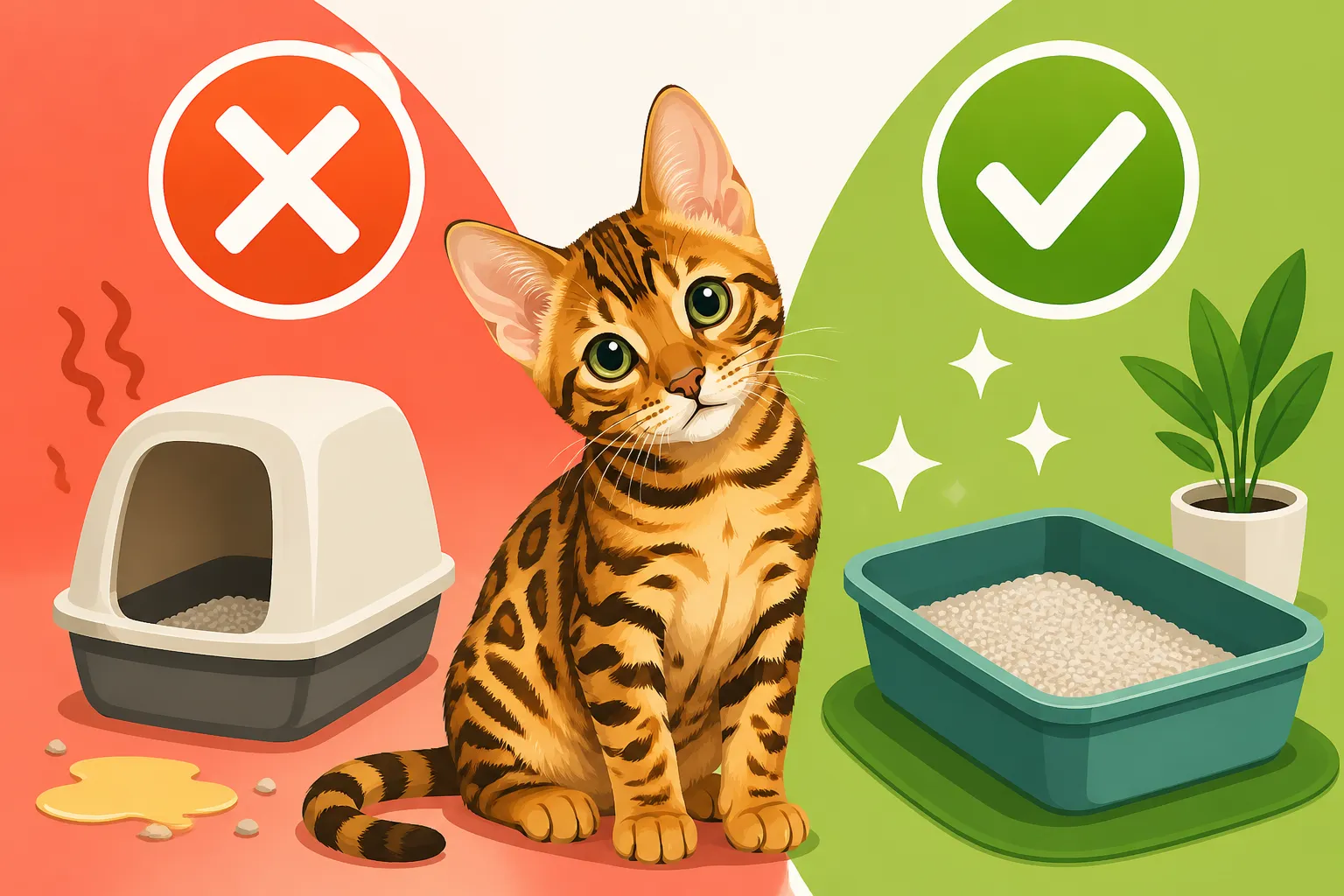
An accident shortly after arrival does not necessarily mean the cat was never trained. The new home may be larger, noisier, or less familiar than the breeder’s home. The box may be too far away, hidden behind a closed door, or placed near a washing machine or other startling sound. A cat that is anxious may also avoid crossing a busy area to reach it.
Start by narrowing the possibilities. Check that the cat can reach the box at all times, that it is clean, and that the litter is familiar. If the accident happened in one location, temporarily place a box nearby, then move it gradually if needed. Keep the cat’s starting area simple until its routine is more dependable. Don’t respond by repeatedly changing litter brands or moving every box; too many changes can make the environment less predictable.
If accidents continue despite a suitable setup, take notes on timing, location, stool or urine appearance, and other changes in behavior. This can help a veterinarian distinguish a medical issue from an environmental one. A cat that previously used the box consistently but suddenly stops deserves particular attention.
Choosing the right expectations
An early-generation Bengal may be a poor match for a household expecting a cat to adapt instantly to a new space, a crowded home, or frequent changes in routine. That does not mean the cat cannot live indoors or learn household habits. It means the adopter should be prepared to offer supervision, enrichment, patient introductions, and a reliable setup rather than expecting the cat’s ancestry to explain away every challenge.
Before committing, think honestly about the environment you can provide. Can you keep the cat in a secure room at first? Can you prevent escapes while doors are opening? Are there children or resident pets who will need gradual introductions? Will you have time to observe the cat’s habits during the first stage of settling in? These practical questions matter at least as much as whether the kitten has used a box before.
A well-prepared home, clear communication with the breeder, and veterinary support when needed give a cat the best chance to settle into good routines. For the litter-box question specifically, an early-generation Bengal can be litter-trained, but no generation label guarantees effortless housetraining. Ask about the individual cat’s history, recreate familiar conditions, and treat persistent changes as a reason to investigate rather than punish.
Disclaimer
This article is for general informational purposes only and does not constitute professional advice. Laws, prices and regulations vary by location and change over time. Consult a qualified professional for guidance on your specific situation.