How to Tell a Bengal Cat From a Savannah
A tall, spotted cat can look like a Bengal in one photo and a Savannah in the next, especially when age, coat color, and camera angle muddy the clues. The difference is more than markings: these are separate breeds with different wild ancestors, body types, and generation histories. This guide explains what to look for—and when appearance alone cannot give you a reliable answer.
Start with the biggest difference: their wild ancestors
Bengals descend from Asian leopard cats
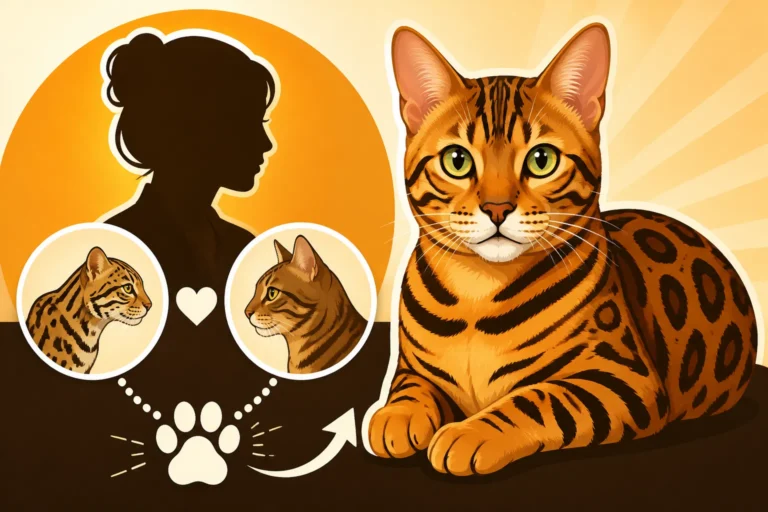
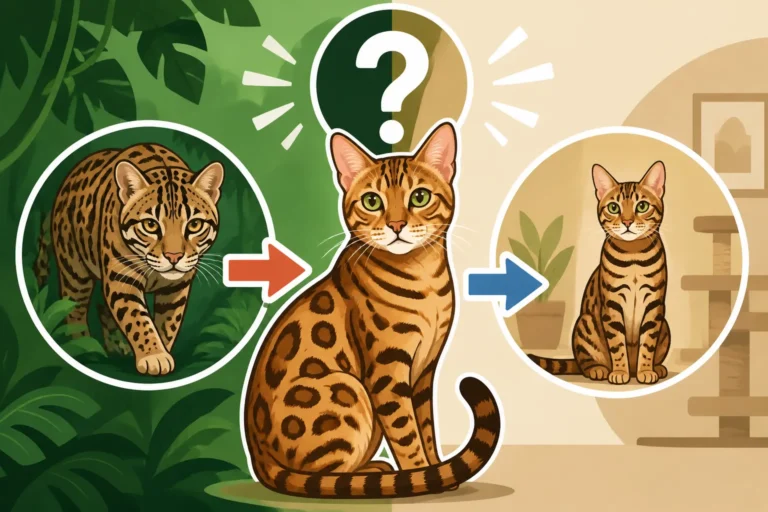
The Bengal breed developed from domestic cats crossed with the Asian leopard cat, a small wild feline native to parts of Asia. Modern Bengals are several generations removed from those early crosses and are bred as domestic cats. The breed’s wild-looking coat is its signature, but its pattern and domestic status are not proof that a particular cat has recent wild ancestry.
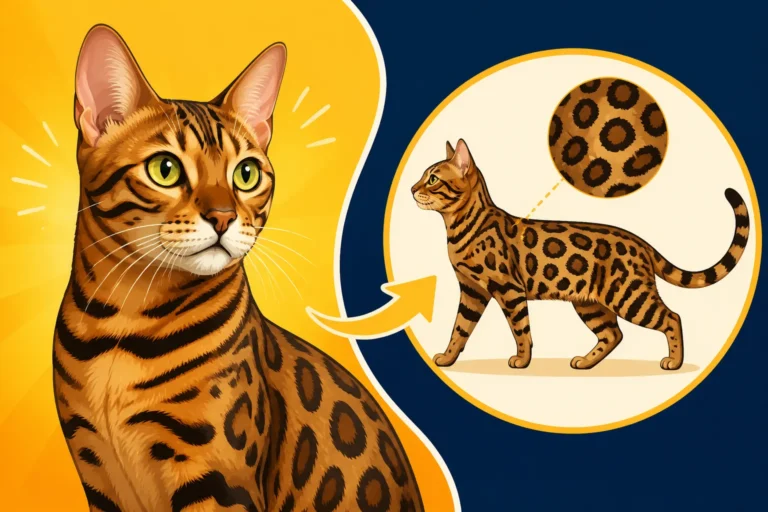
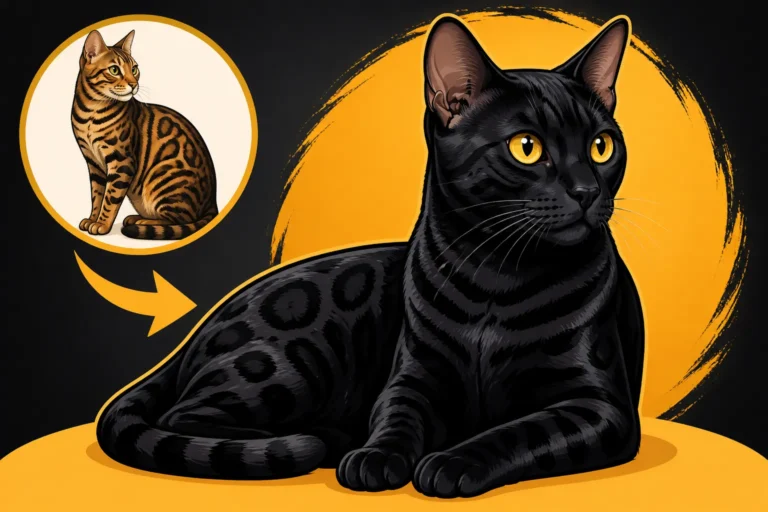
The Asian leopard cat influence is most visible in the Bengal’s coat: spots, rosettes, or marbling, often with strong contrast against the background color. Some Bengals also have a distinctive glitter effect, where the coat can appear to shimmer in certain light. These features are described in more detail in What a Bengal Cat Looks Like by the Standard and What a Rosette Is on a Bengal Cat.
A cat that merely has spots is not automatically a Bengal. Domestic shorthairs, tabby mixes, and other cats can have spotted coats too. If you are comparing an unknown cat with a Bengal, think of the pattern as one clue—not a breed certificate. Whether a Spotted Domestic Shorthair Is a Bengal Cat explains why a striking appearance alone can’t settle that question.
Savannahs descend from servals
Savannah cats come from crosses between domestic cats and the serval, a long-legged wild cat native to Africa. That different ancestor helps explain why Savannahs often have a notably tall, rangy outline, large ears, and long legs. These traits can make a Savannah look more like a small wild cat standing on stilts, while Bengals often look compact, muscular, and close to the ground.
The word “Savannah” can refer to cats with different generational histories. An early-generation Savannah has a serval relatively close in its pedigree; later-generation cats have more domestic generations behind them. As with Bengals, generation matters, but it cannot be determined accurately just by looking at the cat. A pedigree or reliable registration records are more useful than a visual guess.
The two breeds can both have dramatic spots, athletic bodies, and alert expressions. Their ancestry explains why they may share a wild appearance, but it does not make them the same breed or interchangeable in temperament, size, or care needs.
Compare the visible features
Body shape, legs, and ears
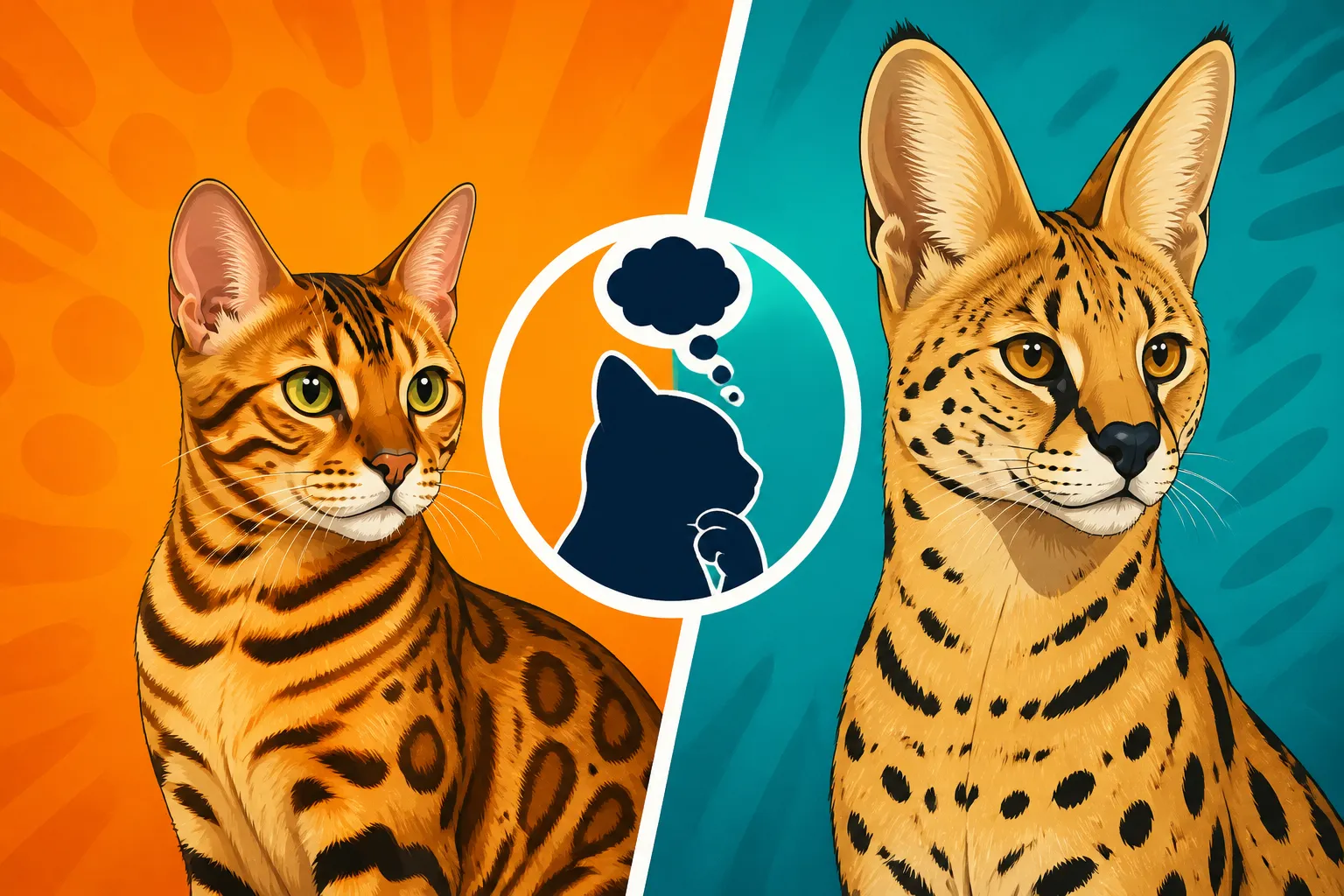
When a Savannah is standing beside a Bengal, its height and proportions may be the first things you notice. Savannahs commonly have long legs and a tall, lean silhouette. Their large ears, set high on the head, can make the head look smaller by comparison. Bengals are also athletic, but many have a more compact, muscular build, with a broader-looking body and sturdy legs.
These are tendencies, not rules. A well-grown Bengal can be substantial, and an individual Savannah may be less towering than expected. Kittens are especially hard to judge: their proportions change as they grow, and a young cat may not yet show the adult body shape people expect from its breed.
Use several features together rather than deciding based on one striking trait. A tall cat with large ears could have Savannah ancestry, but height and ear size do not prove it. Likewise, a muscular spotted cat is not automatically a Bengal. How Big a Bengal Cat Gets offers more context on Bengal size and how much individual cats can vary.
Coat pattern and facial markings
Bengals may have rosettes, single spots, or marbled patterns. Rosettes are markings with a darker outline and a lighter center, creating a two-tone spot that can resemble a small ring or paw print. Marbled Bengals have flowing, swirled markings rather than a coat covered in separate spots. Brown, silver, and snow-colored Bengals can all look quite different from one another, even within the same breed.
Savannahs are best known for their spotted coats, which usually show distinct dark spots against a lighter background. Their spots may vary in size and shape, and the overall coat can look less rosetted than a Bengal’s. The two breeds can still be confusing in a photo: a Bengal with small, dark spots may resemble a Savannah, while lighting can make either cat’s pattern appear more or less dramatic.
Facial markings provide additional hints, but they are not a dependable test on their own. Some Bengals have strong facial lines and a pale area around the muzzle and eyes; Savannahs may have prominent facial markings too. Compare the body, legs, ears, coat, and documented history together. A close-up of the face alone rarely tells the full story.
| Feature | Bengal | Savannah |
|---|---|---|
| Wild ancestor | Asian leopard cat | Serval |
| Typical outline | Muscular and athletic, often more compact | Often taller and rangier, with long legs |
| Common coat patterns | Rosettes, single spots, or marbling | Usually distinct spots |
| Ears | Medium to moderately large, depending on the cat | Often notably large and set high |
| What confirms breed history | Pedigree and registration records | Pedigree and registration records |
Don’t use behavior as a breed test
Both breeds can be energetic and curious
Bengals and Savannahs are often described as active, clever, and highly curious. Either might investigate cupboards, follow a person from room to room, or turn a quiet evening into a game of chase. Those traits can make someone think, “This cat must be a Savannah,” or “That one has to be a Bengal,” but activity is not specific enough to identify a breed.
Individual personality depends on more than ancestry. Socialization, age, health, daily routine, and the cat’s own temperament all matter. One Bengal may enjoy learning tricks, while another prefers watching from a high perch. One Savannah may be outgoing with visitors, while another needs time to warm up. What a Bengal Cat's Temperament Is Really Like gives a fuller picture of the range owners may encounter.
If you are choosing a cat, focus less on assumptions about a breed’s reputation and more on the actual animal’s needs. Ask how the cat behaves at home, what kind of enrichment it enjoys, and how it responds to handling and visitors. A cat’s observed behavior is more useful for anticipating daily life than a guess based on its coat.
Care needs overlap, but the household fit still matters
Both breeds need opportunities to climb, play, scratch, and explore safely. A tall cat tree, sturdy scratching surfaces, interactive toys, and regular play sessions can help channel their energy. A cat that is left without much stimulation may find its own entertainment—sometimes by pawing open a cabinet or knocking something off a shelf.
For ordinary supplies such as food, litter, and toys, owners may compare options at a retailer such as Chewy, but the right choice depends on the individual cat. A Bengal with a sensitive stomach, for example, may need a food plan discussed with a veterinarian rather than a diet chosen because it is marketed for an energetic breed. Likewise, a Savannah’s size or activity level does not mean every product labeled for large cats will be a good fit.
Before bringing either breed home, consider how much time you can give to play and interaction, whether your home has safe vertical space, and how you will prevent escapes. Breed labels can guide your questions, but they do not replace meeting the cat and learning its particular needs. Whether a Bengal Cat Is Right for You can help with that household-fit decision.
Verify the cat’s identity with records, not guesses
Ask for pedigree and registration information
If a breeder says a cat is a Bengal or Savannah, ask to see its pedigree and registration documents. Check that the cat’s identifying details match the paperwork, and ask which registry is involved. A responsible breeder should be able to explain the cat’s lineage and answer reasonable questions about its parents and generation.
For Bengals, generation terminology matters because it describes a cat’s place in the family history. “F” numbers refer to filial generations, while “SBT” is a term used for Bengals with a qualifying domestic Bengal pedigree history. These labels can be confusing at first, so How a Bengal Cat's Generation Is Counted, What F1 Means in a Bengal Cat, and What SBT Means in a Bengal Cat can help clarify the language.
Savannah pedigrees also describe generations from the serval ancestor, but the terms and implications are not something to infer from the cat’s appearance. If a seller cannot provide clear records, treat the breed claim as unconfirmed rather than filling in the gaps with a visual impression. For a broader look at how generations shape breeding history, see Which Generation a Bengal Cat Breeder Works With.
Understand what a DNA test can and cannot tell you
A DNA test may provide information about particular genetic traits or ancestry categories, depending on the test. It is not automatically the same thing as a pedigree, and a result does not necessarily establish a registered breed identity. Before relying on a test, check what it examines, what its results mean, and whether the relevant registry accepts that documentation.
This distinction matters when someone is trying to identify a rescue cat or verify a seller’s claim. A spotted coat, a long-legged build, or a DNA result that mentions related ancestry may raise useful questions, but none should be treated as a substitute for consistent records. Whether a DNA Test Confirms a Bengal Cat explains why genetic testing and breed documentation are not interchangeable.
If you are adopting, ask the rescue what is known about the cat’s history and whether the breed label is confirmed or simply an estimate. If you are buying, request paperwork before committing and make sure you understand the cat’s generation and any local rules that may apply. The same practical caution applies to either breed: verify the documentation, meet the cat if possible, and make your decision based on both its history and its needs.
Disclaimer
This article is for general informational purposes only and does not constitute professional advice. Laws, prices and regulations vary by location and change over time. Consult a qualified professional for guidance on your specific situation.