Whether a Shelter Cat Can Be a Bengal Cat
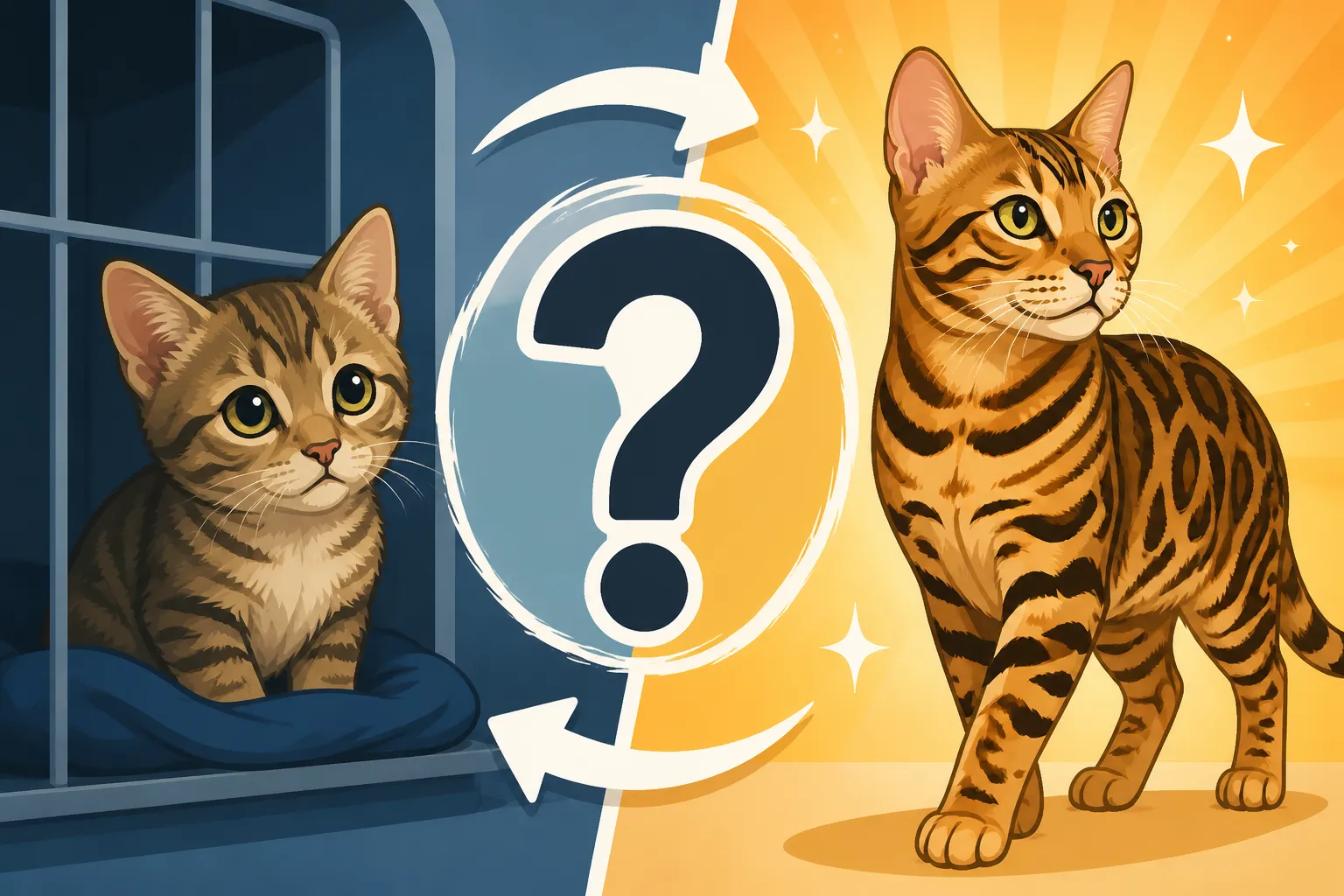
A spotted cat at a shelter can look remarkably like a Bengal, and it’s natural to wonder whether you’ve found a purebred or a mix. Coat patterns alone can’t confirm a cat’s ancestry, though, and shelter records may be incomplete. This guide explains what appearance can tell you, what evidence is more useful, and how to think about breed claims before you adopt.
Can a shelter cat be a Bengal?
Yes. A shelter cat may be a pedigreed Bengal, a Bengal mix, or a domestic cat whose coat happens to resemble the breed. Cats reach shelters for many reasons, including changes in an owner’s circumstances, straying, or being surrendered by a breeder or household. A shelter stay, by itself, tells you nothing certain about a cat’s ancestry.
The key distinction is between a cat that looks like a Bengal and one whose Bengal ancestry is documented. These are not interchangeable descriptions. A shelter might use a broad label such as “Bengal” or “Bengal mix” to describe a cat’s appearance, but that label is not necessarily supported by a pedigree.
How shelter breed labels are usually assigned
Shelter staff often need to describe a cat quickly and understandably. If a cat has large rosettes, a sleek coat, or a muscular build, “Bengal” may seem like a helpful shorthand for potential adopters. The label may reflect visual resemblance rather than confirmed parentage, especially when the cat arrived as a stray or has no paperwork.
That doesn’t mean the shelter is being careless. Breed identification from appearance can be genuinely difficult, and shelters often have limited information about a cat’s history. A cat may also have been described as a Bengal by a previous owner, with no documents available to back up the claim.
It’s reasonable to ask what the label is based on. Was the cat surrendered with registration or pedigree documents? Did a previous owner provide a history? Or is the description based on coat and body shape? The answer helps you understand what is known without diminishing the cat’s appeal or worth as a companion.
Purebred Bengal, Bengal mix, or lookalike
A pedigreed Bengal has documented ancestry through a recognized breeding and registration history. Without that documentation, a cat may still have Bengal ancestry, but its exact background can be hard to establish. “Bengal mix” is often used when a cat resembles a Bengal or is reported to have a Bengal parent, but it doesn’t guarantee a particular percentage of Bengal ancestry.
Some domestic cats naturally have spotted or marbled coats. A coat pattern can make a cat look strikingly similar to a Bengal even if there is no known Bengal in its family tree. The article Whether a Spotted Domestic Shorthair Is a Bengal Cat explores why that resemblance is not enough to confirm breed.
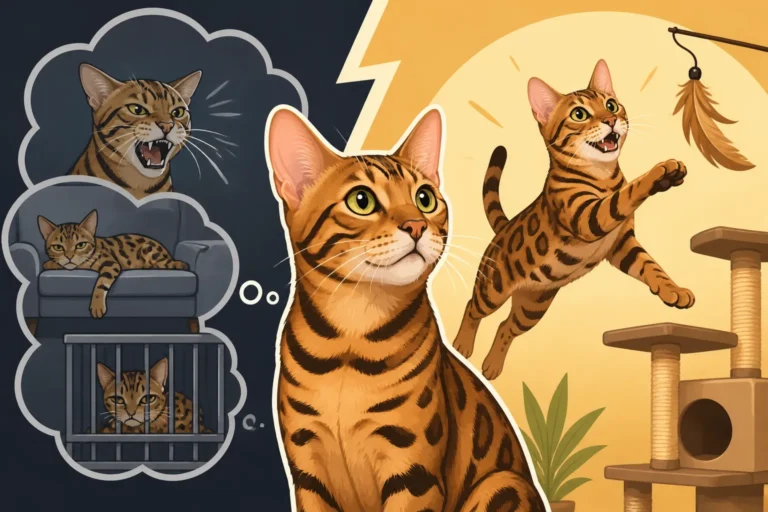
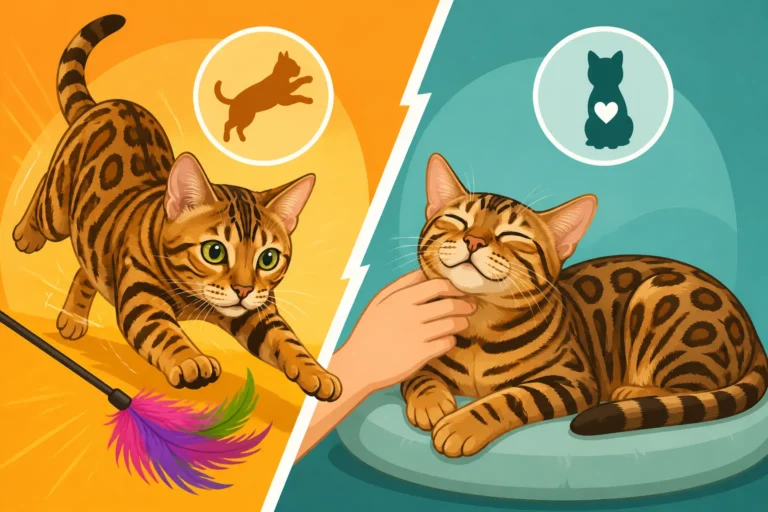
For adoption decisions, it’s often more useful to focus on the individual cat’s behavior, health, and needs than on an uncertain breed label. If you are drawn to the energetic, interactive reputation of Bengals, ask the shelter how this particular cat behaves. A label alone cannot tell you whether the cat is playful, vocal, confident, or comfortable living with children or other pets.
What a Bengal appearance can and cannot tell you
Bengals are known for distinctive spotted or marbled patterns, but coat markings don’t provide a reliable family history. Some shelter cats have bold rosettes that catch your eye immediately; others may have smaller spots or less dramatic markings. Appearance can help you describe a cat, but it cannot prove that the cat is a Bengal.
Features that may resemble the breed
A cat that looks Bengal-like may have a short, close-lying coat, a muscular body, noticeable spots or rosettes, and a long, athletic shape. Some Bengals also have a shimmering quality to their coat, often called glitter. These traits can make a cat stand out in a shelter kennel, but none of them is exclusive proof of Bengal ancestry.
Patterns can be especially misleading. Spotted tabby coats occur in domestic cats, and markings vary widely even among cats with known pedigrees. Marbling can also be confused with other tabby patterns. A useful starting point is What a Bengal Cat Looks Like by the Standard, which explains the breed’s overall appearance without treating any single marking as a DNA certificate.
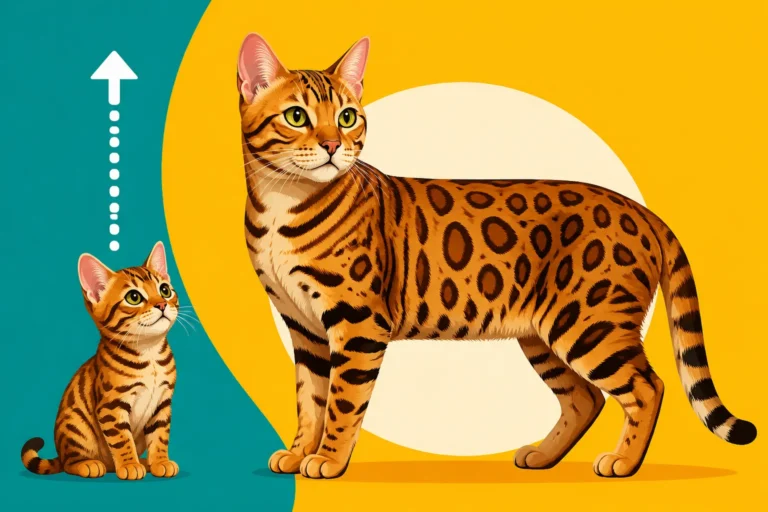
Age can complicate visual guesses, too. Young kittens may have coats that change as they mature, and their adult pattern may not yet be clear. Meanwhile, adult cats can have scars, weight changes, or grooming issues that affect how their coat looks. A photograph or quick shelter visit may not show the full picture.
Why looks are not proof of ancestry
Many physical characteristics are shared across domestic cats. A short coat, athletic build, large spots, or expressive face may be consistent with a Bengal, but they can also appear in cats with mixed or unknown backgrounds. Even a particularly convincing pattern cannot establish that a cat is a registered purebred.
This is why it helps to separate three questions: Does the cat resemble a Bengal? Is there reliable evidence of Bengal ancestry? And does the cat have the temperament and care needs that suit your home? The first is a visual impression, the second is a history question, and the third is an adoption-fit question.
If someone is making a strong breed claim, ask what supports it. A seller or former owner may have a pedigree, registration record, or information about the parents. A shelter may have only an intake description. Those are very different levels of evidence, and it’s fair to ask for clarity before treating the label as fact.
How to investigate a shelter cat’s background
You don’t need to solve a cat’s entire family history before adopting. Still, if breed background matters to you—for example, because you are trying to understand likely activity levels or legal restrictions—you can ask practical questions and consider what kinds of evidence are available.
Ask the shelter specific questions
Instead of asking only, “Is this cat a Bengal?” try asking, “What information supports the Bengal label?” Then follow up about the cat’s intake history, any previous owner records, and whether documents came with the cat. If the cat was found as a stray, the shelter may have no way to know its ancestry, and that is a perfectly understandable answer.
Ask about observed behavior as well. Does the cat seek attention, climb, play intensely, or become distressed when left alone? How does it react to handling, other cats, dogs, or a busy household? Staff and foster carers may have useful observations, though a shelter environment can affect how a cat behaves.
It can also help to ask about health records, known diet preferences, litter habits, and any medical concerns. Those facts tend to be more actionable than an uncertain breed label. For a wider look at how ancestry and generation labels are discussed, see How a Bengal Cat's Generation Is Counted.
What a DNA test can tell you
A consumer cat DNA test may provide information about genetic markers or ancestry estimates, depending on the test. But results are not the same as a formal pedigree, and the interpretation may not establish that a shelter cat is a pedigreed Bengal. Read what the test actually measures before spending money or relying on a breed label.
If you are considering testing, think about what you hope to learn. Are you curious about ancestry, looking for possible inherited health information, or hoping to prove a purebred claim? Those are different goals, and a test may be more useful for one than another. For more on the limits of breed confirmation, read Whether a DNA Test Confirms a Bengal Cat.
A DNA result also cannot tell you everything that matters in daily life. It won’t replace an examination by a veterinarian, reveal a cat’s full personality, or guarantee how active the cat will be. If you adopt, the shelter’s medical records and a veterinary checkup are more immediate tools for planning care.
| What you want to know | Most useful evidence | What it cannot establish on its own |
|---|---|---|
| Whether the cat is a registered purebred Bengal | Pedigree and registration records linked to the cat | Personality, health, or future behavior |
| Whether the cat may have Bengal ancestry | Reliable information about parents or past ownership; potentially a DNA test | Exact pedigree or a guaranteed ancestry percentage |
| Whether the cat will suit your home | Shelter or foster observations, a careful introduction, and your household’s needs | A certain outcome in every new environment |
| Whether the cat needs medical care | Veterinary examination and health records | Breed ancestry |
Making a good adoption decision
It’s easy to focus on the mystery of a cat’s markings, particularly when a label like “Bengal” suggests a vivid personality or a rare breed. But the best match is not necessarily the cat with the most dramatic rosettes. It’s the cat whose needs, temperament, and care requirements fit your home and routine.
Decide whether breed certainty matters to you
For most adopters, an uncertain breed label does not change the central question: Can you give this cat a safe, stable home? If you’re hoping for a particular temperament because you expect a Bengal, remember that individual cats vary. A shelter cat that resembles a Bengal may be energetic and social, or it may be reserved and happiest with a predictable routine.
If you need certainty for a specific reason, such as a housing rule or local regulation, do not rely on appearance or a shelter listing alone. Check the relevant rules and ask what documentation is accepted. Breed and generation questions can have legal implications in some places, and an unsupported visual guess may not settle them.
If you simply love the look, it’s fine to appreciate the cat’s coat without treating it as proof of pedigree. Many people adopt cats with unknown ancestry and build a strong bond without ever learning exactly what breeds, if any, are in the family tree.
Prepare for the individual cat, not the label
Before bringing a cat home, ask what the shelter knows about exercise, enrichment, food, litter, and settling in. A cat that has been living in a kennel may need a quiet room and time to adjust, even if it seems outgoing during a short visit. A foster home may provide a clearer picture of how the cat behaves in a household.
Plan for basic supplies and a slow introduction to the home. Set up food, water, a litter box, hiding places, scratching options, and a comfortable resting spot before arrival. If the cat is active, add interactive play and safe places to climb, but let the cat’s actual behavior guide how much stimulation it needs. Don’t assume every Bengal-looking cat will behave exactly like the breed stereotype.
Finally, give yourself permission to adopt the cat you’ve met rather than the story you imagine about its ancestry. Whether the cat is a purebred Bengal, a mix, or a domestic cat with a Bengal-like coat, its needs and personality are real. The clearest answers usually come from documented history, thoughtful questions, and time spent getting to know the animal—not from spots alone. You may also find What People Get Wrong About the Bengal Cat helpful when separating popular assumptions from practical expectations.
Disclaimer
This article is for general informational purposes only and does not constitute professional advice. Laws, prices and regulations vary by location and change over time. Consult a qualified professional for guidance on your specific situation.