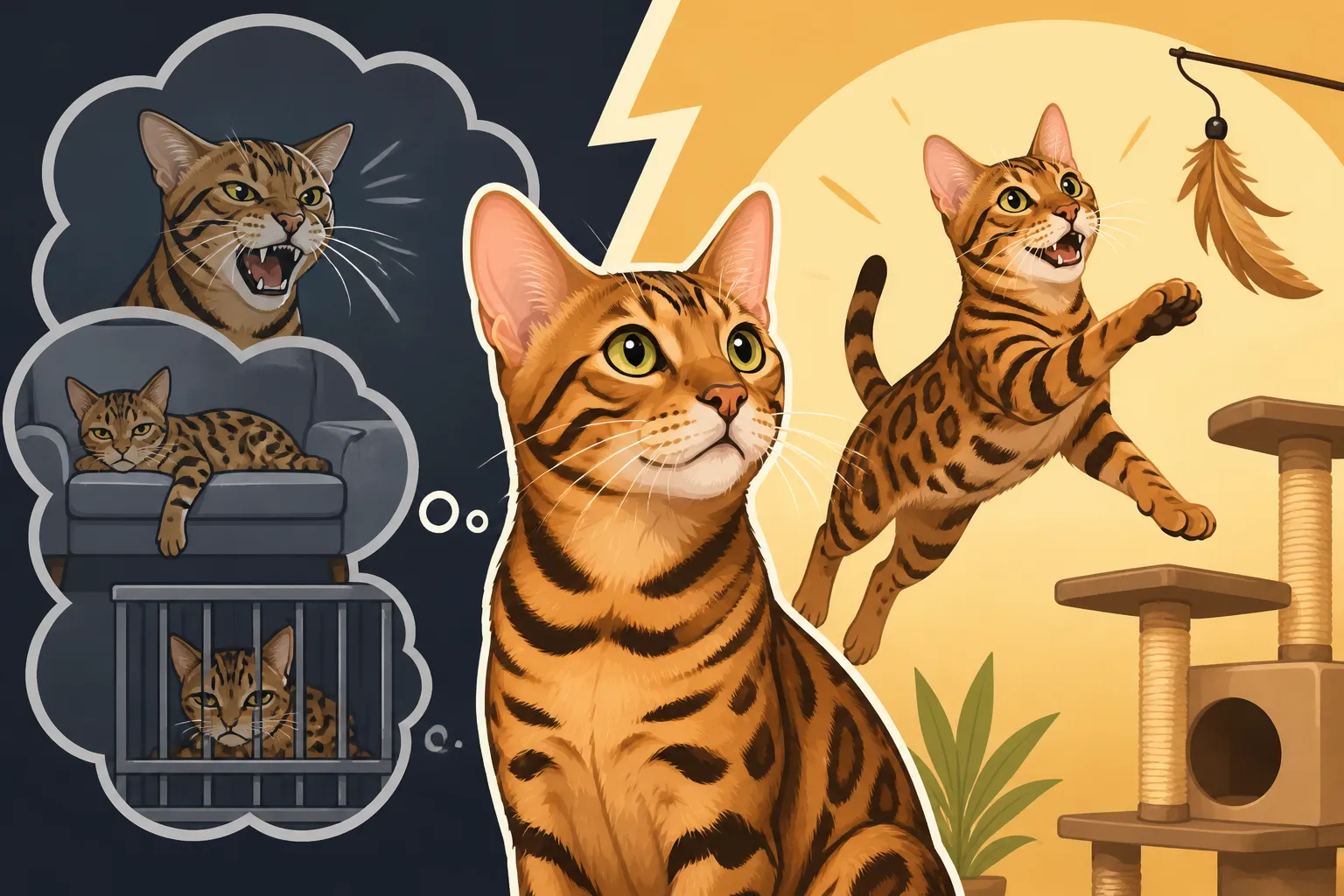
What People Get Wrong About the Bengal Cat
People often picture the Bengal as a tiny wild leopard that needs a huge house, loves every person it meets, and barely sheds. Real life is less tidy: individual cats vary, energy needs are substantial, and a striking coat does not tell you everything about a cat’s ancestry or temperament. This guide separates common Bengal myths from the practical realities of living with one.
What a Bengal Cat Is Really Like
A wild-looking coat does not mean a wild temperament
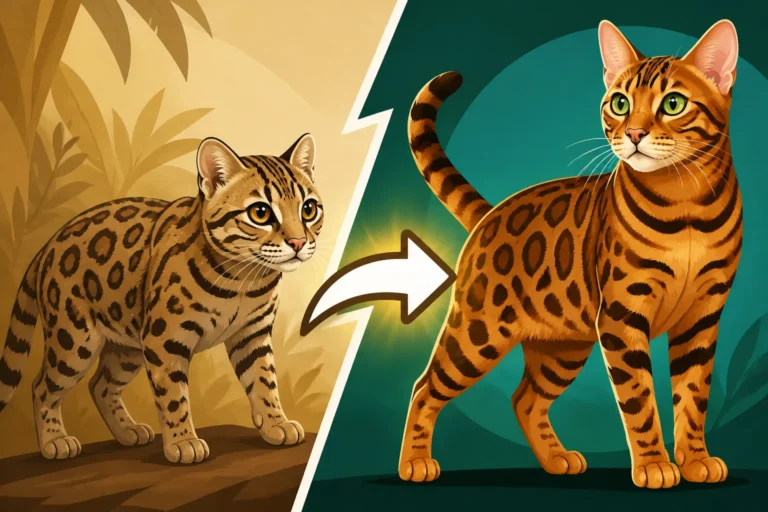
Bengals are domestic cats with a distinctive spotted or marbled appearance. Their ancestors include the Asian leopard cat, but that history does not mean a typical pet Bengal behaves like a wild animal—or that it is a housecat with an automatic “wild” personality. Breeding, socialization, health, age, and the individual cat all shape what an owner actually experiences.
Some Bengals are affectionate lap cats. Others prefer to sit nearby, supervise household activity, or seek attention on their own terms. A cat may be confident with its family but wary of visitors, or playful at home and unsettled by unfamiliar places. Those differences are not proof that the cat is “less Bengal.” They are ordinary individual variation.
It is also easy to mistake intensity for aggression. A Bengal that races through the hallway, chirps at a bird outside, or follows its person from room to room may be showing energy and curiosity, not hostility. If you want a clearer picture of what daily life can feel like, What a Bengal Cat's Temperament Is Really Like explores the range behind the breed’s reputation.
High energy does not mean nonstop activity
Bengals are often active, clever cats, but “active” does not mean they need to be entertained every minute of the day. They still sleep, rest, watch the household, groom, and enjoy quiet time. What catches many owners off guard is how quickly boredom can turn into attention-seeking: a cat may knock something off a shelf, investigate a cupboard, or demand a game just as you sit down to work.
A useful routine combines interactive play, climbing options, food-based activities, and downtime. For example, a short wand-toy session before breakfast, a puzzle feeder while you are busy, and another play session in the evening may work better than leaving a pile of toys on the floor and hoping the cat self-entertains. Rotate toys so familiar objects regain some novelty.
You do not need an elaborate playroom. A sturdy cat tree, safe shelves, hiding places, and a few toys that invite chasing or problem-solving can make a regular home more engaging. If you shop for supplies at Chewy, focus on sturdy construction, safe materials, and whether an item suits your cat’s size and habits—not whether it is marketed specifically for Bengals. For a fuller look at the time and variety involved, see How Much Enrichment a Bengal Cat Actually Needs.
A Bengal is not guaranteed to be friendly with everyone
People sometimes assume that an intelligent, energetic cat must also be outgoing and easy with every person or animal. Those traits are separate. A Bengal may be highly curious about the household but still need a careful introduction to a new dog, cat, child, or visitor. A confident cat can also become overwhelmed if people crowd it or keep handling it when it wants space.
Let the cat set the pace. Give it a quiet retreat, keep early introductions brief, and reward calm behavior rather than forcing contact. With children, teach gentle handling and make sure the cat can leave without being followed. With another pet, separate spaces and gradual scent and visual introductions are usually more sensible than putting the animals together and hoping they work it out.
The most reliable expectation is not “this breed loves everyone,” but “this cat has needs and preferences that I will have to learn.” That mindset helps prevent disappointment and makes it easier to notice when a Bengal is asking for play, space, reassurance, or a calmer environment.
What the Bengal’s Appearance Does and Does Not Tell You
A spotted cat is not automatically a Bengal
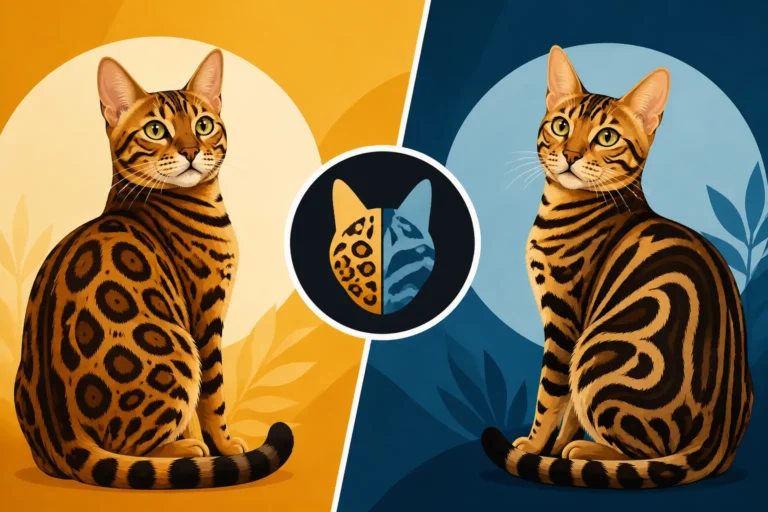
A spotted coat can be striking, but appearance alone cannot confirm a cat’s breed. Domestic shorthairs and mixed-breed cats may have spots, rosettes, or markings that resemble a Bengal. A photo or a seller’s description is not the same thing as documented pedigree information. If ancestry matters to you, ask for records and verify them through the relevant registry or breeder rather than relying on coat pattern alone.
This matters for more than labels. People may make assumptions about a cat’s behavior, care needs, or likely adult size based on its appearance. Those assumptions can lead to mismatched expectations, especially when a shelter cat or an unregistered kitten is described as a Bengal without supporting documentation. A cat can be wonderful without having a confirmed breed.
For help distinguishing looks from proof, Whether a Spotted Domestic Shorthair Is a Bengal Cat explains why markings alone are not enough. If you are considering a Bengal from a breeder, ask what documentation is available and what the records actually establish.
A Bengal is not the same as a Savannah
Bengals and Savannahs are sometimes lumped together because both can have a wild-looking appearance. They are distinct breeds with different histories and ancestry. A large, spotted cat is not necessarily a Savannah, and a Bengal’s look does not make it one. Breed names, generation labels, and ancestry are not interchangeable just because two cats share a dramatic coat.
The comparison can matter when prospective owners are researching temperament, adult size, ownership rules, or care. Do not assume information about one breed applies to the other. If a listing uses breed terms loosely, ask for clear documentation and take time to understand exactly which cat is being described.
A side-by-side explanation is available in How a Bengal Cat Differs From a Savannah. The practical takeaway is simple: identify the animal accurately before making decisions based on breed-specific claims.
The coat does not make a Bengal hypoallergenic
A short, sleek coat can create the impression that a Bengal will not trigger allergies. That is not a dependable promise. Cat allergies are commonly associated with proteins found in skin flakes, saliva, and other secretions—not simply the length or visible amount of fur. Individual reactions vary, and a person who reacts to one cat may react differently to another.
A Bengal may appear to shed less than some cats, but lower visible shedding is not the same as being allergy-free. If allergies are a concern, spend time around the particular cat before committing, where practical, and talk with a healthcare professional about your symptoms and options. Do not rely on a breeder’s assurance that a breed is hypoallergenic as a substitute for testing your own response.
For more detail, read Whether the Bengal Cat Hypoallergenic Claim Holds Up. This is one of the most frustrating myths for families because the coat looks so smooth and low-maintenance; unfortunately, appearance cannot guarantee how someone’s allergies will respond.
What Everyday Bengal Ownership Actually Requires
An indoor life can work with thoughtful enrichment
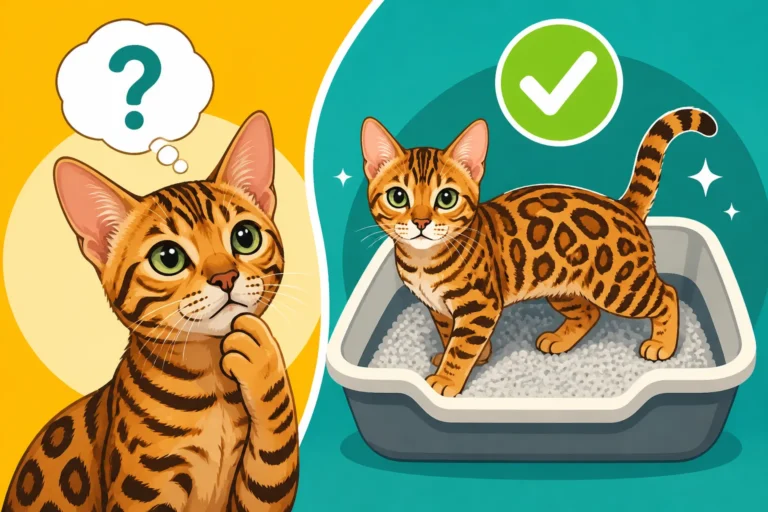
Another common misconception is that an energetic Bengal must roam outdoors to be happy. Many cats can live indoors, provided their environment supports movement, play, exploration, and safe access to interesting sights and smells. Free roaming introduces risks such as traffic, fights, getting lost, and exposure to hazards. Outdoor access is not the only way to meet a cat’s needs.
Consider the home from the cat’s point of view. Are there places to climb and observe? Does the cat have predictable play and feeding routines? Can it retreat somewhere quiet? A secure catio, enclosed garden space, or properly supervised harness outing may offer extra stimulation for some cats, but no outdoor setup suits every household or cat.
Indoor living is not automatically enriching just because the cat has toys. Some Bengals need more variety than a single scratching post and a food bowl. A food puzzle, window perch, rotating toys, and short interactive sessions can help build a routine. If you buy enrichment items at Chewy or another retailer, introduce them one at a time and watch whether your cat actually uses them. The guide Whether a Bengal Cat Can Be an Indoor Only Cat looks at the question in more depth.
The right amount of space is about quality, not just square footage
A large house can still be dull for a cat if there is little to climb, explore, or do. Conversely, an apartment can offer a stimulating life if it is arranged thoughtfully and the owner provides regular interaction. Vertical space matters because cats often enjoy elevated resting places and routes through a room. Stable shelves and a well-anchored cat tree can make a compact home feel more interesting without requiring another room.
That does not mean every Bengal will be content in every apartment. Noise, long stretches alone, limited play, and restricted access to safe retreat areas can all make a home harder to manage. Before adopting, be realistic about your schedule and the space you can provide. A cat that repeatedly seeks attention while you are away may need a change in routine, more interactive activity, or support from a household member—not simply another toy.
Adult size is also frequently misunderstood. Bengals are often muscular and athletic, but they are not all enormous cats. Sex, build, age, and individual variation matter, and weight alone does not tell you whether a cat is healthy. For more context, see What a Bengal Cat Weighs.
Food, supplies, and care should fit the individual cat
A Bengal does not automatically need a raw diet, exotic ingredients, or a special food because of its ancestry. Choose a complete and balanced cat food suited to the cat’s life stage and health needs, and make changes gradually. If a cat has recurring digestive trouble, food refusal, or another health concern, consult a veterinarian instead of cycling through diets based on online claims.
The same principle applies to supplies. A Bengal may need a more robust scratching post or a sturdier climbing structure than a cat that rarely jumps, but the best choice depends on that cat’s behavior. Notice what your cat already prefers: vertical or horizontal scratching, batting toys or chase toys, high resting spots or covered hideaways. When browsing Chewy, product descriptions can help you compare dimensions and materials, but your cat’s actual use is the best test of whether something suits your home.
Care also includes ordinary preventive veterinary visits, safe identification, litter-box upkeep, and attention to changes in behavior. A breed label is not a substitute for knowing your cat’s baseline. If the cat suddenly stops playing, hides more, eats differently, or changes litter-box habits, consider the change itself rather than assuming it is a typical Bengal quirk.
| Common assumption | More realistic expectation | What an owner can do |
|---|---|---|
| Every Bengal is a lap cat | Affection and sociability vary by individual | Let the cat choose how and when to interact |
| Bengals never get tired | They need rest, but may need regular purposeful activity | Build short play and enrichment into the day |
| A Bengal must go outdoors | Indoor life can work when it is stimulating and safe | Add climbing, play, observation spots, and routine |
| A spotted cat is definitely a Bengal | Coat pattern alone does not establish breed | Ask for reliable pedigree documentation |
| A short coat means no allergy risk | Coat appearance cannot guarantee an allergy-free experience | Spend time around the individual cat and seek medical guidance |
| Every Bengal needs special food | Diet should reflect the cat’s age and health, not its look | Choose balanced food and discuss health concerns with a veterinarian |
How to Decide Whether the Bengal Is a Good Fit
Look beyond the photos and the breed reputation
Bengal kittens can be captivating, and their photos often emphasize the coat rather than the ordinary work of living with an active cat. Before bringing one home, ask about the individual cat’s behavior, early socialization, health history, and daily routine. A responsible breeder or rescue should be willing to discuss both the appealing qualities and the challenges, rather than presenting the cat as effortless or universally suited to every household.
Think through your own routine honestly. Do you enjoy daily interactive play? Can you tolerate a curious cat exploring safe parts of the home? Are you prepared to provide climbing and scratching options, protect fragile items, and adjust if the cat’s energy exceeds your expectations? These are not reasons to avoid the breed; they are practical questions that help avoid a painful mismatch.
For a broader decision checklist, Whether a Bengal Cat Is Right for You can help you weigh lifestyle fit. If you are unsure, talking with experienced Bengal owners or a reputable rescue can offer a more grounded picture than relying on short videos or dramatic breed descriptions.
Separate normal behavior from a problem that needs attention
Because Bengals can be vocal, playful, and persistent, owners may dismiss every unwanted behavior as “just what Bengals do.” That can cause frustration to build. A cat that yowls, scratches furniture, raids counters, or wakes the household may be communicating a need, responding to a learned routine, or reacting to a change in its environment. It is worth looking at the pattern rather than treating the breed label as the explanation.
Start with practical adjustments: provide an appropriate scratching surface near the place the cat scratches, add a play session before the time it tends to demand attention, secure tempting food, and reward the behavior you want. Make changes consistently. If a behavior appears suddenly or comes with a change in appetite, movement, or litter-box use, seek veterinary advice to rule out a health concern.
A realistic understanding of the Bengal avoids two extremes: assuming the cat is a miniature wild animal that cannot live normally, or expecting a decorative, low-effort pet because it lives indoors. Bengals are domestic cats with individual personalities and meaningful enrichment needs. The better the match between the cat and the household, the easier it is to appreciate the personality behind the pattern.
Disclaimer
This article is for general informational purposes only and does not constitute professional advice. Laws, prices and regulations vary by location and change over time. Consult a qualified professional for guidance on your specific situation.