Whether a Bengal Cat Mix Keeps the Pattern
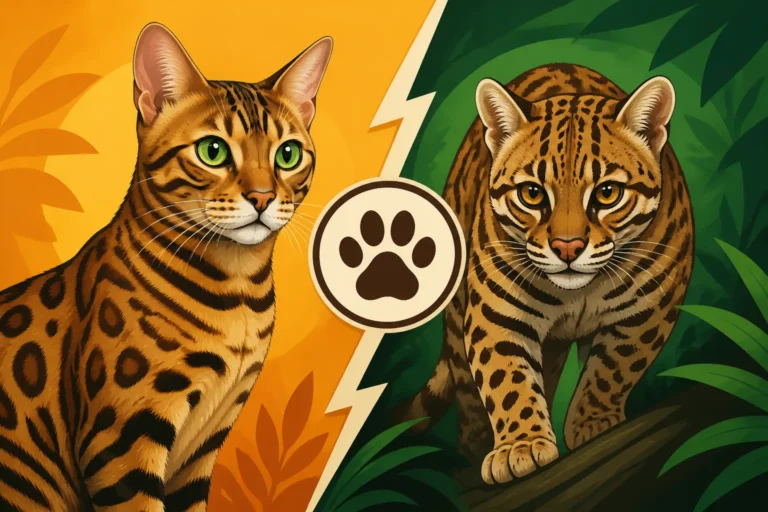
A Bengal mix can keep spots, stripes, or marbling, but there is no guarantee that a kitten will inherit the bold, high-contrast rosettes people picture when they hear “Bengal.” The result depends on the other parent’s coat genes, the mix’s ancestry, and how several pattern traits combine. This guide explains what may carry through, what can change, and why a striking coat alone cannot prove a cat is a Bengal.
What Bengal Pattern Can a Mix Inherit
Bengal coats are famous for rosettes and marbling, but those patterns are not a single, simple trait that passes unchanged from parent to kitten. A Bengal mix may inherit some recognizable features, a different tabby pattern, or a coat that looks much more like the non-Bengal parent.
Rosettes, spots, stripes, and marbling
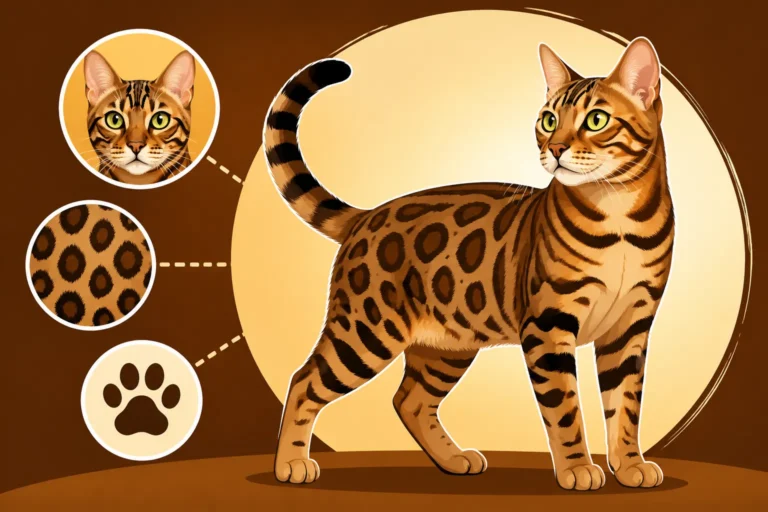
Rosettes are markings with a darker outline and a lighter center. They can look like open circles, paw prints, or elongated patches, and their shape and contrast vary from cat to cat. A kitten that inherits a Bengal parent’s pattern traits might have rosettes, but it might instead show solid spots, narrow stripes, or a less defined pattern.
Marbling is a flowing pattern of dark and light areas across the coat. It can create a swirled or cloud-like appearance rather than rows of distinct spots. The differences between those looks are explored in Rosetted Against Marbled: The Two Bengal Cat Patterns and How Marbling Differs From Rosetting in a Bengal Cat.
A mix can also have markings that fall somewhere between familiar categories. You might see broken stripes on the legs, spots along the sides, and a soft swirl across the shoulders. That can be an attractive coat without matching the clear rosettes or flowing marble pattern associated with a purebred Bengal.
Why the other parent matters
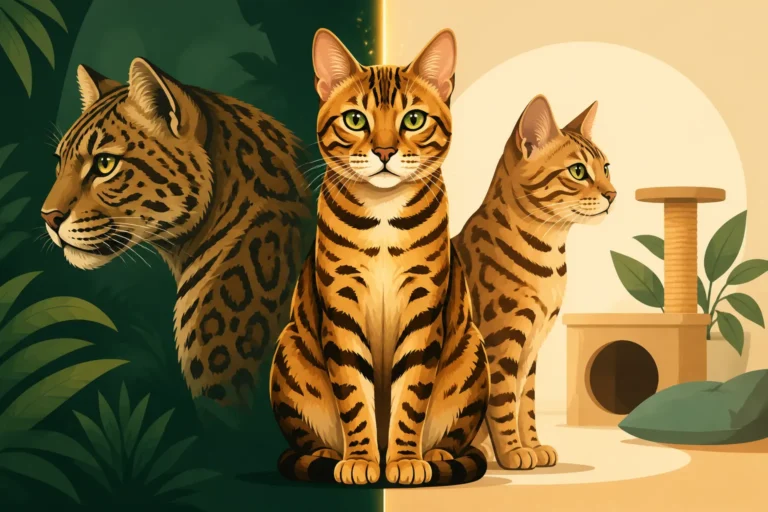
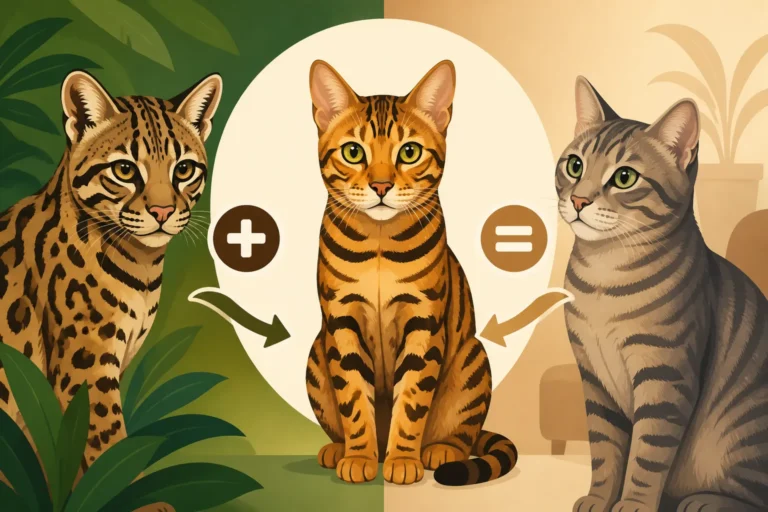
The non-Bengal parent contributes just as much genetic information as the Bengal parent. If that parent has a bold tabby coat, the kittens may show pronounced stripes or spots. If the parent has a mostly solid coat, the pattern may be less visible, although a cat’s inherited pattern can sometimes be faintly detectable in certain lighting or on areas such as the tail and legs.
Coat color and pattern are related in appearance but are not interchangeable. A kitten might inherit warm brown coloring without distinct rosettes, or a pale coat with visible stripes rather than a Bengal-style pattern. Bengal colors and their accepted variations are covered in Which Colors a Bengal Cat Comes In.
It’s also easy to overread a kitten’s appearance. A few dark spots do not mean that a cat has inherited the full Bengal pattern, and a kitten that looks plain at first may develop clearer markings as its coat changes. Genetics can produce a broad range of outcomes, even among kittens in the same litter.
A Bengal-looking coat is not a pedigree
A spotted or marbled coat can appear in cats with no known Bengal ancestry. Domestic cats have many coat patterns, and some can look remarkably similar to Bengal markings. For that reason, appearance may suggest a possibility, but it cannot establish breed or ancestry by itself.
If you are trying to identify a rescue cat or a kitten advertised as a Bengal mix, ask what is known about the parents and where that information came from. A photo of a parent is useful context, but it does not confirm a pedigree. For more on this distinction, see Whether a Spotted Domestic Shorthair Is a Bengal Cat and What a Bengal Cat Looks Like by the Standard.
Why a Bengal Mix May Look Different From a Purebred Bengal
Even when one parent is a Bengal, the kitten’s coat may not resemble the breed’s familiar show-ring look. Pattern inheritance involves multiple traits, and the final appearance is shaped by what both parents pass on.
Pattern is influenced by more than one trait
It is tempting to imagine a single “Bengal pattern gene” that guarantees rosettes. In reality, coat pattern is more complicated. Several inherited factors influence whether markings appear, how they are arranged, how much contrast they have, and whether they look like spots, stripes, or broad swirls.
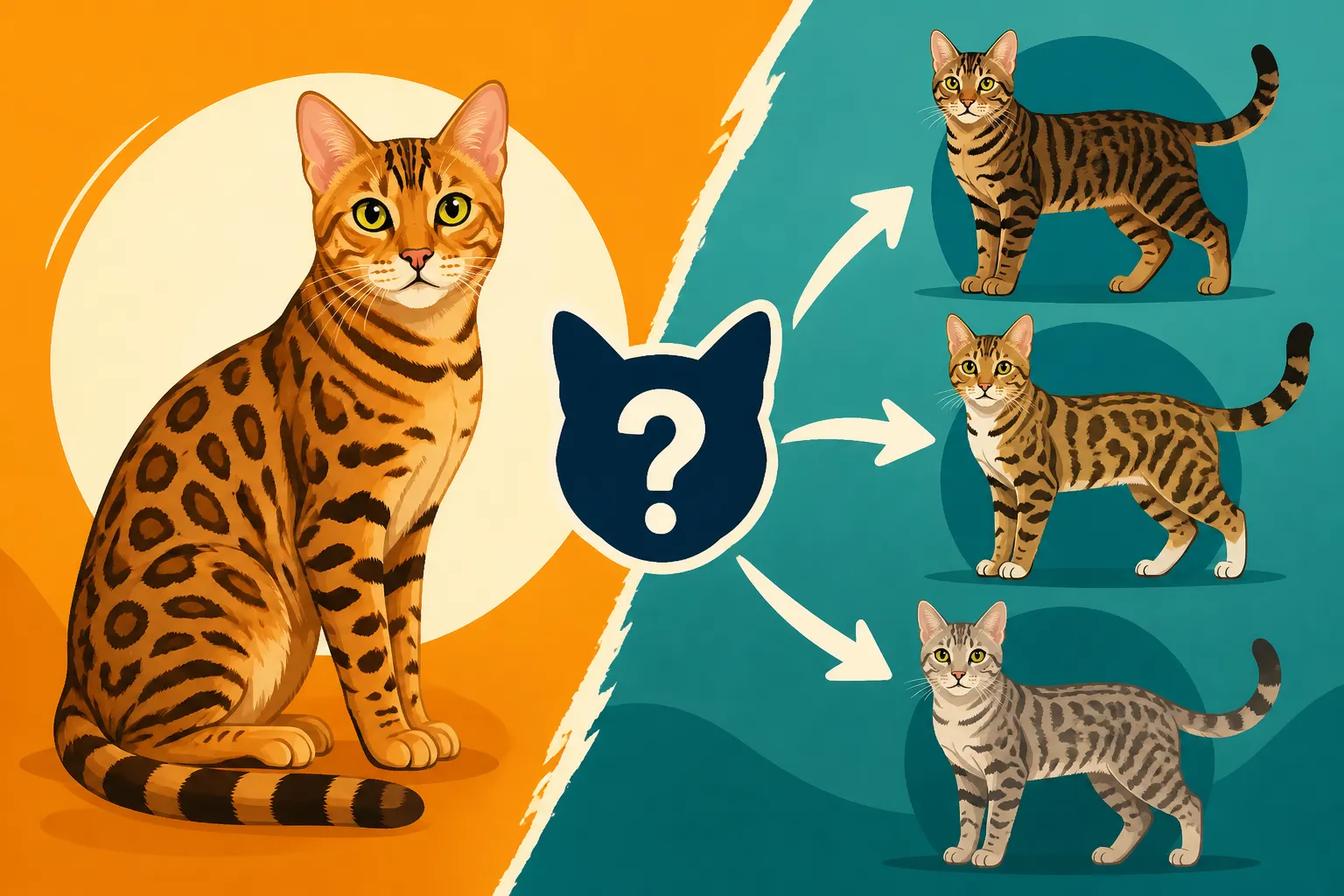
The Bengal’s distinctive look reflects selective breeding over generations, not just a single inherited mark. When a Bengal is crossed with a cat from a different background, the kitten receives a new combination of traits. Some kittens may retain clear spotting, while others have narrower stripes, larger areas of solid color, or lower contrast.
This is why siblings can look surprisingly different. One kitten may have pronounced spots, another may have a striped coat, and a third may have subtle markings that are easiest to see along the sides. Their shared parentage does not mean they will share the same visible pattern.
Contrast and coat color can change the impression
A pattern may be present but hard to see if the coat colors are close together. Dark markings against a dark background, for example, can appear much less dramatic than dark markings on a lighter coat. Lighting matters too: a coat can look strongly patterned outdoors and almost plain in a dim room.
Color also affects what people perceive as a “Bengal look.” A warm base color with high-contrast markings may remind someone of a classic brown Bengal, while a pale or cooler-colored coat may read differently even if it has visible spots. Pattern shape, color, and contrast work together to create the overall impression.
When comparing a mix to breed standards, keep in mind that a pet’s appearance does not have to meet a show standard to be healthy or appealing. What a Rosette Is on a Bengal Cat explains the marking itself, but a mix may have spots or swirls that resemble rosettes without being identical to the defined pattern.
Coat development can make early judgments unreliable
Kittens’ coats change as they grow. Young Bengals can go through a fuzzy-looking stage in which their markings appear muted or blurred, and kittens of mixed ancestry may also have coat changes that make early predictions uncertain. A photo taken at a few weeks old may not show the pattern the cat will have as an adult.
The markings may become easier to see as the coat develops, but they do not necessarily become more rosette-like. A kitten with faint spots might grow into a clearly spotted adult, or the markings may remain soft and low-contrast. A breeder’s or seller’s prediction is just that—a prediction, not a guarantee.
If you are choosing a kitten primarily for a particular pattern, ask to see clear photographs of both parents and older kittens from the same pairing, if available. That can offer a better sense of the range than one flattering close-up, though even family examples cannot promise an exact outcome.
How to Assess a Bengal Mix’s Pattern
When you are looking at a specific cat, focus on what can actually be observed and verified. Separate visible coat traits from claims about ancestry, and be cautious about promises that a kitten will develop a particular pattern.
Look at the whole coat, not one striking patch
Check the sides, back, shoulders, legs, and tail. Bengal-style spotting is often most noticeable along the body, while ordinary tabby markings may be more stripe-like or appear as narrower lines. Marbling can be broad and flowing, but a single swirl or patch does not confirm a Bengal pattern.
Take photos in natural, even light if you want to compare a kitten’s coat over time. Try to photograph the cat from the side and from above, rather than relying only on a close-up of one mark. If you are shopping for supplies, retailers such as Chewy may make it convenient to compare basic grooming tools, but a short-coated cat’s individual grooming needs matter more than its label.
Consider texture and overall appearance as supporting details, not proof. Bengals are often described as having a sleek, close-lying coat, but coat texture varies, and a mix can inherit a different feel from its other parent. A glossy coat cannot confirm ancestry any more than spots can.
Ask clear questions about the cat’s background
A responsible seller or rescue should distinguish what is documented from what is assumed. Ask whether a Bengal parent is known, whether there is pedigree documentation, and whether the other parent’s identity is known. If the cat is described as a Bengal mix, ask what evidence supports that description.
Useful questions include:
- Are the parents known, and can I see clear photos of both?
- Is there pedigree documentation for the Bengal parent?
- Is the kitten’s pattern already visible, or is the pattern being predicted?
- Are there adult relatives whose coats I can see?
- Is the cat being described as a mix based on records, or only on appearance?
These questions are not about challenging someone’s honesty; they help you understand what you are adopting or buying. The same care is useful when a cat is called a “Bengal” based on looks alone. What People Get Wrong About the Bengal Cat discusses why appearance can lead to assumptions.
Treat breed DNA results carefully
A commercial breed DNA test may offer clues about ancestry, but results should not be treated as definitive proof of a cat’s breed or exact percentage of Bengal ancestry. The usefulness of a result depends on the test’s reference data and methods, and a test may not reliably distinguish every mixed background.
A DNA report also cannot predict a kitten’s adult pattern with certainty. Even when ancestry is better understood, coat appearance still depends on the combination of inherited traits. For more context, read Whether a DNA Test Confirms a Bengal Cat.
For a pet owner, it is often more useful to focus on the cat in front of you: its health, temperament, needs, and known history. If the exact ancestry matters for a specific reason, such as confirming a breeder’s claim, ask what documentation is available and consider discussing the test’s limits with a veterinarian or genetics professional.
What to Expect From a Bengal Mix’s Adult Coat
A Bengal mix may retain a spotted or marbled appearance into adulthood, but the coat can be softer, less contrasted, or differently arranged than a purebred Bengal’s. The fairest expectation is variation, not a guaranteed miniature version of the Bengal parent.
A practical comparison
| What you notice | What it may suggest | What it does not prove |
|---|---|---|
| Distinct spots along the sides | The cat has a spotted coat pattern | Bengal ancestry |
| Dark outlines around lighter centers | Markings that resemble rosettes | A purebred Bengal pedigree |
| Broad, flowing markings | A marbled or swirl-like pattern | That the pattern came from a Bengal parent |
| Low-contrast stripes or spots | A tabby pattern with subtle markings | That the cat will develop strong contrast later |
| Similar coat patterns among relatives | A possible family pattern tendency | The exact adult appearance of a kitten |
| Pedigree records for a parent | Documented ancestry for that parent | A guaranteed pattern in the offspring |
Set expectations around variation
If a Bengal mix has visible spots, enjoy the coat for what it is rather than expecting each mark to sharpen into a rosette. If the kitten is mostly striped, the pattern may remain striped. If the coat is low contrast, lighting and age may change how visible it looks, but there is no reliable way to promise a dramatic transformation.
This is especially worth remembering when social media photos set expectations. Images may be taken in ideal light, edited, or selected because they show the most striking angle. A real cat moves, sheds, grows, and looks different across rooms and seasons. A pattern that is subtle in everyday light can still be beautiful.
If you are preparing for a new cat, practical basics matter more than matching accessories to a coat pattern. Chewy is one place an owner might compare everyday items such as brushes, litter, and carriers; choose based on the cat’s comfort and your household setup rather than assuming a Bengal mix needs a special product. For food, take a measured approach: changing diets abruptly can upset some cats, so follow veterinary guidance and transition gradually when appropriate. Chewy may be useful for comparing food options, but product selection should fit the individual cat’s age, health, and preferences.
Choose the cat, not a promised pattern
A Bengal mix can be energetic, quiet, social, shy, or somewhere in between; coat appearance does not reliably predict personality. Spend time learning about the particular cat and ask about its behavior, medical history, and daily needs. Those details will shape life together far more than whether its spots are open or solid.
If you are adopting, ask the rescue what it knows about the cat’s background, but be comfortable with uncertainty when records are missing. Many cats arrive with incomplete histories. A cat can be a wonderful companion whether its Bengal ancestry is documented, suspected, or unknown.
The short answer is that a Bengal mix can keep visible spots, stripes, or marbling, but it may not retain the Bengal’s exact pattern or contrast. Both parents contribute to the coat, and the kitten’s adult markings cannot be guaranteed from a photograph or a label. Trust documented background when available, treat appearance as appearance, and choose the cat for the individual you will live with.
Disclaimer
This article is for general informational purposes only and does not constitute professional advice. Laws, prices and regulations vary by location and change over time. Consult a qualified professional for guidance on your specific situation.