Which Countries Restrict the Bengal Cat
Moving with a Bengal cat can turn into a paperwork puzzle: a cat that is allowed in one country may face import limits, generation rules, permits, or even a ban somewhere else. The key is to check the destination’s rules before booking travel or signing a lease. This guide explains common restrictions and how to verify which ones apply.
Why Bengal cat laws differ between countries
A Bengal cat may be treated as a hybrid
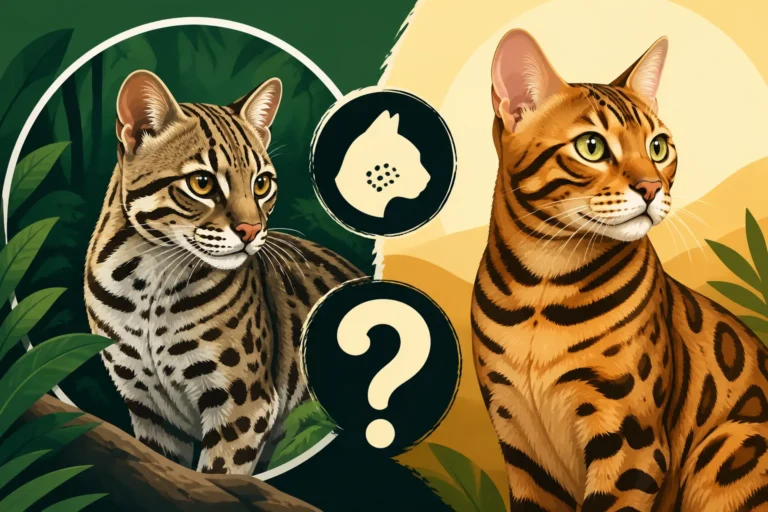
Bengals were developed from domestic cats and the Asian leopard cat. As a result, some authorities classify certain Bengals as hybrid animals rather than treating every cat with the breed name as an ordinary domestic cat. The rules may depend on how many generations separate the individual cat from its wild ancestor.
That distinction matters most for early-generation Bengals. A country might permit a later-generation Bengal as a household pet while restricting an earlier-generation cat, or it might apply separate requirements to breeding, import, sale, and ownership. The word “Bengal” on a sales listing or veterinary record may not answer the legal question.
The generation terms can be confusing. An F1 Bengal has a wild ancestor as a parent, while later filial generations are further removed. An SBT Bengal is a later-generation domestic Bengal under registry terminology, but registry status and government classification are not automatically the same thing. For background, see What F1 Means in a Bengal Cat, What Filial Generation Means for a Bengal Cat, and What SBT Means in a Bengal Cat.
Import rules are not the same as ownership rules
A country may allow a person to keep a Bengal cat that is already there but restrict bringing one across its border. Import rules can involve animal-health documentation, advance approval, quarantine, or breed-specific limits. Conversely, a cat might be allowed to enter the country under import rules but still be subject to local restrictions on possession or breeding.
It helps to treat a move as several separate checks:
- Can the cat enter the country? Check import rules, health documents, and any hybrid or generation requirements.
- Can the cat legally live at the destination? Check national law and any regional or local rules.
- Can the cat be bred or sold there? Breeding and commercial activity can have stricter rules than keeping a pet.
- Can the cat travel through another jurisdiction? Transit rules may matter even if the destination permits ownership.
For example, a route with a stopover may involve a second country’s transit requirements. A move from one city to another within the same country can also trigger local rules that differ from the national framework.
Countries and jurisdictions where Bengal cats may face restrictions
The table below offers a starting point, not permission to travel. Rules can depend on generation, import status, and local law, so confirm the specific requirements with the government authority responsible for animal imports or wildlife regulation.
| Country or jurisdiction | Restriction to investigate | What to verify |
|---|---|---|
| Australia | Hybrid-cat import requirements may distinguish Bengals by generation | Whether the cat meets the permitted-generation definition and all import conditions |
| New Zealand | Hybrid ancestry may affect import eligibility | Whether Bengal cats are allowed and what proof of generation is required |
| United Kingdom | Rules for hybrid cats may make generation relevant | Whether the cat falls within an exception and whether local rules also apply |
| Singapore | Import and ownership requirements may treat early-generation hybrids differently | Whether the cat’s generation is accepted and what approvals or documents are needed |
| United States | Rules vary by state and municipality, and some places prohibit Bengals | State law, city or county ordinances, and any permit requirements |
| Other countries | Hybrid, wildlife, or import rules may apply even without naming Bengals | Whether the law covers domestic-wild hybrids, particular generations, or imports |
Australia and New Zealand
Australia is a particularly important place to check before arranging a move with a Bengal. Its import framework can treat hybrid cats differently according to generation, and meeting a breed or pedigree description alone may not establish eligibility. Ask the relevant Australian import authority what generation standard applies and which documents it accepts as proof.
New Zealand also requires careful checking when a cat has wild ancestry in its pedigree. Do not assume that a Bengal is automatically classified as a standard domestic cat for import purposes. Ask whether the rules distinguish between generations, whether an official pedigree is sufficient, and whether the requirements differ for a cat entering as a pet versus one intended for breeding.
In both cases, verify the rule for the exact cat and travel plan. An informal answer from a breeder, airline, or online forum may not settle whether the authorities will accept the documentation at the border.
The United Kingdom and Singapore
The United Kingdom has legal provisions where the generation of a hybrid cat can matter. That makes the cat’s documented ancestry important, especially for an early-generation animal. Check the relevant national rules and ask whether a separate licence or other requirement applies to your cat’s generation and circumstances. More detail on the UK question is covered in Whether the Bengal Cat Is Banned in the UK.
Singapore is another destination where import and hybrid-cat requirements should be checked before travel. Confirm whether the rules apply to the cat’s generation, what evidence is accepted, and whether import permission differs from permission to keep the animal. Also check whether the cat’s planned route involves a transit stop with its own requirements.
These examples are not interchangeable. A rule that applies in one country does not establish the rule in another, and the same country may treat import, private ownership, and breeding differently.
The United States and local restrictions
In the United States, Bengal cat rules can differ from one state, city, or county to another. Some jurisdictions focus on early generations; others may impose broader restrictions. A person moving across a state line should check both state law and the destination’s municipal code rather than relying on a general national answer.
Hawaii and New York City are examples frequently associated with particularly strict Bengal restrictions, but an owner should still verify the precise rule and its application to their cat. Statewide rules may differ from city rules, and an exception or permit may depend on factors such as generation or documentation. The distinction between state and local law is explored in Where Bengal Cat Law Is Set, the State or the City.
How to verify whether your Bengal cat is allowed
Establish the cat’s generation with records
Before contacting an authority, collect documents that establish the cat’s identity and ancestry. Useful records may include the pedigree, registration paperwork, purchase or adoption contract, microchip details, and veterinary records. Make sure the documents all refer to the same cat and use consistent identifying information.
Generation is not always obvious from a casual description. Ask the breeder or previous owner for a written explanation of how the generation was calculated and what records support it. A cat’s appearance cannot reliably prove its ancestry, and a registration document may not answer every legal question. See How a Bengal Cat's Generation Is Counted, How to Find a Bengal Cat's Generation on Its Pedigree, and Whether a Registration Paper Proves a Bengal Cat's Generation.
If records are missing or contradictory, pause before making travel plans. Contact the authority that enforces the rule and ask what evidence it accepts. In some situations, a registry pedigree may be useful background but not the specific proof the government requires.
Ask the right authority the right questions
Start with the government department responsible for importing animals, animal health, wildlife, or permits. If the rules are unclear, ask the destination’s local animal-control office or licensing authority as well. A veterinarian or airline can help with health and travel procedures, but they may not be responsible for deciding whether a particular generation is legal to own.
When you contact an agency, provide the cat’s generation, country of origin, destination address, travel date if known, and whether the cat is a pet or intended for breeding. Ask questions in writing where possible, and keep the response with the cat’s travel documents.
Useful questions include:
- Is this generation of Bengal cat permitted to enter?
- Is ownership permitted at the destination, or are there separate local rules?
- What documents prove the cat’s generation?
- Is an advance permit or approval required?
- Do the rules differ for breeding, sale, or transport?
- Are there additional requirements during transit?
Avoid relying only on a general statement such as “Bengals are legal here.” It may describe later-generation cats, local ownership, or a different situation from yours.
Planning a move without a last-minute legal surprise
Check the full route and destination
Begin checking well before you book transport. Confirm the rules for the country of departure, any transit countries, the destination country, and the town or city where the cat will live. Also ask whether rules differ for travel by air, land, or sea.
Keep a folder with copies of the cat’s identification and health records, pedigree documents, written agency responses, and any permits or approvals. Carry the originals when required, but keep secure copies separately. If a document is in a language the receiving authority does not accept, ask whether a certified translation is needed.
Do not assume that an airline’s acceptance of a reservation means the cat is legally admissible. The airline handles its own transport requirements; border authorities and local regulators make separate decisions.
If the rules are uncertain or the cat may not qualify
If you cannot establish the cat’s generation or find a clear answer, do not try to solve the problem at the airport or border. Contact the relevant authority again, provide the documents you have, and ask for a written response. If necessary, consult a qualified animal-import professional or lawyer familiar with the destination’s rules.
A legal restriction can affect more than travel. It may limit ownership, breeding, sale, or the ability to keep the cat after moving. Owners considering a purchase should check local law before paying a deposit, and anyone adopting or rehoming a Bengal should ask for accurate records rather than assuming the cat’s breed label settles the issue. For broader context on the wild ancestry behind the breed, see Whether Bengal Cats Are Still Bred From Wild Cats.
Most importantly, do not conceal the cat’s breed or generation on customs or permit forms. Inaccurate declarations can create serious problems for the owner and the animal. The safest plan is to confirm eligibility, gather accepted documentation, and receive any required approval before travel arrangements are final.
Disclaimer
This article is for general informational purposes only and does not constitute professional advice. Laws, prices and regulations vary by location and change over time. Consult a qualified professional for guidance on your specific situation.