Whether Breeding Hybrids Like the Bengal Cat Is Ethical
A Bengal’s wild-looking coat can make the breed feel like a living piece of the jungle, and that can raise uncomfortable questions: Was a wild cat used to create this kitten? Does buying one encourage more hybrid breeding? The ethical answer depends on the cat’s generation, welfare, breeding practices, and lifelong care—not appearance alone. Here’s how to think it through without reducing a complicated issue to a simple yes or no.
What ethical Bengal breeding actually means
The breed’s history is not the same as every breeder’s current practice
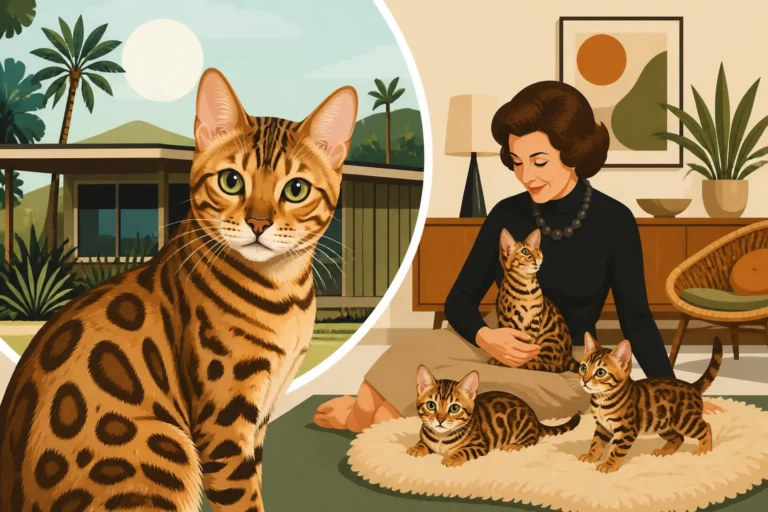
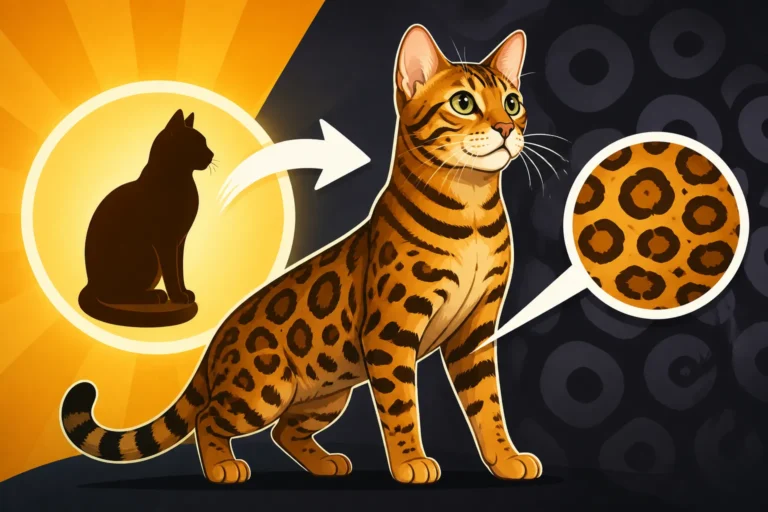
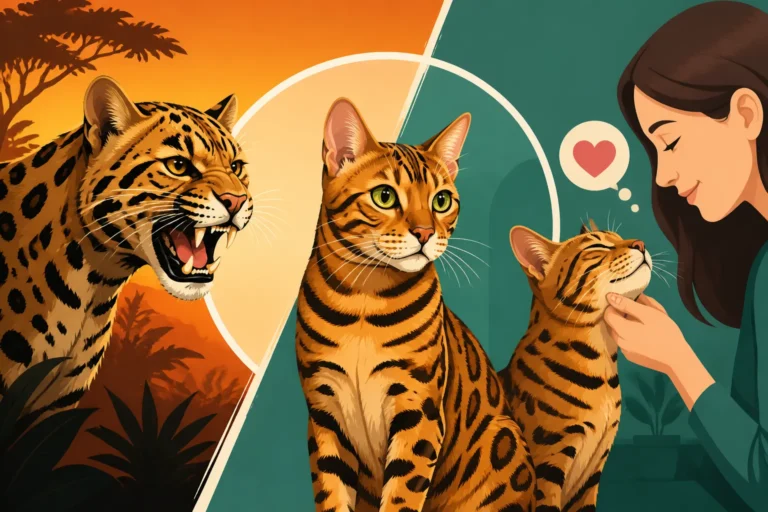
The Bengal breed began through crosses between domestic cats and the Asian leopard cat, a small wild feline. That history is central to the breed, but it does not mean that every Bengal sold today is a recent wild-domestic cross. Many pet Bengals are several generations removed from their wild ancestor, and responsible breeders generally work with established domestic lines. For background, Where the Bengal Cat Comes From and What the Bengal Cat's Wild Ancestor Is Like explain how the breed developed.
That distinction matters because “hybrid” can refer to very different situations. An early-generation cat has a more recent wild ancestor than a later-generation Bengal. The label is not a guarantee of temperament or care needs, but it does help explain why generation should be part of an ethical conversation. What F1 Means in a Bengal Cat describes the first filial generation, while What SBT Means in a Bengal Cat covers a category associated with established Bengal breeding.
A shopper who sees a rosetted coat and assumes the kitten must be close to a wild cat may be responding to appearance rather than pedigree. Conversely, a seller who uses vague language like “part wild” to make an animal seem exclusive deserves careful questions. Ask what the pedigree says, which registry the breeder uses, and whether the kitten is from an established domestic line. A breeder should be willing to explain these details without turning the conversation into a sales pitch.
The strongest ethical concern is often the individual cat’s welfare
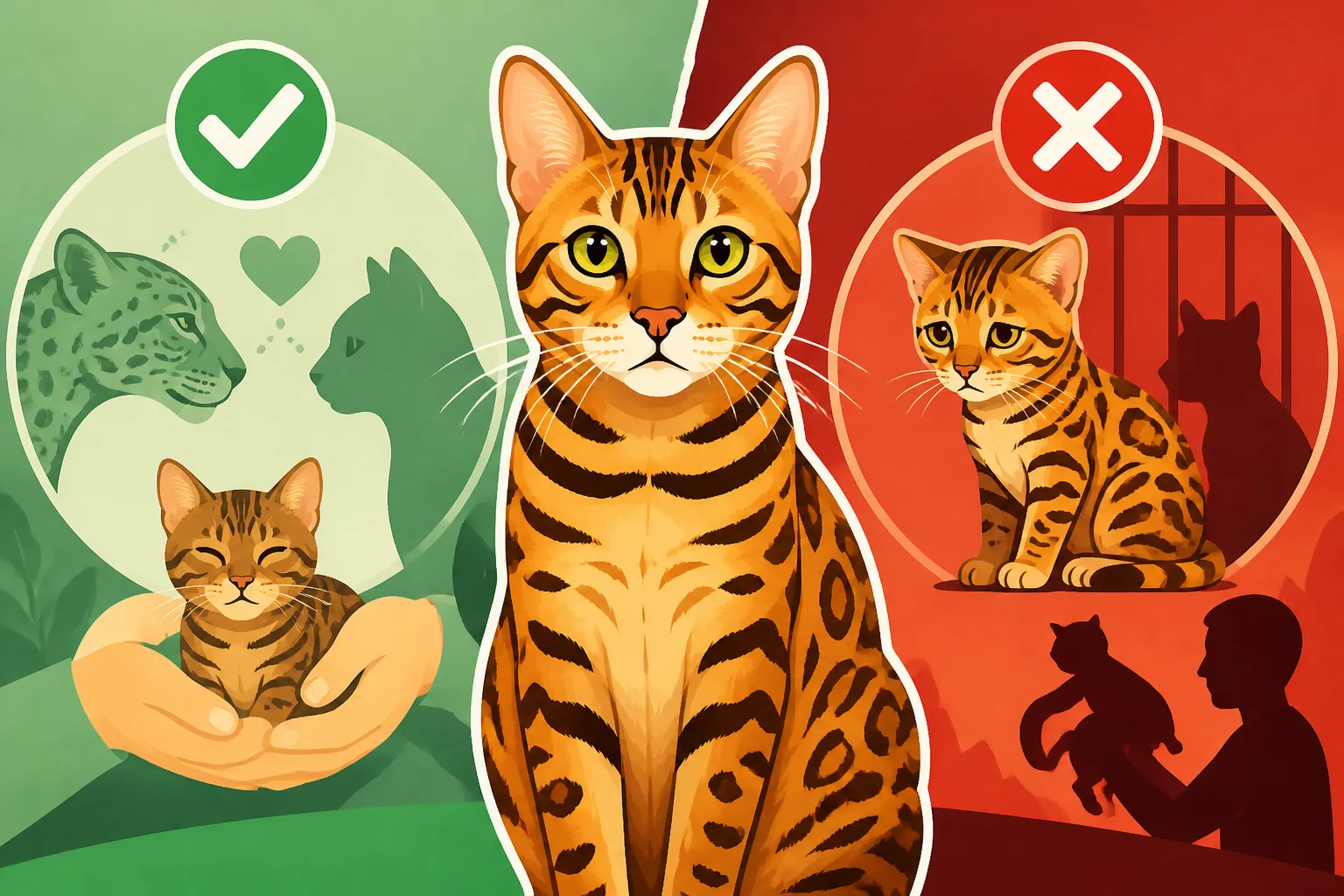
Ethical concerns are not limited to whether an animal has wild ancestry. They also include whether the cat’s parents received appropriate veterinary care, whether kittens were raised in a stable environment, and whether the breeder places them in homes suited to their needs. A Bengal can be a domestic companion and still be an energetic, demanding cat that struggles in a home where people expect a quiet, low-maintenance pet.
The breeder’s choices matter before a kitten is born. That includes selecting healthy breeding cats, avoiding pairings that knowingly put offspring at unnecessary risk, providing appropriate veterinary oversight, and not breeding simply to produce a fashionable coat or a higher selling price. A breeder should also be prepared to discuss how they socialize kittens and what support they offer if a placement does not work out.
There is no single label that proves a breeder is ethical. A polished website, registration paperwork, or an impressive-looking kitten does not answer questions about the cats’ daily lives. A more useful approach is to ask for clear, specific information and notice whether the answers focus on the animals’ welfare—or only on rarity, looks, and deposits.
Wild ancestry raises questions about conservation and demand
People sometimes worry that Bengal ownership threatens wild Asian leopard cats. The ethical issue is worth asking about, but it helps to distinguish historical ancestry from current breeding practices. A modern domestic Bengal population is not automatically the same thing as ongoing capture or removal of wild cats. The more specific question is whether a particular breeder is using new wild crosses, how the cats are bred, and whether the practice is permitted under relevant registry rules and local laws. See Whether Bengal Cats Are Still Bred From Wild Cats and Whether a New Wild Cross Into the Bengal Cat Is Allowed.
Consumer demand can still influence breeding choices. When buyers chase “more exotic” animals or seek the closest possible wild ancestry, sellers may have an incentive to promote traits that are not a good fit for ordinary homes. Asking for a well-socialized, established domestic Bengal rather than prioritizing wildness can help steer your decision toward predictable companion-cat needs.
It is also reasonable to weigh the wider message of buying a hybrid breed. Some people are comfortable with a domestic breed that has historical wild ancestry when breeding and placement are responsible. Others prefer not to support any breed developed through wild-domestic crosses. That personal line is valid; the important thing is to make the decision with accurate information rather than assuming every Bengal is the same.
How generation and breeding conditions affect the decision
Generation can shape expectations, but it is not a shortcut for judging character
A cat’s generation gives context about ancestry, not a complete personality forecast. Individual temperament is shaped by many factors, including genetics, early handling, health, environment, and the cat’s own preferences. An early-generation Bengal may have different needs and may be subject to additional legal restrictions in some places, but a generation label alone cannot tell you whether a specific cat will be affectionate, confident, vocal, or easy to live with. How an Early Generation Bengal Cat Behaves Differently offers more context on the possible distinctions.
For prospective owners, generation is also a practical issue. Rules can vary by location, and housing policies may distinguish between cats or hybrids in ways that are not obvious from a listing. Before committing, check the relevant state, city, housing, and travel requirements. Do not rely solely on a seller’s assurance that a cat is “legal everywhere.” Keep copies of pedigree and registration documents so you can establish what you were told.
If you are looking for a companion, ask the breeder which generation they work with and why. Then ask about the kitten’s socialization, behavior around normal household activity, and the kind of home the breeder believes would suit it. A responsible answer should be specific and realistic, not a promise that a kitten will behave like a dog, never scratch furniture, or happily adapt to any household.
Look beyond the kitten to the breeding program
A careful breeder should be able to talk openly about their breeding cats’ health, temperament, housing, and veterinary care. Ask what health screening is used for the lines, how the breeder handles a kitten that needs additional care, and what happens if a buyer can no longer keep the cat. These are not awkward questions; they help you understand whether the breeder treats the kitten as a lifelong responsibility or simply a sale.
Try to see how kittens are raised, either in person or through a detailed, transparent discussion if an in-person visit is not practical. Look for clean, safe surroundings and cats that have room to rest, play, and retreat. Kittens should not appear to be handled as props for photos or kept in conditions that seem crowded or stressful. A breeder may have reasonable limits on visits to protect young kittens, but should still be willing to explain their rearing practices.
Use this comparison as a starting point when assessing a Bengal breeder:
| Question | Reassuring sign | Reason to pause |
|---|---|---|
| What generation is the kitten? | The breeder explains the pedigree clearly | The answer is vague or changes during the conversation |
| How are kittens raised? | The breeder describes daily socialization and a safe home environment | The focus is only on color, pattern, or rarity |
| What health information is available? | Records and screening practices are explained plainly | Health questions are dismissed or met with pressure |
| What support comes after placement? | The breeder discusses a return or rehoming plan | The breeder says the buyer is entirely on their own |
| Is the kitten a good fit for my home? | The breeder asks about your schedule and experience | The breeder urges you to buy quickly without discussing fit |
No single answer settles the question. Look for a pattern of honesty, preparation, and concern for the cat’s future.
What ethical ownership requires after the kitten comes home
A Bengal needs more than a beautiful indoor backdrop
Even a later-generation domestic Bengal can be energetic and curious. A home that offers only a food bowl, a litter box, and a few toys may leave an active cat bored. Boredom can show up as nighttime noise, persistent attention-seeking, counter-surfing, or destructive play—not because the cat is “bad,” but because its environment is not meeting its needs.
Plan for daily interactive play, climbing options, scratching surfaces, puzzle-style activities, and places to rest undisturbed. Rotate toys rather than leaving every toy out all the time, and give the cat safe ways to investigate and explore. If you are assembling basic enrichment supplies, retailers such as Chewy may be one place to compare puzzle feeders, scratchers, and toys, alongside local pet shops and secondhand options. The important thing is choosing durable, safe items the cat will actually use—not buying a pile of gear and assuming that solves boredom.
Outdoor access needs careful thought, too. Free roaming can expose cats to traffic, disease, fights, and other hazards, and cats can affect local wildlife. A secure enclosure or carefully supervised harness training may offer enrichment with more control, though neither option is right for every cat. Before bringing a Bengal home, decide how you will provide stimulation if the cat lives indoors. Why a Catio Is the Answer to a Bengal Cat explores one possible approach.
The household needs to be ready for the ordinary work of cat care
Ethical ownership includes routine veterinary care, appropriate nutrition, clean litter facilities, and a realistic plan for emergencies. A Bengal’s activity level does not exempt it from regular health checks or make a particular diet automatically suitable. Ask a veterinarian for guidance based on the individual cat’s age, health, and body condition rather than relying on a breed stereotype or social-media advice.
Think through your normal week, not just the first exciting month. Who will play with the cat when work runs late? Who will care for it during travel? Can everyone in the household follow the same rules about doors, food, and handling? A cat that gets very different responses from each person may become more demanding, while a consistent routine can make daily life easier for both the cat and the household.
A shopping list can help you identify what is missing before arrival: a secure carrier, litter and boxes, scratching options, safe toys, and climbing or resting spaces. Chewy and other pet-supply retailers can be useful for comparing everyday supplies, but product availability is only one small part of preparation. A stable routine, a safe home, and access to veterinary care matter much more than buying the most elaborate equipment.
How to make a decision you can stand behind
Ask questions before you pay a deposit
Start with the breeder’s generation and pedigree information, then ask about health screening, socialization, veterinary records, and the kitten’s expected needs. Ask whether the breeder will remain available for questions after the kitten comes home and what support is offered if the placement fails. Which Generation a Bengal Cat Breeder Works With can help you understand why the breeder’s focus matters.
Pay attention to how the conversation feels. A responsible breeder may ask about your work schedule, other pets, children, and experience with active cats. That is not necessarily an attempt to make the process difficult; it can be a sign that they are trying to match a kitten with a suitable home. Be wary of urgency, pressure to send money before basic questions are answered, or claims that the cat will be effortless because it is “basically wild” or “basically just like any other cat.”
A breeder should not make you feel foolish for asking hard questions. If answers are evasive, pause. There are many ways to find a companion, including adult Bengals needing new homes and cats in rescues. An adult cat’s observed temperament may make it easier to judge whether your household is a good match than choosing a kitten based on appearance alone.
Consider alternatives if the ethics do not feel right to you
You do not have to resolve every debate about hybrid breeding to decide whether you want to participate in it. If the breed’s origins make you uncomfortable, adopting a domestic cat with a similar spotted appearance may fit your values better. A shelter or rescue can help you meet cats whose personalities are already visible, though coat pattern does not prove a cat has Bengal ancestry. Whether a Shelter Cat Can Be a Bengal Cat explains why appearance alone is not reliable proof of breed.
If you remain interested in a Bengal, you can still make a more thoughtful choice by looking for an established domestic line, careful breeding practices, and a breeder who puts welfare ahead of novelty. Keep in mind that ethical buying does not end the discussion: the cat’s needs continue for its entire life. Owners often describe the breed as rewarding but intense, and it is worth considering Whether Bengal Cat Owners Would Choose One Again alongside practical information about activity and care.
After you bring a cat home, everyday purchases can support its environment without defining your ethical decision. For example, you might compare sturdy scratching surfaces or enrichment toys through Chewy, a local store, or a rescue’s recommendations. Choose based on safety, durability, and the cat’s behavior. Buying the right supplies can help address a real household need, but it cannot compensate for an unsuitable match or inadequate daily attention.
Ultimately, an ethical decision is one you can explain in terms of the animal’s welfare: where the cat came from, how it was bred and raised, whether your home can meet its needs, and what you will do if circumstances change. People may reach different conclusions about Bengal breeding. What matters is refusing to treat the cat as a decorative object or a status symbol—and making its well-being the central consideration.
Disclaimer
This article is for general informational purposes only and does not constitute professional advice. Laws, prices and regulations vary by location and change over time. Consult a qualified professional for guidance on your specific situation.