Whether a Registration Paper Proves a Bengal Cat’s Generation
One of the most perplexing questions new Bengal cat owners, or even seasoned enthusiasts, often grapple with is how to definitively prove their feline friend's generation. You’ve got this beautiful, wild-looking cat, and maybe a piece of paper that says "F3" or "SBT," but what does that really mean, and does that paper truly hold all the answers? It's a valid concern, especially when questions of legality, temperament, and health are tied so closely to a Bengal's generation. This guide is here to unravel the complexities surrounding Bengal cat generations and the role—and limitations—of registration papers in proving them.
Understanding Bengal Cat Generations: The Foundation
Before we dive into the nitty-gritty of paperwork, it's essential to understand what these "F" numbers and "SBT" designations actually mean. The Bengal cat breed is unique because its origins lie in a hybrid cross between a domestic cat and an Asian Leopard Cat (ALC). This wild ancestry is what gives them their stunning appearance and often their distinctive personality.
The Filial Generations: F1, F2, F3
When you see an "F" number, it stands for "Filial generation," indicating how many generations removed a particular Bengal cat is from its wild Asian Leopard Cat ancestor. An F1 Bengal is the direct offspring of an ALC and a domestic cat. These cats are the closest to their wild heritage in terms of genetics, often displaying more pronounced wild traits, both physically and behaviorally. They can be quite a handful, demanding significant enrichment and a very specific environment.
An F2 Bengal has an F1 parent (which means one of its grandparents was an ALC). An F3 Bengal has an F2 parent, and so on. As you move further down the generations, the percentage of ALC DNA decreases, and the cat generally becomes more "domesticated" in terms of temperament and care requirements. The early generations, particularly F1 and F2, are often restricted by law in many places due to their more wild nature and specific needs. Understanding What an F Number on a Bengal Cat Means Legally is crucial for any potential owner.
The SBT Designation
"SBT" stands for "Stud Book Tradition." This is where things shift slightly. An SBT Bengal is considered at least four generations removed from its ALC ancestor (F4 or later) and has only other Bengal cats in its pedigree for at least three generations. This means an SBT cat is considered fully domestic by most cat registries, such as The International Cat Association (TICA). They are generally much more predictable in temperament, fully litter-trained, and behave much like a very active, intelligent domestic cat.
Most people looking for a companion Bengal cat will be seeking an SBT. These cats have the stunning wild look without the more challenging behaviors of the early generations. They are the most common type you'll find from reputable breeders and are typically legal to own in more places. Which Bengal Cat Generation Most States Draw the Line At often refers to the SBT being the universally accepted domestic Bengal.
Why Generation Matters Beyond Breeding
The generation of a Bengal cat isn't just a fancy label; it profoundly impacts various aspects of ownership. Legally, many states, counties, and even cities have regulations regarding which generations of Bengal cats are permitted. An F1 or F2 Bengal might require special permits or could be outright banned in your area. This isn't just an inconvenience; owning an illegal animal can lead to severe penalties, including confiscation. It’s absolutely essential to verify local laws before bringing an early-generation Bengal home.
Beyond legality, temperament is heavily influenced by generation. Early generation Bengals can be more challenging, exhibiting behaviors like spraying, extreme vocalization, or needing a highly specialized diet and enrichment plan. Later generations, particularly SBTs, are generally much more adaptable to a typical home environment, though they still require immense engagement due to their high energy and intelligence. Their health also factors in; while all Bengals should be tested for certain genetic conditions, the stress and unique care needs of an early generation can impact their overall well-being.
The Truth About Registration Papers and Generations
When you get a Bengal kitten from a reputable breeder, you'll typically receive registration papers or be provided with information to register your cat yourself. These documents are vital for establishing a cat's lineage and breed authenticity. However, it's important to understand what they actually do and don't prove when it comes to generation.
Information Found on a Typical Registration Paper
A standard registration paper from a recognized registry like TICA will contain a wealth of information. This usually includes your cat's registered name, its breed (Bengal), its birth date, its unique registration number, and often its pattern and color. Crucially, it will also list the names and registration numbers of both parents, and sometimes even grandparents, complete with their own generation designations. This pedigree information is designed to trace your cat's lineage back through established breeding lines.
For example, a paper for an SBT Bengal might list its parents as SBT Bengals, and their parents also as SBT. A paper for an F3 Bengal would show one or both parents as F2, and somewhere further back, an ALC ancestor would appear in the pedigree, even if not directly on the immediate registration slip. This historical record is the backbone of purebred cat breeding, meticulously maintained by the registries to preserve breed standards and track genetics.
The Role of Pedigrees in Tracing Ancestry
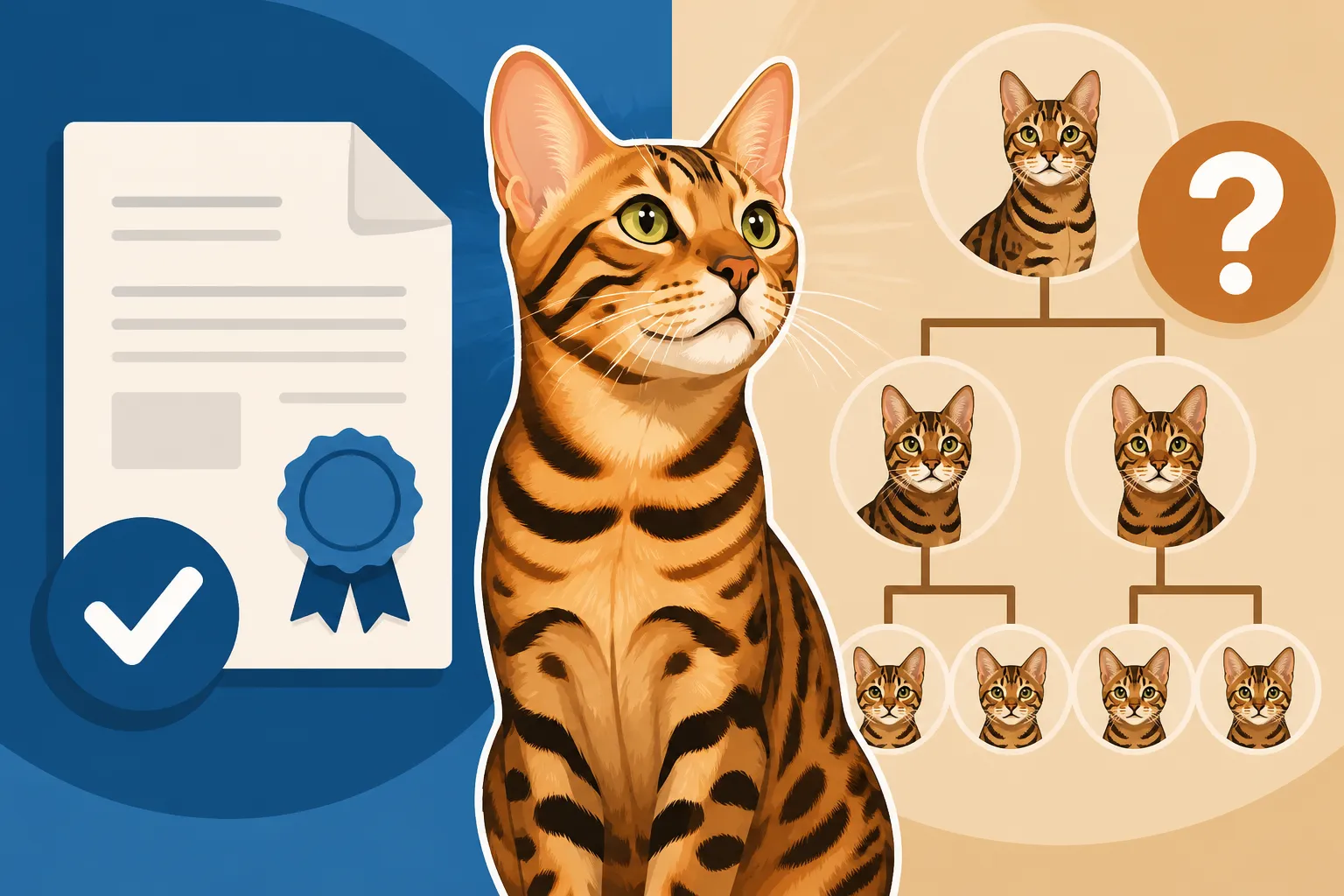
The pedigree is arguably the most important part of a Bengal's registration documentation when it comes to understanding its generation. This detailed family tree allows you to see the generations of ancestors that led to your cat. A true F1 Bengal will have an Asian Leopard Cat listed as one of its parents. An F2 will have an F1 parent, and so on. The pedigree is essentially the story of your cat's genetic journey.
Reputable breeders pride themselves on transparent pedigrees, as this demonstrates their commitment to ethical breeding practices and the integrity of the Bengal breed. It's how they can prove their cats meet breed standards and are part of legitimate lines. When you're considering a kitten, always ask to see the full pedigree, not just the registration slip. This helps you understand How to Find a Bengal Cat's Generation on Its Pedigree and gives you confidence in the breeder's claims.
Limitations of Registration Papers for Generation Proof
Here’s the rub: while a registration paper states your Bengal cat's generation based on its recorded lineage, it doesn't independently prove it in the same way a scientific test would. The paper reflects what the breeder submitted and what the registry recorded based on those submissions. For the vast majority of cases with reputable breeders, this information is accurate and reliable. They have a vested interest in maintaining the integrity of their breeding lines and the breed as a whole.
However, the paper itself is a record, not proof positive of biological fact. It relies on the accuracy of all previous breeders in the line and the registry's administrative processes. In rare cases, misidentification, accidental errors, or—most concerningly—deliberate misrepresentation by an unscrupulous breeder could mean the generation stated on the paper isn't entirely accurate. This is why due diligence is so important, especially if you're concerned about legal restrictions or temperament.
Why a Registration Paper Alone Isn't Definitive Proof
While the registration paper from a recognized body like TICA is usually a reliable indicator, it's not an infallible, scientific proof in and of itself. It’s a document of record, based on submitted information. This distinction is critical when you consider the stakes involved, such as legal ownership, insurance policies from providers like Healthy Paws, or ensuring your cat truly fits your lifestyle expectations.
The paper documents a lineage that the breeder claims and the registry verifies through its own records. It doesn't perform genetic testing on every cat to confirm its generation directly. Therefore, while it tells you what the cat's lineage is supposed to be, it doesn't prove that lineage beyond any shadow of a doubt if there's reason to suspect discrepancies. This is generally not an issue with established, ethical breeders, but it's a critical point to understand for consumer protection.
In essence, a registration paper is proof of registration, which includes the reported generation. It's strong evidence, but not unassailable scientific verification. Think of it like a birth certificate stating parentage; it's accepted as true, but a DNA test can provide deeper, biological confirmation if ever challenged.
The Gold Standard: DNA Testing and Corroborating Evidence
So, if registration papers aren't the absolute end-all, be-all, what is the gold standard for proving a Bengal cat's generation, especially if you have doubts or legal requirements to meet? The answer lies in scientific verification through DNA testing.
The Accuracy of DNA Testing
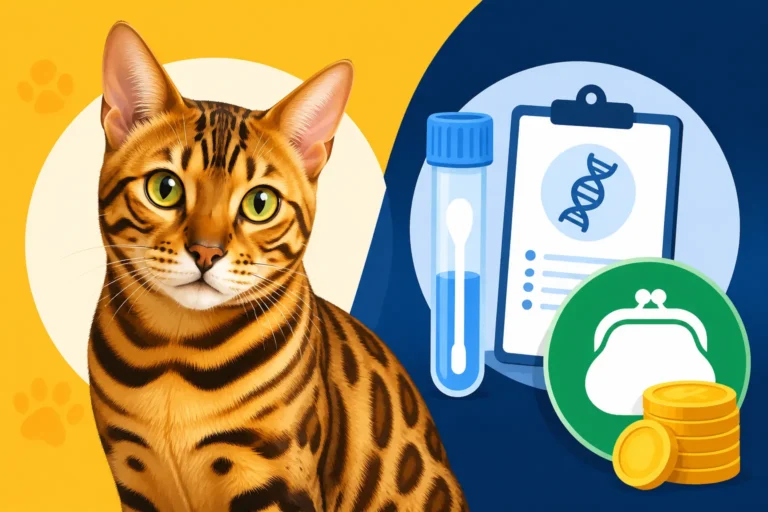
For definitive proof, DNA testing is the most accurate method. Some specialized labs offer genetic testing that can determine the percentage of Asian Leopard Cat DNA in your Bengal, or at least confirm parentage to verify the stated generation. While most DNA tests for Bengals focus on genetic health conditions like Which Gene Causes PRA-b in a Bengal Cat or Which Enzyme PK Deficiency Removes From a Bengal Cat, certain tests can help establish a cat's filial generation by analyzing specific markers associated with ALC ancestry. This kind of test removes any doubt that might arise from paper-based records.
This is particularly useful for early-generation Bengals where the difference of one "F" number can mean the difference between legal and illegal ownership, or a vastly different temperament expectation. If you're ever in a situation where you need irrefutable proof, perhaps for a permit application or just for your own peace of mind, exploring specific DNA tests that verify ALC lineage is the way to go. These tests offer a scientific bedrock that paperwork alone cannot provide.
Breeder Documentation and Contracts
When you work with a reputable breeder, the registration paper is just one piece of the puzzle. They should also provide a comprehensive contract that outlines the health guarantees, spay/neuter agreements, and often explicitly states the cat's generation. This contract, signed by both parties, serves as another layer of legal documentation. Furthermore, good breeders will be transparent about their breeding practices, willingly showing you the parents of your kitten, their health test results (like echoes for What HCM Does to a Bengal Cat's Heart), and their full pedigrees.
They might also provide copies of the parents' registration papers, showing their generations, to help you understand the lineage. This level of transparency and documentation, combined with the registration paper, creates a strong evidential chain. Brands like Chewy, for instance, don't directly prove generation, but a breeder who recommends specific high-quality diets available there shows a commitment to your cat's long-term health, which is often a hallmark of a responsible breeder.
Visual Cues and Temperament as Supplementary Information
While not scientific proof, a Bengal cat's physical appearance and temperament can offer strong supplementary clues about its generation. Early-generation Bengals, especially F1s and F2s, often have a more pronounced wild look: smaller, rounded ears, large nocturnal eyes, a leaner build, and a distinct "wild gaze." Their vocalizations can also be more akin to chirps and growls than typical domestic meows, and their energy levels are often off the charts. You might also notice a stronger instinctual drive for behaviors like hunting or water play.
As you move to SBTs, the domestic influence becomes more apparent. They still have that gorgeous wild patterning and energetic personality, but they tend to be more comfortable in a home environment, more affectionate, and generally easier to manage. However, appearances can be deceiving, and temperament can vary greatly even within the same generation, so these should never be the sole basis for determining a generation. They are simply pieces of the puzzle that, when combined with proper documentation and potentially DNA testing, paint a clearer picture.
What to Do When Seeking a Bengal: Your Due Diligence
Bringing a Bengal cat into your life is a huge commitment, and ensuring you get a cat of the generation you expect, and that is legal in your area, is paramount. Diligence on your part will save a lot of heartache down the road.
Questions to Ask Your Breeder
Never be afraid to ask a breeder extensive questions. A reputable breeder will welcome them. Ask to see the registration papers and the full pedigree for both parents and the kitten itself. Inquire about the parents' health testing history—not just genetic tests, but also echocardiograms if you're looking at a breeder of higher generations. Ask specific questions about the kitten's temperament, how it's been socialized, and what dietary recommendations they have.
Crucially, ask about the kitten's generation and how the breeder verifies it. A good breeder will clearly explain the lineage and why their cats are the generation they claim. For example, understanding What an SBT Bengal Cat Costs might involve asking about the specific generation and why its price aligns with the typical range for that generation. Any hesitation or unwillingness to share documentation should be a red flag.
What to Look for in a Reputable Cattery
A reputable cattery will maintain a clean and safe environment for their cats. The kittens should be playful, socialized, and show no signs of illness. They should be transparent about their breeding goals, health testing protocols, and kitten care. A responsible breeder will also screen you as a potential owner, asking about your living situation, experience with cats, and understanding of the Bengal breed's specific needs, like their immense activity levels.
They should also provide a comprehensive contract and health guarantee. Look for breeders who are registered with TICA or another recognized cat association, and who actively participate in the Bengal cat community. These breeders are often passionate about the breed's health and integrity, going above and beyond to ensure their cats are well-bred and properly placed.
Long-Term Considerations for Ownership
Beyond the initial purchase and verification, consider the long-term implications of your Bengal's generation. An early-generation Bengal might require a very specific setup, potentially including a secure outdoor enclosure (catio) or even living arrangements that differ from a typical house cat. Their dietary needs might also be more specialized, which could impact your budget.
For later generations (SBTs), while more adaptable, they are still incredibly active, intelligent, and vocal cats. They need consistent enrichment, play, and interaction to thrive. Ensuring you can provide this for The Twelve to Sixteen Years a Bengal Cat Gets is a significant commitment. Understanding that a Bengal cat's generation influences its care needs throughout its life is key to being a responsible and happy Bengal owner.
| Generation | Description | Typical Temperament & Needs | Key Proof Elements |
|---|---|---|---|
| F1 | Direct offspring of an ALC x Domestic Cat | Highly wild, demanding, needs specialized care & environment, often restricted legally. | ALC parent on pedigree, DNA verification. |
| F2 | Grandparent is an ALC (F1 parent) | More manageable than F1, but still very active and instinctual, often restricted legally. | F1 parent on pedigree, DNA verification. |
| F3 | Great-grandparent is an ALC (F2 parent) | Strong wild traits, but generally more domestic-like and litter-trained. | F2 parent on pedigree. |
| F4 / SBT | At least 4 generations from ALC, 3 gen of Bengals only | Considered fully domestic, predictable, high energy, needs enrichment. | Bengal parents on pedigree, TICA registration. |
Disclaimer
This article is for general informational purposes only and does not constitute professional advice. Laws, prices and regulations vary by location and change over time. Consult a qualified professional for guidance on your specific situation.