Which Bengal Cat Generations Delaware Permits
Falling in love with the striking beauty and vivacious personality of a Bengal cat is easy. But then the questions start bubbling up: are they even legal where I live? Do those "F" numbers mean anything for ownership? It's a genuinely confusing landscape, especially when you're dreaming of bringing one of these magnificent creatures home. This guide is here to untangle the specific laws and regulations surrounding Bengal cat ownership in Delaware, making sure you understand exactly which generations are permitted and how to navigate the process with confidence.
Understanding Bengal Cat Generations and Why They Matter
Before we dive into Delaware's specific regulations, it's crucial to grasp what those "F" numbers — F1, F2, F3, and SBT — actually mean in the world of Bengal cats. These designations aren't just fancy pedigree terms; they directly relate to how far removed a Bengal is from its wild ancestor, the Asian Leopard Cat, and this distance is what typically dictates legal restrictions.
The Filial Generations: F1, F2, F3
The term "filial generation" refers to the number of generations removed from the original cross between an Asian Leopard Cat (ALC) and a domestic cat. These early generations are often the focus of legal scrutiny because they retain more wild characteristics, both in appearance and temperament.
An F1 Bengal cat is the direct result of breeding an Asian Leopard Cat with a domestic cat. Imagine the stunning, wild looks, but also a personality that can be less predictable and more demanding than a typical housecat. They might even display behaviors like spraying or being less amenable to litter training. How much Asian Leopard Cat DNA an F1 Bengal Cat Has These cats carry a significant percentage of wild DNA, which means their instincts are much closer to their jungle-dwelling ancestors. This is why many jurisdictions view F1s, and often F2s and F3s, as exotic hybrids rather than domestic pets.
An F2 Bengal cat is the offspring of an F1 Bengal bred with a domestic cat. While a step further from the wild, they still typically exhibit strong wild traits and a striking appearance. An F3 Bengal cat is the result of breeding an F2 Bengal with a domestic cat. Each generation generally dilutes the wild blood percentage, leading to a more domesticated temperament, but F3s can still be quite wild in their behavior and needs, often requiring experienced handlers. Because of these factors, these early generations often fall under stricter regulations, requiring special permits or being outright banned in many areas.
The SBT Designation: Fully Domesticated Bengals
The acronym "SBT" stands for "Stud Book Traditional." This is the designation given to Bengal cats that are at least four generations removed from their Asian Leopard Cat ancestor (F4 or later) and have been bred Bengal-to-Bengal for at least three consecutive generations. In essence, an SBT Bengal cat has a Bengal parent, whose parent was a Bengal, whose parent was also a Bengal.
This means that an SBT Bengal is considered fully domesticated by major cat registries like TICA (The International Cat Association). By the time a Bengal reaches the SBT generation, their temperament is generally much more akin to a domestic cat. They are typically well-socialized, litter-trained, and possess the playful, affectionate, and intelligent qualities that make Bengal cats such popular companions, without the more challenging behaviors sometimes seen in early generations. How many generations before a Bengal Cat is fully domestic
For most prospective pet owners, the SBT Bengal is the generation they'll encounter and adopt. These cats are recognized as a domestic breed and are generally legal to own without special permits or licenses in most places that allow Bengal cats at all. The distinction between early generations (F1-F3) and SBTs (F4+) is paramount when examining local and state laws.
Delaware's Stance on Bengal Cat Ownership
Navigating animal ownership laws can feel like wading through treacle, and hybrid cats like Bengals often find themselves in a legal gray area or under specific restrictions. Thankfully, Delaware has a relatively clear stance on Bengal cat ownership, distinguishing between the early generations and the later, more domesticated ones.
Specific Regulations for Early Generations (F1-F3)
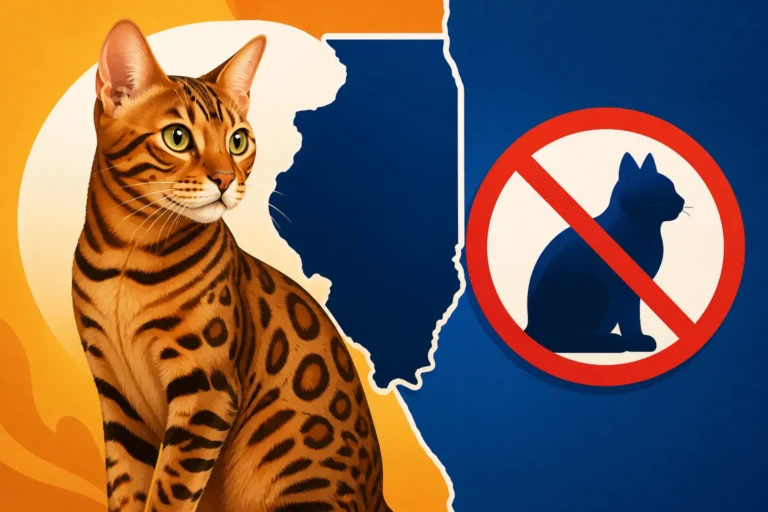
When it comes to the early generations of Bengal cats – the F1, F2, and F3 Bengals – Delaware takes a cautious approach. These cats are classified as "exotic animals" or "potentially dangerous animals" due to their close lineage to the wild Asian Leopard Cat. In Delaware, you generally cannot own an F1, F2, or F3 Bengal cat as a regular household pet without a specific permit.
The state's Department of Natural Resources and Environmental Control (DNREC) is typically the authority overseeing permits for exotic animals. Obtaining such a permit is not a simple matter of filling out a form. It often involves demonstrating that you have appropriate enclosures that meet specific security and size requirements, proof of veterinary care plans, and sometimes even showing that you have sufficient experience in handling exotic animals. This process is designed to prevent individuals from acquiring animals that they are not adequately equipped to care for, ensuring public safety and the welfare of the animal.
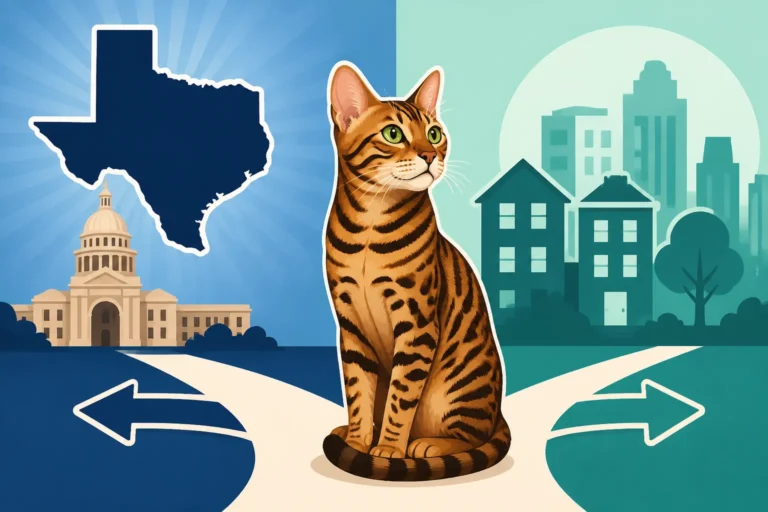
It's also crucial to understand that even if state law might allow for a permit, local county or city ordinances can add further restrictions or even outright bans. Where Bengal Cat Law Is Set, the State or the City For example, a city within Delaware might have its own rules that are stricter than the state's, prohibiting all hybrid cats regardless of generation, or imposing even more stringent permit requirements. This layered approach to legislation means thorough research at both the state and local levels is absolutely essential before considering an early generation Bengal.
The Legality of SBT Bengal Cats in Delaware
Here's the good news for most Bengal cat enthusiasts: SBT (Stud Book Traditional) Bengal cats, which are F4 and subsequent generations, are generally considered domestic cats under Delaware law. This means that if you're looking to adopt a well-socialized, playful Bengal that acts much like a typical housecat, you're usually in the clear.
For SBT Bengal cats, you typically won't need any special permits or licenses from the state. They are treated the same as any other domestic cat breed, like a Siamese or a Maine Coon. This is because, by the F4 generation, the genetic contribution from the Asian Leopard Cat is significantly diluted, and the cats exhibit predominantly domestic cat behaviors and characteristics. They've been bred selectively for temperament over many generations, making them suitable for most household environments.
However, while the state generally gives the green light to SBT Bengals, it's always wise to perform due diligence. Just as with early generations, local municipalities can have their own unique ordinances. While it's less common for an SBT Bengal to be restricted, a specific city or county might have an unusual clause. It's best practice to double-check with your local animal control or municipal clerk's office to ensure there are no unforeseen local regulations that might affect your ownership of an SBT Bengal. This proactive step can save a lot of heartache and potential legal issues down the road.
Navigating Ownership: Permits, Proof, and Practicalities in Delaware
So, you've done your research, and you're either confident that an SBT Bengal is right for you, or you're one of the rare, dedicated individuals considering an early-generation Bengal. Either way, understanding the practical steps, documentation, and ongoing responsibilities is key to being a successful Bengal cat owner in Delaware.
Obtaining Necessary Permits (If Applicable)
If you are considering an F1, F2, or F3 Bengal cat in Delaware, prepare for a rigorous and often complex permitting process. The state doesn't make it easy to own these animals, and for good reason—they require specialized care and housing.
The process typically begins with an application through the Delaware Department of Natural Resources and Environmental Control (DNREC). This application will likely require detailed information about your proposed enclosure, which often needs to be a secure, outdoor space that prevents escape and protects the cat from the elements, possibly even meeting specific square footage requirements per animal. You may need to provide blueprints, photographs, and detailed descriptions of how the enclosure will be constructed and maintained. Financial stability is often a factor too, as caring for an exotic animal can be quite expensive, from specialized diets to veterinary care.
Beyond the initial application, expect inspections. State officials will likely visit your property to ensure that your proposed setup meets all safety and welfare standards before a permit is issued. These permits are also usually subject to renewal, meaning ongoing compliance checks. The fees associated with permits, inspections, and potentially upgrading your property to meet the requirements can be substantial. What an Early Generation Bengal Cat Permit Costs This isn't a casual commitment; it's a serious undertaking that involves significant financial investment and dedicated effort to ensure you're meeting legal and ethical standards for the animal's welfare and public safety.
Proving Your Bengal Cat's Generation
Whether you're dealing with permit applications for an early generation Bengal or simply want peace of mind that your SBT Bengal is fully legal, proving your cat's generation is paramount. This isn't just a "nice to have"; it's a non-negotiable part of responsible ownership.
The primary way to prove your Bengal's generation is through official registration papers from reputable cat associations like TICA (The International Cat Association). A responsible breeder will provide you with these papers, which clearly list the cat's lineage and generation. For an SBT Bengal, the papers will explicitly state "SBT" and trace back at least three generations of Bengal-to-Bengal breeding, demonstrating that it's an F4 or later. How to Prove Your Bengal Cat's Generation These documents are your legal proof and should be kept safe.
If you are ever in doubt, or if you acquire a Bengal cat without proper paperwork (perhaps from a rescue or a less reputable source), DNA testing can sometimes confirm the presence of Asian Leopard Cat markers, though it typically cannot pinpoint an exact filial generation in the same way pedigree papers can. Some labs can give you an estimated percentage of wild ancestry, which might be helpful in an informal sense, but official registration papers are the gold standard for legal purposes. Whether a DNA Test Shows a Bengal Cat's Wild Percentage Always insist on proper paperwork from your breeder. Without it, you could inadvertently acquire a cat that is illegal in Delaware, putting both you and the animal at risk.
You'll also want to consider all the supplies you'll need for your new Bengal. Whether it's high-quality food, engaging toys that stand up to their active nature, or the right litter, reliable sources like Chewy can help you stock up on everything a Bengal needs.
Insurance and Other Considerations
Beyond the initial legality, owning a Bengal cat in Delaware, particularly an early generation, comes with other practical considerations. Pet insurance is one area where things can get tricky. Some standard pet insurance providers might have breed-specific exclusions or higher premiums for hybrid cats, even SBT Bengals. It's crucial to shop around and be upfront about your cat's breed and generation when seeking coverage. Providers like Healthy Paws are known for their comprehensive coverage, but it's always best to verify their specific policies regarding Bengal cats.
Another significant consideration is housing. If you rent, your landlord might have policies regarding "exotic" or "high-energy" breeds. Even if an SBT Bengal is legal in Delaware, a landlord can still enforce their own rules, just as they might with certain dog breeds. Always get written permission from your landlord if you plan to bring a Bengal cat into a rental property. Whether a Landlord Can Ban a Bengal Cat
Finally, consider travel. Moving to a different state or even traveling through one with an early generation Bengal can become a logistical nightmare. Laws vary wildly from state to state, and what's legal in Delaware might be strictly prohibited just across the border. Whether a Bengal Cat Can Cross a State Line Even with an SBT Bengal, always check the laws of your destination and any states you'll be passing through to avoid issues.
What to Do If You're Unsure About Your Bengal Cat's Status
It's a tough situation to be in: you've welcomed a beautiful Bengal into your home, but now you're second-guessing if you've truly understood all the legal nuances. Perhaps you adopted a rescue with unclear origins, or you're just feeling overwhelmed by the regulations. Don't panic, but do take proactive steps.
Consulting Local Authorities
If you're unsure about the legality of your Bengal cat in Delaware, the first and most critical step is to consult the appropriate authorities. Start with your local animal control office or county clerk's office. They can provide specific information about local ordinances that might affect Bengal ownership in your particular city or town. Be prepared to provide details about your cat's generation if you know it, or a description if you don't.
Next, reach out to the Delaware Department of Natural Resources and Environmental Control (DNREC). As mentioned, they are typically the state authority for exotic animals and permits. When contacting them, clearly state your concerns and ask for clarification on the laws pertaining to your specific cat. It's always a good idea to try to get this information in writing, whether through email or by requesting official documentation, to avoid misunderstandings later.
If the situation remains unclear or if you discover your cat might fall into a restricted category, consider consulting an attorney who specializes in animal law. They can interpret complex regulations and advise you on the best course of action to ensure compliance and protect your pet. This might seem extreme, but navigating legal issues around pet ownership is serious business.
Responsible Ownership and Rehoming
Discovering that your beloved Bengal cat might be illegal to own can be incredibly distressing. However, responsible pet ownership means taking the necessary steps to rectify the situation. The welfare of your cat, and compliance with the law, must be your top priorities.
If you find that your early generation Bengal falls under a permit requirement that you cannot meet, or is outright banned, it's essential to explore safe and legal rehoming options. This is where Bengal-specific rescues or hybrid cat sanctuaries can be invaluable. These organizations understand the unique needs of these cats and can provide a safe environment or find a qualified adopter in an area where ownership is permitted. Never, under any circumstances, consider abandoning your cat. This is not only illegal and inhumane but also puts the animal at severe risk.
The challenges of early-generation Bengal cat ownership are part of why SBT Bengals are so strongly recommended for most pet owners. They offer the stunning looks and engaging personality of the breed without the complex legal hurdles and specialized care requirements that F1-F3 generations demand. Being informed and proactive is the best way to ensure a happy, legal, and fulfilling life with your Bengal cat in Delaware.
Disclaimer
This article is for general informational purposes only and does not constitute professional advice. Laws, prices and regulations vary by location and change over time. Consult a qualified professional for guidance on your specific situation.