How Much Asian Leopard Cat DNA an F1 Bengal Cat Has
An F1 Bengal is often described as having about 50% Asian leopard cat ancestry, but that number can sound more precise than it is. It refers to the expected share of its nuclear DNA from each parent in a first-generation cross—not a guarantee of wild behavior, appearance, or care needs. This guide explains what the percentage means and what it cannot tell you.
The expected Asian leopard cat DNA in an F1 Bengal
Why the usual figure is about 50 percent
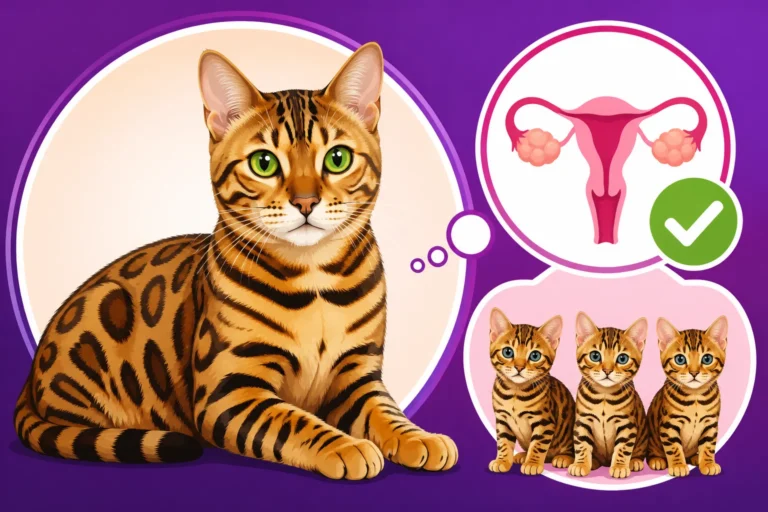
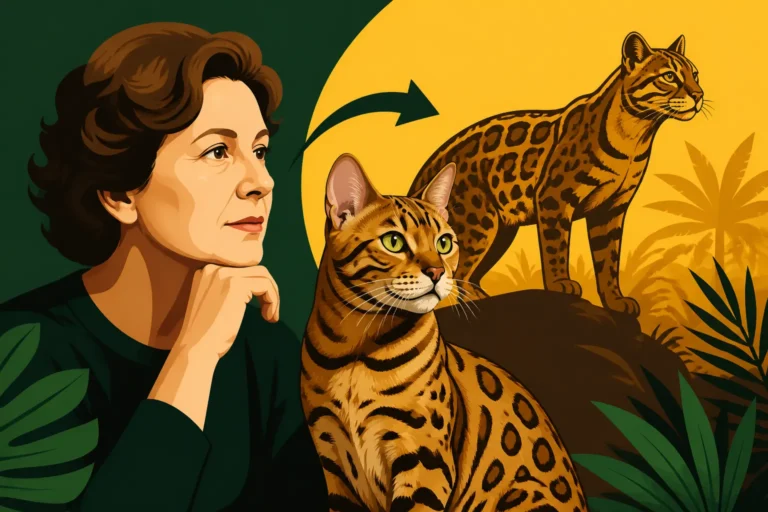
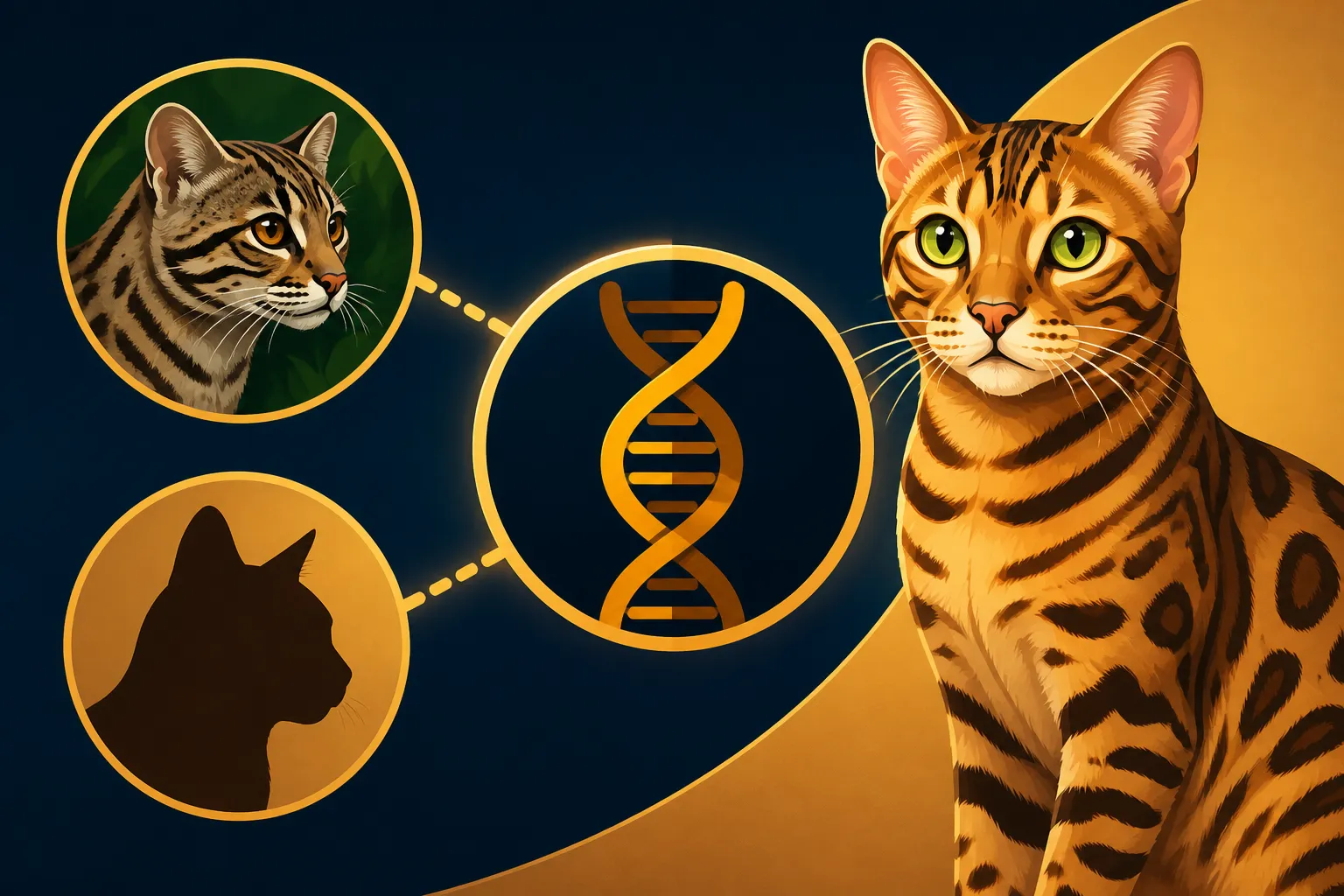
An F1 Bengal is generally the first-generation offspring of an Asian leopard cat and a domestic cat. Each parent contributes roughly half of the kitten’s nuclear DNA, so the straightforward ancestry estimate is approximately 50% Asian leopard cat and 50% domestic cat.
That is the useful short answer, but it helps to understand what the number describes. It refers to genetic ancestry across the kitten’s nuclear genome. It does not mean that half of the kitten’s body, personality, or visible traits are “wild.” A cat inherits a mixture of genetic variants from both parents, and those variants influence traits in complicated ways.
Think of it like a shuffled deck: the kitten receives genetic material from both parents, but the exact combination of inherited segments is individual. Two kittens from similar crosses may not inherit identical versions of the same genes, and their markings or behavior will not necessarily match.
For a broader explanation of the generation label itself, see What F1 Means in a Bengal Cat. The label identifies a position in a breeding pedigree; it is not a behavioral score or a precise description of every trait the cat will show.
What the 50 percent does and does not measure
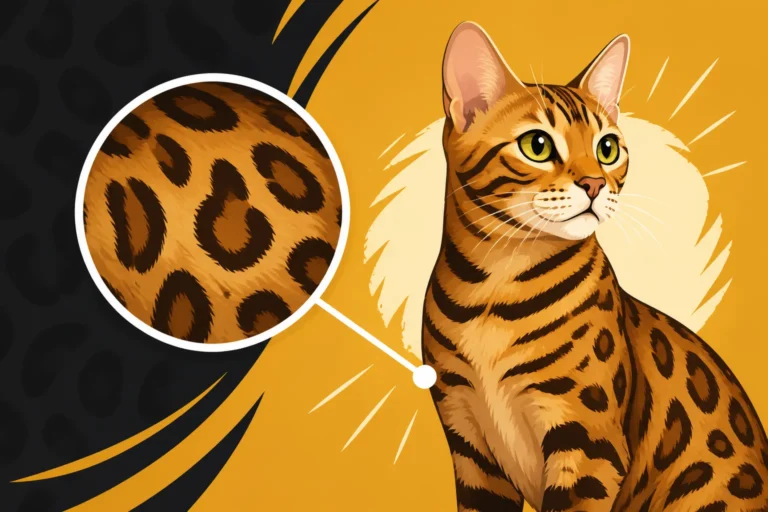
The percentage is best treated as an ancestry estimate based on the parentage and generation. It is not a direct measure of how much the cat will resemble an Asian leopard cat. A cat can inherit a striking spotted coat without being “more wild” than a less spotted relative, and coat appearance alone cannot establish lineage.
The number also does not mean that every part of the cat’s DNA follows a neat half-and-half split. The inheritance of nuclear DNA is broadly divided between parents, but individual stretches of DNA are passed down in combinations. Some genetic features, such as mitochondrial DNA, follow a different inheritance route and do not fit the simple nuclear-ancestry percentage in the same way.
| Question | What the answer means |
|---|---|
| What is the usual F1 ancestry estimate? | About half Asian leopard cat and half domestic cat ancestry |
| Does 50% mean half the cat’s behavior is wild? | No. Ancestry percentage does not predict behavior in that way |
| Can coat pattern prove the percentage? | No. Appearance cannot confirm a pedigree or ancestry estimate |
| Does an ordinary pet DNA test necessarily show the percentage? | Not necessarily; test capabilities and reference data vary |
| What is the best evidence of generation? | A documented, traceable pedigree from a knowledgeable source |
When people ask how much Asian leopard cat DNA an F1 Bengal has, they are often trying to answer a practical question: “What kind of cat am I bringing home?” The ancestry figure is a starting point, not a substitute for learning about the individual animal’s background, temperament, socialization, and needs.
How Bengal generations affect the estimate
The number changes as domestic generations are added
After the initial F1 cross, breeders may mate descendants with domestic cats or with Bengals from later generations. With each successive generation, the expected share of Asian leopard cat ancestry generally decreases. The exact ancestry estimate depends on the individual pedigree and breeding history, so it should not be guessed from a cat’s appearance or a seller’s casual description.
The basic pattern is often described as a halving of the expected wild ancestry with each backcross to a domestic cat. That is a simplified way to understand the progression, not a promise that every individual’s measured genome will land on an exact fraction. Each kitten inherits a particular selection of DNA from its parents, and lineages can have different breeding histories.
For the broader mechanics behind the labels, How a Bengal Cat's Generation Is Counted explains how generation numbers are assigned. When comparing later generations, How Much Wild DNA an F2 Bengal Cat Has, How Much Wild DNA an F3 Bengal Cat Has, and How Much Wild DNA an F4 Bengal Cat Has cover the expected ancestry at each stage.
Why SBT is not another percentage label
You may also encounter the term SBT, which is a pedigree designation rather than a statement that the cat has a particular measurable percentage of Asian leopard cat DNA. It indicates that a Bengal’s pedigree meets a defined standard of domestic Bengal ancestry over multiple generations. It does not mean that every SBT cat has identical genetics or that a particular DNA percentage can be inferred from those three letters alone.
This distinction matters when a seller uses generation labels loosely. Ask what the label means in the cat’s documented pedigree, who registered or recorded the lineage, and whether the paperwork identifies the parents. What SBT Means in a Bengal Cat explains that term in more detail.
For example, a photograph of a dramatic, spotted cat cannot establish that it is an F1, F2, or SBT Bengal. Nor does a registration document automatically answer every question about the cat’s genetic ancestry. If the generation affects a decision you need to make, such as checking local rules or choosing a suitable home, ask for clear pedigree information and verify the requirements that apply where you live.
Why ancestry percentage cannot predict a cat’s behavior
Genes are only one part of the picture
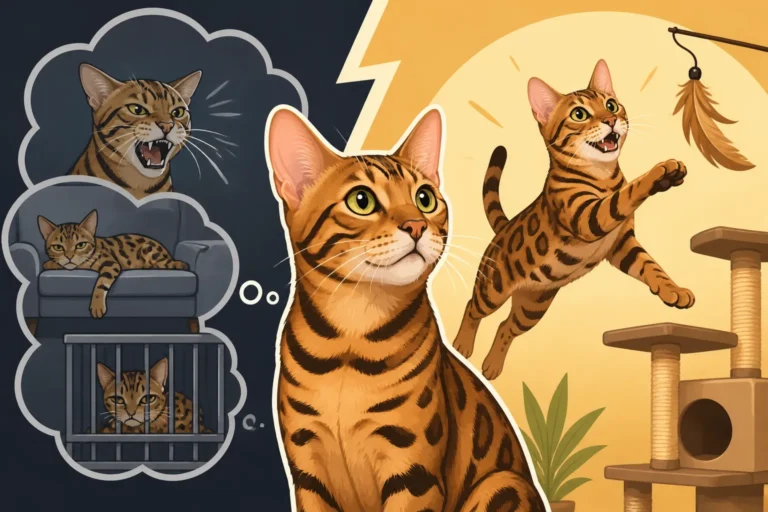
It is tempting to assume that a cat with more Asian leopard cat ancestry will automatically be more difficult, more active, or less suited to life with people. That conclusion is too simple. Behavior develops through a mix of inherited tendencies, early socialization, individual temperament, environment, health, and the cat’s daily experiences.
Two cats with similar ancestry estimates can behave very differently. One may be confident around visitors and comfortable with household routines; another may be more cautious or easily overwhelmed. Even within the same litter, kittens can differ in how they respond to handling, noise, other animals, and changes to their surroundings.
A responsible assessment therefore starts with the actual cat and its history. Ask how it has been raised, what kinds of people and household experiences it has encountered, and how it responds in ordinary situations. A percentage cannot tell you whether a particular cat enjoys being handled, tolerates children, or will settle into your home.
Why generation still matters for practical decisions
Although ancestry alone cannot predict personality, generation can matter in context. Early-generation hybrids may have specialized legal, housing, breeding, or care considerations. Rules differ by location, so anyone considering an early-generation Bengal should check state and local requirements before committing. A breeder’s description is not a substitute for understanding the rules that apply to your home.
Generation can also be part of a conversation about the cat’s expected needs. Rather than relying on stereotypes, talk with a veterinarian and a reputable breeder or rescue familiar with the individual animal’s history. Ask about diet, handling, enrichment, and how the cat has been socialized. The practical goal is to plan for the cat you are meeting, not to treat a genetic percentage as a complete personality forecast.
If you are preparing a home, focus on reliable basics: safe resting spaces, sturdy climbing and scratching options, suitable food and litter, and a plan for veterinary care. Retailers such as Chewy may be one place to look for routine supplies, but a store listing cannot verify a cat’s pedigree or tell you which products are right for its health. If you are comparing items through Chewy or another retailer, use your veterinarian’s advice for medical or diet-related choices. The same applies to any shopping checklist: Chewy can help with supplies, while lineage questions need documentation from the breeder or relevant registry.
Can a DNA test confirm the percentage?
What a test may be able to tell you
People sometimes expect a consumer DNA test to provide a definitive answer such as “this Bengal is exactly 50% Asian leopard cat.” That is not something to assume. A test’s ability to identify ancestry depends on the lab’s methods, the reference samples it uses, and whether it is designed to assess the specific ancestry question you are asking.
Breed identification and health screening are also different from confirming a filial generation. A test might examine particular genetic markers or screen for certain inherited conditions without being able to reconstruct a cat’s complete pedigree or assign a reliable wild-ancestry percentage. Before paying for a test, ask the laboratory exactly what its report can establish and what it cannot.
For a fuller discussion of the limits, read Whether a DNA Test Shows a Bengal Cat's Wild Percentage. If the question is about a specific health risk, ask your veterinarian which test is relevant; a test for one condition does not confirm a cat’s generation.
What to ask a breeder or seller instead
For generation and parentage, the most useful first step is usually to request pedigree documentation and ask the breeder to explain it. Ask who the parents are, how the generation was determined, what records support the claim, and whether the paperwork can be checked with the named registry. A clear answer should connect the label to a traceable breeding history, rather than relying on coat pattern or a verbal assurance.
It is also reasonable to ask whether the cat’s generation affects local ownership rules or any other practical requirements. If you are considering an early-generation animal, verify the rules with the relevant local authority before bringing the cat home. Avoid treating a DNA result, sales listing, or registration paper as proof of every claim unless you understand what that document actually covers.
Ultimately, the most reliable way to interpret “about 50%” is as a useful expected ancestry figure for the first generation—not a promise about a Bengal’s looks, nature, or needs. Pedigree records explain the generation; DNA testing may answer narrower questions; and meeting the cat helps you understand the individual animal. Keep those pieces separate, and the number becomes much easier to use without asking it to tell you more than it can.
Disclaimer
This article is for general informational purposes only and does not constitute professional advice. Laws, prices and regulations vary by location and change over time. Consult a qualified professional for guidance on your specific situation.