How to Prove Your Bengal Cat’s Generation
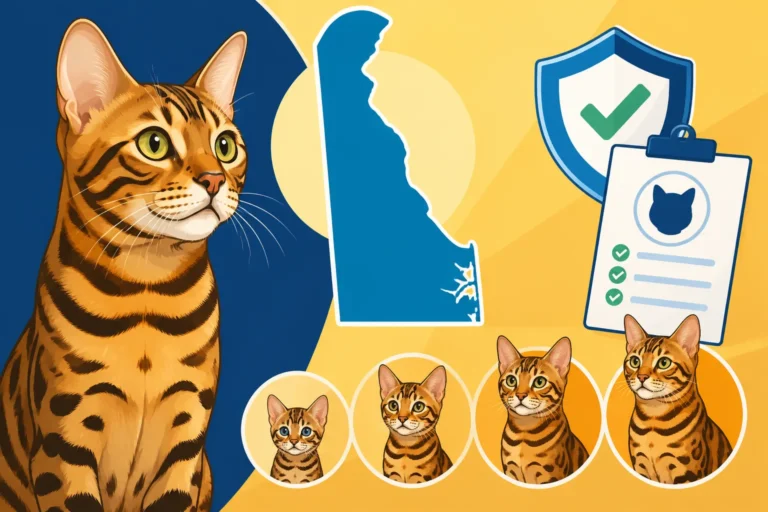
It can be incredibly frustrating to encounter legal restrictions or landlord demands about your Bengal cat, only to realize you’re not entirely sure how to definitively prove their generation. This guide is here to walk you through the essential methods and documentation needed to establish your Bengal cat's lineage, saving you potential headaches down the road.
Understanding Bengal Cat Generations and Why They Matter
When you welcome a Bengal cat into your home, you're not just getting a beautiful companion; you're also bringing in a fascinating lineage that traces back to the wild Asian Leopard Cat. This wild heritage is what makes Bengal cats so unique, but it's also why their "generation" is such a crucial topic. Many states and cities, and even some landlords or insurance companies, have specific rules about owning certain generations of Bengal cats, especially the earlier ones. It’s not about judging your cat, but about ensuring compliance with regulations designed around the perceived temperament and needs of these magnificent animals.
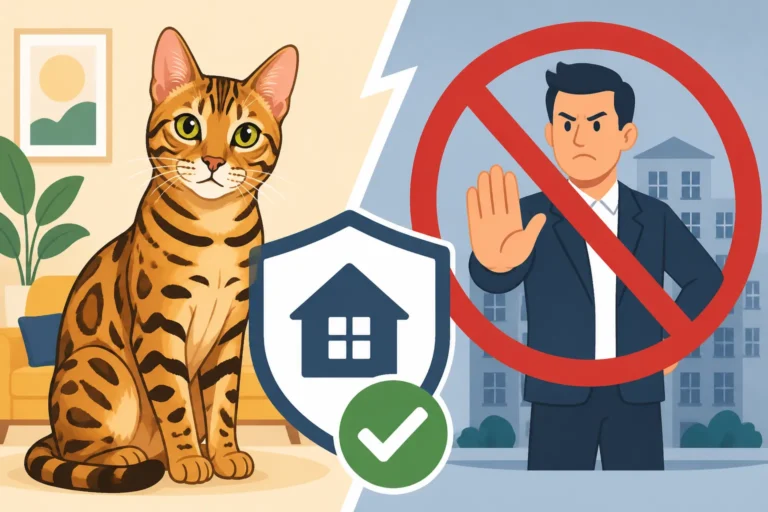
Imagine the stress of moving to a new apartment only to have your landlord question your cat's breed and generation, potentially denying your application or demanding a higher pet deposit. Or perhaps your local animal control has strict ordinances about exotic pet ownership, and you need to clearly demonstrate that your beautiful spotted friend is indeed a fully domestic Bengal. These aren't far-fetched scenarios; they're real concerns that many Bengal owners face. Understanding what your cat's generation means and how to prove it isn't just bureaucratic red tape; it's a vital part of responsible Bengal cat ownership that protects both you and your feline family member. It truly affects Why the Generation Number Decides Whether You Can Own a Bengal Cat.
What Each Generation Number Actually Means
The generation number, often called the "F-number" (for filial generation), indicates how many generations removed your Bengal cat is from its wild Asian Leopard Cat ancestor. It's a fundamental part of the breed's identity and genetic makeup.
- F1 Bengals: These are the direct offspring of a first-generation cross between a domestic cat and a pure Asian Leopard Cat (ALC). They are 50% ALC and often exhibit more pronounced wild traits, both in appearance and behavior. They are rare in pet homes due to their wilder nature and legal restrictions.
- F2 Bengals: An F2 Bengal is the offspring of an F1 female bred back to a domestic male. They are approximately 25% ALC and tend to be less wild than F1s, but still retain many distinctive characteristics.
- F3 Bengals: Produced by breeding an F2 female to a domestic male, F3 Bengals are around 12.5% ALC. At this point, they are typically quite socialized and closer to a domestic temperament, but still considered early generation.
- SBT (Stud Book Tradition) Bengals: This is where most pet Bengals fall. An SBT Bengal is at least four generations (F4 or later) removed from its ALC ancestor. They are bred Bengal-to-Bengal for at least three consecutive generations, meaning both parents, grandparents, and great-grandparents were all Bengals. These cats are recognized as fully domestic and are eligible for championship status in cat registries. They have proven consistency in temperament and type, making them wonderful, albeit still very active, companions for families. Understanding What an F Number on a Bengal Cat Means Legally is crucial for anyone considering one of these amazing cats.
The Legal and Practical Implications of Generation
The generation number of your Bengal cat isn't just a neat piece of trivia; it has significant legal and practical ramifications that can impact everything from where you can live to whether your cat is covered by insurance. It's a reflection of how regulatory bodies and even common perception view the "wildness" of the cat.
For earlier generations, particularly F1 through F3, many jurisdictions have outright bans or require special permits. These rules are in place because these cats are considered to have a stronger wild instinct, potentially leading to behaviors that are not suitable for a typical household or a dense urban environment. They might be more vocal, less tolerant of handling by strangers, or have specific environmental needs that are difficult to meet in a standard home. If you own an early-generation Bengal without proper documentation in a restricted area, you could face hefty fines or even have your beloved cat confiscated. This is not a situation any loving owner wants to encounter, which is why proof is so critical. For example, What Happens If You Move With an Illegal Bengal Cat can be a devastating consequence of not knowing or being able to prove your cat's generation.
Beyond legalities, your cat's generation can affect practical aspects like housing and insurance. Some landlords, even in areas where Bengals are legal, may have clauses against "hybrid breeds" or "exotic pets" in their leases. Being able to present clear proof that your Bengal is an SBT (F4 or later) can often circumvent these issues, as SBT Bengals are widely accepted as domestic cats. Similarly, pet insurance providers like Healthy Paws or even routine vet care providers might have different policies or require specific documentation for early-generation hybrids versus fully domestic breeds. Without proper proof, you might find yourself in a challenging position when trying to secure a policy or even facing higher premiums. It's truly a cascade of effects stemming from that single F-number.
The Primary Methods for Proving Your Bengal Cat's Generation
So, how do you actually go about proving your Bengal's generation? It's not always as simple as pointing to their spots. You need official documentation, and often, multiple layers of it, to satisfy landlords, veterinarians, or local authorities.
Relying on Official Pedigree and Registration Papers
The gold standard for proving your Bengal cat's generation is official registration papers from a reputable cat registry, such as The International Cat Association (TICA). TICA is the primary registry for Bengal cats and has stringent rules for how generations are recorded. These papers are like your cat's birth certificate and family tree rolled into one.
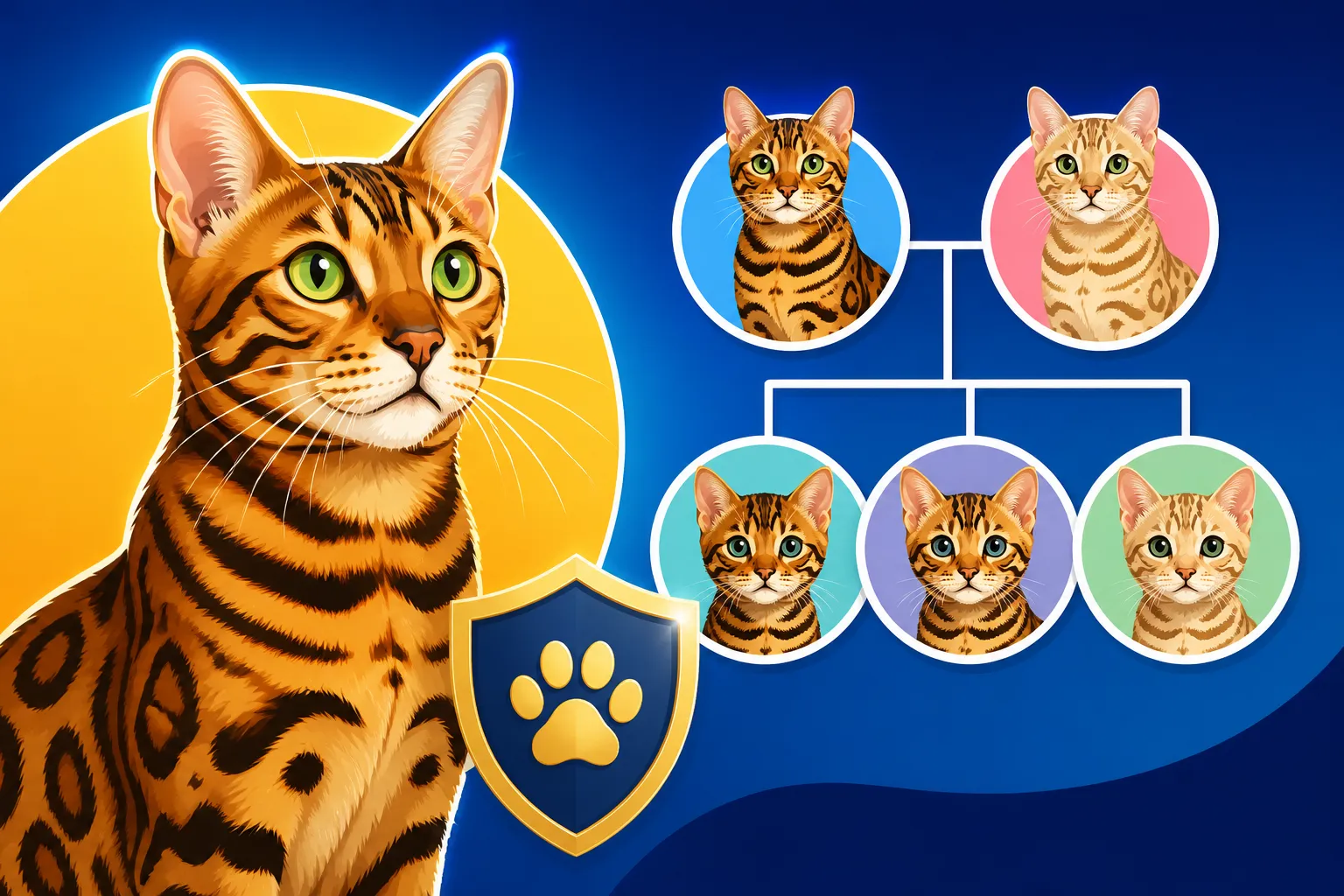
When you purchase a Bengal cat from a reputable breeder, they should provide you with a pedigree certificate and registration papers. This document will clearly state your cat's name, birthdate, color, pattern, and, most importantly, their generation (e.g., SBT, F4). It will also list their parents, grandparents, and often great-grandparents, showing their generations as well. The pedigree essentially traces your cat's lineage back to its Asian Leopard Cat ancestor, demonstrating the number of generations removed. Make sure these papers are in your name as the owner, or that the breeder has initiated the transfer process. A good breeder will also provide these documents promptly after the purchase. For more on this, check out How to Find a Bengal Cat's Generation on Its Pedigree.
If you're considering a Bengal cat, always ask to see the parents' and kitten's registration papers. Don't settle for vague promises or breeders who say they "don't bother with papers." This is a huge red flag. Without official papers, it's virtually impossible to prove your cat's generation, and you might inadvertently end up with a cat that isn't a purebred Bengal or an earlier generation than you intended, especially if the price seems too good to be true. Unfortunately, Whether a Breeder Can Fake a Bengal Cat's Generation is a concern you need to be aware of, so always verify through the official channels.
The Role of DNA Testing
DNA testing can be a valuable tool, but it's important to understand its limitations when it comes to proving a Bengal cat's generation. While DNA tests can confirm the presence of certain genes indicative of Bengal ancestry, or even identify specific health markers common in the breed, they generally cannot provide a precise F-number.
Current commercial DNA tests can confirm if your cat has a certain percentage of wild cat DNA, which might hint at an early generation, but they don't give you the exact "F1" or "F4" designation that official registries do. For example, a test might confirm the presence of Asian Leopard Cat markers, confirming your cat is indeed a hybrid. However, it won't be able to tell you if your cat is F2 versus F3 with the same precision as a pedigree. The registries rely on careful tracking of breeding pairs over generations, not just genetic markers. So, while a DNA test can be a good supporting piece of evidence, especially if you adopted a cat with an unknown background and want to confirm its hybrid status, it typically won't replace official pedigree papers for generation proof. If you're curious about the genetic side, you might want to read Whether a DNA Test Shows a Bengal Cat's Wild Percentage.
Nevertheless, DNA tests are invaluable for verifying a cat's breed if you have doubts, or for health screenings. For example, a DNA panel can test for common Bengal genetic issues like PRA-b (progressive retinal atrophy) or PK deficiency (pyruvate kinase deficiency). Many breeders ensure their cats are screened for these conditions, and it's a good practice for any Bengal owner, regardless of generation.
Breeder Contracts and Health Guarantees
A comprehensive breeder contract is another critical piece of documentation that can indirectly help prove your Bengal cat's generation and establish its legitimacy. While not a direct proof like a pedigree, it details the terms of sale and often specifies the cat's generation, along with other vital information.
A reputable breeder will always provide a written contract. This contract should clearly state the cat's full registered name, its generation, birthdate, and often includes clauses about spaying/neutering, health guarantees, and return policies. This document serves as a legally binding agreement between you and the breeder and acts as strong circumstantial evidence in conjunction with official registration papers. If you're ever in a dispute regarding your cat's identity or health, this contract will be invaluable. It shows that the breeder stands behind their cats and provides transparency. Good breeders work with registries like TICA, and their contracts will reflect that adherence to breed standards. You should also be asking Which Questions to Ask a Bengal Cat Breeder when you're looking for a kitten.
Furthermore, many contracts come with health guarantees, which speak to the breeder's confidence in their lines. These guarantees often depend on the cat being of sound health, which reputable breeders ensure through health screenings and responsible breeding practices. Be wary of any breeder who operates without a detailed contract; this can be a sign of a backyard breeder who might not be accurately representing their cats' lineage or health. The kind of detailed information contained in a comprehensive contract helps protect you and ensures you’re getting the Bengal cat you paid for.
Common Pitfalls and What to Watch Out For
Navigating the world of Bengal cat ownership, especially when it comes to verifying lineage, can sometimes feel like walking through a minefield. Unfortunately, not everyone operates with the highest integrity, and without proper vigilance, you can easily fall prey to misleading information or outright scams. The stakes are high when you're talking about welcoming a new family member, so it's crucial to be aware of the potential pitfalls.
One of the biggest frustrations owners face is discovering after the fact that their cat's documentation is incomplete or inaccurate. Perhaps a well-meaning seller assured them the cat was an SBT, but when they tried to register it or present proof to a landlord, the papers just weren't there. This can lead to significant stress, financial burdens, and emotional heartache. This is particularly relevant when you consider Whether an SBT Bengal Cat Is Legal Everywhere – you need that proof.
Red Flags When Buying or Adopting a Bengal Cat
When you're in the process of acquiring a Bengal cat, whether from a breeder or a rescue, there are several warning signs that should prompt you to dig deeper and exercise caution. Ignoring these red flags could leave you with a cat whose generation is unprovable, or worse, a cat with undisclosed health or behavioral issues.
- No Registration Papers or Pedigree: This is the most glaring red flag. A legitimate Bengal breeder, especially one selling SBT (F4 or later) Bengals, will always provide TICA registration papers and a pedigree. If a breeder claims they "don't bother with papers" or that it's "extra paperwork" you don't need, walk away. Without these documents, there is no verifiable proof of your cat's lineage or generation. You could easily be buying a Whether a Backyard Bred Bengal Cat Is Really One or even just a spotted domestic shorthair.
- Vague or Inconsistent Claims About Generation: Be wary if the seller is unclear about the generation, uses terms like "Bengal mix," or changes their story. If they say "it's basically an F4," but can't produce the papers, consider it a warning. An SBT Bengal will be clearly marked as such on official documents.
- Unusually Low Price: While it's tempting to snag a bargain, an extremely low price for a Bengal cat is often a strong indicator that something isn't right. Reputable breeders invest heavily in health testing, quality food, vet care for their breeding cats, and proper socialization, all of which contribute to the cost. If you see a Bengal listed for significantly less than the typical market rate, especially if it’s for an F1-F3, ask yourself why. This could be a sign of an unregistered cat, a backyard breeder cutting corners, or a misrepresentation of the cat's true generation. For context, you might want to understand what the price ladder (The F1 to F5 Price Ladder for a Bengal Cat) typically looks like.
- No Health Guarantees or Testing Records: While not directly related to generation proof, the absence of health guarantees or proof of parental health screenings (e.g., for HCM, PRA-b, PK deficiency) suggests a breeder who isn't investing in the well-being of their cats. This lack of transparency often extends to other areas, including accurate generation claims.
- Inability to Visit the Cattery/Home: If a breeder refuses to let you visit their premises (or insists on meeting in a neutral location), it could mean they have something to hide, such as unsanitary conditions or an unethical breeding setup. This makes it impossible to verify the conditions in which the kitten was raised or to meet the parents.
What to Do If Documentation is Missing or Questionable
It's a distressing situation to find yourself in: you have a beautiful Bengal cat, but the documentation proving its generation is either non-existent or clearly dubious. Don't panic, but understand that you have a challenge ahead.
- Contact the Breeder/Seller (If Possible): Your first step should be to reach out to the person you acquired the cat from. Clearly state your concerns and politely request the missing documentation. If they are reputable, they should be able to provide copies of the registration papers or assist you in the transfer process. Be persistent but polite. If they become evasive or refuse to cooperate, it confirms your suspicions.
- Consider a DNA Breed Test: While not a substitute for official pedigree papers for generation number, a breed-specific DNA test can at least confirm that your cat has Bengal lineage. This can be helpful if you need to prove to a landlord or vet that your cat is indeed a hybrid breed, even if you can't pinpoint the exact F-number. Some labs offer detailed reports on genetic markers that might hint at a closer wild ancestor, but again, they won't issue an "F-number" certificate.
- Consult with a Vet: Share your concerns with your veterinarian. While they can't issue generation papers, they can provide a professional assessment of your cat's physical characteristics, which might align with a Bengal cat, and document this in your cat's medical records. This can serve as supporting evidence. They can also advise on any health screenings that would be prudent given the unknown background.
- Research Local Ordinances: If your primary concern is legal compliance, thoroughly research your local and state laws regarding Bengal cat ownership. Some jurisdictions may have provisions for "grandfathering" in pets acquired before certain regulations, or may accept alternative forms of proof in unique circumstances. However, be prepared for the possibility that without official papers, you may face challenges.
- Reach Out to Bengal Cat Rescues/Associations: Sometimes, rescue organizations specialize in specific breeds, and may be able to offer guidance, resources, or even help you connect with people who can assess your cat's traits. They often have experience with situations where documentation is missing. While you might have paid What a Bengal Cat Costs to Buy in 2026, a rescue might still be able to offer insights.
Ultimately, proving your Bengal cat's generation requires diligence and proper documentation. Always prioritize obtaining official TICA registration papers from a reputable breeder. This ensures you have verifiable proof, protecting you and your feline friend from future complications.
| Proof Method | What it Provides | Best For | Limitations |
|---|---|---|---|
| Official Pedigree/Papers | Exact F-number, full lineage, TICA registration | Legal compliance, breeder verification, definitive proof | Requires purchase from reputable breeder, can be faked if not verified |
| DNA Breed Test | Confirmation of Bengal (ALC) ancestry, health markers | Identifying mixed breeds, health screening, general hybrid confirmation | Does not provide exact F-number, not recognized by registries for generation |
| Breeder Contract | Written agreement, stated generation, health guarantees | Supporting evidence, legal recourse with breeder | Not direct generation proof, only as reliable as the breeder |
| Vet Assessment | Physical characteristic confirmation, health status | Supporting evidence, general breed identification | Cannot determine F-number, no legal standing for generation proof |
Disclaimer
This article is for general informational purposes only and does not constitute professional advice. Laws, prices and regulations vary by location and change over time. Consult a qualified professional for guidance on your specific situation.