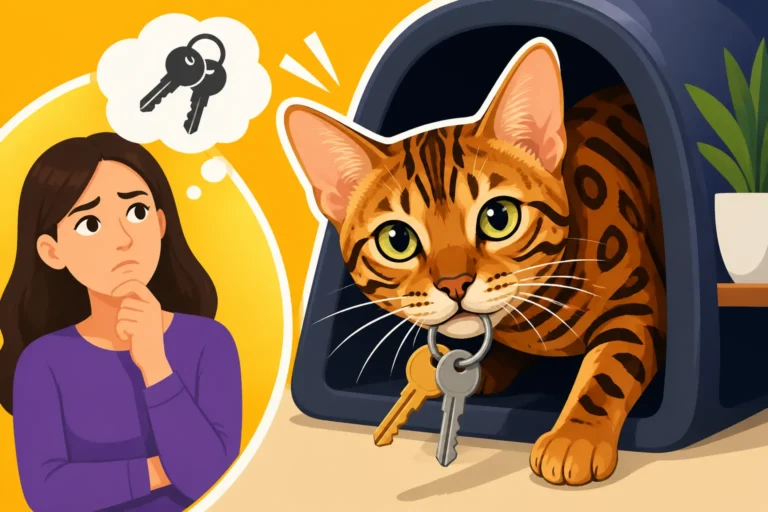
What a Bengal Cat Does at Four in the Morning
That jarring jolt from a deep sleep, the one where you're suddenly aware of a feline silhouette on your chest, or a persistent paw batting your face, usually signals one thing: it’s 4 AM, and your Bengal cat has decided the sun is way too slow. This isn't just an inconvenience; it's a common source of sleep deprivation for many Bengal owners. This guide is here to shed light on why your energetic companion becomes a tiny, spotted alarm clock at ungodly hours and, more importantly, how you can reclaim your mornings (and your sanity).
The Dawn Chorus: Why 4 AM is Prime Time for a Bengal
Let's face it, living with a Bengal means embracing a certain level of chaos and energy. But the 4 AM wake-up call often feels less like endearing quirkiness and more like a carefully orchestrated campaign to disrupt your sleep. Understanding the root causes, from their wild lineage to their internal rhythms, is the first step toward finding peace.
The Wild Ancestor's Schedule
It's easy to forget, amidst their domestic cuddles and silly antics, that Bengal cats carry the genes of a wild creature: the Asian Leopard Cat (ALC). These magnificent small wild cats are primarily crepuscular, meaning they are most active during dawn and dusk. This isn't just a preference; it's a survival instinct. These low-light periods offer the best hunting conditions, providing enough visibility to spot prey while offering cover from larger predators.
Now, fast forward a few generations, and your Bengal cat still has that hardwired programming. Even though they've never had to hunt for their supper, that ancestral urge to be up and about when the world is just starting to stir, or winding down, is incredibly strong. So, when your Bengal is bouncing off the walls at 4 AM, they’re not being malicious; they're simply listening to an internal clock that's been ticking for millennia. It’s part of Where the Bengal Cat Comes From, and it explains so much of their unique behavior.
Biological Clock and Light Cycles
Beyond the ancestral hunting schedule, feline biological clocks are incredibly sensitive to light cycles. Just like humans, cats produce melatonin, a hormone that regulates sleep, and its production is heavily influenced by ambient light. As the first hints of dawn creep through your curtains, even if you’re still in blissful slumber, your Bengal's body is receiving signals. Their melatonin levels start to drop, and their system begins to prepare for activity.
Think about it: even on a cloudy morning, there's a subtle shift in light. For a Bengal, whose senses are already heightened, this subtle change is often enough to kickstart their day. This makes 4 AM, or even earlier, a perfectly natural "wake-up" time for them, despite our human desire for a few more hours of darkness. Trying to fight this natural inclination can feel like swimming upstream, but understanding it helps us strategize better.
Hunger Pangs and Empty Bowls
Another major, and perhaps the most common, driver of the 4 AM wake-up call is simple hunger. Most Bengal cats are fed once or twice a day, typically in the morning and evening. If their last meal was, say, 12 hours ago at 6 PM, then by 4 AM, their stomach is likely rumbling. Bengal cats are incredibly active creatures, burning a lot of calories throughout the day. Their high metabolism means they process food relatively quickly.
A Bengal can become quite vocal and demanding when hunger strikes. You might experience the insistent meows, the chirps, or even full-blown yowls that seem to pierce through walls. This isn't just a gentle reminder; it's often a full-scale protest. They know that you, the benevolent food provider, are usually around to fix this problem. They connect your awakening with the imminent delivery of breakfast. If you've ever given in to their early morning demands, even once, you've inadvertently reinforced that behavior, teaching them that persistence pays off.
The Four AM Fiasco: Common Bengal Cat Wake-Up Tactics
If you've owned a Bengal for any length of time, you're intimately familiar with their intelligence and persistence. When they decide it’s time for you to be awake, they employ a repertoire of tactics that would make a seasoned military strategist proud. These aren't random acts; they are often calculated maneuvers designed to get your attention and, more importantly, get you out of bed.
The Vocal Alarms: Chirps, Yawls, and Meows
Bengal cats are renowned for being quite vocal, and their range of sounds is impressive, to say the least. At 4 AM, they deploy this vocal arsenal with full force. It often starts innocently enough – a soft chirrup from the end of the bed, a sound that in other contexts might be charming. But if that doesn't work, it quickly escalates. You might hear distinct meows, growing louder and more insistent, sometimes accompanied by a direct stare, as if daring you to ignore them.
Then there are the yowls. Oh, the yowls. These aren't your average housecat meows; they often carry a wilder, more primal tone, echoing through the quiet house. They are demands, pure and simple, and your Bengal has learned that these sounds are particularly effective at cutting through your deepest sleep. They understand that a noise that is annoying or startling is far more likely to elicit a response than a quiet request. It’s a classic example of How Vocal a Bengal Cat Is when they want something.
Physical Persuasion: Pouncing and Pawing
When vocalizations alone don't cut it, many Bengal cats move on to physical tactics. This can range from the surprisingly gentle to the downright jarring. You might first feel a soft paw patting your cheek, initially almost mistaken for a dream. This escalates to more persistent tapping, kneading, or even a determined "face hug" where they rub their head forcefully against yours. Some Bengal owners report their cats actually pulling their hair or nibbling earlobes.
The more direct approach involves pouncing. A Bengal, with its incredible athleticism, might launch itself onto your sleeping form, landing with surprising force, often directly on your chest or stomach. This is usually accompanied by purrs and headbutts, all designed to make it impossible for you to ignore their presence. It’s their way of saying, "Hello! I am here! And I require your immediate attention!" They are masters of using their physical presence to break through your defenses.
Environmental Manipulation: Destruction and Disturbance
For the truly determined Bengal, or those whose owners have learned to ignore the direct approaches, there's always the option of creating a ruckus that simply cannot be ignored. This is where their intelligence truly shines (or vexes, depending on your perspective). They know that certain objects in your home make satisfyingly loud noises when knocked over, or that opening certain cabinets will create a distinctive clatter.
You might find your Bengal systematically pushing items off shelves, batting at blinds to create a rhythmic clatter, or even attempting to open doors and drawers. They might jump on counters and start exploring, knowing full well that the sound of a glass or ceramic item being nudged will surely rouse you. This isn't necessarily destructive behavior born of malice, but rather a highly effective, if inconvenient, attention-seeking strategy. They’ve likely observed what gets your attention fastest during the day, and they simply apply that lesson to the wee hours.
Surviving the Early Morning Surge: Strategies for Peace
The good news is that living with an early-rising Bengal doesn't have to mean perpetual exhaustion. While you can't entirely reprogram their wild instincts, you can implement strategies to manage their expectations and shift their internal clock closer to yours. It's all about consistency, patience, and understanding what makes your Bengal tick.
Adjusting the Feeding Schedule
One of the most powerful tools you have is controlling when and how your Bengal eats. Since hunger is a primary driver of 4 AM wake-ups, addressing this directly is crucial. Instead of a single evening meal, consider splitting their dinner into two smaller portions, with the last one given right before you go to bed. This can help tide them over through the night.
Automated feeders are truly a game-changer for many Bengal owners. These devices can be programmed to dispense a small meal at, say, 3 AM or 4 AM. This way, your Bengal gets their early morning snack without needing to wake you up. They learn that the food comes from the machine, not from you, breaking the association between your awakening and their breakfast. Look for sturdy models that a clever Bengal can't easily break into, as they are notorious for figuring out puzzle feeders, as discussed in Which Puzzle Feeder Beats a Bengal Cat. Some can even be found on Amazon.
Maximizing Evening Play
A tired Bengal is a quiet Bengal. Or, at least, a quieter Bengal. Increasing their physical and mental stimulation in the hours leading up to your bedtime can make a significant difference. Engage them in intense, structured play sessions. Think wand toys, chasing feathers, or even a laser pointer (though always end a laser session with a tangible toy they can "catch" to avoid frustration).
Aim for at least two vigorous play sessions in the evening, ideally ending 30-60 minutes before you plan to sleep. One session should really get them panting and running, and the second can be a bit calmer but still engaging. The goal is to simulate a "hunt" and burn off that incredible energy they possess. Remember, How Much Exercise a Bengal Cat Needs a Day is significant, and they need several How Many Play Sessions a Bengal Cat Needs throughout the day, with evening being particularly critical for your sleep. After the final play session, offer a small meal or a few treats. This mimics the natural hunt-kill-eat-groom-sleep cycle of a wild cat, helping them wind down more effectively.
Creating a "No Response" Policy
This is perhaps the hardest strategy to implement, especially when you're desperate for sleep, but it is absolutely essential. Any response you give to your Bengal's 4 AM antics – whether it's a frustrated sigh, a gentle push, or worse, getting up to feed them – reinforces the behavior. They learn that their actions get your attention. Even negative attention is still attention.
You need to become a stone statue. When they yowl, ignore it. When they paw, ignore it. When they jump, remain still. This will be incredibly difficult at first, and it might even get worse before it gets better, as they try even harder to get a reaction. But if you are utterly consistent, they will eventually learn that their early morning efforts are futile. Consider wearing earplugs or using a white noise machine to help you get through the initial phase. It's a challenging journey, but crucial to stopping Why a Bengal Cat Wakes You Every Morning.
Environmental Enrichment for the Night Owl
While you're trying to sleep, your Bengal still needs outlets for their energy and intelligence. Ensure they have plenty of enrichment options available, even (or especially) at night. This can help redirect their focus away from waking you up. Vertical space is paramount for these climbing machines, so invest in tall, sturdy cat trees. A multi-level Which Cat Tree a Bengal Cat Needs will give them plenty to explore.
Puzzle feeders filled with a portion of their kibble can provide mental stimulation and a small snack throughout the pre-dawn hours. Toys they can play with independently, like spring toys, kickers, or even a cat wheel, if they use one, can keep them occupied. Some owners even set up special "night zones" with soft lighting and quiet toys in a room where their cat can play without disturbing them. This provides a safe, engaging space for them to act on their crepuscular instincts without demanding your participation. This kind of thoughtful environment planning addresses How Much Enrichment a Bengal Cat Actually Needs and helps combat Signs a Bengal Cat Is Bored.
| Bengal Cat Wake-Up Tactic | Why They Do It | Effective Counter-Strategy |
|---|---|---|
| Persistent Meowing/Yowling | Seeking attention, demanding food | No response policy, automated feeder |
| Pawing/Pouncing on you | Directly soliciting interaction | No response policy, earlier bedtimes for you |
| Knocking items over | Creating noise for attention | Secure loose items, provide night enrichment |
| Biting/Nipping | More intense attention-seeking | No response policy, redirect to chew toys |
| Digging/Scratching | Instinctual behavior, boredom | Provide appropriate scratchers, puzzle toys |
Ultimately, managing a Bengal's 4 AM energy requires a multi-pronged approach and a good dose of perseverance. By understanding their natural drives and consistently implementing strategies to meet their needs without sacrificing your sleep, you can foster a more harmonious household for everyone. It might take time, but the payoff of a full night's rest is absolutely worth the effort.
Disclaimer
This article is for general informational purposes only and does not constitute professional advice. Laws, prices and regulations vary by location and change over time. Consult a qualified professional for guidance on your specific situation.