Which Rooms a Bengal Cat Should Not Be Left In
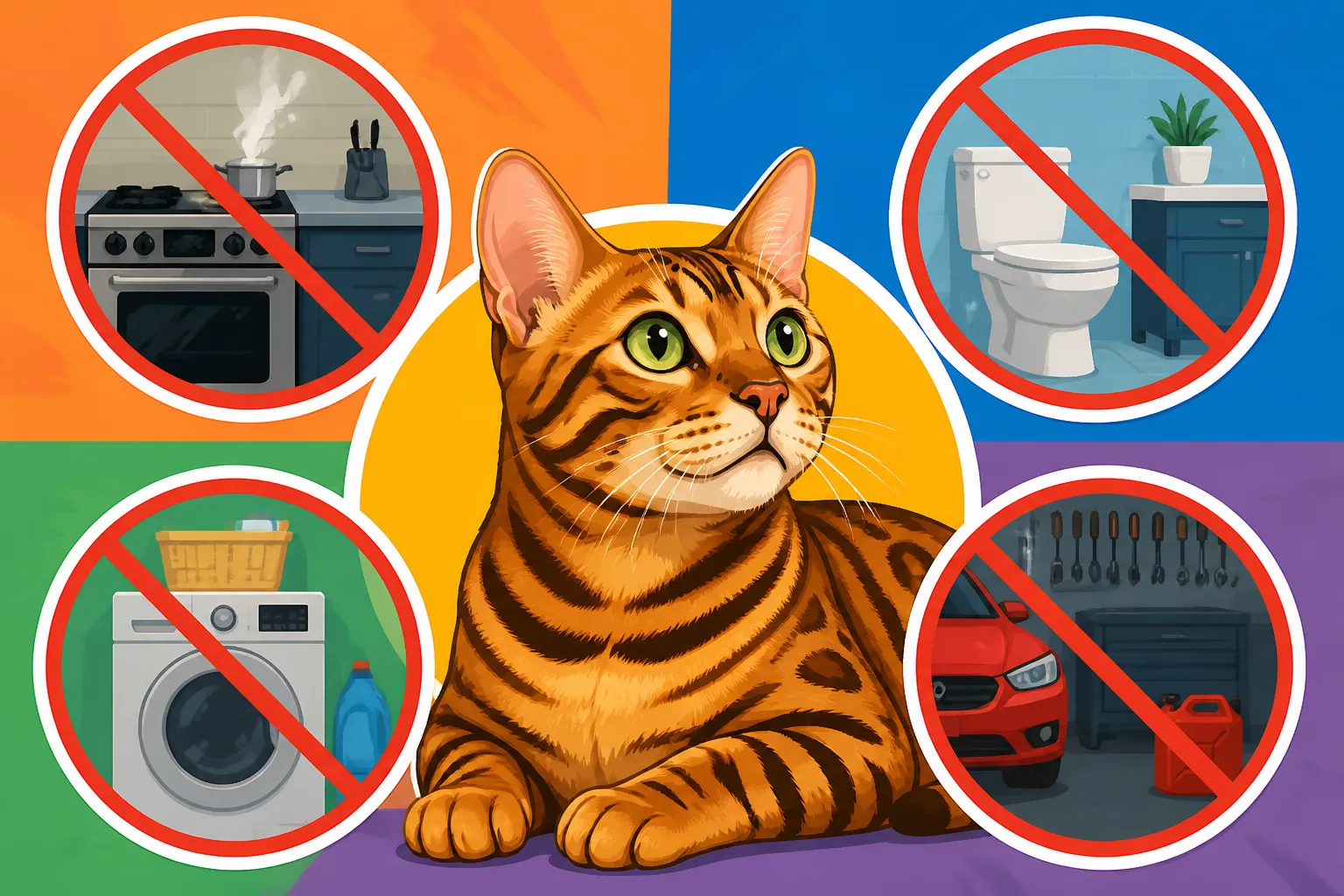
The boundless energy and sharp intelligence of a Bengal cat are endlessly charming, but they also mean a never-ending quest for novelty and exploration. If you've ever owned a Bengal, you know they're not content to simply observe; they want to be in everything. This curious nature, while endearing, means certain areas of your home can actually become significant hazards if left unsecured. This guide will walk you through which rooms pose the most risk to your intrepid feline explorer and how to make your home a safer, more enriching environment for them.
The Lure of the Kitchen: Culinary Curiosity and Hidden Hazards
The kitchen, with its tantalizing smells and a seemingly endless array of interesting objects, is often ground zero for a Bengal cat's adventures. What looks like a harmless collection of cupboards and counters to us is a vertical playground and a treasure trove of potential discoveries for them. You might think a quick shoo will do the trick, but a Bengal's persistence is legendary.
Counter Surfing and Food Raids
Bengal cats are incredible climbers, and gravity seems to be a mere suggestion when there's a countertop to explore or a high shelf to scale. They're not just looking for a good view; those keen noses are constantly on the hunt for forgotten crumbs or interesting new scents. A partially cooled pot of spaghetti sauce might look safe to you, but to a Bengal, it's an opportunity. They can easily knock over pots or pans, not only creating a huge mess but potentially scalding themselves or causing burns. Sharp knives left near the edge of a counter after dinner prep are an obvious danger, as are glass dishes that can shatter.
Beyond the immediate physical hazards, many common human foods are toxic to cats. Onions, garlic, chocolate, grapes, and even certain artificial sweeteners found in gum can be incredibly dangerous if ingested. A Bengal, in its pursuit of a tasty morsel, won't discriminate. They're quick learners, too. Once they discover a cabinet contains treats or a favorite toy, they'll often figure out how to open it, even if it requires a surprising amount of dexterity. Many owners find themselves investing in child locks for kitchen cabinets, not for human toddlers, but for their clever felines. Remember, a Bengal's determination to get what they want from a cupboard can be quite impressive; they'll bat, pull, and even use their teeth to pry doors open. It's not malicious, just pure, unadulterated curiosity. You can find robust child locks on Amazon that can withstand a Bengal's attempts.
Cleaning Supplies and Appliances
It's not just food that attracts a Bengal's attention in the kitchen. The cabinets under the sink, typically reserved for cleaning supplies, are also a major danger zone. Bleach, oven cleaner, dishwashing detergent, and various household chemicals are all highly toxic. A Bengal might bat at a colorful spray bottle, chew through the plastic, or even get into a spill. Their inquisitive nature means they'll sniff and taste anything new or interesting, and these chemicals are often scented, making them all the more appealing.
Appliances themselves can also be surprisingly hazardous. Washing machines and dryers, for example, present dark, cozy spaces that a cat might find inviting for a nap. Imagine the horror of accidentally starting a cycle with your beloved Bengal curled up inside. It's crucial to always check inside these machines before closing them. Dishwashers, especially when open and half-loaded, contain sharp utensils, hot water residue, and lingering food particles that could be tempting. A Bengal might jump in, looking for interesting smells, and get cut or trapped. Even a refrigerator, if left ajar, can tempt a cat to explore, leading to them getting locked inside. Prevention is key here: keep all cleaning products securely locked away, preferably in high cabinets that a Bengal can't reach, and always keep appliance doors closed and double-checked. How to Cat Proof Cabinets From a Bengal Cat offers more detailed strategies for securing these areas.
The Wet and Wild World of the Bathroom: A Bengal's Playground with Perils
If there's one thing many Bengals are famous for, it's their love of water. This isn't just a quirky trait; it means your bathroom, a sanctuary for most people, can become an irresistible adventure park for your spotted friend, complete with unique dangers.
Water Woes and Toilet Troubles
For a Bengal cat, an open toilet is practically an invitation to investigate, and perhaps even play. While most adult Bengals are too large to truly drown in a toilet, a small kitten could certainly be at risk. More commonly, the danger comes from the cleaning products we use. Many toilet bowl cleaners contain harsh chemicals that are extremely toxic if ingested. If your Bengal decides to take a sip from the bowl after it's been cleaned, it could lead to severe internal burns or poisoning. Even if you don't use harsh cleaners, an open toilet still poses a hygienic risk.
Beyond the toilet, Bengal cats are notorious for their fascination with running water. They will happily sit in an empty sink, batting at a dripping faucet, and many have even learned to turn on taps themselves. While this might seem adorable, it can quickly lead to flooding if they're left unsupervised, causing significant water damage to your home. I've heard countless stories of Bengal owners walking into a bathroom to find a mini-waterfall cascading over the sink, often with a very pleased cat observing their handiwork. Shower curtains and bath mats become exciting objects to shred, adding to the general chaos. To curb this, consider child-proofing faucet handles or simply ensuring bathroom doors are kept firmly shut. For more on their aquatic antics, read Why a Bengal Cat Loves Water and Why a Bengal Cat Turns on a Faucet.
Medications and Small Objects
The bathroom is also a repository for a myriad of small, tempting, and potentially dangerous items. Medicine cabinets are a prime target. A Bengal's intelligence means they can often figure out how to open simple push-and-pull doors, leading them to your prescription medications, over-the-counter pills, or even cosmetics. Human medications, even common ones like ibuprofen or acetaminophen, are highly toxic to cats and can cause organ failure or death with even a small dose. Pills dropped on the floor, especially if brightly colored, look like fascinating toys to bat around and then, inevitably, chew on.
Dental floss, while seemingly innocuous, can be incredibly dangerous if ingested. It can wrap around the tongue and, as the cat tries to swallow it, cheese-wire through the intestines, causing severe internal damage requiring emergency surgery. Razors, nail clippers, hair ties, cotton swabs, and various other small grooming tools are also common bathroom residents that can pose choking hazards or cause cuts and internal injuries. It’s essential to keep all medicine, toiletries, and small objects secured in drawers or cabinets that are truly cat-proof. Simply placing items out of sight on a counter isn't enough; a Bengal will find a way to reach them.
Utility and Laundry Rooms: Industrial Dangers in the Home
These often-overlooked spaces are usually functional rather than aesthetic, and as such, they rarely receive the same level of cat-proofing attention as, say, the living room. However, for a curious and tenacious Bengal, they represent a whole new frontier of exploration and are packed with potential dangers.
Appliance Entrapment and Chemical Exposure
Utility and laundry rooms typically house large appliances like washing machines, dryers, water heaters, and furnaces. These machines often create warmth, dark nooks, and interesting sounds—all incredibly appealing to a cat looking for a cozy spot or a new adventure. The danger of a Bengal climbing into a washing machine or dryer before a cycle is started cannot be overstated. A quick check before loading can save a life. Even when not in use, the nooks and crannies around these appliances can be tight squeezes, leading to a cat getting stuck or injured.
Furthermore, these rooms are often where we store laundry detergents, fabric softeners, and other household cleaners, sometimes in bulk. Laundry pods, with their bright colors and squishy texture, are particularly attractive to curious pets and are highly concentrated with toxic chemicals. Ingesting even a small amount can lead to severe vomiting, respiratory distress, and chemical burns. Anti-freeze, often stored in garages or utility closets, is also a grave danger due to its sweet taste, which can tempt pets. Ensure all these chemicals are stored in sturdy, sealed containers on high shelves or in locked cabinets. Don't underestimate a Bengal's jumping ability or their drive to investigate; what's out of reach for a regular housecat might be fair game for them.
Tools, Wires, and Small Parts
Beyond chemicals and large appliances, utility rooms and garages often contain a plethora of tools, hardware, and miscellaneous items that pose a threat. Loose wires and cords connected to various equipment (vacuum cleaners, power tools, chargers) are a chewing hazard, risking electrocution or burns. Small parts like nails, screws, batteries, and glues are often left lying around on workbenches or shelves. These can be easily knocked down, played with, and then ingested, leading to choking or internal injuries. Even paint cans, solvents, and pesticides can be found in these areas, presenting serious poisoning risks if a Bengal manages to get into them.
The sheer variety of potential hazards in these rooms means that simply closing the door is often the best defense. If that's not possible, a heavy-duty pet gate might be needed to block access. Think about how a Bengal's natural behavior—climbing, scratching, batting, and chewing—interacts with everything in the room. A loose bolt could become a toy, a dangling cord an irresistible chew, and a bucket of liquid a new water feature. Providing plenty of appropriate mental and physical enrichment in safe areas, such as robust cat trees and puzzle feeders from Amazon, can sometimes reduce their drive to seek out danger, but vigilance in hazardous rooms is always necessary. For ideas on keeping them occupied safely, consider What a Bengal Cat Does All Day.
Home Offices and Craft Nooks: A Temptation of Tangled Troubles
Our personal workspaces, often filled with paper, pens, and intricate projects, can be just as enticing and dangerous for a Bengal cat as a kitchen or bathroom. Their intelligence and dexterity mean that what seems like a simple office supply to us is a complex, interactive toy to them.
Wires, Paper, and Office Supplies
A home office is a veritable jungle of wires and cords. Computers, monitors, printers, chargers, and various electronics create a tempting network of dangling lines. Bengals, with their natural instinct to pounce and chew, will see these as irresistible playthings. Chewing on live electrical cords can lead to severe electrical burns in the mouth, internal injuries, or even electrocution. Even if the cords aren't live, a Bengal can damage expensive equipment, leading to costly repairs. Cord protectors or conduits, readily available on Amazon, are an essential investment to safeguard both your cat and your electronics.
Beyond wires, paper is often a Bengal's nemesis (or best friend, depending on how you look at it). Important documents, blueprints, or even children's homework can quickly become shredded confetti. Pens, pencils, erasers, paper clips, rubber bands, and pushpins are all small, easily ingested items that can cause choking, internal blockages, or cuts. A paper shredder, while off, might seem like a dark cubbyhole, but if accidentally turned on, it poses a severe risk. Keep all office supplies neatly stored in drawers or containers, and never leave a paper shredder plugged in if it's not actively being used. A Bengal's keen observation skills mean they often learn by watching us; they might see you open a drawer and then attempt to replicate the action themselves. Their cleverness is a double-edged sword! You might find helpful tips in How Clever a Bengal Cat Is for understanding their intelligence.
Crafting Materials and Toxic Substances
For those with a dedicated craft nook or hobby space, the dangers multiply. Yarn, string, fabric scraps, beads, needles, pins, glues, paints, and solvents are all common materials that can be deadly if a Bengal gets their paws on them. Like dental floss, yarn and string can cause linear foreign bodies if ingested, leading to severe intestinal damage. Needles and pins are an obvious puncturing hazard. Small beads or embellishments can be choked on. Various glues, paints, and solvents, especially those used for model making or art, are often highly toxic.
A Bengal cat, driven by instinct and curiosity, won't differentiate between a child's glitter glue and a non-toxic crayon, or your expensive embroidery floss and a length of thread for mending. They simply see an opportunity to play or investigate. To protect your crafty creations and, more importantly, your cat, ensure all materials are stored in closed containers or cabinets. If you're actively working on a project, keep your Bengal out of the room. This might mean setting up a temporary barrier or engaging them with high-energy play in another, safer area of the house before you settle down to your hobby. An unsupervised Bengal in a craft room is almost guaranteed to find something they shouldn't. The article What a Bored Bengal Cat Destroys delves into their destructive tendencies when not adequately stimulated.
| Room Type | Common Dangers | Prevention Strategies |
|---|---|---|
| Kitchen | Hot surfaces, sharp objects, toxic foods, chemicals, appliances | Childproof locks, clear counters, secure food storage, closed appliance doors |
| Bathroom | Open toilet, cleaning products, medications, small objects, running water | Keep lid down, secure chemicals, lock medicine cabinet, keep door closed |
| Utility/Laundry | Toxic detergents, chemicals, small tools, exposed wires, appliances | High, locked storage, cord protectors, closed appliance doors, restrict access |
| Home Office/Craft | Electrical cords, small office supplies, paper, craft materials, toxic glues/paints | Cord management, secure supplies, locked storage for hazardous items, supervision |
Bengal cats are a joy to live with, but their extraordinary intelligence, agility, and insatiable curiosity demand a proactive approach to home safety. What might be an inconvenience for a typical housecat can be a genuine danger for a Bengal. By understanding the specific risks associated with certain rooms and taking steps to secure them, you're not just protecting your belongings; you're safeguarding the well-being of your beloved feline companion. A well-secured home allows your Bengal to explore safely within boundaries and gives you peace of mind.
Disclaimer
This article is for general informational purposes only and does not constitute professional advice. Laws, prices and regulations vary by location and change over time. Consult a qualified professional for guidance on your specific situation.