How a Bengal Cat Learns From Watching You
If you've ever felt like your Bengal cat is constantly studying your every move, you're not imagining things. These incredibly intelligent and curious felines are notorious for their sharp minds and their uncanny ability to learn by simply watching what you do. It can be equal parts fascinating and frustrating when your seemingly innocent housecat figures out how to open the pantry or turn on the faucet, all because they’ve been observing your daily habits. This guide will dive deep into why Bengals are such keen observers and how you can harness this unique trait for a harmonious home life.
The Instinctive Roots of Observational Learning in Bengal Cats
Bengals possess a truly remarkable intelligence, a trait that directly traces back to their wild ancestor, the Asian Leopard Cat (ALC). Unlike many domestic cat breeds, which have been selectively bred for thousands of years primarily for companionship, the Bengal cat still retains many of the primal instincts of its wild lineage. One of the most powerful of these instincts is observational learning – the ability to acquire new behaviors by watching and imitating others.
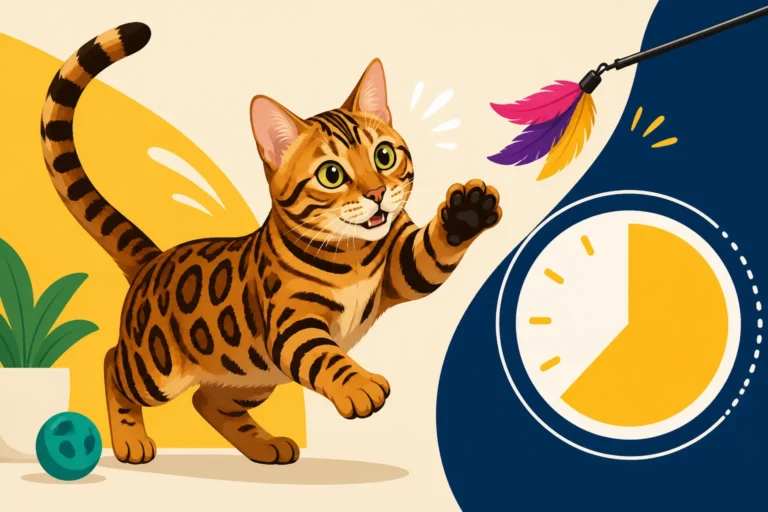
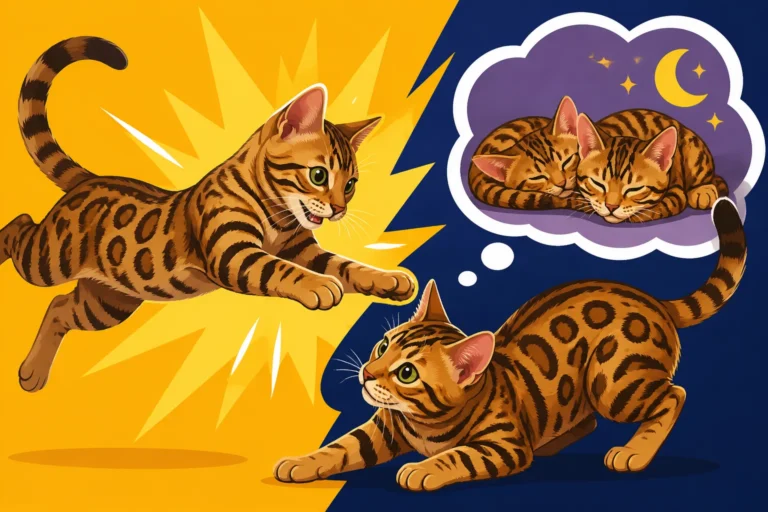
Think about a wild predator. Survival hinges on understanding its environment and the actions of others within it. An Asian Leopard Cat in its natural habitat would constantly observe its prey, its rivals, and even its own species, learning hunting techniques, safe paths, and potential dangers. This isn't just idle curiosity; it's a fundamental survival mechanism. When you bring a Bengal cat into your home, this deep-seated instinct doesn't disappear; it simply recontextualizes. Instead of watching a squirrel climb a tree, your Bengal is watching you open the treat cupboard. They're processing the sequence of actions, the cause and effect, and filing it away for later. This intense focus and capacity for pattern recognition are what make them such quick learners and often, such mischievous masterminds. Their high energy levels also fuel this drive; a bored Bengal is a Bengal actively seeking new "puzzles" to solve, and observing you is often their first step. For more on their energy, you might read The Bengal Cat Is the Most Active Cat You Can Own.
This isn't just anecdotal fluff, either. Anyone who lives with a Bengal can attest to their problem-solving skills. They don't just randomly bat at things; they'll try different angles, different pressures, and different paw movements until they achieve their goal. This persistence is a direct result of their keen observation skills combined with their inherent intelligence. They watch, they plan, they execute, and sometimes, they even perfect.
How Bengal Cats Mimic Human Actions Around the House
It's almost eerie how well a Bengal can mimic complex human actions. What might seem like an accident the first time can quickly become a deliberate, repeated behavior once they've observed you enough. This mimicry isn't limited to simple tasks; they can string together multiple observations to achieve a goal.
The Door-Opening Masterminds
One of the most common, and often frustrating, examples of a Bengal cat learning by observation is their knack for opening doors. They watch you turn the doorknob, pull or push the door open, and they quickly grasp the mechanics. For a Bengal, a closed door isn't a barrier; it's a challenge, a puzzle waiting to be solved. They’ll stand on their hind legs, batting at the knob, or even leaping up to grasp it. If you have lever-style door handles, you're in for an even bigger challenge. These are often easier for a Bengal to manipulate, as they can simply hang from the lever or push it down with their weight. I've heard countless stories of Bengals systematically going through a house, opening every closed door, just because they can. They aren't trying to be naughty; they're simply applying what they've learned and exploring their boundaries. It's a testament to How a Bengal Cat Opens a Door.
The Faucet Fanatics
Another beloved (or dreaded, depending on your perspective) Bengal trait is their fascination with water, and by extension, their ability to turn on faucets. They'll sit and watch you in the bathroom, mesmerized by the running water. They see you turn the handle, the water magically appears, and they immediately understand the connection. It won't be long before they're attempting to replicate your actions. Many Bengal owners wake up to the sound of running water because their clever cat has figured out how to twist a tap or push a lever on a sink faucet. It's not just for drinking; they love to play in the running water, splashing and batting at the stream. This behavior stems from their wild ancestry and is a perfect example of their observational skills put to playful (and sometimes messy) use. This behavior is so common, it's worth exploring Why a Bengal Cat Turns on a Faucet.
The Great Object Retrieval
Have you ever "lost" your car keys, only to find them later under a sofa cushion or in a shoe? Chances are, your Bengal cat might have been responsible. They observe where you place things, especially small, interesting objects that catch their eye. They watch you pick up your wallet, put your phone on the charger, or place a hair tie on the counter. And then, once your back is turned, they apply their observational learning to "retrieve" these items. They might not understand the purpose of your keys, but they understand that you interact with them, making them fascinating targets for play. They learn where you keep them, how you pick them up, and then they'll often carry them off to their favorite hiding spot. It's truly impressive how well they can memorize locations and replicate the act of "taking" something. For more on this, check out Which Objects a Bengal Cat Brings Back.
Securing Your Home and Providing Constructive Outlets
Living with a highly intelligent, observant cat like a Bengal means being proactive. What they learn from watching you can be incredibly entertaining, but it can also lead to destructive behaviors or even unsafe situations if not managed correctly.
Child Locks and Cabinet Proofing
Because Bengals are so adept at figuring out mechanisms, standard child locks designed for toddlers often aren't enough to deter a determined Bengal. They'll watch you open them, try to replicate the push-and-slide or squeeze-and-pull motions. You'll need heavy-duty, robust latches for cabinets and drawers, especially those containing food, medications, or anything potentially dangerous. I've found that combination locks or magnetic key locks tend to be more effective than simple plastic clips. Don't underestimate their dexterity; they can use their paws and even their mouths to manipulate latches. Always assume they can open something if they watch you do it. This proactive approach is key to How to Cat Proof Cabinets From a Bengal Cat.
Securing trash cans is another must. They'll observe you lifting the lid, dropping things in, and closing it. Many a Bengal has learned to tip over a trash can or even lift a swinging lid to explore its contents. Invest in heavy, pedal-operated bins or those with secure, locking lids that require a more complex action to open than a simple push or pull.
| Human Action Observed | Potential Bengal Mimicry/Behavior | Suggested Solution |
|---|---|---|
| Opening lever-handle doors | Opening doors, escaping rooms | Install round knobs or vertical bolt locks |
| Turning on sink faucets | Turning on water, playing, flooding | Child-proof faucet locks, close bathroom doors |
| Opening cabinet doors | Accessing food, cleaning supplies | Magnetic or combination child safety locks |
| Picking up small items (keys, pens) | "Stealing" items for play/hiding | Store valuables in secure, closed drawers |
| Flushing toilet | Playing in toilet, wasting water | Keep toilet lids down, use toilet locks |
| Getting treats from a specific spot | Breaking into treat containers | Store treats in hard-to-open containers, high shelves |
Providing Constructive Outlets for Their Intelligence
Since their minds are always working, it’s vital to give your Bengal cat appropriate outlets for their intelligence and observational learning skills. This isn't just about preventing destructive behavior; it's about enriching their lives and making them happier, healthier cats.
- Puzzle Feeders: These are fantastic for Bengals. Instead of just devouring food from a bowl, a puzzle feeder makes them work for it, mimicking the mental challenge of hunting. They'll watch you load the feeder, see how the pieces move, and then apply their observational skills to figure out how to extract the kibble. Start with simpler ones and gradually introduce more complex designs. You can find a huge variety of these on platforms like Amazon, from slow-feeder bowls to intricate mazes. They truly challenge a Bengal's brain. For very smart Bengals, it might be tough to find Which Puzzle Feeder Beats a Bengal Cat.
- Cat Wheels: These are brilliant for channeling their physical energy, but also require a bit of observational learning. They watch you encourage them onto the wheel, see how it moves, and then quickly figure out how to propel themselves. Once they get the hang of it, many Bengals become obsessed with their wheel. It’s a great way for them to burn off steam and engage their minds. Consider the investment; What a Cat Wheel for a Bengal Cat Costs might surprise you, but it's often worth it.
- Vertical Space: Bengals love to climb and observe from high vantage points. Providing tall cat trees, wall-mounted shelves, and cat "superhighways" gives them safe spaces to watch the world go by. They'll observe you moving around the house from up high, feeling secure and engaged. This also helps satisfy their instinct to survey their territory, a behavior undoubtedly passed down from their wild ancestors. They love to see everything from above.
Encouraging Positive Observational Learning Through Training
The good news about a Bengal's intelligence and observational skills is that you can absolutely use it to your advantage for positive training! They are incredibly trainable cats, often more like dogs in their ability to learn commands and tricks.
The Power of Positive Reinforcement
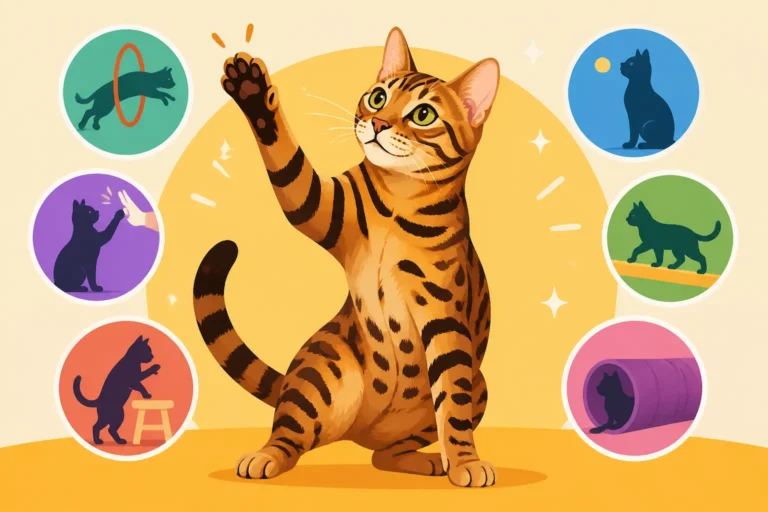
Clicker training is a perfect method for Bengals, leveraging their keen ability to associate sounds and actions with rewards. They watch your hand signals, listen to your verbal cues, and connect them with the click and the treat. You can teach them to "sit," "stay," "come," and even more complex tricks like "high five" or "fetch." Their observational skills mean they pick up on subtle body language and vocal inflections very quickly. When you consistently reward a desired behavior, they learn to repeat it, not just because of the treat, but because they've observed the successful outcome. For a deeper dive into this, check out How to Clicker Train a Bengal Cat.
Even simple things like leash training benefit from their observational nature. They watch you prepare their harness, pick up the leash, and head for the door. They quickly learn to associate these actions with an exciting outdoor adventure, making them more eager participants.
Establishing Predictable Routines and Cues
Bengals thrive on routine, largely because they are such observant creatures. They quickly learn the sequence of events in your day. They'll know when it's breakfast time because you always get out of bed at a certain hour, or when it's play time because you pick up a specific wand toy from Amazon. This predictability helps manage their expectations and reduces anxiety or destructive curiosity.
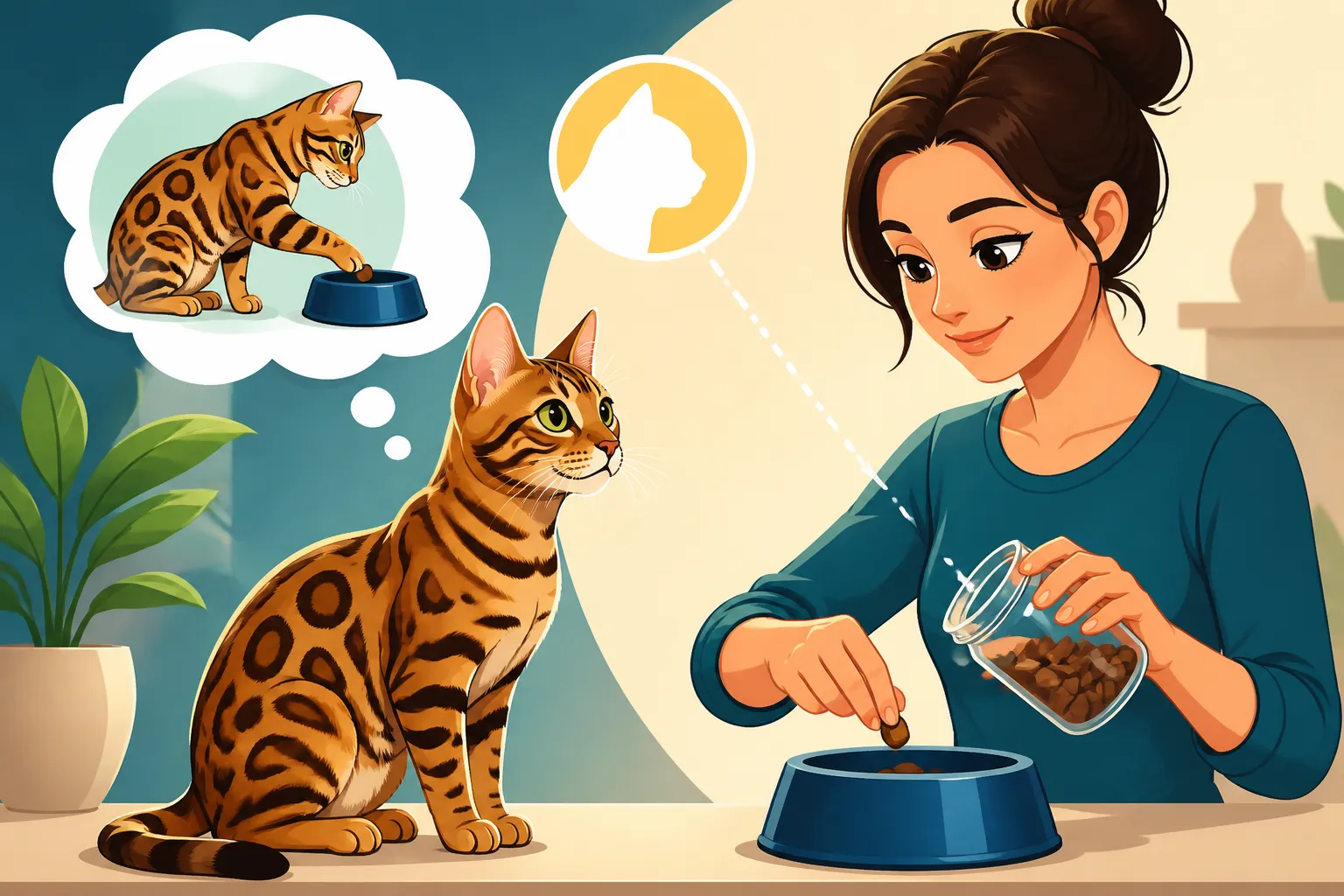
For example, if you always pick up their food bowl before feeding them, they will observe that pattern and begin to anticipate mealtime simply by seeing you approach the bowl. If you always use a specific word or gesture before a snuggle session, they'll learn to associate that cue with affection. This isn't just about obedience; it's about building a language of understanding between you and your intelligent companion. What a Bengal cat does all day is often driven by these learned routines and observations. Their ability to pick up on these patterns is truly a cornerstone of How Clever a Bengal Cat Is.
By understanding and channeling your Bengal's incredible observational learning abilities, you can create a home environment that is both stimulating for them and peaceful for you. It's a journey of mutual learning, where you learn to appreciate their unique intelligence, and they, in turn, learn to thrive within your shared world.
Disclaimer
This article is for general informational purposes only and does not constitute professional advice. Laws, prices and regulations vary by location and change over time. Consult a qualified professional for guidance on your specific situation.