How to Cat Proof Cabinets From a Bengal Cat
It’s a tale as old as time for Bengal cat owners: you walk into the kitchen, only to find a cabinet door ajar, contents rummaged through, and your clever feline looking utterly innocent, perhaps with a slight smudge of something questionable on their nose. Bengal cats aren't just curious; they're incredibly intelligent and persistent, turning cabinet doors into their personal puzzle boxes. This guide will walk you through robust strategies to cat-proof your cabinets, safeguarding both your belongings and your adventurous Bengal.
Why Your Bengal Cat Sees Cabinets as Opportunities
Let's be honest, for many cats, a closed cabinet is just a closed cabinet. But for a Bengal, it's a challenge, an un-climbed mountain, a hidden treasure chest. Understanding why your Bengal is so drawn to exploring these off-limits spaces is the first step in effectively thwarting their efforts. It’s not just naughtiness; it’s deeply rooted in their unique personality and instincts.
The Inherent Curiosity and Intelligence of Bengals
Bengal cats are renowned for their sharp minds and boundless curiosity, traits that trace back to their wild Asian Leopard Cat ancestry. This isn't your average house cat's casual sniff around a new object. A Bengal's curiosity is an intense, investigative drive. They don't just wonder what's inside a cabinet; they actively strategize on how to find out. We’re talking about an animal that views obstacles as invitations to learn and conquer.
They're incredibly observant, watching your every move. Have you ever noticed your Bengal intensely focused as you open a cupboard for a snack or pull out cleaning supplies? They're logging that information, noting how the handle turns, how the door swings, and the satisfying click of it closing. They learn by watching, and then they experiment. It's truly fascinating, if not a little infuriating, to witness their problem-solving skills in action. You might think you’ve got a secure latch, but given enough time and motivation, a Bengal will often deduce how to bypass it. They possess an almost dog-like ability to understand cause and effect, which makes them formidable opponents in the battle of wits over your pantry. If you want to know more about their smarts, check out How Clever a Bengal Cat Is.
High Activity Levels and Boredom as Motivators
A bored Bengal cat is a destructive Bengal cat, and an active Bengal cat needs constant mental and physical stimulation. If their environment isn't providing enough outlets for their energy and intellect, those cabinets become an irresistible target. It’s not necessarily malice; it’s simply redirection of their formidable drive.
Imagine a Bengal cat with an hour of intense play in the morning, then left alone for the rest of the day in a quiet house. That restless energy doesn't just dissipate. It funnels into exploring every nook and cranny, looking for adventure. Opening cabinets offers a thrill: new smells, new textures, new spaces to investigate. It breaks the monotony. Perhaps they hear a crinkle of a bag, a forgotten treat, or just the exciting clang of bottles, and suddenly, the cabinet is the most interesting thing in the house. This pursuit becomes a self-rewarding game, especially if they occasionally find something interesting to bat around or, worse, something to chew on. Ensuring your Bengal has plenty of appropriate outlets is paramount; consider reading How Much Enrichment a Bengal Cat Actually Needs.
Identifying Your Cabinet Vulnerabilities
Before you rush out and buy every child lock on the market, take a moment to assess your home from your Bengal's perspective. Not all cabinets are created equal, and some pose a greater risk than others, both in terms of ease of access and the dangers they contain.
Which Cabinets Are Most at Risk
Think like a Bengal. They're masters of observation and opportunism. Cabinets that are at floor level or within easy jumping distance are prime targets. Any cabinet with a simple knob or, even worse, a loose handle, is practically an open invitation. If it's a frequently accessed cabinet, your Bengal has likely had ample opportunity to study its mechanics.
For example, the kitchen pantry, often filled with intriguing food smells, is usually the first place they'll target. Cleaning supply cabinets, while less appealing in terms of scent, can be easily breached if they have flimsy magnetic closures or simple child-proof latches that clever paws can manipulate. Bathroom vanity cabinets, especially those with medications or small, shiny objects, also rank high on the list. These are the spaces where a Bengal's intelligence and dexterity are truly tested, and often, they excel. Any cabinet that contains things they deem "toys" or "prey" will be relentlessly pursued. You might be surprised at What a Bengal Cat Steals Most Often once they get access!
Dangers Lurking Inside Accessible Cabinets
The real reason we go to such lengths to cat-proof is safety, not just tidiness. Your Bengal's curiosity can put them in serious danger. Household chemicals are at the top of this list. Bleach, detergents, drain cleaners, oven sprays – these are incredibly toxic and can cause severe burns, internal damage, or worse, if ingested. Even seemingly innocuous items like dish soap or glass cleaner can lead to upset stomachs or skin irritation.
Beyond cleaning supplies, think about medications. Over-the-counter pain relievers, prescription drugs, or even pet medications can be deadly if consumed in incorrect doses by a curious cat. Food items can also be dangerous: chocolate, onions, garlic, grapes, and xylitol-containing products are all toxic to cats. Even human-grade vitamins or supplements can be harmful. Small, ingestible items like rubber bands, hair ties, or plastic bags are choking hazards or can cause intestinal blockages. It’s not just about keeping your pantry neat; it’s about protecting your adventurous family member from a trip to the emergency vet.
Choosing the Right Cabinet Locks
Okay, so we understand the why and the what. Now, let's get to the how. When it comes to cabinet locks, it's not a one-size-fits-all solution, especially with a cat as ingenious as a Bengal. You'll need to consider durability, ease of use for humans (without being easy for cats!), and the type of cabinet door you have.
Internal vs. External Latches
There are generally two main categories of cabinet locks: internal and external. Each has its pros and cons, and your choice might depend on your aesthetic preferences and how determined your Bengal is.
Internal latches are installed inside the cabinet, completely out of sight. They typically involve a latching mechanism on the inside that engages when the door is closed, requiring a human to either press a button or use a magnetic key to release it. These are fantastic for maintaining a sleek, uncluttered look in your kitchen or bathroom. The biggest advantage is that your Bengal can't see the mechanism, making it much harder for them to figure out. Think of magnetic locks: you hold a special key to the outside of the cabinet, and it releases the hidden latch inside. These are often strong and very effective. However, installation can be a bit more involved, often requiring drilling. You'll also need to keep track of that magnetic key!
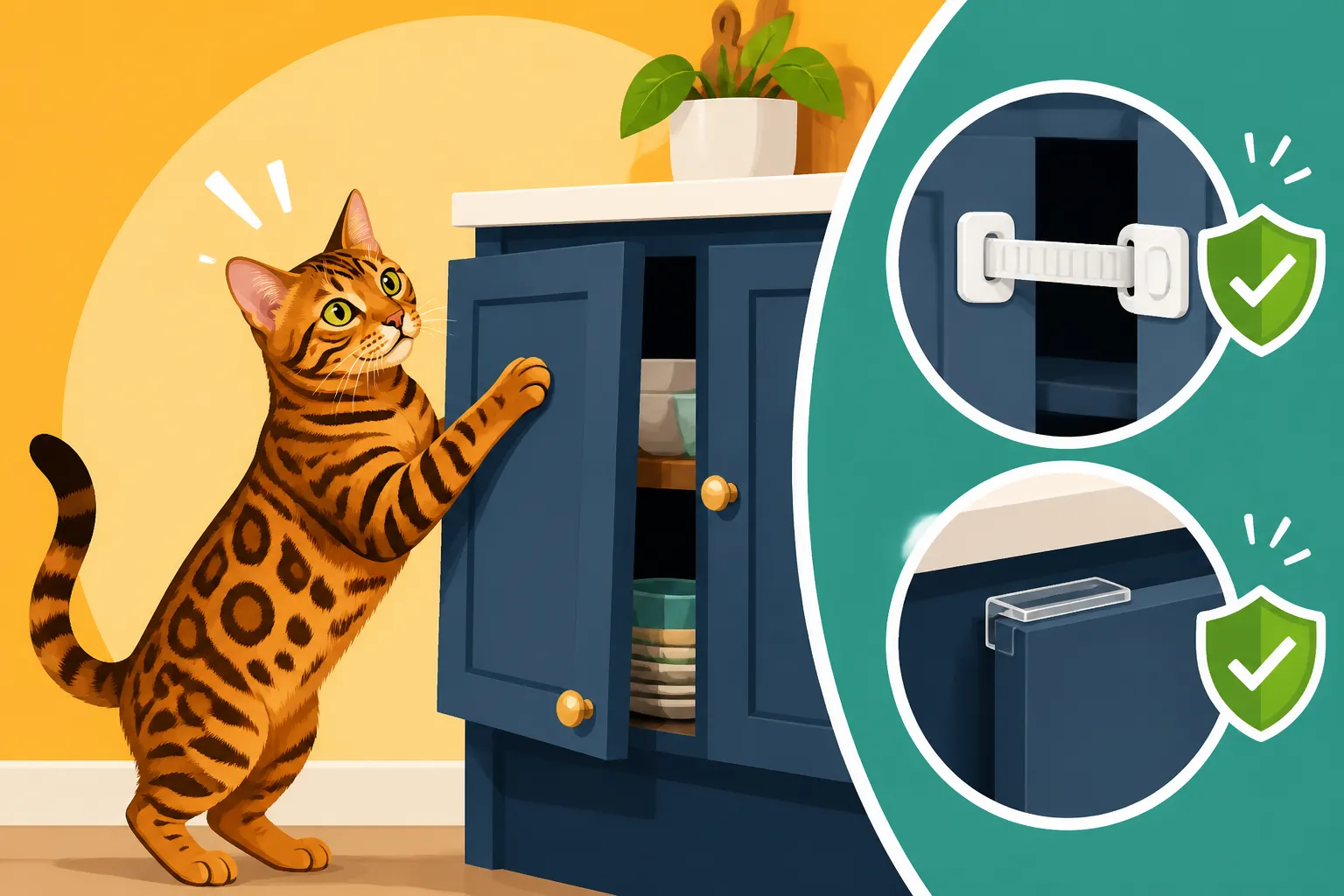
External latches, on the other hand, are visible on the outside of the cabinet. These often consist of a strap or a U-shaped latch that wraps around the handles or knobs, or a simple plastic clip that snaps onto the edges of the doors. They are usually much easier to install, often with adhesive, and require no tools. They're also generally less expensive. The downside is their visibility, which can disrupt your home's aesthetic. More importantly, because the mechanism is visible, a clever Bengal can sometimes study and eventually manipulate them. Some Bengals have been known to chew through plastic straps or learn to unhook simple latches with their paws. If your Bengal is particularly persistent, these might only be a temporary solution. You can find a wide variety of both types of locks on Amazon, making it easy to compare options.
Child-Proof Locks That Can Deter Cats
Many child-proofing solutions work surprisingly well for Bengals, simply because they're designed for little hands and curious minds that often mimic a cat's problem-solving approach.
-
Magnetic Cabinet Locks: These are, in my opinion, the gold standard for clever cats. They install on the inside of the cabinet, completely hidden, and require a magnetic "key" to open. Without the key, the cabinet stays firmly shut. The beauty of these is that your Bengal can't see how it works, so they can't replicate the motion. They'll pull and paw, but the door won't budge. This lack of visual feedback is a huge deterrent. The keys can be mounted on the fridge or a nearby wall so they're always accessible to you, but out of reach of your cat. Ensure you purchase a set that includes multiple keys, just in case one goes missing.
-
Adhesive Latches/Straps: These are quick and easy to install, often requiring no tools, which is a huge plus for renters or those who don't want to drill holes. They come in various designs, from flexible straps that loop around knobs to rigid plastic pieces that stick to the side of the cabinet and engage a latch. While excellent for quick fixes, the adhesive strength is crucial. A persistent Bengal can pull hard, and if the adhesive isn't industrial-strength, they might eventually rip it off. Opt for brands with strong, reputable adhesive, and give it at least 24 hours to cure before testing. These are widely available on Amazon and in most hardware stores.
-
Spring-Loaded Catches: These are internal latches that snap closed when you push the cabinet door shut. To open, you typically push down on a small lever inside. These are great because they’re hidden, but some Bengals with fine motor skills can actually get a paw in the crack of the door and flick the lever if there's enough give. They are more secure than a simple magnet, but not quite as foolproof as the magnetic key system for truly determined cats.
Ultimately, the best approach might be a combination. Use strong magnetic locks on highly dangerous cabinets (cleaning supplies, medications) and perhaps adhesive straps on less critical ones (like your Tupperware drawer) if your Bengal isn't too determined.
Table: Comparing Common Cabinet Lock Types for Bengals
| Lock Type | Pros | Cons | Bengal Cat Effectiveness | Best For |
|---|---|---|---|---|
| Magnetic Locks | Hidden, strong, no visible mechanism. | Requires key, drilling (usually), more involved installation. | Excellent | High-risk cabinets (chemicals, medications, food). |
| Adhesive Straps/Latches | Easy install, no drilling, affordable. | Visible, adhesive can fail, Bengals can sometimes manipulate/chew. | Fair to Good | Low-risk cabinets, temporary solution, non-destructive Bengals. |
| Spring-Loaded Catches | Hidden, stronger than basic magnetic. | Can be manipulated by very clever paws with enough door gap, requires drilling. | Good | Cabinets with non-dangerous items, but need security. |
| External Slide Locks | No install, removable, inexpensive. | Very visible, can be noisy, some Bengals learn to slide them open. | Fair | Knobs/handles that are close together, very temporary. |
Beyond Locks: Holistic Cat-Proofing Strategies
While locks are your first line of defense, a truly Bengal-proof home requires a multi-faceted approach. Think of it as creating an environment where they're less motivated to break into cabinets, and where other, more appropriate, avenues for their energy and intelligence exist.
Diversion and Enrichment: Give Them Better Things to Do
A Bengal cat that is properly stimulated is a less mischievous Bengal cat. Their high energy levels and sharp minds demand constant engagement. If you're struggling with them breaking into cabinets, it's a strong sign they might be under-stimulated.
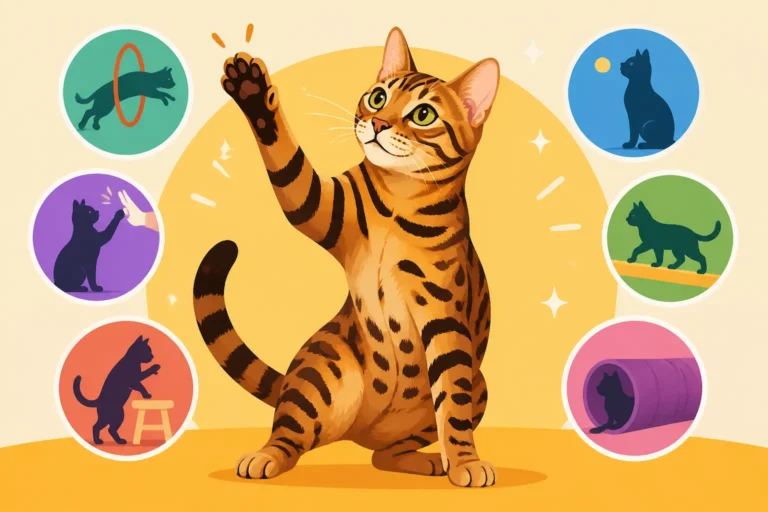
- Interactive Play: Dedicate significant time each day to active play with wand toys or laser pointers. This isn't just a casual toss of a toy; it needs to be vigorous, mimicking a hunt. Let them "catch" the toy at the end of each session to satisfy their prey drive. Multiple short play sessions throughout the day are often more effective than one long one.
- Puzzle Feeders: These are fantastic for engaging a Bengal's intellect. Instead of simply eating from a bowl, they have to work to get their food, solving a puzzle in the process. This taps into their problem-solving skills in a safe and rewarding way. There are many types, from simple treat balls to complex multi-step feeders. Start simple and work your way up. Check out Which Puzzle Feeder Beats a Bengal Cat for ideas on challenging your clever feline.
- Vertical Space: Bengals love to climb and observe their domain from high vantage points. Providing tall cat trees, wall-mounted shelves, or cat hammocks can give them appropriate outlets for their climbing instincts. A bored cat on the floor is more likely to investigate cabinets than a cat surveying its kingdom from a perch. Ensure any shelving is securely mounted, as Bengals can be quite robust climbers. How High a Bengal Cat Can Jump is something to keep in mind!
- Window Perches: A good view of the outside world can provide hours of entertainment for a Bengal. Bird feeders placed strategically outside a window can offer endless "cat TV" and keep their minds occupied.
Remember, a tired Bengal is often a good Bengal. Providing these alternative outlets can significantly reduce their inclination to explore off-limits areas.
Secure Storage and Eliminating Temptation
Sometimes, the best offense is a good defense. Beyond locks, rethinking what you store in easily accessible cabinets, and how you store it, can make a big difference.
- Move Dangerous Items: If possible, relocate highly dangerous items (like cleaning supplies, chemicals, and medications) to high, locked cupboards that are truly out of reach, or even to a different room that your Bengal cannot access at all. The fewer dangerous items behind lower cabinet doors, the less risk there is if a lock fails or is circumvented.
- Use Airtight Containers: For any food items in your pantry, store them in sturdy, airtight containers. Not only does this keep food fresher, but it also contains tempting smells that might draw your Bengal to the cabinet in the first place. A Bengal’s sense of smell is keen, and if they can whiff that bag of treats or kibble, they will be relentlessly motivated. Plastic bins with secure lids, or even glass jars, work wonders.
- Clutter Control: A cluttered cabinet is often an easier target for a Bengal to get a paw into and grab something. Keep cabinet interiors tidy and organized. This also makes it easier for you to spot if your feline friend has managed a breakout.
- Consider a Catio: If your Bengal is constantly trying to get outside or seems restless indoors, a catio (an enclosed outdoor patio for cats) can provide a safe and stimulating environment. It gives them fresh air, new smells, and a larger space to explore and climb, diverting their attention from indoor cabinets. Learn more about why A Catio Is the Answer to a Bengal Cat.
Consistent Training and Redirection
While "training" a cat to stay out of cabinets might seem like a futile endeavor, consistency is key, and Bengals are highly trainable. It's about redirection and positive reinforcement.
- Immediate Redirection: The moment you see your Bengal attempting to open a cabinet, gently but firmly redirect their attention. Pick them up and move them to a designated play area, or initiate a play session with a favorite toy. The goal is to associate cabinet-opening with being redirected to something else, not necessarily punishment.
- Positive Reinforcement for Good Behavior: When your Bengal is playing with appropriate toys or using their scratching post, lavish them with praise and treats. You want them to understand that engaging with their designated enrichment items leads to positive outcomes.
- Discouraging Sprays (Use with Caution): Some owners use motion-activated air canisters or bitter apple sprays on cabinet surfaces to create an unpleasant experience without being harmful. However, use these sparingly and observe your cat's reaction. Some cats become fearful of the area, which isn't ideal. The goal is deterrence, not fear.
- Never Punish: Yelling, hitting, or scolding your Bengal will not work. It will only make them fearful of you and potentially more sneaky in their cabinet raiding. They don't understand "bad" behavior in the human sense; they're simply acting on instinct and curiosity. Redirection and prevention are always more effective than punishment.
By combining physical barriers with environmental enrichment and consistent behavioral strategies, you can create a home that is both safe for your clever Bengal and preserves your sanity (and your cabinet contents!).
Maintaining the Peace: Long-Term Solutions
The battle against the Bengal bandit isn't a one-and-done affair. These cats are smart, adaptable, and perpetually curious. What works today might need reinforcement or an upgrade tomorrow. Thinking long-term is crucial for a harmonious household.
Regular Inspection and Upgrades
Just like a security system, your cat-proofing measures need regular checks. What once seemed impenetrable might, over time, show signs of wear or simply become a new puzzle for your ever-learning Bengal.
Make it a habit to periodically inspect all your cabinet locks and latches. Are adhesive straps starting to peel? Is a magnetic lock weakening or becoming stiff? Have any of the plastic child locks developed chew marks that hint at an impending breach? Bengals are incredibly strong and persistent, and even the most robust locks can fail if given enough attention. A small crack in a plastic latch might be all it takes for a determined paw to exploit. If you notice any signs of compromise, don't wait for a full-scale breakout; replace or reinforce the lock immediately. Consider upgrading your locks as your Bengal matures and potentially becomes more adept at problem-solving. A kitten's clumsy attempts at opening a cabinet are far different from an adult Bengal’s calculated efforts. They often learn How a Bengal Cat Learns to Open a Cabinet over time, so you need to stay ahead of them.
Adapting to Your Bengal's Evolving Cleverness
Bengals are master learners. What they couldn't figure out at six months, they might easily conquer at two years old. This means your cat-proofing strategies need to evolve with their intelligence and dexterity.
A Bengal might initially be deterred by a simple external latch. But after weeks of observing you, tugging, and experimenting, they might suddenly figure out how to unclip it. This isn't a failure on your part; it's a testament to their incredible intelligence. Be prepared to upgrade to more sophisticated locks, like hidden magnetic ones, if simpler solutions are breached. Observe your Bengal's methods: do they try to pry with a paw? Chew at the plastic? Push with their nose? Understanding their approach can help you choose a lock that specifically thwarts their current tactics. This ongoing adaptation is part of the unique challenge and joy of living with such a brilliant feline companion. Don't get discouraged if a lock that worked for months suddenly fails; it just means your Bengal has had a breakthrough!
The Importance of Consistent Enrichment Over Time
The need for mental and physical enrichment isn't something your Bengal "grows out of." While they might mellow slightly with age, their core intelligence and energy levels remain high throughout their lives. Neglecting their enrichment needs can lead to a resurgence of unwanted behaviors, including cabinet raiding.
As your Bengal ages, their play might shift from vigorous chasing to more puzzle-oriented games. Continue to provide a variety of interactive toys, puzzle feeders, and plenty of vertical space. Even a senior Bengal benefits from daily engagement that challenges their mind. Consider new types of puzzle toys or rotating their current selection to keep things fresh and exciting. A Bengal that is consistently stimulated and happy is far less likely to turn their keen mind toward trying to break into your cupboards. This commitment to their well-being ensures not only the safety of your home but also a richer, more fulfilling life for your extraordinary cat.
Disclaimer
This article is for general informational purposes only and does not constitute professional advice. Laws, prices and regulations vary by location and change over time. Consult a qualified professional for guidance on your specific situation.