Whether a Bengal Cat With PRA-b Lives a Normal Life
Progressive retinal atrophy in Bengal cats causes slow blindness through a CEP290 gene mutation, yet pets adapt using heightened senses.
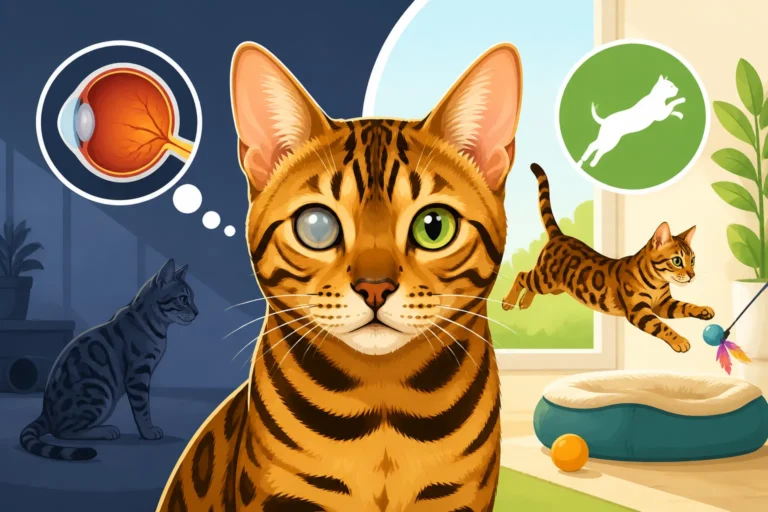
Progressive retinal atrophy in Bengal cats causes slow blindness through a CEP290 gene mutation, yet pets adapt using heightened senses.
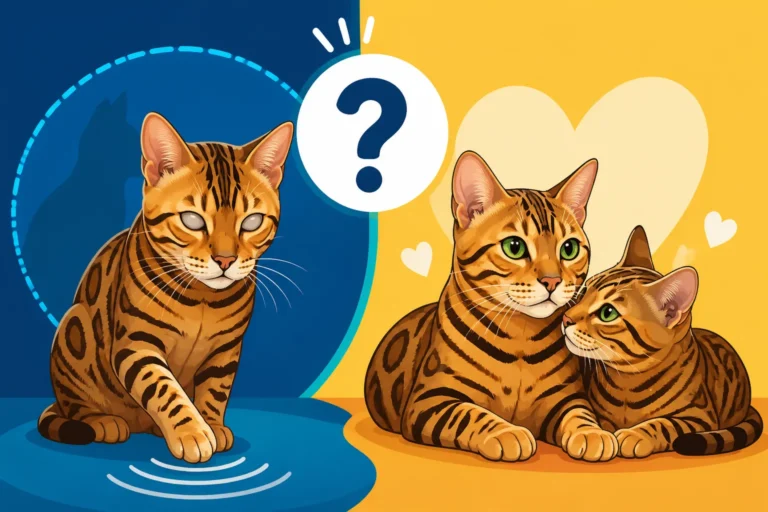
Blind Bengal cat companionship needs, sensory adaptation methods, and environmental consistency rules for vision loss.
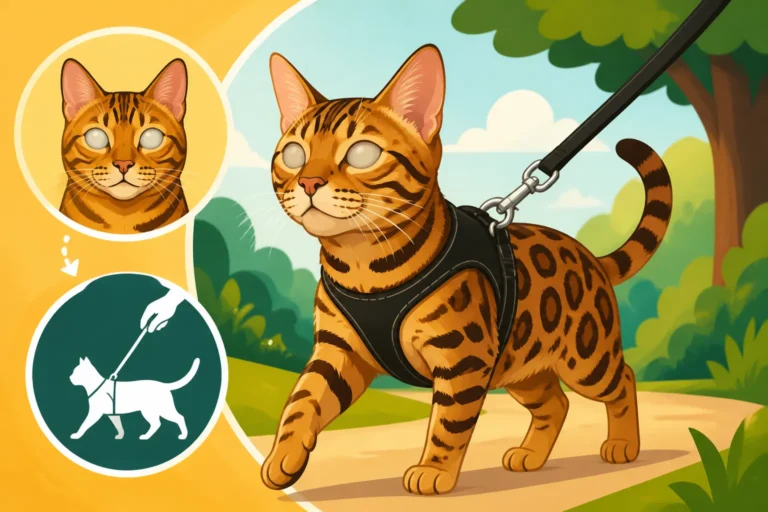
Leash walking a blind Bengal cat is possible because their enhanced hearing, smell, and whiskers help them navigate outdoors.
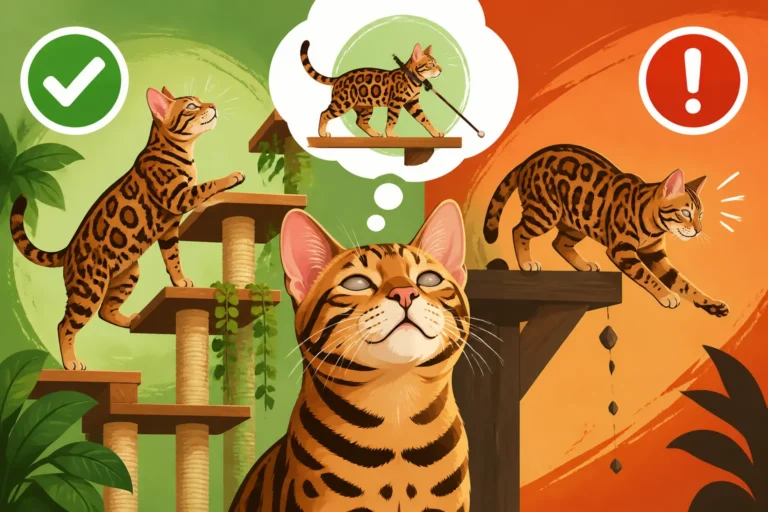
Blind Bengal cats retain their natural climbing instincts and can navigate vertical spaces safely using heightened senses.
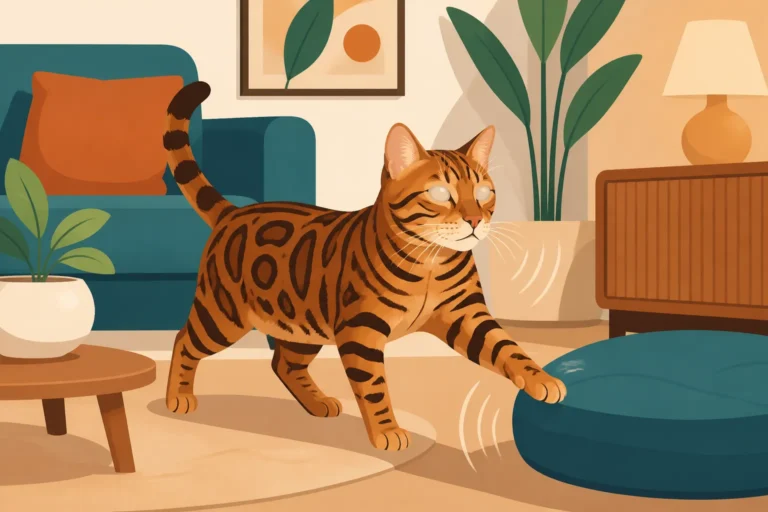
Practical home layout changes help a blind Bengal cat navigate rooms safely using hearing, smell, and sensitive whiskers.
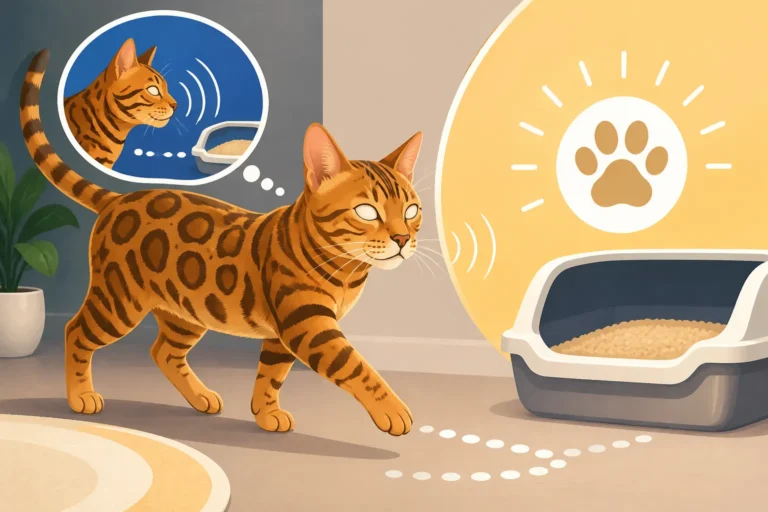
Blind Bengal cats use smell, touch, and hearing to find litter boxes after losing vision from conditions like Progressive Retinal Atrophy.
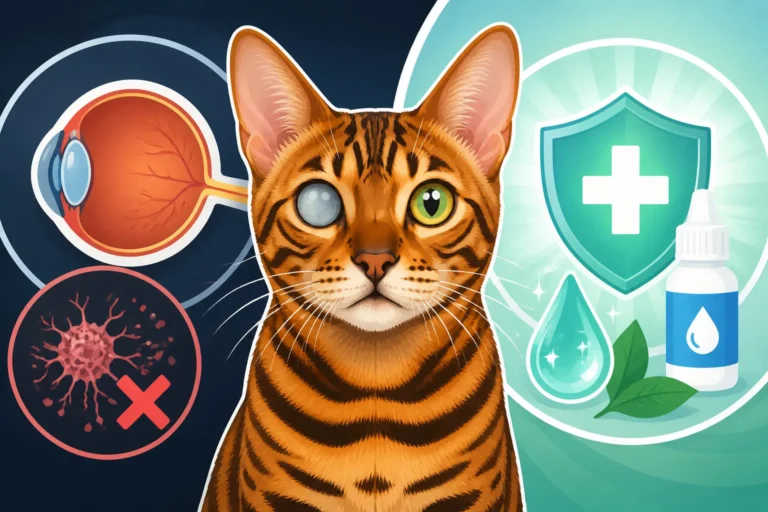
Progressive retinal atrophy in Bengal cats causes irreversible vision loss and currently has no known medical treatment.
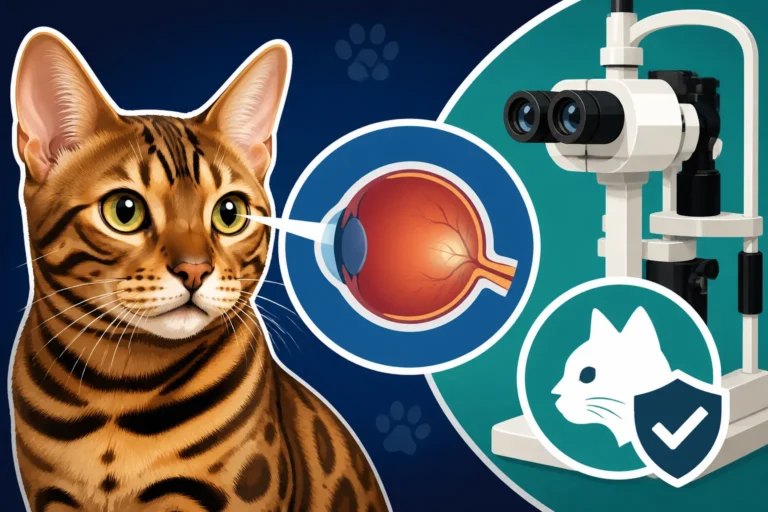
Veterinary eye exams often fail to detect early Progressive Retinal Atrophy in Bengal cats because the genetic condition damages cells microscopically.
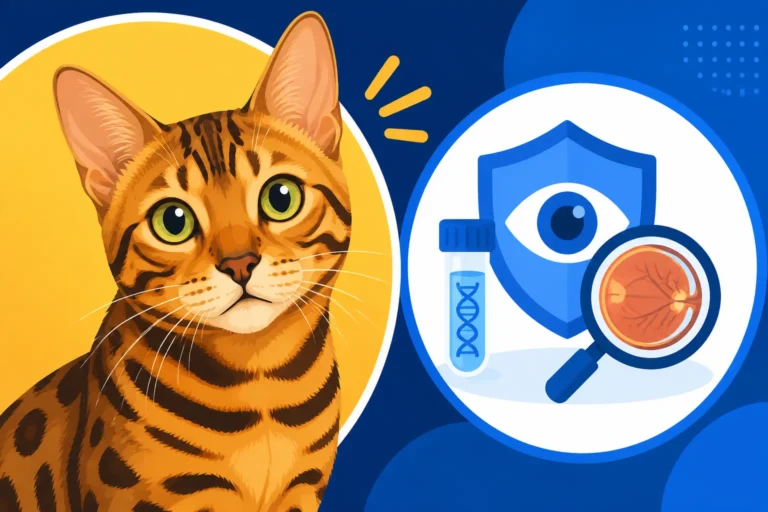
PRA-b testing explains inherited progressive retinal atrophy in Bengal cats, causing eventual blindness from degenerating photoreceptors.
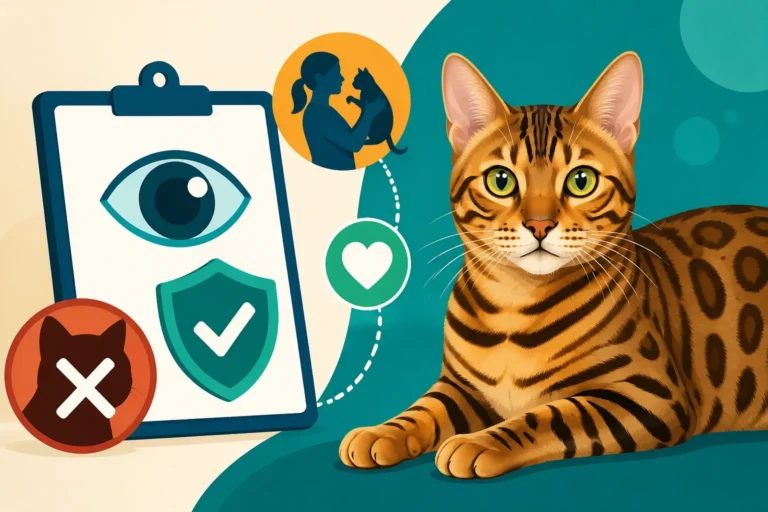
Bengal cat PRA-b test results show autosomal recessive gene mutations that cause hereditary blindness and irreversible vision loss.