Whether the Bengal Cat Is a Healthy Breed
Bengal cat health involves genetic predispositions inherited from wild ancestors and domestic cats that require proactive veterinary monitoring.
Know what to watch for.
Breed-specific conditions, screening and DNA tests, what surgery actually costs, and the daily habits that stretch a healthy lifespan.
Bengal cat health involves genetic predispositions inherited from wild ancestors and domestic cats that require proactive veterinary monitoring.
Caring for a senior Bengal cat past age ten involves monitoring muscle mass loss, dental health, and changes in activity rhythms.
Bengal cat lifespan typically ranges from twelve to sixteen years, influenced by genetics, environment, and veterinary care.
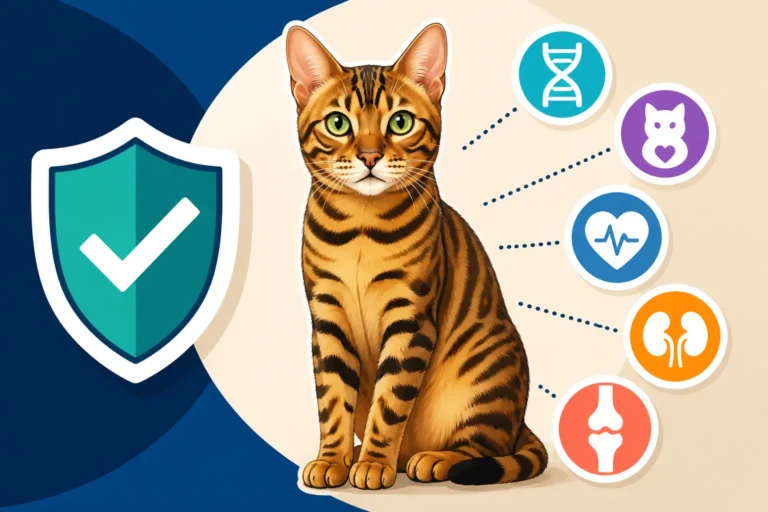
Responsible Bengal cat breeding standards require specific genetic tests to ensure healthy kittens and reduce inherited disease risks.
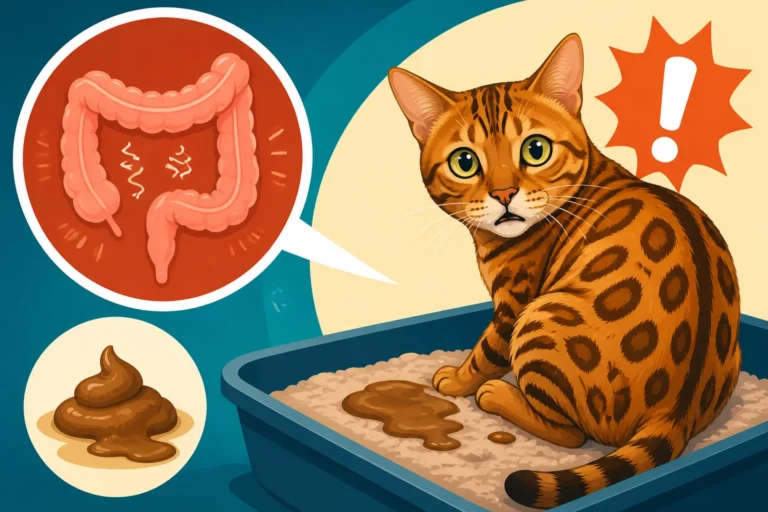
Chronic diarrhea in Bengal cats stems from wild ancestry and sensitive guts, requiring specific veterinary management steps.
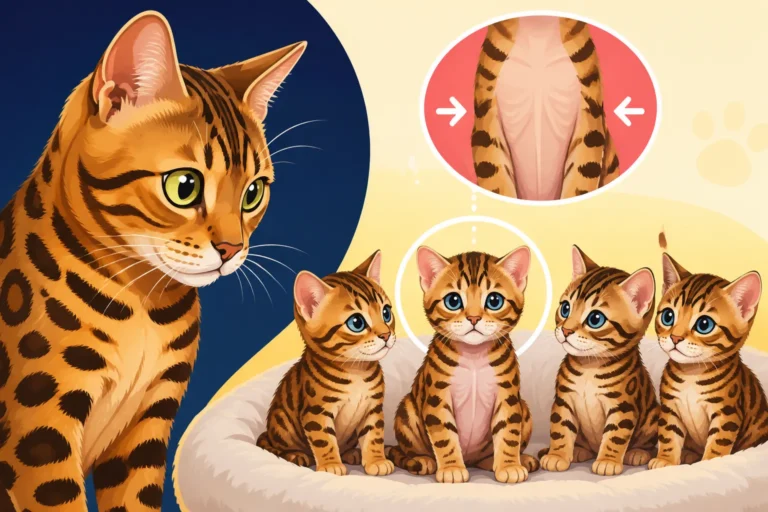
Flat Chested Kitten Syndrome causes rib cage flattening in newborn Bengal cats, constricting internal organs and impairing breathing.
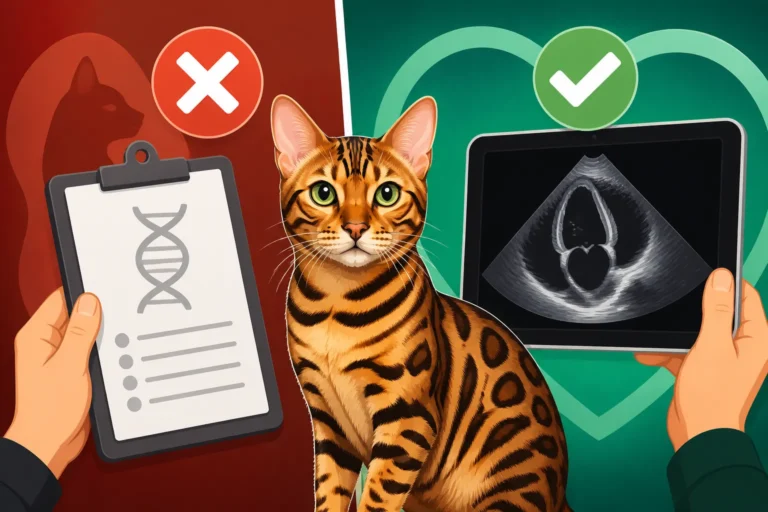
Bengal cat heart disease screening requires an echocardiogram because a gene test alone cannot detect Hypertrophic Cardiomyopathy.
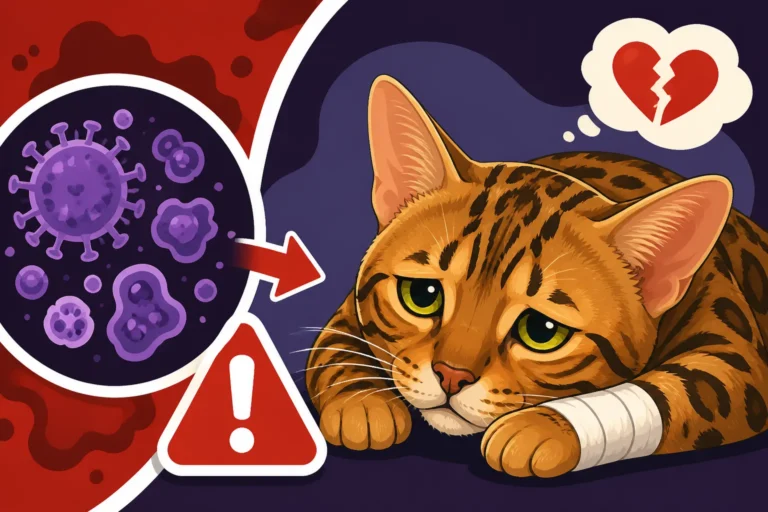
Hypertrophic cardiomyopathy causes abnormal heart muscle thickening in Bengal cats, impairing function and reducing chamber size.
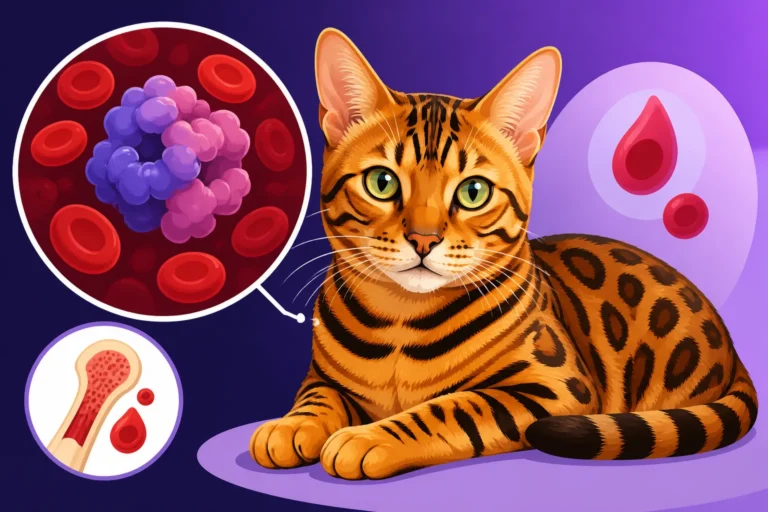
Pyruvate kinase deficiency in Bengal cats is an inherited blood disorder causing hemolytic anemia through red blood cell destruction.
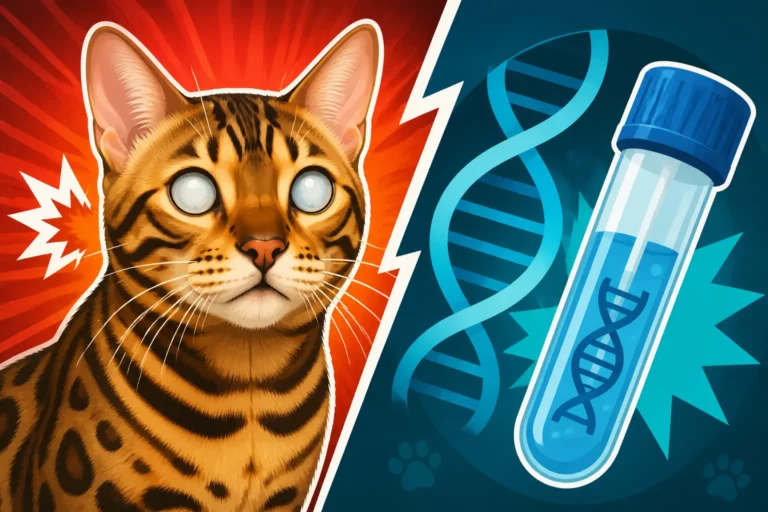
Progressive Retinal Atrophy in Bengal cats causes blindness by age two, but a DNA test identifies the faulty CEP290 gene.