How a Bengal Cat Rides in a Car
Taking your adventurous Bengal cat on a car ride can feel like preparing for a high-stakes expedition, rather than a simple trip to the vet or a vacation. Many Bengal owners find themselves battling a cacophony of yowls, frantic attempts to escape, or even car sickness that makes any journey a nightmare. This guide will help you understand the unique challenges of traveling with a Bengal in a car and provide practical, empathetic strategies to make every ride safer, calmer, and hopefully, even enjoyable for both of you.
Understanding the Bengal Cat's Unique Car Travel Challenges
Let's be real: your Bengal isn't your average housecat who might quietly curl up in a carrier and doze off. Bengals are a breed known for their incredible energy, sharp intelligence, and an insatiable curiosity that often borders on mischievous. These very traits, while endearing at home, can turn a simple car journey into a truly stressful event if not managed proactively.
Why Bengals Resist the Confines of a Carrier
The moment that carrier comes out, many Bengals know what's up. For a cat that thrives on exploration and often views every corner of your home as a personal jungle gym, being confined to a small space can feel like a direct affront to their wild spirit. They're not just being dramatic; their instincts tell them that being trapped limits their ability to react to perceived threats or opportunities. This is why you often hear those piercing, demanding "Bengal shouts" from the carrier – it's their way of protesting the lack of control and freedom. It's frustrating when you just need them to cooperate, but try to remember it's coming from a place of instinct.
Think about it: a cat that will open cabinets, doors and drawers (A Bengal Cat Opens Cabinets, Doors and Drawers) at home is not going to appreciate being locked into a small box on wheels. They're wired to investigate, to move, to be in control of their environment. A carrier, by its very nature, restricts all of that. Their high intelligence means they're constantly processing their surroundings, and a moving car, filled with unfamiliar sights, sounds, and smells, can be overwhelming without proper desensitization.
The Overwhelming Sensory Experience of a Car
A car ride is a sensory overload for any cat, but for a highly perceptive Bengal, it can be particularly intense. The constant motion, the shifting light, the unfamiliar smells of gasoline or cleaning products, and the loud, rumbling engine are all amplified. Their keen hearing picks up every passing car, every horn, every rumble. Their excellent vision processes the blur of the outside world, which can be disorienting. This isn't just an inconvenience for them; it can be genuinely frightening or disorienting, leading to anxiety, vocalization, or even motion sickness.
Imagine if you were suddenly put into a vibrating box, blindfolded (or rather, unable to make sense of the rapidly changing scenery), and subjected to strange noises and smells, all while feeling trapped. That's a bit like what your Bengal experiences. It's no wonder they express their displeasure loudly! Their instincts for escape or defense kick in, and since they can't physically escape, they often resort to loud protests. It’s important to acknowledge this isn't just naughtiness; it's a genuine reaction to a very unnatural situation for them.
Preparing Your Bengal Cat for Car Journeys
Given their unique personalities, you can't just spring a car ride on a Bengal and expect them to be thrilled. Preparation is key, and it often involves a gradual process of desensitization and positive association. Starting early, if possible, makes a huge difference, but even older Bengals can learn to tolerate (and sometimes even enjoy) car travel with patience and consistency.
Desensitization: Making the Carrier a Happy Place
The first step in car travel is always the carrier itself. If the carrier only appears when it's time for the dreaded vet visit, your Bengal will immediately associate it with negative experiences. The goal is to transform the carrier into a neutral, or even positive, space. Start by leaving the carrier out in a common area of your home all the time, not just when you need it. Let them explore it at their leisure.
Make it comfortable. Put a soft blanket or a familiar towel inside – something that smells like home and you. You can try spraying a feline pheromone spray inside about 15-30 minutes before you want them to go in, which can help create a calming environment. Place treats or favorite toys just inside the entrance, then further inside, gradually encouraging them to enter on their own. Feed them meals near or inside the carrier. The more positive experiences they have with it, the less of a threat it becomes. Think of it as their safe den, not a prison. This process might take days or even weeks, so don't rush it. How Long a Bengal Cat Copes Alone can sometimes depend on how well-adjusted they are to their secure spaces, like a carrier.
Gradual Introduction to the Car Environment
Once your Bengal is comfortable with the carrier, it’s time to introduce the car itself. This also needs to be done in baby steps. First, take the carrier (with your Bengal inside, calm and happy) out to the car, but don't even start the engine. Just let them sit in the parked car for a few minutes. Offer treats and praise. The goal is simply to get them used to being in the car, safely contained. Repeat this a few times over several days.
Next, try starting the engine for a short period, still parked. Let them get used to the sound and vibration, all while offering reassurance and treats. Then, gradually work up to very short drives – literally just backing out of the driveway and pulling back in. Slowly increase the duration and distance of these "practice runs." Always keep the first few actual drives to destinations that are positive, like a fun walk at a quiet park if they're leash-trained, rather than immediately going to the vet. This helps build positive associations with the car itself.
Positive Reinforcement and Rewards
Throughout the entire process, positive reinforcement is your best friend. Every time your Bengal shows a calm behavior – sniffing the carrier, entering it, sitting quietly in the car – reward them immediately with a high-value treat, verbal praise, or a gentle pet (if they're receptive). Never punish them for vocalizing or showing anxiety; this will only make the situation worse and create more fear.
Using clicker training can be incredibly effective here. If your Bengal is already familiar with clicker training for other tricks (and many Bengals are quite adept at learning, see How Intelligent a Bengal Cat Is), you can use the clicker to mark desired behaviors, like settling in the carrier or remaining quiet in the car, followed immediately by a treat. This clear communication helps them understand what you want. Remember, consistency is vital. Short, frequent training sessions are much more effective than long, infrequent ones.
Essential Gear for Safe and Stress-Free Car Travel
Having the right equipment is non-negotiable for safe car travel with a Bengal. This isn't just about comfort; it's about their safety and preventing distractions that could lead to an accident. Investing in good quality gear can save you a lot of stress and potential heartache in the long run.
Secure Carriers and Car Seats
A sturdy, secure carrier is paramount. Look for one that is well-ventilated, easy to clean, and large enough for your Bengal to stand up, turn around, and lie down comfortably. Hard-sided carriers are generally safer as they offer more protection in case of impact, but some Bengals may tolerate a soft-sided carrier better if it feels more den-like. The carrier should be secured in the car, either with a seatbelt threaded through the handles or by placing it on the floor behind a front seat, to prevent it from sliding or becoming a projectile during sudden stops.
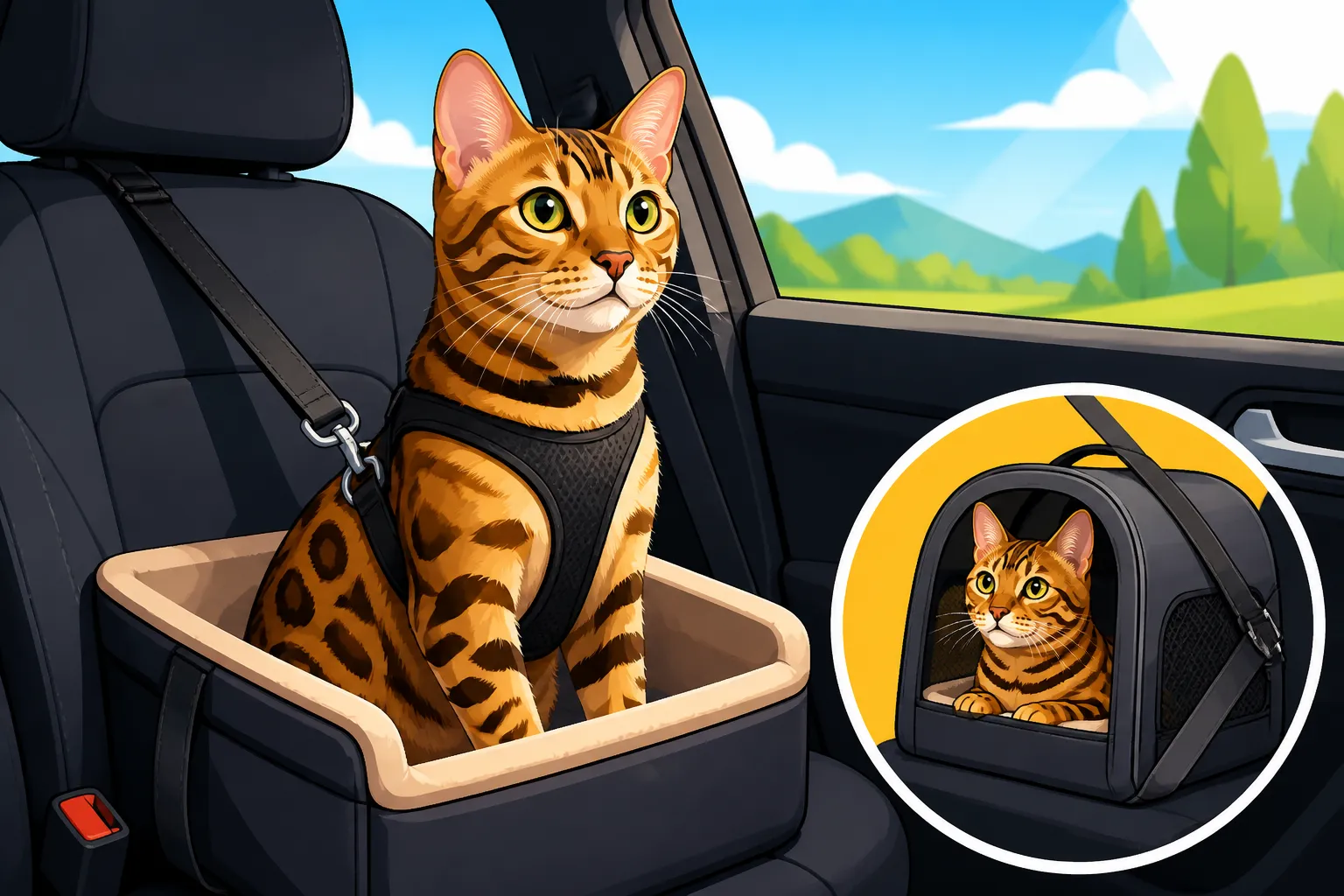
For Bengals who truly detest carriers and are well-behaved enough to not be a distraction, a dedicated cat car seat or booster seat with a secure harness attachment might be an option. These often lift the cat higher to see out the window, which can sometimes reduce anxiety or motion sickness in some individuals. However, the cat absolutely must be wearing a well-fitting, crash-tested harness that is then clipped directly to the car seat's attachment or a seat belt. Never let a cat free-roam in the car, and never attach a leash directly to a collar in a moving vehicle. You can find a wide variety of these options, from basic soft carriers to more elaborate car seats, often with detailed reviews, on platforms like Amazon.
| Carrier Type | Pros | Cons | Ideal For |
|---|---|---|---|
| Hard-Sided Plastic | Very durable, easy to clean, good protection, stackable. | Can feel confining, less flexible, may be noisy. | Regular travel, vet visits, cats prone to escapes. |
| Soft-Sided Fabric | More comfortable, lighter, collapsible for storage, cozy. | Less impact protection, harder to clean, can be chewed. | Short, less frequent trips, anxious cats needing comfort. |
| Backpack Carrier | Hands-free transport, good for walking distances to car. | Limited space, can be unstable in car, variable ventilation. | Public transport, short walks before car, small Bengals. |
| Car Seat/Booster | Allows cat to see out, feels less confined (with harness). | Only for calm, harness-trained cats; less crash protection than carrier. | Bengals who get anxious when they can't see, good travelers. |
Harness and Leash
Even if your Bengal is in a carrier, having a well-fitting harness is a good idea. Should an emergency happen and you need to get them out quickly, or if they somehow escape the carrier, a harness provides a safe way to control them. Bengals are escape artists, and a regular collar can easily be slipped. A sturdy, escape-proof harness is a must, especially if you plan to let them out of the carrier at rest stops or at your destination. A double-H or vest-style harness is often recommended for their secure fit.
If you envision your Bengal being one of those cool cats that Walks on a Leash, then practicing harness training at home is crucial long before you introduce it to car travel. Never use a harness for the first time in a stressful situation like a car ride. Always introduce it gradually and positively in a familiar environment. You'll find many reputable brands for cat harnesses on Amazon, often with sizing guides to ensure a snug fit for your lean, muscular Bengal.
Comfort Items and Enrichment
To make the car ride as pleasant as possible, bring along items that provide comfort and enrichment. A familiar blanket or bed that smells like home can be incredibly soothing. A favorite quiet toy can offer a distraction. For some Bengals, a puzzle feeder with a few treats might provide a short period of mental engagement, though this is usually better for a parked car or short, calm stretches of road, not intense driving.
Water is also crucial. For longer journeys, consider a no-spill water bowl or offer water regularly during stops. Dehydration can exacerbate stress and motion sickness. Some owners find that a pheromone spray designed for cats, applied to the carrier or a blanket, can help calm anxious felines by mimicking their natural calming scents. Remember, the goal is to create an environment that feels as safe and predictable as possible in an otherwise unpredictable situation.
Managing Car Sickness and Anxiety in Bengal Cats
Despite your best efforts in preparation, some Bengals will still struggle with car sickness or severe anxiety. It’s important to recognize the signs and have strategies in place to manage these issues, ensuring their well-being and reducing stress for everyone involved.
Recognizing Signs of Car Sickness and Anxiety
Your Bengal cat won't tell you in words that they're feeling nauseous or stressed, but their body language will. Signs of car sickness often include excessive drooling, licking lips, lethargy, vomiting, diarrhea, or unusual vocalizations (beyond their usual demanding chirps). They might pant rapidly or stare blankly.
Anxiety can manifest as excessive vocalization (the loud yowling or incessant meows that make you question your life choices), restlessness, hiding, trembling, rapid breathing, dilated pupils, or even aggression if they feel cornered. They might try to dig at the carrier or show frantic attempts to escape. Sometimes, a Bengal might become unusually quiet and withdrawn, which, while seeming calmer, can also be a sign of extreme stress. Being able to recognize these cues early allows you to intervene before the situation escalates.
Calming Techniques and Strategies
For anxiety, continuing with desensitization and positive reinforcement is paramount. For car rides, keep the car's temperature comfortable, avoid strong air fresheners, and drive smoothly, avoiding sudden stops or accelerations. Try covering part of the carrier with a blanket to reduce visual stimulation, especially for cats who get overwhelmed by the blur of passing scenery. Some cats do better if they can see out; others prefer a darkened, den-like space. Experiment to see what your Bengal prefers.
Music or a podcast at a low volume can sometimes help mask unsettling road noises. Talk to your cat in a calm, reassuring voice. If your Bengal is generally quite active and vocal, like many of their breed (see How Vocal a Bengal Cat Is), managing their energy levels before a trip might help. A vigorous play session before a car ride can sometimes tire them out enough to be calmer passengers, though you need to balance this with not causing them undue stress right before confinement.
When to Seek Veterinary Advice
If your Bengal consistently experiences severe car sickness (vomiting, diarrhea) or extreme anxiety that doesn't improve with behavioral techniques, it's time to consult your veterinarian. They can rule out any underlying medical conditions and discuss potential solutions.
Your vet might suggest anti-nausea medication for car sickness or prescribe anti-anxiety medication for severe stress. These aren't meant to be long-term solutions for every trip, but they can be invaluable for breaking the cycle of fear and creating a more positive experience during critical journeys. They might also recommend supplements, like L-theanine or Zylkene, which can have calming effects. Never administer any human medication or unapproved supplements to your cat without veterinary guidance, as many common human medications are toxic to felines. A good vet can help you create a travel plan tailored to your Bengal's specific needs, ensuring their comfort and safety.
Disclaimer
This article is for general informational purposes only and does not constitute professional advice. Laws, prices and regulations vary by location and change over time. Consult a qualified professional for guidance on your specific situation.