A Bengal Cat Opens Cabinets, Doors and Drawers
Oh, the sheer frustration of walking into your kitchen to find a cupboard door ajar, a drawer slightly open, and a tell-tale trail of crinkled treat bags or a scattered pile of paper. If you own a Bengal cat, you know this scene all too well. These magnificent creatures are renowned for their boundless energy and stunning coats, but they also come equipped with a level of intelligence and dexterity that can turn your perfectly organized home into their personal playground. This guide is here to validate your struggles and offer practical, empathetic advice on how to outsmart (or at least manage) your clever Bengal cat who views every cabinet, door, and drawer as an exciting new challenge to conquer.
Understanding Your Bengal Cat's Cleverness
Let's be real, owning a Bengal is less like having a domestic house cat and more like living with a tiny, incredibly agile, and intensely curious wild animal. Their ability to manipulate latches and handles isn't just a quirky habit; it's deeply rooted in their genetics and intelligence. It can feel like you're constantly battling a tiny, furry Houdini, but understanding why they do it is the first step toward finding peace.
The Hunter's Instinct: Curiosity and Problem Solving
Think about the Asian Leopard Cat (ALC) ancestry that flows through your Bengal's veins. In the wild, survival depends on keen senses, cunning, and an insatiable curiosity to find food, shelter, and avoid danger. This isn't just about chasing a toy mouse; it's about actively problem-solving. A closed cabinet isn't a barrier to your Bengal; it's a puzzle waiting to be solved, a challenge to their intellect.
They approach a closed door or drawer with the same methodical focus an ALC might use to locate prey. They'll bat, paw, chew, and experiment. They'll test the resistance of the latch, the give of the hinge, the angle needed to get a paw underneath. This isn't naughtiness; it's their natural instinct to explore and understand their environment. It’s truly amazing to watch them at work, even if it drives you absolutely bonkers when they succeed! This relentless drive to figure things out is part of How Clever a Bengal Cat Is.
Mimicry and Observation: Learning from You
Here's a tough pill to swallow: a lot of what your Bengal does, they learned from you. They are incredibly observant creatures. Have you ever noticed your Bengal watching you intensely as you open a cabinet to get their treats, or slide open a drawer for your keys? They're not just waiting patiently; they're studying your movements. They connect the action (your hand turning a knob) with the reward (the cabinet opening, access to whatever is inside).
They'll then try to replicate those actions, often with surprising accuracy. If they see you push down on a lever handle, they'll learn to jump up and hang from it until it depresses. If they see you pull open a drawer by the handle, they'll attempt the same. This mimicry is a hallmark of their intelligence, and while it's flattering that they pay such close attention, it also means you need to be mindful of the "lessons" you're inadvertently teaching them. You might think you're just getting a snack, but to your Bengal, you're providing a masterclass in home invasion.
Intelligence and Boredom: A Dangerous Combination
A Bengal cat is not a breed that thrives on idleness. They are built for action, for mental stimulation, and for constant engagement. A bored Bengal is a destructive Bengal. When their brilliant minds aren't adequately challenged, they will find their own entertainment, and often, that entertainment involves exploring forbidden territories like your cupboards and drawers.
Imagine being incredibly smart, full of energy, and stuck in a house with nothing new to discover. That's how your Bengal might feel if their environment isn't rich enough. Opening cabinets and doors becomes a game, a way to alleviate boredom, and a fantastic source of new smells, textures, and potential "prey" to investigate. This combination of high intelligence and unmet enrichment needs can turn even the most well-behaved Bengal into a furry wrecking crew. This is why understanding How Much Enrichment a Bengal Cat Actually Needs is absolutely crucial for their well-being and your sanity.
The Great Cabinet Heist: What They're After
It's not just about opening things; it's about what's inside. Your Bengal isn't randomly selecting cabinets; they often have a specific agenda, driven by their powerful senses and inherent motivations. Once you recognize their patterns, you can better anticipate their next target.
Food Stash Raids: The Quest for Extra Snacks
This is probably the most common and most frustrating target. Your Bengal's nose is highly attuned to the scent of food, especially their favorite treats or even human snacks. They know exactly where you keep the good stuff. That distinct crinkle of a treat bag, the aroma of a new bag of kibble, or even the faint scent of yesterday's dinner plate can guide them directly to the cabinet.
They’re not just looking for a meal; it's an exhilarating hunt. They'll scale counters, balance precariously, and use their powerful paws to pry open cabinet doors, sometimes even sliding them open if they're on rollers. I've had Bengals learn to open the pantry door, sneak in, and then close it behind them to enjoy their spoils in private, only to meow pitifully when they realize they can't open it from the inside! It's less about hunger and more about the thrill of the chase and the reward of the illicit snack. You might find them gnawing through a bag of catnip or trying to get at the cereal box – anything they perceive as edible or interesting.
Toy and Treat Exploration: Hidden Treasures
Even if you're meticulous about putting away their toys, Bengals seem to possess an innate sense for where the fun stuff is hidden. Maybe it's the scent of catnip, or perhaps they remember seeing you put their favorite wand toy away. For them, a closed drawer or cabinet containing their playthings isn't a storage space; it's a treasure chest.
They’ll spend time working on those drawers or cabinets, knowing that inside lies the potential for an exciting play session. It's like a scavenger hunt that they create for themselves. I've seen Bengals systematically go through every drawer in a dresser, one by one, until they unearthed a forgotten toy. It’s part of their intense need for stimulation and novelty; a hidden toy is far more exciting than one sitting out in the open.
The Lure of the Forbidden: Anything That's "Off Limits"
Let's face it, cats have a perverse fascination with anything they're not supposed to have. If a cabinet or drawer is always kept tightly shut, and you react with a gasp or a quick "no!" when they even sniff it, that space becomes infinitely more intriguing. It's the ultimate challenge, the ultimate forbidden fruit.
This could be anything from a cabinet with cleaning supplies (which is, of course, incredibly dangerous and a huge reason to cat-proof), to your collection of delicate glassware, or even just a drawer full of mundane paperwork. The appeal isn't necessarily what's inside, but the act of getting inside. It's a testament to their rebellious spirit and their desire to explore every inch of their territory. Their persistence in these forbidden zones is a clear sign that you need robust Which Locks Stop a Bengal Cat.
Door-Opening Dilemmas: Freedom and Access
Cabinets are one thing, but when your Bengal starts opening doors, a whole new level of "cat-proofing" begins. Whether it's the bathroom door during your shower or the bedroom door at 4 AM, their ability to gain access can be both impressive and incredibly disruptive.
The Need for Exploration: No Room is Off-Limits
Bengal cats have an unparalleled drive for exploration. They want to know what's behind every door, what's under every bed, and what secrets every closet holds. For them, a closed door isn't a boundary; it's an oversight, a mistake that needs correcting. If they haven't been in a room, it's a new frontier, a potential landscape for hunting and climbing.
This is especially true if you tend to close off certain rooms. The mystery of the "forbidden room" becomes an irresistible magnet for their curious minds. They will jump, bat, and hang off door handles until they succeed. I often tell people that a Bengal considers your entire house their house, and any closed door is an affront to their dominion! This relentless drive is also why many owners find a Why a Bengal Cat Needs a Catio to be a game-changer, providing safe, expansive outdoor exploration.
Attention-Seeking Behavior: "Let Me In/Out!"
Sometimes, a Bengal's door-opening prowess is less about exploration and more about demanding your attention. If they want to play, be fed, or simply be near you, a closed door is merely a temporary inconvenience. They learn very quickly that jiggling a handle or rattling a door will often get a response from you, even if that response is a frustrated groan.
Picture this: you're trying to work, or sleep, or just have a moment of peace, and suddenly you hear the unmistakable jiggle, jiggle, thump as your Bengal successfully opens the door to your sanctuary. They'll walk in, look at you with an air of triumphant innocence, and then perhaps knead on your face or chirp for a treat. It’s a very effective way for them to get what they want, and it reinforces their behavior. They understand cause and effect perfectly.
The Art of the Lever Handle: A Bengal's Specialty
If you have lever-style door handles in your home, you've likely witnessed your Bengal's remarkable ability to operate them. Unlike round doorknobs which require a twisting motion and some grip strength, lever handles only need to be pushed down. This makes them incredibly accessible for a jumping, balancing, and determined Bengal.
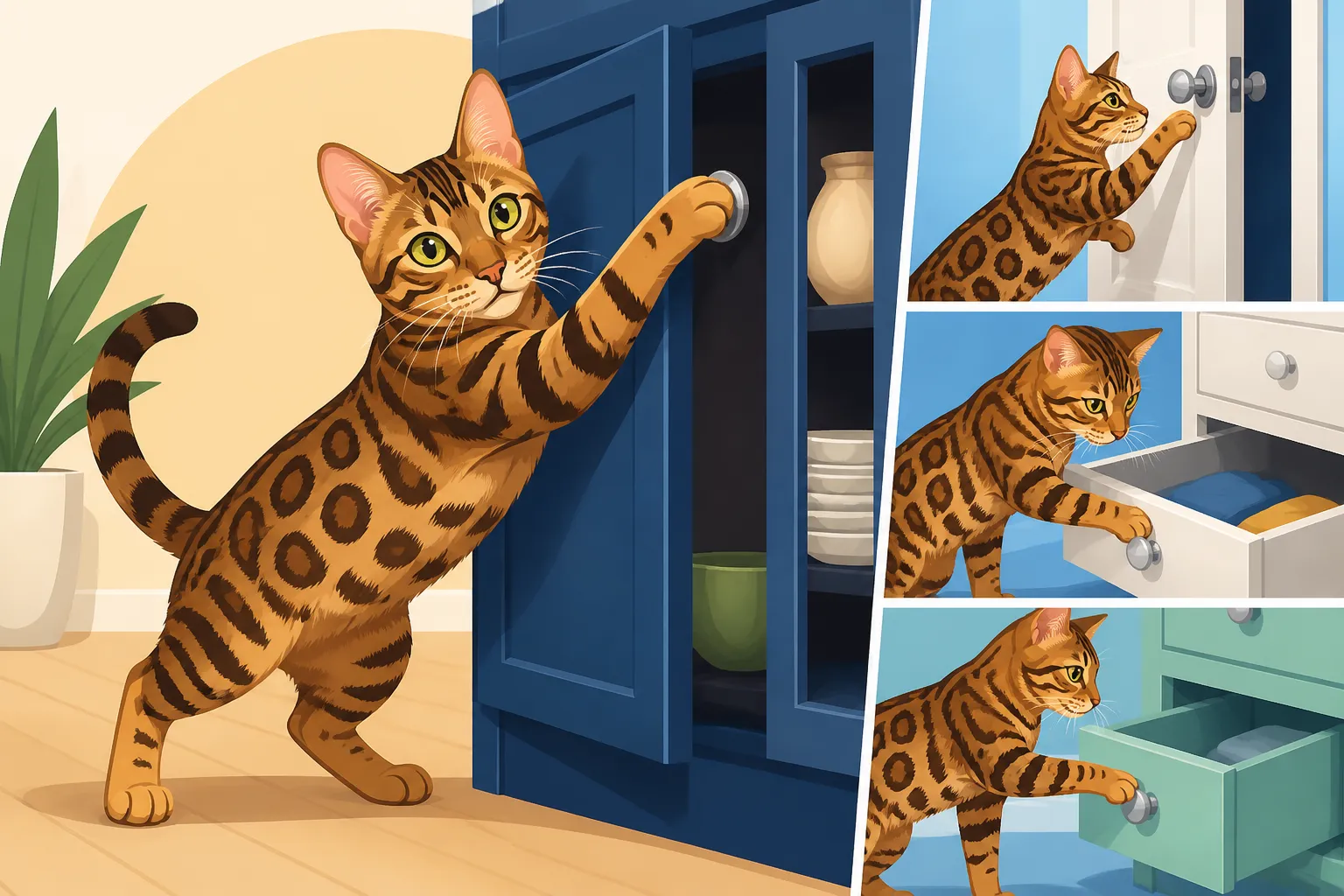
They’ll jump up, hook a paw around the lever, and use their body weight to depress it. Sometimes they’ll even hang from it until the latch disengages. It's a true acrobatic feat! I’ve personally watched a particularly persistent Bengal perform this maneuver with such grace it looked like a carefully choreographed dance. This is the classic scenario described in How a Bengal Cat Opens a Door, and it's a common complaint among Bengal owners. It’s a skill that demonstrates their incredible strength, coordination, and problem-solving abilities – traits that are wonderful in many contexts, but not so much when you're trying to keep them out of the linen closet.
Drawer Diving: Uncovering Secrets
Beyond doors and cabinets, drawers present another exciting challenge for the ingenious Bengal. They love to rummage, pull things out, and create their own brand of organized chaos.
Clothes and Linens: Cozy Nests and Playthings
Your dresser drawers might seem mundane to you, but to a Bengal, they're a treasure trove of new scents and textures. Soft sweaters, fresh linens, and even a pile of clean socks can become irresistible. They might be looking for a new, hidden spot to nap, burrowing deep into a pile of clothes, or simply enjoying the sensory experience of a new "den."
I've had clients report finding their Bengals curled up asleep in a drawer, completely unfazed by the disarray they created to get there. Other times, they’ll pull out socks or underwear, turning them into makeshift toys for a game of chase. It’s not malicious; it's pure, unadulterated feline exploration and comfort-seeking. They're just making themselves at home, in their own unique Bengal way.
Papers and Trinkets: New Toys and Chewing Opportunities
Open a desk drawer, and you might find your Bengal investigating pens, paper clips, rubber bands, and anything else they can get their paws on. Small, shiny objects are particularly enticing. They might knock things onto the floor, bat them around, or, if you're really lucky, decide to chew on them.
I know one Bengal who developed a particular fondness for pulling out receipts and shredding them into confetti. The owner would wake up to a snowstorm of tiny paper bits scattered across the floor, a clear sign of a successful nocturnal drawer raid. This behavior often ties into Why a Bengal Cat Steals Small Objects, as these small items become trophies of their successful infiltration. It's their way of interacting with their environment and keeping their hunting instincts sharp, even if the "prey" is just your utility bill.
The Thrill of the Mess: Chaos as Entertainment
Sometimes, it seems like the goal isn't just what's inside, but the sheer act of making a glorious mess. Pulling out clothes, scattering papers, batting objects off shelves – the process itself can be highly entertaining for a Bengal. The visual and auditory feedback of things falling and scattering is a reward in itself.
This behavior can be especially prevalent when they're bored or feeling particularly mischievous. A tidied drawer is an invitation for chaos. They thrive on activity and novelty, and turning an orderly space into a chaotic one provides both. It’s a clear sign that they need more engaging activities and mental challenges to channel that boundless energy.
Effective Cat-Proofing Strategies
Okay, so we know why they do it. Now, how do we stop them? It feels like an arms race sometimes, doesn't it? They find a way around one deterrent, and you have to come up with another. But fear not, there are actual, effective strategies that go beyond just yelling "No!" or shooing them away.
Let's look at some solutions that can actually work, many of which are readily available and surprisingly effective.
Child-Proofing Latches: More Than Just for Kids
This is often the first line of defense, and for good reason. Child-proofing latches, designed to deter toddlers, are often equally effective against curious cats. There's a wide range available, from simple internal latches that require a human hand to manipulate, to magnetic locks that are completely invisible from the outside.
- Magnetic Cabinet Locks: These are fantastic because they install inside the cabinet, making them invisible and maintaining your home's aesthetic. You use a magnetic key (which you'll need to keep somewhere the Bengal can't reach, or learn to fetch!) to disengage the lock from the outside. Once installed, they're incredibly secure. You can find these easily on platforms like Amazon.
- Adhesive Latches: These typically involve a strap or a hook that connects the cabinet door to the frame. They're usually visible from the outside, but they're quick to install and effective for many Bengals. Just make sure the adhesive is strong enough to withstand persistent batting and tugging.
- Spring-Loaded Latches: These are installed on the inside of the cabinet and require you to push down on a lever or button to open the door. They're a bit more finicky to install but offer a robust solution.
When installing, make sure they are placed high enough or in such a way that your Bengal can't get a paw in to manipulate them. A persistent Bengal will try to use their claws to pry at any exposed part of the latch. This is your definitive guide for How to Cat Proof Cabinets From a Bengal Cat.
Lever Handle Locks: Foiling the Feline Masterminds
For those pesky lever handles that your Bengal has mastered, specialized locks are your best friend. Standard doorknob covers won't work here.
- Lever Handle Child Locks: These are designed specifically to prevent children (and clever cats!) from pushing down the lever. They usually involve a casing that goes over the handle, preventing it from being depressed. Some require two hands to operate, which is usually beyond a cat's capabilities.
- Simple Hooks and Eyes: For doors that you absolutely need to keep shut, a traditional hook and eye latch installed higher up on the door frame can be incredibly effective. It's a low-tech solution, but it works because it requires a human-level of dexterity and reach to operate.
Remember to consider the weight and force your Bengal can exert. They can hang from a lever handle with surprising strength. Choose robust options that can withstand their acrobatics. Here's a table comparing some common locking mechanisms:
| Lock Type | Installation Difficulty | Visibility | Effectiveness Against Bengals | Best Use Case |
|---|---|---|---|---|
| Magnetic Cabinet Lock | Moderate | Invisible | High | Kitchen, bathroom, laundry cabinets (food, chemicals) |
| Adhesive Strap Latch | Easy | Visible | Moderate | Light-use cabinets, drawers, toilet seats |
| Spring-Loaded Cabinet Lock | Moderate | Invisible | High | Anywhere magnetic locks are suitable |
| Lever Handle Cover Lock | Easy | Visible | High | Bedrooms, bathrooms, pantry doors (lever handles) |
| Hook and Eye Latch | Easy | Visible | Very High | High-security doors, storage closets |
| Sliding Door Lock | Easy | Visible | Moderate | Sliding closet doors, glass cabinets |
It's all about finding the right balance between security and ease of use for you. You don't want to make your own life miserable, but you do want to prevent your Bengal from getting into trouble or dangerous situations. And for a more in-depth look, consult Whether Child Locks Work on a Bengal Cat.
Securing Drawers: The Invisible Barrier
Drawers can be trickier because they often have smaller gaps and less obvious points for locking. However, there are still excellent options.
- Magnetic Locks (again!): These are also fantastic for drawers, providing that invisible, strong barrier. You'll install the latch on the inside of the drawer and the catch on the frame, using the magnetic key to release it.
- Internal Drawer Latches: Some latches install on the inside and require you to push down on a small lever inside the drawer to open it fully. This works well for drawers that aren't accessed constantly.
- "L" Shaped Latches: These are external and often clip onto the drawer and then hook onto the frame. They're more visible but can be very effective for lighter drawers or those with a small gap.
- Velcro or Strong Adhesive Strips: For very lightweight drawers that they simply pull open, a strong strip of industrial-grade Velcro or a heavy-duty adhesive strip along the top edge can create enough resistance to deter them. This isn't foolproof for a determined Bengal, but it can work for less persistent ones or drawers that aren't high-value targets.
The key with drawers is to prevent them from getting even a claw-hold. If they can’t get a paw in to pull, they often can’t open it. Remember, these cats learn How a Bengal Cat Learns to Open a Cabinet by trial and error, so making the "error" phase too frustrating or impossible is your goal.
Enrichment: The Ultimate Counter-Strategy
While physical barriers are essential for safety and sanity, they are only one part of the solution. The other crucial component is providing enough mental and physical stimulation to keep your Bengal's brilliant mind and boundless energy positively engaged. An enriched Bengal is a happier Bengal, and often, a less destructive Bengal.
High-Value Play Sessions: Tiring Out the Hunter
Bengal cats thrive on interactive play that simulates hunting. They need vigorous, engaging play sessions every single day. We're not talking about a five-minute dangle of a feather toy. We're talking about intense, focused sessions that leave them panting and satisfied.
Invest in durable wand toys with various attachments (feathers, crinkly bits, faux fur). Mimic prey movements: dart, hide, pounce, fly. Let them "catch" the toy at the end of the session, so they feel the satisfaction of a successful hunt. Aim for at least two 15-20 minute high-intensity sessions a day, more if your Bengal is particularly young or energetic. This kind of play taps into their innate instincts and helps burn off that boundless energy, reducing their need to find "entertainment" by breaking into your cupboards. This active engagement is vital for their well-being and is a cornerstone of The Bengal Cat Is the Most Active Cat You Can Own.
Puzzle Feeders and Interactive Toys: Mental Stimulation
Puzzle feeders are absolutely indispensable for Bengal owners. These devices require your cat to use their brains and paws to extract treats or kibble, slowing down their eating and providing mental enrichment. It turns mealtime into a challenging game, mimicking the effort they'd expend in the wild to get food.
- Slow Feeder Bowls: These have mazes or obstacles that prevent rapid eating, offering a mild mental challenge.
- Treat Dispensing Toys: These are balls or odd-shaped toys that release treats as your cat bats or rolls them around. Brands available on Amazon often include various difficulty levels.
- Complex Puzzle Feeders: Some feeders have multiple compartments, sliding panels, or levers that your Bengal needs to manipulate in sequence to get their reward. These are fantastic for really challenging their intellect.
Rotate these toys regularly to keep them novel and engaging. A toy that's always out becomes boring. By providing these mental workouts, you give them a productive outlet for their cleverness. Remember, a tired Bengal (mentally and physically) is a good Bengal! Many Bengals excel at these, just as they excel at Which Tricks a Bengal Cat Can Learn.
Vertical Space and Catios: Safe Exploration
Bengal cats are natural climbers and observers. They need vertical territory to feel secure, to survey their domain, and to get exercise. If they don't have adequate climbing structures, they'll turn your bookshelves, curtains, and cabinets into their personal jungle gyms.
- Tall Cat Trees: Invest in a sturdy, tall cat tree that reaches near the ceiling. It should have multiple platforms, scratching surfaces, and ideally, some enclosed spaces. Look for models with heavy bases to prevent tipping.
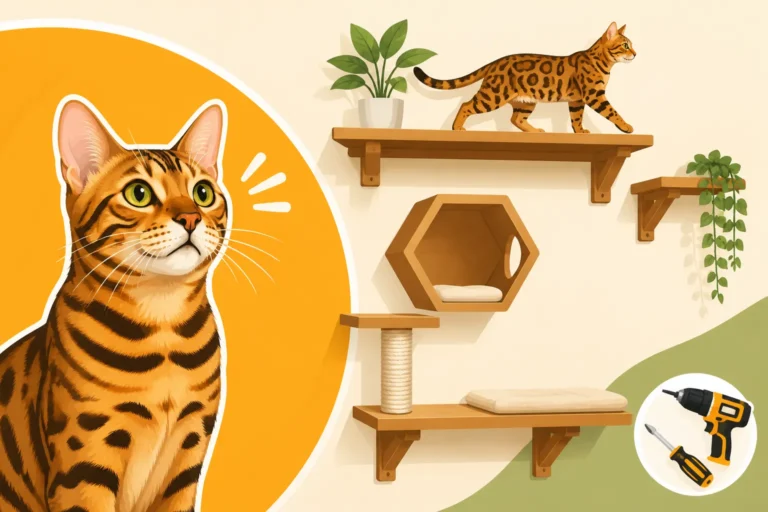
- Wall Shelves and Climbers: Create a "cat highway" on your walls using sturdy shelves, perches, and ramps. This allows them to climb, jump, and explore without touching the floor. This also ties into How to Build Shelves for a Bengal Cat and provides them with a stimulating, safe environment.
- Catios: If possible, a catio (an enclosed outdoor patio for cats) is truly the ultimate enrichment for a Bengal. It provides safe access to the outdoors, with fresh air, natural sights and sounds, and ample climbing opportunities. It satisfies their wild instincts in a secure environment. A catio can significantly reduce their desire to break into indoor spaces because they have a whole outdoor world to explore. It's truly life-changing for many Bengals and their owners, and exactly Why a Bengal Cat Needs a Catio.
By providing these outlets, you’re not just keeping them busy; you’re fulfilling their intrinsic needs as a hybrid breed.
Living with a Genius: Adjusting Your Expectations
Let's be honest, living with a Bengal cat means accepting a certain level of intelligent mischief. They are not always going to be perfectly behaved, sedentary creatures. Part of successfully coexisting with them is adjusting your expectations and understanding that their behaviors, even the frustrating ones, stem from their unique breed characteristics.
Consistency is Key: Training and Reinforcement
While you can't "train" a Bengal out of being naturally curious or intelligent, you can certainly train them on what is acceptable and what is not. This requires consistency, patience, and positive reinforcement.
- Redirection: When you catch them trying to open a cabinet, gently redirect them to an appropriate activity, like a puzzle feeder or a play session. Don't just scold them; show them what they can do instead.
- Clicker Training: Bengals respond incredibly well to clicker training. You can teach them commands like "off," "leave it," or even to go to a specific spot when they hear a cue. This provides mental stimulation and strengthens your bond. Every successful click and treat reinforces desired behavior. Consider learning How to Clicker Train a Bengal Cat for a more engaged and responsive pet.
- Environmental Management: Ultimately, the most effective "training" is to make it physically impossible or unrewarding for them to get into places you don't want them. The locks and enrichment strategies discussed above are your primary tools here. Don't set them up for failure by leaving tempting items easily accessible.
Remember, a Bengal is always learning. If they get a reward (even just attention, positive or negative) for opening a cabinet, they will continue to do it.
Safety First: What to Lock Away Absolutely
Beyond the annoyance factor, some cabinets and drawers contain items that are genuinely dangerous to a curious cat. Prioritize these areas above all else.
- Cleaning Supplies: Bleach, detergents, disinfectants, pest control products – these are toxic and must be kept behind secure, Bengal-proof locks.
- Medications: Human and pet medications, even seemingly innocuous ones, can be incredibly dangerous if ingested by a cat. Keep them in high, locked cabinets.
- Chemicals and Tools: Garage or utility room cabinets often contain antifreeze, paints, glues, and sharp tools. These areas are absolutely critical to secure.
- Human Food: While not always toxic, large quantities of certain human foods can cause digestive upset or pancreatitis. Fatty foods, onions, garlic, chocolate, and grapes are particularly dangerous. Store them where paws cannot reach.
Think like your Bengal. If it's interesting, or smells good, or is shiny, they will try to get to it. Assume they can open anything that isn't locked. This mindset shift is vital for their safety.
Embracing the Chaos (a Little): Finding the Humor
Finally, a dose of realism and good humor is essential for living with a Bengal. You will never fully "cure" their curiosity or their drive to explore. There will be days when you find a cabinet door ajar despite your best efforts, or a random item pulled from a drawer and presented to you like a hunting trophy.
Learn to laugh about it. Share your stories with other Bengal owners – trust me, you're not alone in these struggles! While you must maintain safety and set boundaries, accepting that your Bengal's unique personality includes a healthy dose of mischievous cleverness will make your life together much more enjoyable. They may open your cabinets and drawers, but they also open your heart with their playful antics, striking beauty, and deep affection. It's a trade-off, but for many, it's a trade worth making.
Disclaimer
This article is for general informational purposes only and does not constitute professional advice. Laws, prices and regulations vary by location and change over time. Consult a qualified professional for guidance on your specific situation.