What a Bengal Cat Does All Day
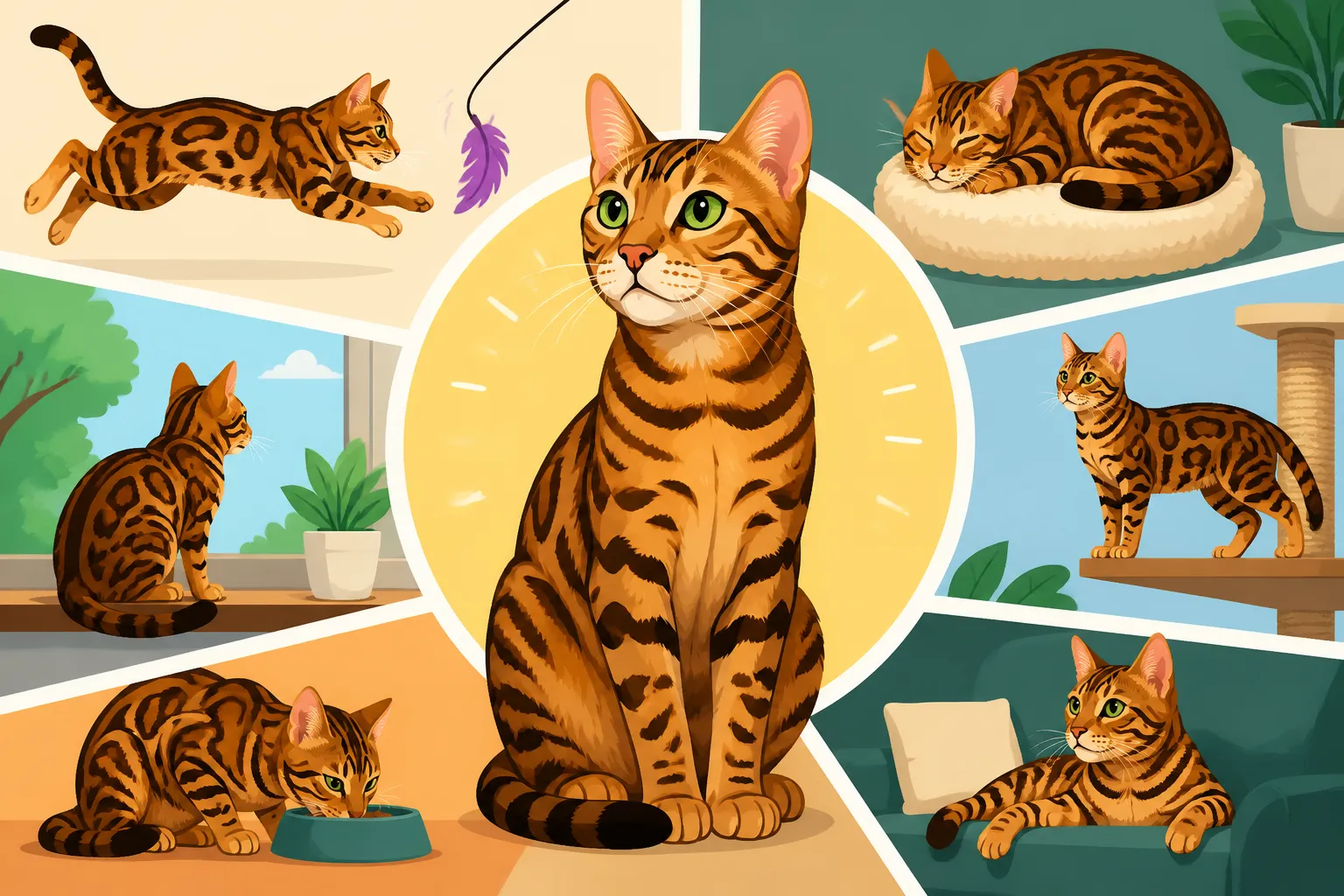
If you’ve ever lived with a Bengal cat, you know the common perception that cats are lazy creatures who spend 16 hours a day napping is absolutely shattered. These are not your average couch potatoes; they are bundles of boundless energy, driven by instincts that hark back to their wild ancestors. Understanding what a Bengal cat actually does all day is key to a harmonious home, otherwise, you might find yourself bewildered by their constant motion and curious antics. This guide will take you through a typical day in the life of a Bengal, from the first rays of dawn to the quiet of night.
The Morning Rush: The Dawn Patrol
For many Bengal cat owners, the concept of a peaceful morning is a distant dream. These felines are often up with the sun, sometimes even before it, ready to conquer the day with an impressive amount of zeal. Their internal clock is less about human schedules and more about ancient hunting rhythms.
The Wake-Up Call
Oh, the Bengal wake-up call. It's not a gentle purr or a soft nudge. For many, it's a persistent, often loud, vocalization designed to get you moving. Imagine being roused from a deep sleep by a series of chirps, trills, and outright demands. It's not uncommon for a Bengal to pace back and forth, vocalizing directly at your face, or even batting at your eyelids with a gentle but firm paw. They aren't trying to be rude; they simply operate on a different schedule, one that says, "The sun is up, and it's time for action!" Their energy levels are already at 100%, and they expect yours to match. This can be quite a shock for first-time Bengal owners used to more demure feline companions. They truly believe they are doing you a favor by ensuring you don't miss a single moment of prime activity time. How Vocal a Bengal Cat Is is often one of the first things new owners learn.
Breakfast Blitz
Once you're finally up and stumbling towards the kitchen, the Bengal is usually two steps ahead, weaving impatiently around your ankles. Breakfast isn't just a meal; it's a highly anticipated event, a fuelling station for the day's adventures. They often eat with an intensity that belies their sometimes small stature, devouring their food quickly as if another predator might snatch it away, a clear echo of their wild heritage. If you feed wet food, they might spend a few minutes batting their bowl around or making a mess, truly engaging with their meal. Dry kibble often disappears in record time. It's less about savoring and more about efficient energy intake. Post-breakfast, don't expect them to curl up for a nap. Instead, that surge of energy from the food often translates directly into a burst of play. This is when the house might become a blur of motion, with zoomies through hallways and energetic leaps onto furniture.
Midday Mayhem: Seeking Stimulation
Once breakfast is digested, the Bengal cat shifts into high gear, transforming your home into their personal jungle gym and hunting ground. This isn't a breed content to simply observe; they want to interact with, dismantle, and explore every single inch of their environment.
The Quest for Play
Bengals possess an almost insatiable need for play. For hours, they will hunt phantom prey, stalking invisible foes through the living room or pouncing on their own shadow. Toys are not just toys; they are vital tools for honing their hunting skills. Wand toys, especially those with feathers or crinkly bits, are often a favorite, allowing them to practice their impressive jumps and acrobatic flips. However, they're not always waiting for you to initiate play. Many Bengals are masters of self-amusement. They might bat a small toy mouse under a rug, then "hunt" it out, repeating the process until you wonder if they've invented their own game of hide-and-seek. Some will even figure out Whether a Puzzle Feeder Tires a Bengal Cat and spend a significant portion of their midday strategizing how to extract every last treat. Durability is key for any toy you purchase; soft, plush toys often don't stand a chance against their powerful jaws and relentless energy. Browsing for sturdy options on Amazon is often a good strategy to keep their toy chest stocked with things that last more than a day.
Water Workouts
One of the most distinctive traits of a Bengal cat is their fascination with water. While many domestic cats view water with suspicion, Bengals often see it as a plaything, a challenge, or even a refreshing dip. Why a Bengal Cat Loves Water is a question many owners ask, and the answer lies deep in their genetics. During the midday hours, when the household might be quieter, a Bengal might be found exploring the kitchen sink, batting at the stream from a dripping faucet, or even attempting to "fish" for toys in their water bowl. Some will turn on taps if they can manage the lever. They might sit in an empty tub, fascinated by the acoustics, or even join you for a shower or bath, perched on the edge, batting at the water droplets. This isn't just about drinking; it's about sensory engagement. Many owners find that a good quality pet water fountain, perhaps one found on Amazon, is not only a necessity for hydration but also a source of endless entertainment for a water-loving Bengal.
Afternoon Adventures: Exploring and Engaging
As the day progresses, the Bengal's energy doesn't wane; it simply shifts focus. This is a time for more intricate exploration, mental stimulation, and perhaps some controlled outdoor time. Their intelligence is as remarkable as their athleticism, and they thrive on challenges.
Vertical Ventures
A Bengal cat sees your home not as a flat plane, but as a multi-dimensional playground. If there's a high shelf, a tall bookcase, or the top of your refrigerator, you can bet your Bengal has mapped out a route to get there. They have an innate desire to climb and survey their territory from above, a clear nod to their wild ancestors who would scale trees for safety and a better vantage point for hunting. This means that a significant portion of their afternoon might be spent in vertical exploration. They'll leap onto counters, scale drapes (much to an owner's dismay!), and navigate complex paths through furniture. Providing ample vertical space is not just a luxury but a necessity for this breed. Tall, sturdy cat trees that reach the ceiling, and strategically placed shelves or cat walks, allow them to fulfill this instinct safely. Without these outlets, your Bengal might decide your delicate ornaments or kitchen cabinets make for excellent climbing practice. How Much Vertical Space a Bengal Cat Needs is often underestimated by new owners.
Curiosity and Capering
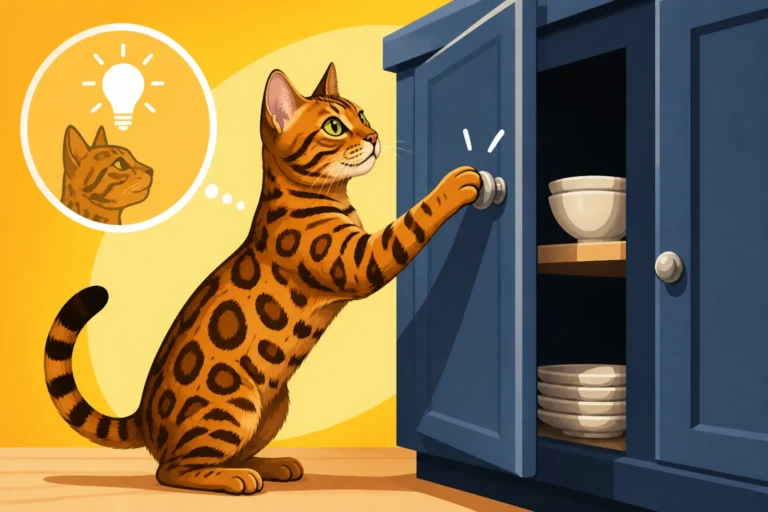
Bengals are incredibly clever and endlessly curious. This means your home's defenses against a typical housecat might be laughably insufficient. How a Bengal Cat Opens a Door is a common question because many develop the dexterity to manipulate doorknobs or lever handles. Drawers, cabinets, and even refrigerators can become targets of their inquisitive paws. During the afternoon, while you might be working or busy, your Bengal could be conducting a full-scale investigation of your pantry, seeing what treasures might be hidden behind closed doors. They're not just being mischievous; they are problem-solvers, driven to understand how things work and what new experiences lie beyond barriers. This often means coming home to cabinet doors ajar, items gently removed from drawers, or the toilet paper roll completely unspooled. Investing in child-proof locks for cabinets might sound extreme for a cat, but for a Bengal, it's often a smart move.
Outdoor Explorations
While many Bengals are indoor cats, their wild instincts often lead owners to provide safe outdoor access. For some, this means leash walks. An afternoon might include a stroll around the neighborhood or a park, allowing them to sniff new scents and experience the wider world under supervision. How to Leash Train a Bengal Cat can be a rewarding process that provides immense enrichment. For others, a secure outdoor enclosure, known as a catio, is the perfect solution. A catio allows them to feel the sun on their fur, watch birds, and enjoy fresh air without the dangers of free-roaming outdoors. During the afternoon, a Bengal might spend hours observing squirrels, chasing fallen leaves, or simply basking in a sunbeam within their catio. This provides a crucial outlet for their predatory instincts and deep love for the outdoors, preventing boredom and destructive behaviors indoors. What Size Catio a Bengal Cat Needs often depends on how many Bengals you have and how much space you have available.
Evening Wind-Down: Still Active, Just Differently
As evening approaches and the human household winds down, the Bengal cat, though perhaps slightly less frenetic, remains highly engaged. This is often prime time for intense interaction with their human companions, a period of bonding interspersed with bursts of playful energy.
Interactive Playtime
Evenings are often reserved for deep, satisfying interactive play sessions. A Bengal cat thrives on engagement with their owners, and a high-energy play session before bed can be crucial for a good night's sleep – for both of you! This is when the laser pointer might come out, or the beloved wand toy that simulates bird or mouse prey. These sessions aren't just for fun; they're essential for draining that seemingly bottomless well of energy. The Bengal will leap, pounce, chase, and capture with impressive agility, mimicking the hunting behaviors of their wild cousins. Owners often find they need to schedule at least two vigorous play sessions in the evening, sometimes more, lasting 15-30 minutes each. Simply tossing a toy won't cut it for long; they want you to be an active participant in their hunt. Remember, How Many Play Sessions a Bengal Cat Needs often exceeds what a typical domestic cat requires.
Cuddle Curfew
While Bengals are highly active, they are also incredibly affectionate in their own unique way. After a vigorous play session or a busy day of exploration, many Bengals will seek out their favorite human for some quality cuddle time. This might involve purring intensely while kneading on your lap, rubbing their head against yours, or even giving gentle "love bites." It's their way of reconnecting and showing affection. However, don't expect them to stay still for too long. A Bengal's idea of a "cuddle curfew" is often a brief interlude, a moment of stillness before their curiosity or renewed energy prompts them to explore another room or stalk an imagined fly. They might drift off for a short, intense power nap on your lap, only to suddenly spring up, refreshed and ready for round two of evening antics. These moments of quiet affection are precious and help balance their otherwise high-octane personality.
Nighttime Narratives: The Hidden Hunter
Just when you think your Bengal might finally settle down for the night, remember that their ancestors were nocturnal or crepuscular hunters. This means that for many Bengals, the night isn't for sleeping; it's for observing, prowling, and sometimes, for the infamous "midnight zoomies."
Nocturnal Instincts
While modern Bengal cats have adapted somewhat to human schedules, those deep-seated nocturnal instincts often surface once the lights go out. They become more alert, their senses heightened in the quiet darkness. You might hear them stealthily padding through the house, exploring areas they couldn't fully appreciate during the day. Their excellent night vision allows them to navigate with ease, and every shadow becomes a potential target for a playful pounce. They might sit by a window, intently watching the world outside, tracking moths or other nocturnal creatures. This quiet prowling is a manifestation of their hunting heritage, even if the "prey" is just dust bunnies or a discarded sock. It's not uncommon to be woken by the soft thud of a cat jumping from a dresser or the distinct sound of a toy being batted around in another room.
Midnight Zoomies
Ah, the midnight zoomies. This is perhaps one of the most infamous Bengal cat nighttime activities. After a period of quiet observation, often when you're deeply asleep, a Bengal can suddenly unleash a burst of unbridled energy. They'll race through the house at top speed, scrambling up and down furniture, sliding across floors, and performing acrobatic feats that would amaze you if you weren't trying to sleep. This sudden burst of activity seems to come from nowhere, often accompanied by playful vocalizations or the clatter of toys being flung about. It's their way of burning off any residual energy from the day, a final explosion of exuberance before the dawn. Many owners lament being woken by what sounds like a small herd of wildebeest stampeding through their home at 3 AM. What a Bengal Cat Does at Four in the Morning is often a vivid demonstration of this phenomenon. It can be frustrating, but it's a completely normal part of living with such an active and energetic breed.
Keeping the Balance: Preventing Boredom
Given their intense activity levels and keen intelligence, preventing boredom is paramount for a Bengal cat. A bored Bengal is often a destructive Bengal, and understanding their daily needs is the first step in creating a happy home.
Structured Routines
While Bengals are independent, they also thrive on predictability. Establishing a routine for feeding, playtime, and even cuddle sessions can provide a sense of security and help manage their high energy. They learn quickly when to expect meals and when to anticipate interactive play, which can help mitigate demanding behaviors. For example, if they know vigorous playtime happens immediately after your evening dinner, they might be less likely to pester you during that time. A consistent routine for cleaning litter boxes (making sure to use a durable, large litter box you can find on Amazon that stands up to their vigorous digging) also contributes to their comfort and well-being. Knowing what's coming next helps channel their energy into appropriate activities rather than creating their own, potentially destructive, fun.
Environmental Enrichment
The key to a well-adjusted Bengal cat lies in providing a rich and stimulating environment that caters to their natural instincts. This isn't just about having toys; it's about creating a landscape within your home that allows them to climb, explore, hunt, and play.
| Aspect of Enrichment | Standard Domestic Cat Needs | Bengal Cat Needs (and why) |
|---|---|---|
| Play Sessions | 1-2 short sessions/day | 3-5 vigorous sessions/day, often 15-30 min each; driven by high prey drive and stamina. |
| Vertical Space | A cat tree or two | Multiple tall cat trees, wall shelves, cat superhighways; they naturally climb and survey territory from heights. |
| Interactive Toys | Varied toys, rotated | Durable wand toys, puzzle feeders (tough ones!), fetch toys; they need challenging engagement that simulates hunting. |
| Water Access | Bowl of fresh water | Water fountain, access to sinks/tubs, water-safe toys; they are fascinated by and often play in water. |
| Outdoor Access | Optional safe garden | Catio or leash walks are highly beneficial; fulfills strong desire for outdoor scents, sounds, and exploration without danger. |
| Mental Challenge | Some puzzle toys | Advanced puzzle feeders, training for tricks, new environments to explore; their intelligence requires constant stimulation. |
This means investing in sturdy, tall cat trees that allow them to reach high vantage points. Wall-mounted shelves and cat "superhighways" can turn empty walls into exciting pathways for exploration. Puzzle feeders that require them to work for their food are excellent for mental stimulation and can slow down their eating, which is good for their digestion. Some owners even invest in cat wheels, available from retailers like Amazon, to give their Bengal an endless outlet for running energy. Remember, The Bengal Cat Is the Most Active Cat You Can Own, so providing these outlets is crucial for their physical and mental health. A home filled with opportunities for activity and exploration will go a long way in ensuring your Bengal cat is happy, healthy, and less prone to destructive behaviors born out of sheer boredom.
Disclaimer
This article is for general informational purposes only and does not constitute professional advice. Laws, prices and regulations vary by location and change over time. Consult a qualified professional for guidance on your specific situation.