How Young to Start Leash Training a Bengal Cat
Bringing a Bengal cat into your home is an adventure, isn't it? You’ve probably heard all the stories about their boundless energy and insatiable curiosity, and while these traits are absolutely part of their charm, they can also leave new owners feeling a bit overwhelmed, especially when it comes to things like exercise. One common frustration is how to channel all that energy safely, and many Bengal parents wonder if leash training is even an option, and if so, when to begin. This guide is here to walk you through the optimal age to start leash training your Bengal cat, covering everything from understanding their unique personality to practical, step-by-step advice.
Understanding the Bengal Cat's Instincts for Leash Training
Before we even talk about harnesses and leashes, it’s crucial to wrap our heads around what makes a Bengal cat tick. These aren't your average couch potato kitties. They carry a little bit of their wild ancestor, the Asian Leopard Cat, in their DNA, and it shows in their behavior. This means they often have a higher prey drive, a profound love for climbing and exploring, and an energy level that can put a toddler to shame. This distinct nature actually makes them surprisingly receptive to leash training, but it also means your approach needs to be tailored to their specific needs.
The Importance of Early Socialization
Think of socialization as building a foundation for everything you want to teach your Bengal cat, including leash walking. A well-socialized kitten is generally more confident, adaptable, and less prone to fear responses when introduced to new experiences – like a harness or the great outdoors. If your Bengal kitten has been exposed to a variety of sights, sounds, people, and gentle handling from a young age, they're much more likely to accept new routines and equipment without a fuss.
This isn't just about cuddles; it's about positive exposure. Gently handling their paws, getting them used to having things around their neck (like a lightweight collar for ID purposes, even if it's just for a few minutes at first), and making these experiences fun with treats and praise can significantly smooth the path for leash training. Imagine trying to put a harness on a cat that's never been touched beyond a quick pet – it’s going to be a battle! So, before the harness even comes out, focus on building a strong, trusting bond and making handling a normal, pleasant part of their day.
Why Bengal Cats Take to Leashes Differently
Unlike many domestic cats who might view a leash and harness as an affront to their feline dignity, Bengal cats often see it as a gateway to adventure. Their innate curiosity and high activity levels mean they are constantly seeking stimulation. For them, a walk isn't just a walk; it's an exploration, a hunt, a chance to stalk unseen prey (even if it's just a leaf). They're more akin to dogs in their desire to engage with the world outside the four walls of your home. This drive can be your biggest asset in leash training.
However, this also means they can be easily distracted and might pull harder than you expect when something exciting catches their eye. Their powerful, athletic build means they can make quick dashes or jump surprisingly high, so security and control are paramount. Their intelligence also means they'll quickly learn the routine if it's enjoyable, but they'll also just as quickly pick up on any inconsistencies or negative associations. It's a double-edged sword: they're eager learners, but they won't tolerate boredom or discomfort. For more on their drive, read The Bengal Cat Is the Most Active Cat You Can Own.
The Ideal Age to Begin Leash Training Your Bengal Kitten
So, you're ready to embrace the leash-walking life with your Bengal. The question remains: when's the perfect time to start? It's not a one-size-fits-all answer, but there's definitely a sweet spot that maximizes your chances of success.
The "Sweet Spot" for Learning and Acclimation
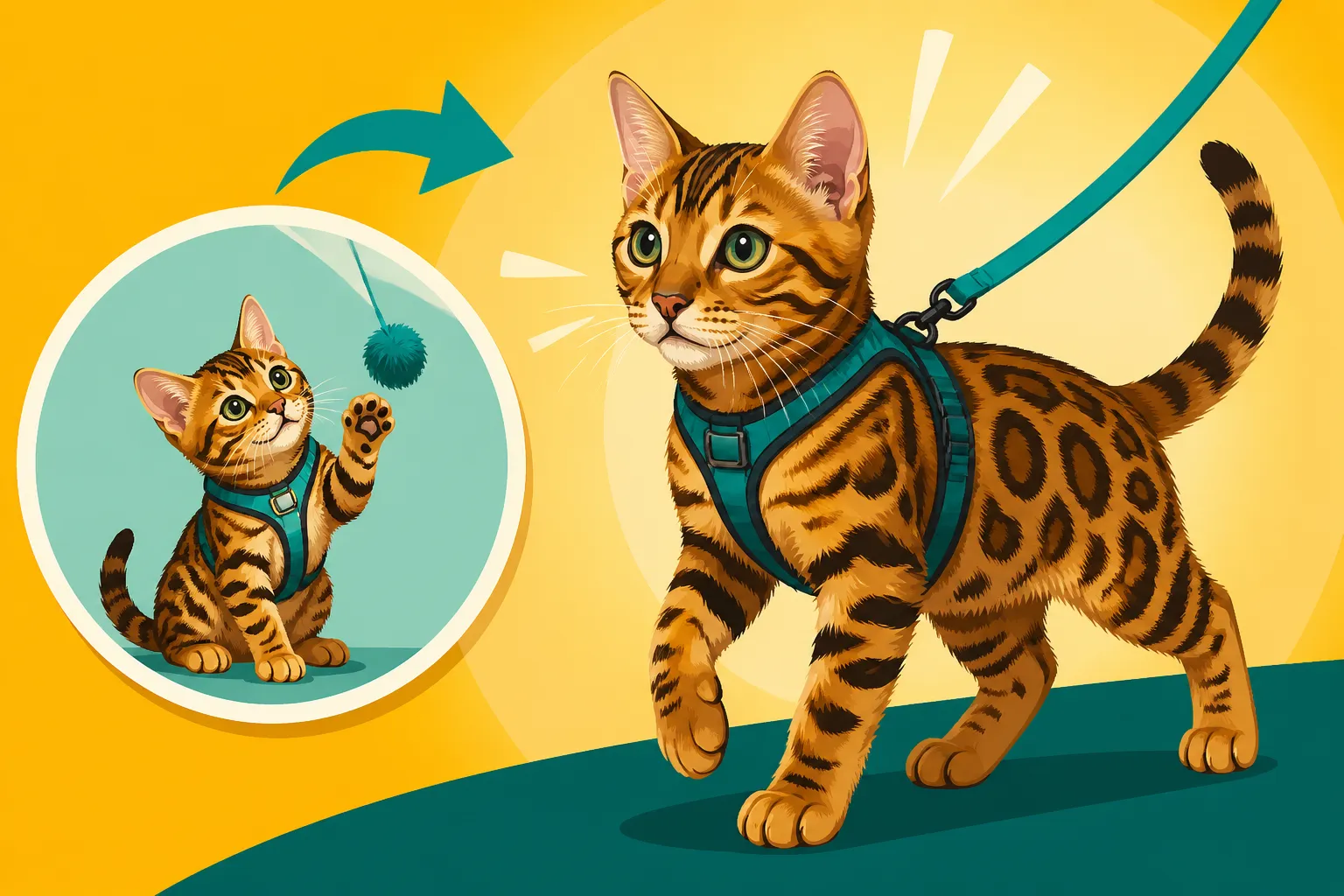
Generally speaking, the ideal time to begin introducing your Bengal kitten to a harness and leash is between 8 to 12 weeks of age. This window is often referred to as a critical socialization period for kittens. At this age, they are incredibly impressionable, curious, and usually less resistant to new experiences than older cats. Their fear responses aren't fully developed, and they're still very much in a learning and exploring phase of life.
Starting young allows the harness and leash to become a normal, comfortable part of their world before they develop strong opinions or fears. Think of it like teaching a child a second language – it's much easier when they're young and their brains are sponges. You're not aiming for full-blown walks at 8 weeks, of course! The goal is gentle, positive exposure and acclimation to the equipment itself. They should associate the harness with good things: treats, praise, and eventually, exciting outdoor adventures.
Many breeders actually start this process before kittens even go to their new homes, which is a fantastic head start. If your kitten hasn't had this early exposure, don't despair! You'll just need to be a bit more patient and consistent. Even if you get your kitten a little older, say at 4 or 5 months, it's still absolutely doable. The younger, the better, but consistency and positive reinforcement are always key.
What Happens If You Start Too Late
While it's never truly "too late" to try and leash train a Bengal cat, starting when they are older can present more challenges. An adult Bengal, particularly one that hasn't been exposed to many new things, may be more set in their ways and less tolerant of new equipment or experiences. Their instinct to escape or resist might be stronger, leading to a more prolonged and potentially frustrating training process for both of you.
Older cats might freeze, flop over dramatically, or try to back out of the harness – all signs of discomfort or fear. It takes a lot more patience and very gradual steps to convince an adult cat that a harness isn't a terrible, restrictive contraption. You might also find they're more prone to anxiety when introduced to the outside world if they haven't had prior positive experiences. While not impossible, it certainly demands a higher level of dedication and understanding from you. So, if you have the opportunity, jump on that early "sweet spot" to make life easier for everyone. For information on how active they are, see How Active a Bengal Cat Is.
Step-by-Step Guide to Leash Training a Young Bengal Cat
Okay, you've got a young Bengal, you're mentally prepared, and now it's time to get practical. Leash training is a gradual process that requires patience, consistency, and a whole lot of positive reinforcement. Don't rush it!
Choosing the Right Gear Harness vs. Collar
This is a critical first step, and for Bengal cats, a harness is non-negotiable. Never, ever attempt to walk a cat on a leash attached directly to a collar. Cats, especially agile Bengals, can easily slip out of a collar or injure their delicate necks if they pull or get startled. A harness distributes pressure evenly across their chest and shoulders, making it safer and more comfortable.
When choosing a harness, look for one specifically designed for cats. There are several types:
- H-style harnesses: These are popular and often consist of two loops (one for the neck, one for the chest) connected by a strap on the back. They offer good security if fitted correctly.
- Vest-style harnesses: These cover a larger area of the cat's torso and can feel more secure for some cats, as they provide a sense of gentle compression. Many owners find these harder for escape artists to wriggle out of.
Whatever style you choose, ensure it's made from lightweight, breathable material. Fit is paramount: it should be snug enough that your Bengal can't back out of it, but not so tight that it restricts movement or breathing. You should be able to comfortably slide one or two fingers under any strap. Brands like Voyager or Rabbitgoo (available on Amazon) offer good options that cater to the unique build of a Bengal cat. For more detailed insights, check out Which Harness Fits a Bengal Cat.
| Harness Type | Pros | Cons | Ideal For |
|---|---|---|---|
| H-Style | Lightweight, less material, adjustable | Can be easier to slip out of if not perfectly fitted | Bengals who dislike bulky clothing, quick acclimation |
| Vest-Style | Very secure, harder to escape, comforting | Can be warmer, some cats resist the bulk | Escape artists, cats needing more security/comfort |
| Step-In | Easy to put on (no overhead pulling) | Less common for cats, fit can be tricky | Cats sensitive to overhead handling |
Making the Harness a Positive Experience
This is where the real training begins, and it all happens indoors, long before you even think about stepping outside.
- Introduce the Harness Slowly: Don't just slap it on. Let your kitten see and sniff the harness. Place it near their food bowl or sleeping area so it becomes a neutral, familiar object.
- Associate with Treats and Play: The harness should equal good things! Every time you bring it out, offer a high-value treat or engage in a favorite play session.
- Short, Sweet Sessions:
- Step 1: Just the Scent: Let them explore it while you give treats.
- Step 2: The Touch: Gently touch the harness to their body, then immediately reward. Repeat this many times.
- Step 3: Quick Dons: Briefly put the harness on (without fastening it fully) for literally 5-10 seconds, then take it off and reward generously. Increase the duration slowly.
- Step 4: Fasten and Reward: Once they tolerate it briefly, fasten it. Keep it on for just a minute or two, distracting them with play and treats.
- Increase Wear Time Gradually: Over several days or even a week, slowly increase the amount of time they wear the harness indoors. Always supervise them. They might flop over or walk funny at first; this is normal. Ignore the dramatics, but reward them when they move naturally.
- Never Use Force: If your kitten resists, stop, take a break, and try again later. Forcing it will create a negative association that's very hard to undo.
The key is to move at your Bengal's pace. Some might be ready in a few days, others might need a couple of weeks to become comfortable. This stage is absolutely crucial, so don't skimp on it.
Graduating to the Leash and Short Walks
Once your Bengal is completely comfortable wearing the harness indoors for extended periods (e.g., 15-30 minutes, acting like it's not even there), you can introduce the leash.
- Indoor Leash Practice: Attach a lightweight leash to the harness while indoors. Let them drag it around for a few minutes under supervision. This gets them used to the feel and slight drag.
- Gentle Guidance, Not Pulling: Pick up the leash and let them lead. Don't pull or drag them. If they stop, gently coax them forward with a treat or a favorite toy. The goal is for them to understand the leash is a connection, not a restraint.
- Introduce an Outdoor Environment:
- Step 1: Safe Zone Exploration: Start in a very quiet, contained, and safe outdoor space, like a fenced yard or a quiet balcony. Carry your cat out in their harness and leash, put them down, and let them explore.
- Step 2: Short, Frequent Outings: Keep initial outdoor sessions very short – just 5-10 minutes. The goal is positive exposure, not a marathon. End on a good note before they get overwhelmed or tired.
- Step 3: Gradually Expand: As they gain confidence, you can slowly introduce them to new environments, always prioritizing safety and minimizing stressors. Public parks or busy streets might be too much for a Bengal cat initially. Focus on quiet residential areas or nature trails where they can sniff and explore. How Far a Bengal Cat Will Walk is an interesting read for future goals!
- Always Be Aware: Bengals are alert and fast. Always be on the lookout for potential dangers like dogs, loud noises, or escape routes. Never tie your Bengal's leash to anything and walk away, even for a second.
Remember, every session should be a positive, enriching experience. Praise, treats, and patience are your best friends.
Troubleshooting Common Leash Training Challenges with Bengals
Even with the best intentions and an early start, you might encounter a few bumps in the road. Bengals are smart and opinionated, and they'll let you know if something isn't working for them.
Dealing with Resistance and Freezing
It's common for cats, especially initially, to resist the harness and leash. They might flop to the ground, "freeze" in place, or even walk backward to try and escape. This isn't defiance; it's often a sign of discomfort, confusion, or being overwhelmed.
- Re-evaluate the Fit: Is the harness too tight? Too loose? Pinching anywhere? A poorly fitting harness is a quick way to derail training.
- Go Back a Step: If they're resisting outside, take the training back indoors. If they're resisting the harness, go back to just having it near their food bowl. Slow down the process.
- Increase Positive Association: Offer higher-value treats. Make the "harness time" even more fun and exciting. Play a favorite game right after you put it on.
- Ignore the Dramatics: If they flop, gently pick them up, offer a treat, and try to encourage a few steps. If they refuse, end the session calmly and try again later. Don't scold them; it will only make them more resistant.
- Change of Scenery: Sometimes a change of environment can help. If your cat is freezing in the living room, try a different, quieter room for a few minutes.
Remember that patience is paramount. You're teaching them something completely new and potentially unnatural for a feline. Respect their boundaries and build confidence gradually.
Managing Over-Excitement and Distractions
Bengal cats are highly stimulated by their environment. Once they get outside, that keen intelligence and prey drive can kick into overdrive, making them easily distracted or overly excited. This might manifest as pulling on the leash, trying to chase every bird or squirrel, or becoming hyper-focused on smells.
- Start in Low-Stimulus Environments: As mentioned before, begin walks in very quiet areas with minimal distractions. A bustling city park is not the place for initial training. Your backyard or a very quiet cul-de-sac is much better.
- Keep Sessions Short: When they are highly stimulated, their attention span might shorten. Keep these walks brief to prevent over-arousal.
- Practice "Look at Me": Teach a "look at me" command indoors first, using treats. When you're outside and they get distracted, use the command to re-focus their attention on you, rewarding them heavily when they comply. This is a vital safety tool.
- Bring High-Value Rewards: When you're competing with the allure of a rustling bush or a chirping bird, your regular kibble might not cut it. Bring their absolute favorite treats – something irresistible to them – to maintain their focus.
- Be a "Walking Tree": If your Bengal pulls, stop walking. Only resume when the leash goes slack. They will quickly learn that pulling gets them nowhere, but a loose leash means movement. This technique can be effective but requires consistency.
- Engage Their Hunter Instincts: Allow them some time to sniff and explore. Leash walks for Bengals aren't about getting from point A to point B quickly; they're about mental and physical enrichment. Let them stalk a leaf or investigate a patch of grass. This fulfills their natural instincts in a safe, controlled way. You might also want to look at How Many Play Sessions a Bengal Cat Needs to ensure they are getting enough enrichment overall.
- Consider a Backpack Carrier: For highly stimulating areas, or if your cat gets overwhelmed, a cat backpack or carrier can offer a safe retreat. You can carry them through busy sections and let them out in quieter spots. This also allows them to observe the world from a safe vantage point without being directly in it.
Leash training a Bengal cat can be an incredibly rewarding experience, deepening your bond and providing vital physical and mental stimulation for your energetic companion. Starting young, being patient, and consistently using positive reinforcement are your keys to success. Happy trails!
Disclaimer
This article is for general informational purposes only and does not constitute professional advice. Laws, prices and regulations vary by location and change over time. Consult a qualified professional for guidance on your specific situation.