Where a Bengal Cat’s Glitter Came From
It's absolutely mesmerizing, isn't it? That almost iridescent shimmer on a Bengal cat's coat, often described as "glitter," is one of their most distinctive and enchanting features. It's not just a fancy word; it's a genuine optical phenomenon that gives their already wild-looking pelts an extra layer of magic. For anyone who's ever wondered how this unique sparkle came to be, this guide will delve deep into the origins, genetics, and care behind the Bengal cat's famous glitter.
The Unique Luster of the Bengal Cat's Coat
When you run your hand over a Bengal cat's coat, you instantly notice it's different. It's not like the soft, fluffy fur of a traditional housecat. This isn't just about their stunning patterns; it's about the very nature of their hair shafts and the incredible sheen they possess. This glitter isn't universally present in all Bengals, but when it is, it's truly unforgettable.
More Than Just "Shiny": The Pelted Feel
The term "pelted" is often used to describe a Bengal cat's coat, and it's a surprisingly accurate descriptor. Unlike many domestic cats that have a dense, soft undercoat and longer guard hairs, Bengals tend to have a very short, sleek coat that lies exceptionally close to their body. This unique texture makes their fur feel more like silk or, indeed, a finely tanned pelt, rather than typical cat fur. It's cool to the touch and incredibly smooth, creating a luxurious tactile experience.
This distinct feel isn't just a pleasant side effect; it's a key part of their wild heritage. Their Asian Leopard Cat ancestors evolved with coats optimized for jungle life – sleek, water-resistant, and less prone to tangles. The domestic cat contributions to the breed, while adding temperament, were carefully selected to maintain this primitive yet refined coat characteristic. When you feel a true Bengal coat, you're touching a piece of living history, a direct link to their wild roots, making you appreciate how unique How a Bengal Cat's Pelt Differs From Ordinary Fur really is.
The Mystery of the Glitter Gene
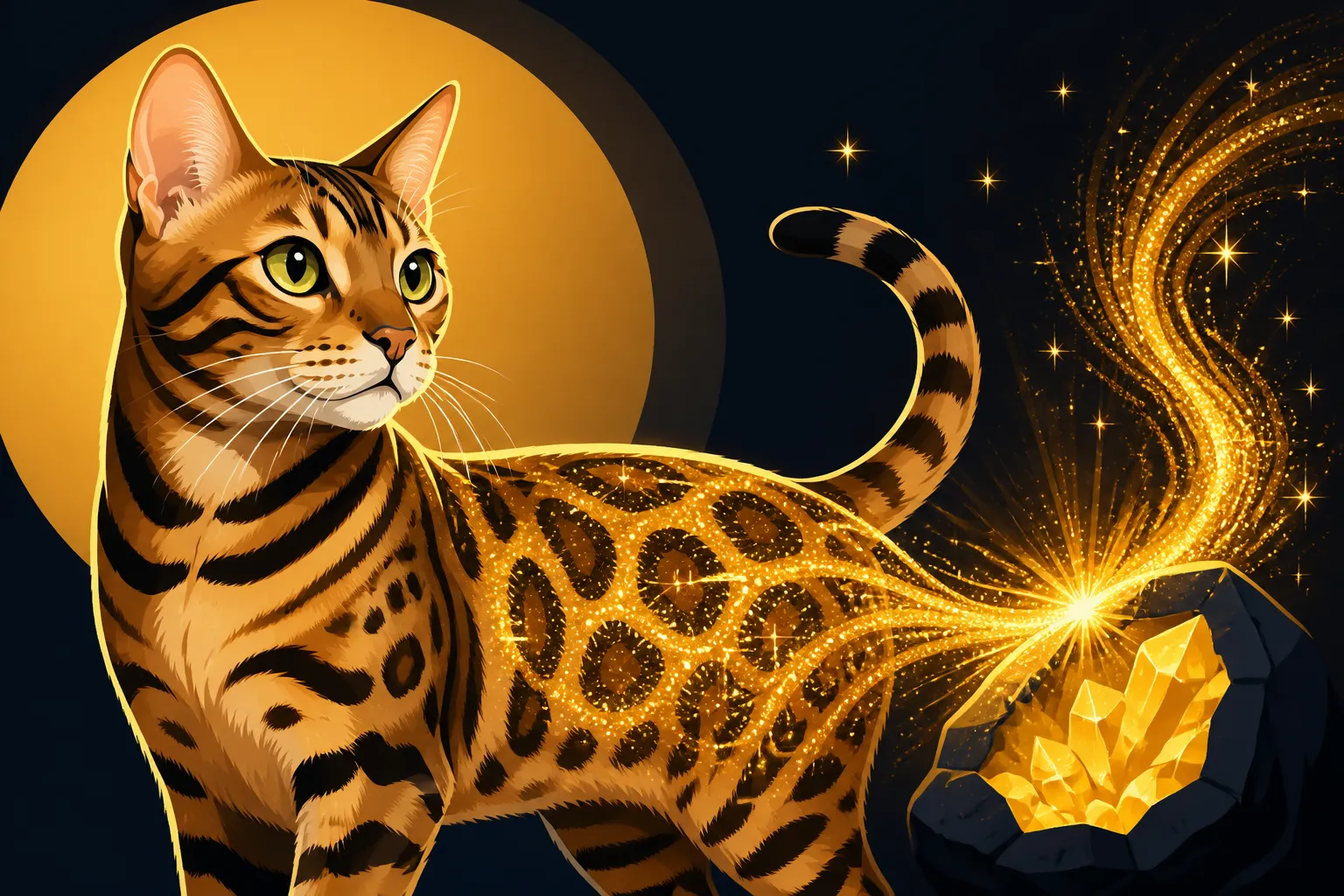
So, what exactly is this "glitter"? It's not actual glitter that you might find in crafts; it's an optical illusion, a stunning effect created by the unique structure of the individual hair shafts. When light hits a Bengal cat's coat that possesses this trait, it doesn't just reflect off the surface. Instead, the light penetrates the translucent tip of each hair shaft and bounces back, creating a sparkling, iridescent effect, almost as if millions of tiny diamonds were embedded in their fur.
This phenomenon gives the coat a wet, dewy look, even when it's perfectly dry. It's particularly noticeable in bright sunlight or under direct indoor lighting, where the shimmer seems to dance as the cat moves. While many cats have shiny coats, the Bengal's glitter is in a league of its own, an almost supernatural glow that enhances their wild appearance and makes them look even more exotic. It’s one of the reasons the breed is so visually captivating, and why The Glitter Gene and What It Does to a Bengal Cat's Coat is such a sought-after trait.
Decoding the Science Behind the Sparkle
Understanding where the glitter came from means digging into the microscopic world of genetics and hair structure. It's not just a random mutation; it's a fascinating interplay of inherited traits that culminated in this visually stunning characteristic.
Microscopic Magic: How Hair Structure Creates Glitter
At the heart of the Bengal's glitter is a unique hair structure. Individual Bengal hairs that exhibit glitter are not opaque from root to tip like most cat hairs. Instead, they have a hollow core or a translucent tip that acts like a tiny prism. When light hits these specialized hair shafts, it doesn't just reflect off the surface; it penetrates the clear, hollow outer layer, refracts within the hair, and then reflects back out. This internal refraction and reflection is what gives the coat its characteristic sparkle and depth.
Imagine countless microscopic fiber optics covering your cat – that's essentially what's happening. The light isn't simply bouncing off a flat, colored surface; it's traveling through a clear layer, picking up depth and luminosity before it returns to your eye. This makes the coat appear not just shiny, but almost internally lit, giving it that famous glitter effect. This intricate design is a key reason What Makes a Bengal Cat's Hair Shafts Translucent and enables the stunning visual display.
Is "Glitter" a True Gene or a Trait?
While we often refer to it as the "glitter gene," the scientific community still debates whether it's a single, identifiable gene or a polygenic trait – meaning it's influenced by multiple genes working together. However, it's generally accepted to be inherited in a recessive manner, meaning a kitten needs to inherit a copy of the "glitter" allele from both parents to fully express the trait. Cats with only one copy might carry the trait without showing the pronounced glitter themselves.
Breeders have learned to select for this trait through careful breeding programs, but because it's not always a straightforward dominant/recessive inheritance pattern for intensity of glitter, achieving that perfect sparkle can be a long-term goal. The complexity of its inheritance highlights the remarkable genetic diversity that was harnessed to create the Bengal breed, ensuring a wide array of stunning coat characteristics. This fascinating genetic puzzle is a testament to the intricate process of creating a new breed, especially one as visually striking as the Bengal.
Tracing Glitter Back to the Asian Leopard Cat
To understand the Bengal cat's glitter, we have to go back to its roots: the wild Asian Leopard Cat (ALC), the foundational ancestor that gave the Bengal its incredible patterns and much of its wild allure.
The Wild Ancestor's Contribution
The Asian Leopard Cat ( Prionailurus bengalensis) is a small, solitary wild cat native to Southeast Asia, and it's where the Bengal cat gets its name and much of its striking appearance. What an Asian Leopard Cat Is Behind Every Bengal Cat is crucial to understanding the breed. These wild cats possess a stunning coat of short, dense fur adorned with spots, rosettes, and stripes, perfectly camouflaged for their forest and jungle habitats. While ALCs generally have a sleek, somewhat iridescent quality to their coats, they don't typically display the profound, all-over "glitter" that is celebrated in domestic Bengals. Their natural sheen is more about the quality of their individual hairs and the way their patterns catch the light, rather than the internal luminescence we associate with glitter.
However, the ALC's coat provided the foundational genetics for the Bengal. Their pelted texture, rich contrast, and distinct patterns were all inherited by the first hybrid offspring. It's from this wild canvas that domestic breeders, through generations of careful selection, would eventually coax out the glittering effect. It demonstrates how nature provides the raw materials, and human selection can refine and exaggerate certain desirable traits.
Early Hybridization and Accidental Discoveries
The first crosses between Asian Leopard Cats and domestic cats were pioneered by Jean Mill in the early 1960s, initially for research into feline leukemia resistance. When these F1 (first-generation) hybrids were bred back to domestic cats, the goal was primarily to produce fertile females and domesticate the temperament, while retaining the beautiful wild patterns. The glitter was likely an unexpected bonus, a beautiful trait that emerged from this genetic mixing bowl.
It's believed that the glitter trait wasn't explicitly present in a truly sparkling form in the initial ALC parents but rather developed through the combination of ALC genes with specific domestic cat genes. The early domestic cats used in the breeding program were often American Shorthairs, Abyssinians, or other breeds chosen for their robust health and agreeable temperaments. A Leopard Cat and a Housecat Made the First Bengal Cat through this careful, iterative process. It's within these subsequent generations that the unique structural modifications in the hair shaft, responsible for glitter, began to express themselves more clearly, possibly due to a recessive gene inherited from either the ALC side or, more likely, a lucky combination or mutation arising from the crossbreeding itself. This makes the question of Whether the Asian Leopard Cat Gave the Bengal Cat Glitter a bit more nuanced than a simple yes or no.
The Role of Selective Breeding in Enhancing Glitter
While the initial genetic spark for glitter might have been an accidental discovery in the early Bengal breeding programs, its prevalence and enhancement are undoubtedly due to decades of dedicated selective breeding.
Domestic Cat Influence and Genetic Fortuity
As mentioned, the domestic cat breeds initially used for outcrossing played a crucial, if perhaps unwitting, role in the development of the glitter gene. These foundation domestic cats brought a wider genetic pool to the mix, and it's entirely plausible that certain genes from these domestic ancestors, when combined with the unique properties of the ALC coat, created the perfect conditions for the glitter effect to emerge. It wasn't just about preserving the wild look; it was about combining the best attributes of both worlds. The short, sleek coat of the ALC, when combined with a specific genetic modifier from a domestic cat, could have led to the structural changes in the hair shaft that cause the glitter.
Breeders, upon noticing this enchanting shimmer in their kittens, recognized it as a highly desirable trait. It wasn't something they set out to create from day one, but once it appeared, it became a hallmark of the burgeoning Bengal breed. This genetic fortuity, coupled with keen observation, allowed them to capitalize on this unique characteristic and ensure its continuation.
Breeders' Pursuit of the Perfect Sparkle
Once the glitter effect was identified, Bengal breeders became focused on selectively breeding cats that exhibited this trait. They would carefully choose breeding pairs where both parents either displayed glitter or were known carriers of the "glitter gene," to maximize the chances of producing kittens with that highly sought-after sparkle. This meticulous process involved studying pedigrees, evaluating kittens for the presence and intensity of glitter, and making informed decisions about which cats to include in their breeding programs.
This pursuit wasn't just about aesthetics; it was about defining the breed standard. The glitter became a recognized and valued characteristic within the Bengal fancy, distinguishing them even further from other spotted cat breeds. Which Founding Bengal Cat Carried the Glitter Gene is a topic of much discussion among breeders, as they trace back the lineage to understand how this magnificent trait became a cornerstone of the breed. This dedication has ensured that today, many Bengal cats proudly carry and display this gorgeous, shimmering quality.
Varieties of Glitter and Its Expression
Glitter isn't a one-size-fits-all phenomenon. Its appearance can vary significantly depending on the Bengal cat's base color and pattern, as well as their age. Understanding these variations adds another layer to appreciating this unique trait.
How Glitter Appears Across Different Bengal Colors
The visual impact of glitter can be strikingly different across the various accepted Bengal cat colors. On a classic brown spotted or rosetted Bengal, the glitter often creates a warm, golden sheen that highlights their rich, earthy tones. It can make their rosettes appear to pop more dramatically against the background, giving them an almost three-dimensional quality. The effect is truly captivating, enhancing the contrast and definition of their wild patterns. How Glitter Looks on a Brown Bengal Cat is a testament to how this trait can elevate the entire appearance of the cat.
For "Snow" Bengals (Seal Lynx Point, Seal Mink, and Seal Sepia), the glitter can appear as a silvery or pearlescent shimmer, making their lighter coats seem almost ethereal. This cool sparkle enhances their icy blue eyes (in the case of Seal Lynx Points) or the soft warmth of their mink and sepia tones. Similarly, on Silver Bengals, the glitter provides an additional layer of metallic sheen, making their coats truly gleam like polished silver. Regardless of the base color, the glitter adds a depth and vibrancy that sets the Bengal apart.
The Evolution of Glitter in Kittens and Adults
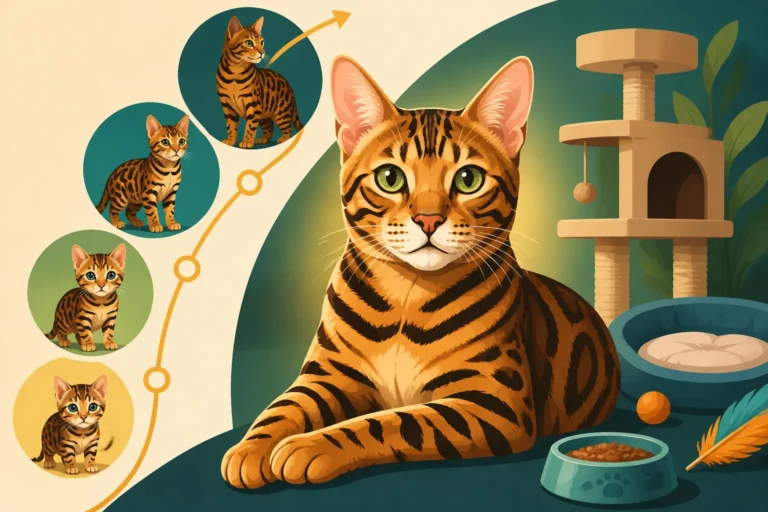
Observing a Bengal kitten develop can be a journey of transformation, and glitter is no exception. Bengal kittens often go through a "fuzzies" stage, usually between 4 weeks and 6 months of age, where their coat appears duller and less defined due to longer, less structured guard hairs. During this time, the glitter might be less apparent or even completely hidden. It's a natural camouflage phase, akin to what wild kittens experience, helping them blend into their surroundings.
As the kitten matures and When a Bengal Cat Kitten's Fuzzies Clear, their adult coat begins to come through, becoming shorter, sleeker, and more defined. This is when the glitter typically becomes much more prominent and consistently visible. The intensity can also deepen as the cat fully matures, with some adults displaying an almost astonishing level of sparkle. Owners might even notice subtle changes in the intensity of their cat's glitter with seasonal coat changes, though the underlying structural ability to glitter remains. It's a characteristic that truly comes into its own with age. The good news is that for the most part, Whether Glitter Fades in a Bengal Cat is generally not a concern, though the perception might change with coat condition.
Maintaining That Iridescent Sheen
While the glitter gene is primarily a genetic trait, the health and vibrancy of a Bengal's coat can certainly be influenced by their overall well-being. Ensuring proper nutrition and basic grooming can help that sparkle shine its brightest.
Nutrition for a Radiant Coat
A healthy coat, complete with dazzling glitter, starts from the inside out. A diet rich in high-quality animal protein, essential fatty acids (like Omega-3 and Omega-6), and vitamins is paramount for skin and coat health. These nutrients contribute to the strength and luster of the hair shafts, making them more resilient and capable of reflecting light optimally. Low-quality foods with excessive fillers or inadequate protein can lead to a dull, dry coat, even in a genetically glittered Bengal.
Many Bengal owners opt for premium cat foods, often high-meat wet diets or even carefully balanced raw diets, to meet their cat's carnivorous needs. If you're looking for high-quality food options, tailored fresh meals can contribute to a lustrous coat. Always look for foods with real meat as the first ingredient and a good balance of fats. A well-nourished Bengal will naturally have a more vibrant and sparkling coat.
Grooming for Optimal Sparkle
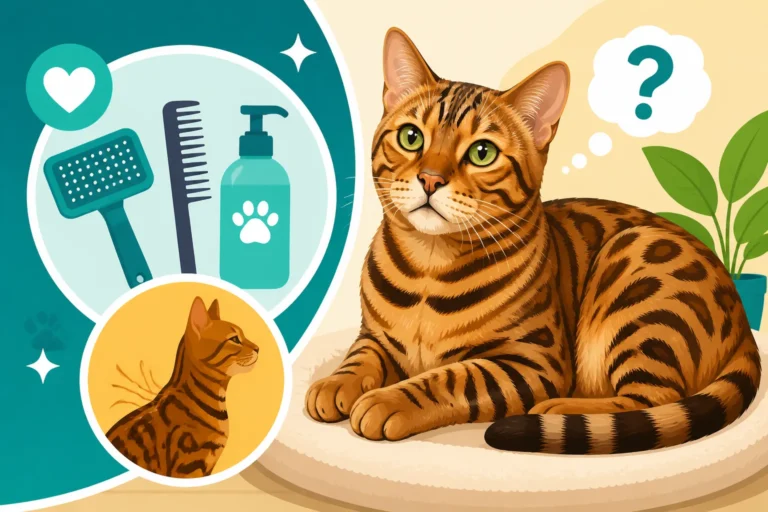
One of the wonderful aspects of the Bengal's unique pelted coat is its low maintenance. A Bengal Cat Needs Almost No Grooming compared to many other breeds. Their short, sleek hair, combined with their natural fastidiousness, means they do a great job of keeping themselves clean. However, a little help from you can enhance their natural glitter even further. Occasional gentle brushing, perhaps once or twice a week, can help remove loose hairs, distribute natural oils, and stimulate circulation, all of which contribute to a healthy, vibrant coat.
A soft rubber grooming brush or a grooming glove is usually all that's needed – anything too harsh can be unnecessary and potentially uncomfortable. While Bengal cats are low-maintenance, a soft grooming brush or glove, readily available on platforms like Amazon, can enhance their natural glitter. This minimal grooming routine isn't just about keeping them tidy; it's also a wonderful bonding experience for you and your Bengal. A clean, healthy coat is a happy coat, and a happy coat glitters most beautifully.
Bengal Cat Coat Characteristics
| Feature | Asian Leopard Cat (ALC) | Domestic Shorthair (Typical) | Bengal Cat (SBT) |
|---|---|---|---|
| Texture | Short, sleek, dense pelt | Varies, soft, often fluffy | Short, sleek, pelted, silky |
| Undercoat | Minimal | Variable, often dense | Minimal |
| Glitter (Iridescence) | Subtle, natural sheen | Generally absent | Often present, pronounced |
| Hair Shaft Structure | Generally opaque/solid | Opaque/solid | Often translucent tips/hollow |
| Pattern | Spotted, rosetted, striped | Solid, tabby, bicolor | Rosetted, spotted, marbled |
| Maintenance | Low | Low to moderate | Very low |
Disclaimer
This article is for general informational purposes only and does not constitute professional advice. Laws, prices and regulations vary by location and change over time. Consult a qualified professional for guidance on your specific situation.