Why a Snow Bengal Cat Has Blue Eyes
A Snow Bengal’s icy blue eyes can look almost unreal, especially beside a pale coat and dark rosettes. The reason is not simply that the cat is white: a colorpoint gene affects pigment production in both the coat and the eyes. This guide explains how Snow Bengal varieties differ, why blue eyes are most associated with one type, and when an eye change deserves a veterinarian’s attention.
Why a Snow Bengal Cat Has Blue Eyes
The colorpoint gene affects coat and eye pigment
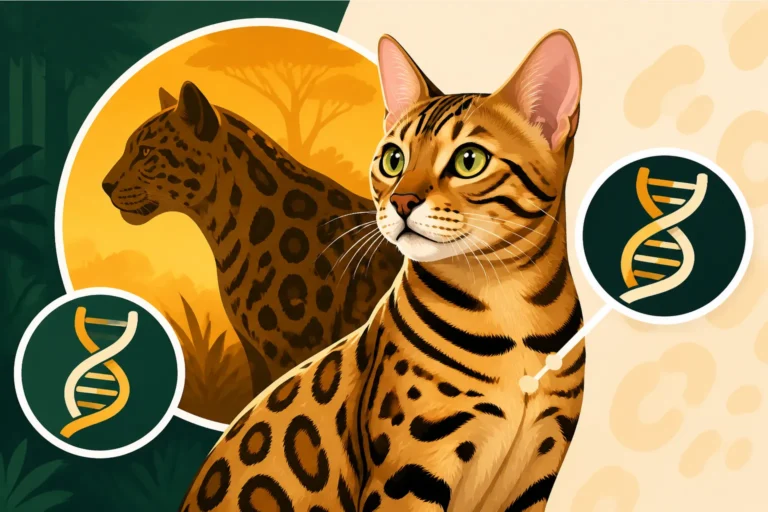
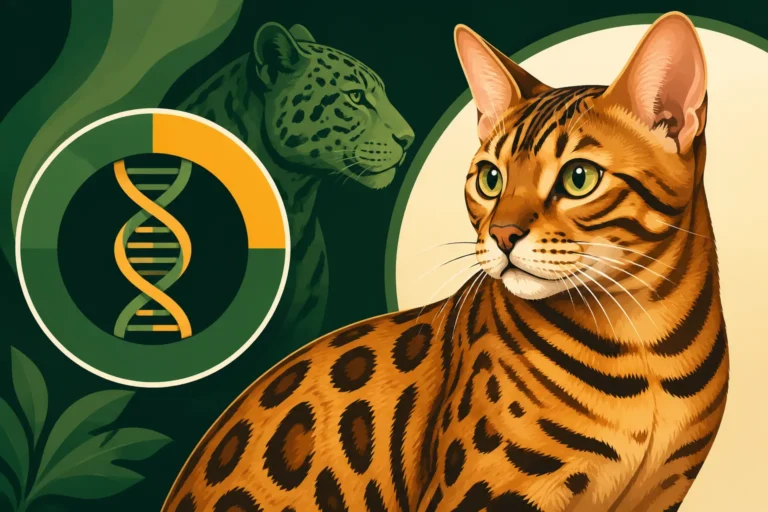
A Snow Bengal’s coloring comes from genes that influence how much pigment the body makes and where it appears. In colorpoint cats, a temperature-sensitive form of an enzyme involved in pigment production works less effectively in warmer parts of the body. Cooler areas, such as the ears, face, paws, and tail, can develop darker markings, while the warmer body remains lighter.
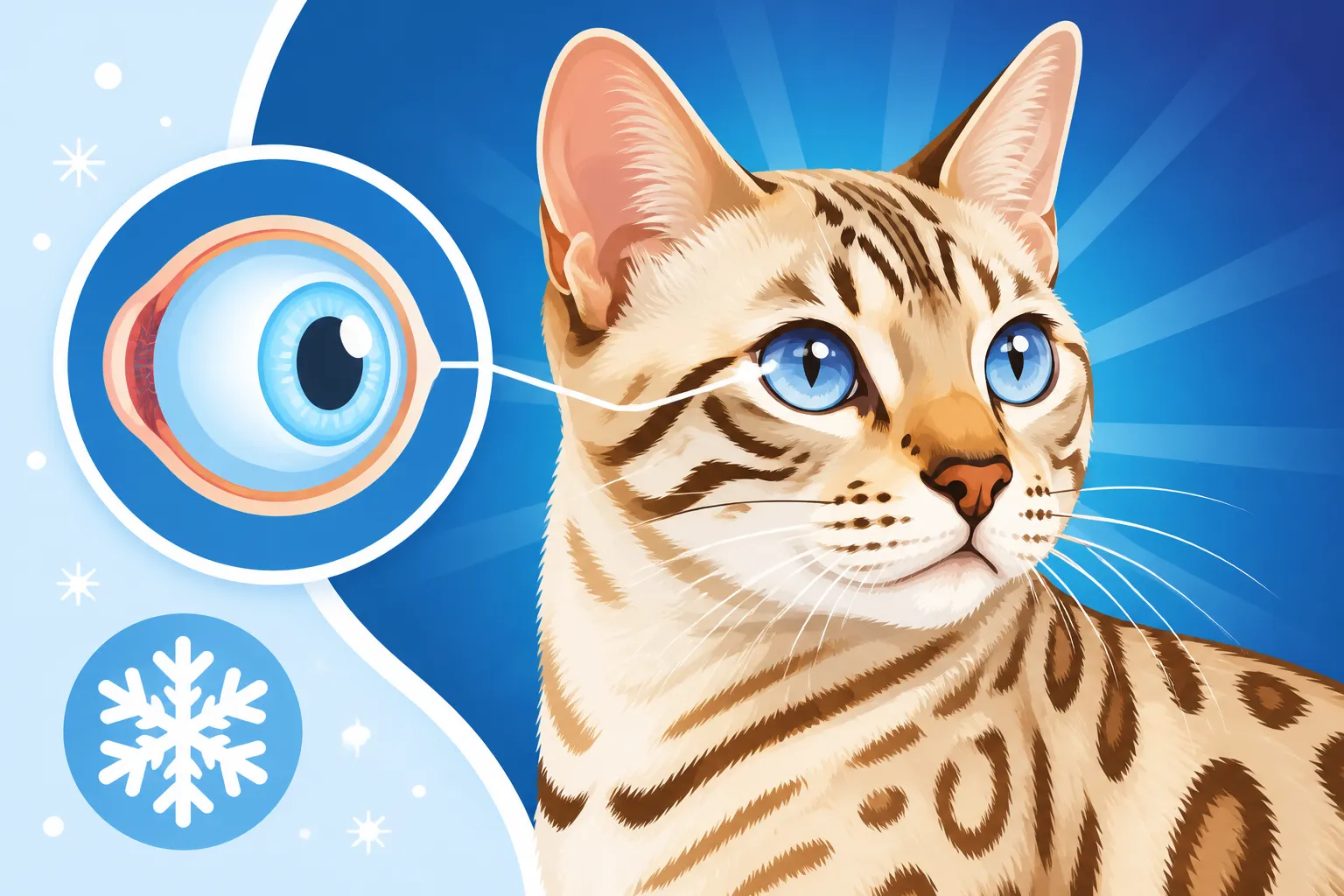
The same gene can affect pigment in the eyes. A blue iris has little pigment in its front layers; its appearance comes from how light scatters through the tissue, rather than from blue pigment itself. When pigment production in the iris is limited, the eyes can look blue.
That connection helps explain why the seal lynx point Snow Bengal is especially known for blue eyes. Its colorpoint genetics produce the pale body and darker points, and blue eyes are a characteristic feature of this variety. The relationship is strong, but eye color should be considered alongside the cat’s overall coloring and pedigree—not used by itself to identify a breed or coat variety.
Snow does not mean albino or completely white
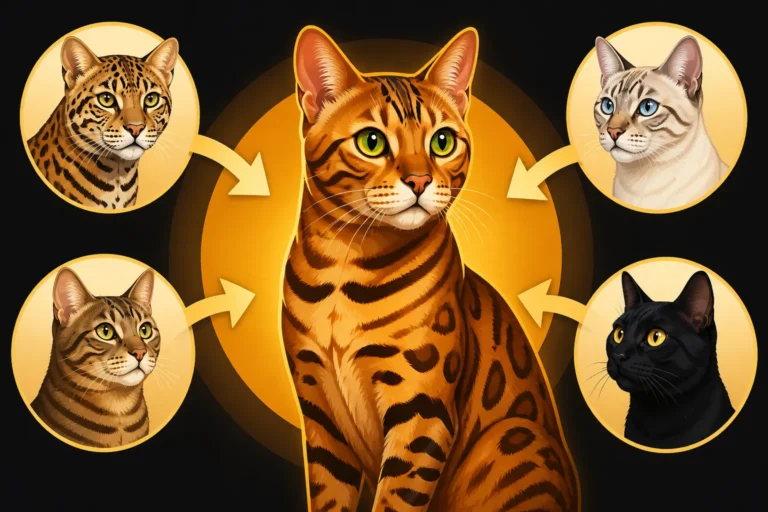
“Snow” is a Bengal color description, not a claim that the cat is an albino. Snow Bengals usually have a cream, ivory, or pale beige background, with visible markings that may be darker brown, taupe, or gray. Some look very pale when young and develop more contrast as they mature.
The term covers several related color varieties, and their eye colors can differ. A pale coat alone does not guarantee blue eyes. In particular, mink and sepia Snow Bengals are commonly associated with aqua, green, or gold shades rather than the clear blue typical of a seal lynx point.
If you are comparing a kitten’s appearance with its paperwork, it helps to learn What a Snow Bengal Cat Is and Which Colors a Bengal Cat Comes In. Those distinctions explain why two kittens described as “snow” can have noticeably different coats and eyes.
The Three Snow Bengal Varieties and Their Eye Colors
Seal lynx point Bengals
Seal lynx point Bengals are the Snow variety most closely associated with blue eyes. Their coat often has a very light ivory or cream ground color, with markings that can become more visible as the cat grows. The points—especially around the face, ears, legs, and tail—may darken over time.
A seal lynx point kitten may be born with a faint pattern that becomes clearer as the coat develops. That can make it difficult for a new owner to judge the adult contrast from a very young kitten’s appearance. Blue eyes, on the other hand, are a defining visual clue for this variety, though a breeder should be able to explain the kitten’s color and parentage rather than relying on eye color alone.
For a closer look at this particular color, see What a Seal Lynx Point Bengal Cat Is. It is also useful to understand Which Eye Colors a Bengal Cat Has, because eye shades vary across Bengal colors and are not all tied to the Snow label in the same way.
Seal mink and seal sepia Bengals
Seal mink Bengals often have aqua or blue-green eyes. Their coat can be a little warmer or darker than a lynx point’s, and their markings may show stronger contrast earlier. The color is commonly described as a blend of traits associated with lynx point and sepia varieties.
Seal sepia Bengals tend to have warmer-looking eyes, often in green or gold shades. Their coats may also appear darker or more strongly marked than those of seal lynx points. These are tendencies, not a promise that every individual will have exactly the same shade. Lighting, age, and the way someone describes a color can all make an eye look more aqua, green, or gold in a photograph.
The names can be confusing when you are looking at kitten listings, especially if a seller uses “snow” as a broad label without specifying the variety. Comparing the descriptions of What a Seal Mink Bengal Cat Is and What a Seal Sepia Bengal Cat Is can help you ask more focused questions about a kitten’s expected coat and eye color.
| Snow Bengal variety | Common eye-color tendency | General coat impression |
|---|---|---|
| Seal lynx point | Blue | Very pale body with darker points and developing markings |
| Seal mink | Aqua or blue-green | Pale to warm-toned body with visible contrast |
| Seal sepia | Green or gold | Often warmer or darker in appearance, with stronger-looking markings |
These are typical patterns, not a substitute for individual assessment. Eye color may be described differently by different people, and photos can distort it. If a kitten’s appearance does not seem to match the description, ask the breeder to explain the variety and provide the relevant pedigree information.
How Eye Color and Coat Color Develop
A kitten’s coat can change as it matures
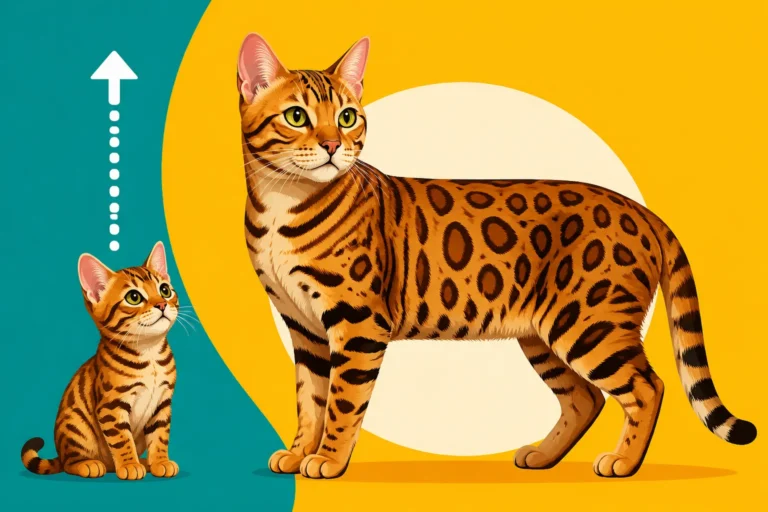
Snow Bengal kittens may not arrive looking like miniature versions of the adults they will become. Their markings can be soft or indistinct at first, then gain contrast as the coat develops. Colorpoint-related shading may also become more noticeable in cooler areas of the body. This is one reason a kitten photographed indoors can look different from the same kitten in bright daylight or several months later.
Eye color is not identical to coat color, but both reflect the kitten’s genetic makeup. Blue eyes in a seal lynx point are not caused by the coat “turning blue,” and a blue-eyed kitten is not necessarily a Snow Bengal. Many cat breeds and mixed-breed cats can have blue eyes for different genetic reasons.
A kitten’s eye shade can also appear different in photographs because of lighting, camera settings, and reflections. If the eyes look different in person than they do in a listing photo, that alone does not indicate a health problem. For breed context, What a Bengal Cat Looks Like by the Standard can help separate overall Bengal features from the specific traits of a Snow coat.
Eye color is not the same as eye health
A stable blue eye color is a normal feature of many seal lynx point Snow Bengals. It does not, on its own, mean that a cat has poor vision or needs special eye treatment. Blue-eyed Snow Bengals should receive routine veterinary care just like other cats, including an eye check during wellness visits.
What matters is a change in the eye’s appearance or the cat’s comfort. Contact a veterinarian if you notice sudden cloudiness, persistent redness, swelling, repeated squinting, unusual discharge, or a visible difference between the two eyes. A cat that is pawing at an eye, holding it partly closed, or avoiding light may be uncomfortable and should be assessed promptly.
Do not use human eye drops or leftover medication unless a veterinarian specifically directs you to. Eye problems can have different causes, and treating the wrong one can make things worse. If you are preparing for a kitten’s arrival, a basic grooming kit and familiar food can make the adjustment easier; retailers such as Chewy may be one place owners look for everyday supplies, but no special eye product is needed simply because a cat has blue eyes.
Choosing and Caring for a Blue-Eyed Snow Bengal
Ask the breeder useful questions
If you are choosing a Snow Bengal kitten, ask which variety the breeder believes the kitten is and how they reached that conclusion. A knowledgeable breeder should be able to explain whether the kitten is seal lynx point, seal mink, or seal sepia, and why the expected eye color fits that description. Ask to see the kitten in natural light when possible, because indoor lighting can shift how pale coats and eye shades appear.
It is also reasonable to ask how the kitten’s coat and markings may change with age. A breeder cannot promise every detail of an adult appearance, but they should be able to describe the parents’ colors and what they have observed in related kittens. Be cautious if someone treats blue eyes as proof that a cat is a purebred Bengal or uses the eye color alone to justify a particular variety.
Look beyond appearance, too. Ask about the kitten’s veterinary care, socialization, and the breeder’s practices, and make sure the kitten’s paperwork matches the explanation you are given. If you need help understanding how Bengal color terminology fits into the wider breed picture, What a Bengal Cat Looks Like by the Standard offers useful context.
Set up ordinary, comfortable care
Blue-eyed Snow Bengals do not need a special diet, grooming routine, or lighting arrangement because of their eye color. Focus on ordinary cat care: regular meals suited to the cat’s age and needs, fresh water, clean litter, enrichment, and veterinary checkups. A confident, active Bengal also benefits from safe climbing spaces and interactive play, regardless of whether its eyes are blue, aqua, green, or gold.
When shopping for everyday supplies, choose items for the cat’s size, age, and habits rather than its eye color. Some owners browse Chewy or a local pet store for litter, toys, and grooming basics; the important thing is that the supplies are appropriate and that the cat can use them safely. A sturdy carrier and a calm introduction to household routines are often more helpful than buying anything marketed specifically for blue-eyed cats.
A pale coat can make natural color variations easier to notice, but routine observation is enough. Notice whether the eyes remain clear and comfortable, and bring unusual changes to your veterinarian rather than trying to diagnose them from a photo. Chewy may be convenient for replenishing general supplies, but eye symptoms are a veterinary issue—not a shopping problem.
A Snow Bengal’s blue eyes are best understood as part of a wider color pattern: the seal lynx point variety is most characteristically blue-eyed, while mink and sepia varieties often have different shades. The color can be striking, but it is only one piece of the cat’s appearance. If you are choosing a kitten, ask about the specific variety and its background; if you are caring for one already, focus on normal wellness and seek veterinary help for sudden eye changes.
Disclaimer
This article is for general informational purposes only and does not constitute professional advice. Laws, prices and regulations vary by location and change over time. Consult a qualified professional for guidance on your specific situation.