Which Colors a Bengal Cat Comes In
When you first fall for a Bengal cat, it’s usually their wild, exotic coat that captures your heart. But then you start looking closer, and you realize it’s not just spots and stripes—there's a whole spectrum of breathtaking colors and patterns that make each Bengal truly unique. This guide is here to help you navigate the stunning array of shades and markings that your beautiful Bengal cat might display, moving beyond the simple "brown" or "snow" to truly appreciate the depth and variety of their wild-look coat.
The Core Palette: Brown, Snow, and Silver Bengal Cats
These three colors form the foundation of what you'll commonly see in Bengal cats accepted by most registries. Each has its own distinct charm and a range of variations that can make your head spin – in the best possible way, of course! Understanding these core colors is your first step into the dazzling world of Bengal cat genetics and aesthetics.
The Classic Brown Spotted/Rosetted Bengal
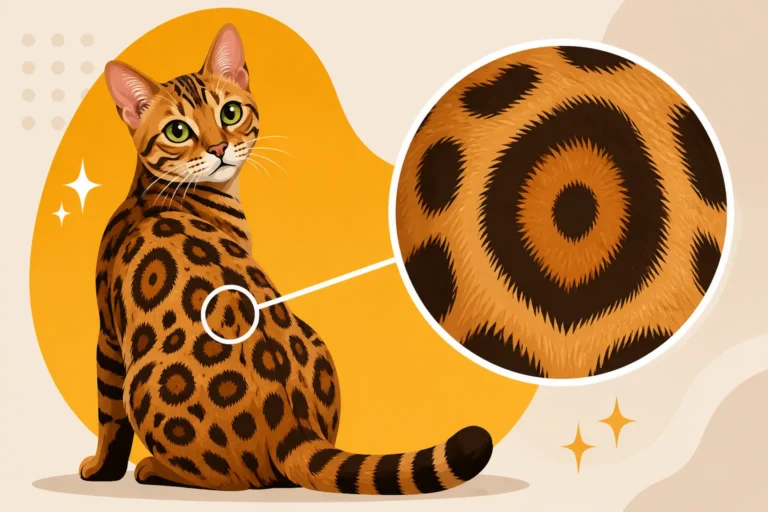
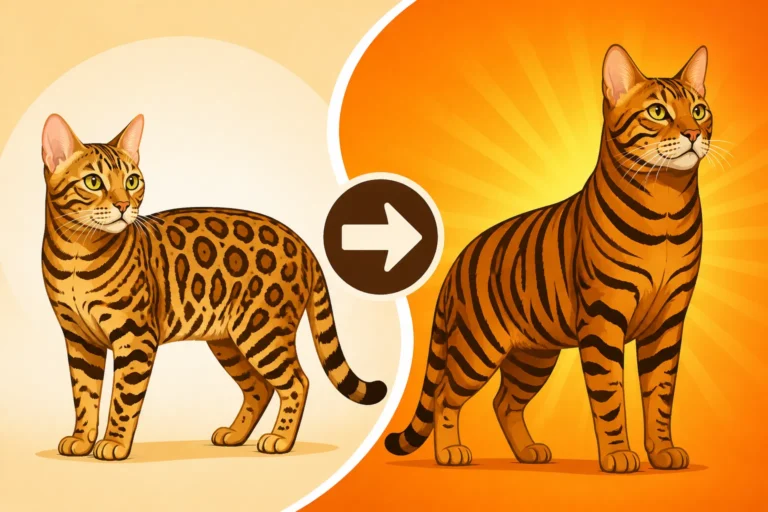
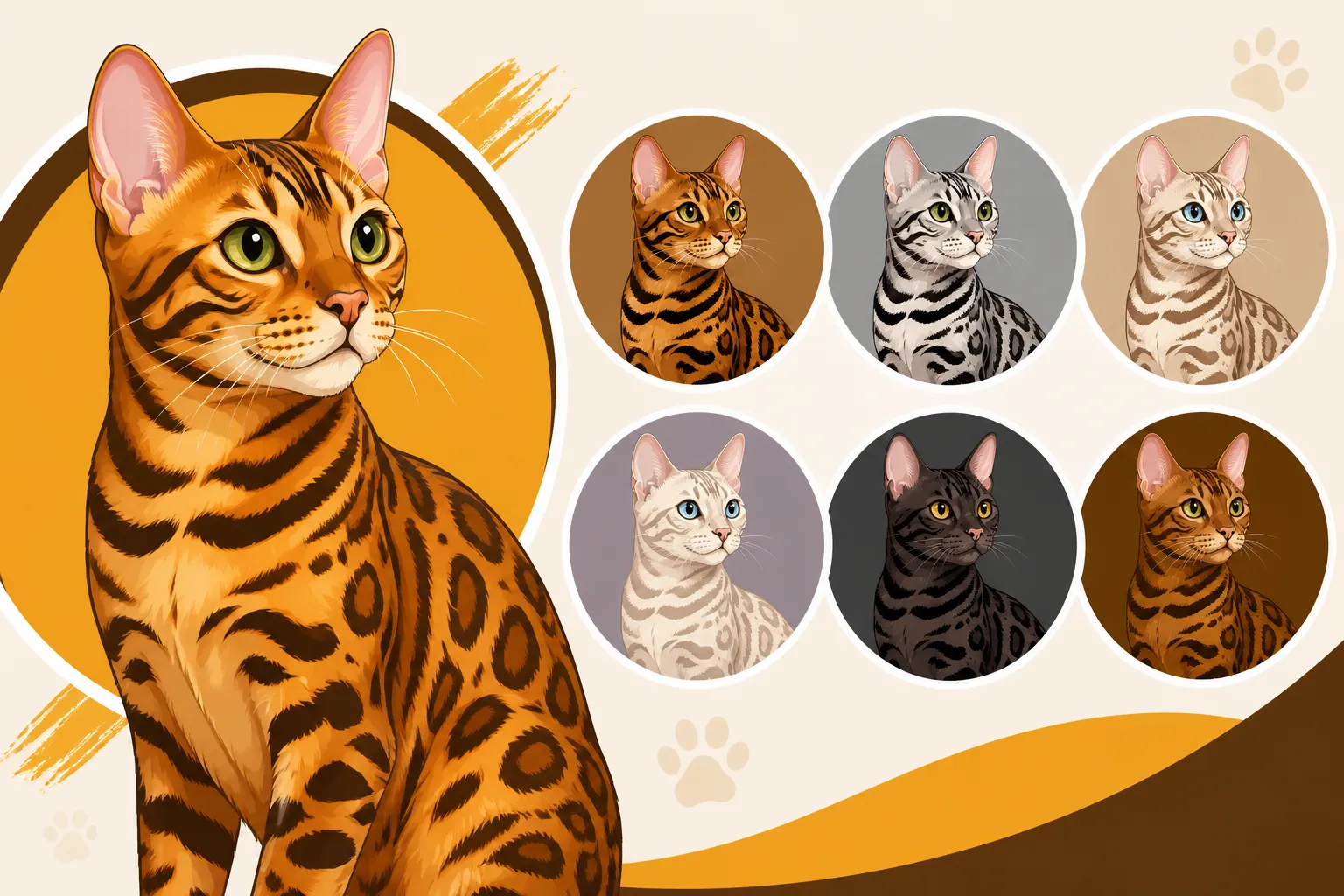
Ah, the brown Bengal – the original, the classic, the one that screams "miniature leopard" the loudest. When people picture a Bengal cat, they’re usually imagining one of these stunners. But calling them simply "brown" hardly does them justice. The base coat can range from a warm, rich golden honey to a deep, fiery orange or even a cool, almost grey-toned tawny brown. It's truly a spectrum, and the richness of that background color plays a huge role in how the markings pop.
The spots, or rosettes as they're often called, are usually black or dark brown, providing that striking contrast. You'll often hear about "crisp" markings, which means the spots are sharply defined against the background. Sometimes, though, you'll see a slightly softer contrast, especially in Bengals with a lighter base coat, which can be equally beautiful. Many brown Bengals also have that coveted "glitter" gene, which makes their coat shimmer as if dusted with gold dust when the light catches it just right. It’s an inherited trait that makes their already magnificent coat even more spectacular. You can often tell the quality of a brown Bengal by the vibrancy of its background color and the clarity of its markings; the more defined and contrasted, the more sought-after. For breeders, perfecting this classic look is a constant goal, often focusing on features like the "whited tummy" and "mascara marks" around the eyes that accentuate their wild lineage.
The Enchanting Snow Bengal: Lynx, Mink, and Sepia
If you're looking for something truly ethereal, the "Snow Bengal" is probably what you have in mind. These cats have light cream, ivory, or even pure white base coats with markings that range from light tan to dark chocolate brown. But here's where it gets interesting: "Snow" isn't just one color, it's actually an umbrella term for three distinct genetic variations, each with its own unique characteristics. These are the Seal Lynx Point, Seal Mink, and Seal Sepia, and they’re all absolutely breathtaking.
The Seal Lynx Point Bengal is the lightest of the snows. They are born pure white or cream, and their markings develop over time, gradually darkening as they mature. This delayed color development is due to the Siamese gene (cs/cs) they carry. A defining feature of the Seal Lynx Point is their brilliant blue eyes – it’s a non-negotiable trait, and one that makes them instantly recognizable. Their markings tend to be a lighter shade of brown, often a pale tan or fawn, creating a softer, more blended look than their darker snow counterparts. If you're looking for a cat with striking sapphire eyes, this is your pick.
Next up, we have the Seal Mink Bengal. These beauties are a middle ground between the Lynx Point and the Sepia. They also have a lighter body color, usually a warm cream or ivory, but their markings are more prominent at birth and continue to darken. Their eye color is typically aqua or blue-green, a stunning blend that complements their coat perfectly. Genetically, they carry one Siamese gene and one Burmese gene (cs/cb), which gives them this intermediate coloration. The contrast on a mink is usually stronger than a lynx point, offering a more defined pattern against their creamy background.
Finally, the Seal Sepia Bengal is the darkest of the snows. Their base coat ranges from a warm, pale tan to a rich, almost light brown, and their markings are typically a darker brown, creating a high-contrast appearance right from kittenhood. Their eyes are usually gold or green, much like a traditional brown Bengal. Sepias carry two copies of the Burmese gene (cb/cb), resulting in this deeper, richer coloration. Their patterns are often very clear and defined, making them look almost like a ghost leopard. For many, the warm tones and strong contrast of a Sepia Snow Bengal are irresistible. Understanding What a Snow Bengal Cat Is really helps appreciate these nuances.
The Striking Silver Bengal Cat
If you're drawn to a cooler, more sophisticated aesthetic, then the Silver Bengal will absolutely captivate you. Silver Bengals are essentially brown Bengals where the underlying brown pigment has been inhibited, replaced by a stunning silver-grey base coat. Imagine a traditional brown Bengal, but instead of warm earthy tones, all the background color is stripped away, leaving behind a shimmering, icy silver. Their markings are usually a stark, dark black, creating an incredibly dramatic and high-contrast appearance.
The beauty of a silver Bengal lies in this intense contrast between the cool silver background and the jet-black rosettes or marbling. The clearer the silver, without any yellow or brown "tarnishing" creeping in, the more prized the cat is. This tarnish can sometimes appear as a brownish hue, especially on the back or legs, and breeders work hard to minimize it. A truly exceptional silver Bengal will have a pure, untarnished silver coat that gleams under the light. Their eyes can be green, gold, or aqua, providing a beautiful splash of color against their monochrome coat. A well-bred silver Bengal often appears incredibly sleek and modern, a true testament to selective breeding. They maintain the wild look of their ancestors but with an undeniable elegance that sets them apart. You can explore How Glitter Looks on a Silver Bengal Cat to see how this trait enhances their icy appeal.
Beyond the Basics: Charcoal and Melanistic Bengals
While brown, snow, and silver are the most common colors recognized, the Bengal cat breed also boasts some truly unique and captivating variations that take their wild appearance to another level. These colors are often less common and carry their own distinct genetic stories, offering a different kind of exotic beauty.
The Unique Allure of the Charcoal Bengal
The Charcoal Bengal is a jaw-dropping variant that often causes a double-take. They have a dramatically darker face mask, often resembling a Zorro mask, and a thick, dark dorsal stripe (known as a 'cape') running down their spine. This striking appearance is due to a specific genetic combination involving the "apb" (charcoal) allele from the Asian Leopard Cat and the "A" (agouti) allele from the domestic cat, or two copies of the "apb" allele. Essentially, it intensifies the dark pigments and reduces the rufousing (reddish tones) in the coat.
The base color of a charcoal Bengal can vary, but it's typically a much cooler tone than a standard brown, ranging from a dark ash grey to almost black. The markings, whether rosetted or marbled, are usually a rich, deep black, creating an exceptionally high-contrast and dramatic look. Think of it as a super-charged version of a silver or a very dark brown. Their eyes are usually green or gold, which provides a vivid pop against their intense facial mask. For many, the charcoal Bengal truly embodies the wild spirit of their ancestors, presenting a fierce, untamed beauty that is simply captivating. It’s a phenotype that demands attention and appreciation for its raw, powerful aesthetics. Learning What a Charcoal Bengal Cat Is delves deeper into this fascinating genetic expression.
The Mysterious Melanistic, or Black, Bengal
Imagine a Bengal cat, with all its iconic rosettes and patterns, but instead of brown, snow, or silver, the entire coat is a deep, velvety black. This is the Melanistic Bengal, often referred to as the Black Bengal, and they are truly a sight to behold. At first glance, they might just appear to be a sleek black cat, but when the light hits them just right, you can see the ghost of their patterning – the rosettes or marbling faintly visible beneath the dark overlay. This is known as "ghost spotting" or "ghost rosetting," and it's what makes them so unique.
Melanistic Bengals carry a recessive gene for non-agouti, which causes the full expression of black pigment throughout the entire coat, masking the underlying pattern. It’s similar to how a black panther is a melanistic leopard. These cats are incredibly rare and often highly sought after by those who appreciate their mysterious allure. Their eyes are typically gold or green, standing out brilliantly against their dark fur. While not currently accepted for show by major registries like TICA, they are recognized as a natural variation and are increasingly appreciated by enthusiasts. A well-conditioned melanistic coat can have an incredible sheen, making the ghost markings appear even more prominent. They possess all the characteristic traits of a Bengal—the athletic build, the intelligence, the vocal nature—but wrapped in a cloak of midnight. If you are intrigued by this rare beauty, What a Melanistic Bengal Cat Is provides more insight.
Patterns and Markings: Rosettes and Marbling Across Colors
It’s not just the colors that make a Bengal cat's coat so special; it's the intricate patterns that truly mimic their wild ancestors. The contrast, clarity, and type of pattern are crucial elements that define a Bengal's exotic look, making each one a living piece of art.
The Coveted Rosetted Patterns
When most people think of a Bengal, they envision those stunning rosettes – markings that aren't just solid spots but are composed of two or more distinct colors, often resembling the markings of a leopard or jaguar. These aren't just pretty patterns; they're a hallmark of the breed's wild heritage and a key indicator of quality. There are several types of rosettes, each with its own charm.
The Arrowhead Rosette is shaped like an arrowhead, often with a darker outline and a lighter center. These are distinct and well-defined, pointing in a single direction. Then there's the Paw Print Rosette, which often looks like a collection of paw prints trailing around a darker central area. But perhaps the most prized are the Donut Rosette and the Clouded Rosette. A donut rosette is a darker, almost complete circle or oval around a lighter central color, creating a striking three-dimensional effect. Imagine a mini donut on your cat's side! The clouded rosette takes this a step further, forming larger, more irregular, cloud-like patterns with multiple darker outlines and varying shades within. These are particularly impressive, mimicking the markings of a clouded leopard, hence the name. The goal in breeding is often to achieve large, horizontally aligned, highly contrasted rosettes, as these most closely resemble their wild cousins. For a deep dive into the specifics, check out What a Rosette Is on a Bengal Cat.
The Elegant Marbled Coat
While rosettes get a lot of attention, the marbled pattern is equally stunning and equally rooted in the Bengal's wild ancestry. Instead of distinct spots, marbled Bengals feature swirling, horizontal patterns that flow across their body, often resembling marble stone or intricate finger painting. A truly exceptional marbled Bengal will have a pattern that appears to flow horizontally, avoiding the bullseye or target look that is less desired.
The best marbled patterns are often described as "horizontal flow" or "sheet marble." A horizontal flow marble will have patterns that stretch out across the cat's sides, creating long, unbroken lines that trace the contours of their body. A "sheet marble" can appear as a larger, more abstract pattern across the back and sides. Just like rosettes, the marbling should have good contrast, with darker swirls against a lighter background. The clarity of the lines and the richness of the colors are key to its beauty. Young marbled kittens often go through a "fuzzie" stage, where their patterns are muted, but they clear as they mature, revealing their full glory. Some people find the marbled pattern to be even more artistic and unique than the rosetted, offering a different kind of wild beauty. You can learn more by reading What a Marbled Bengal Cat Is.
Understanding Whited Tummy and Mascara Marks
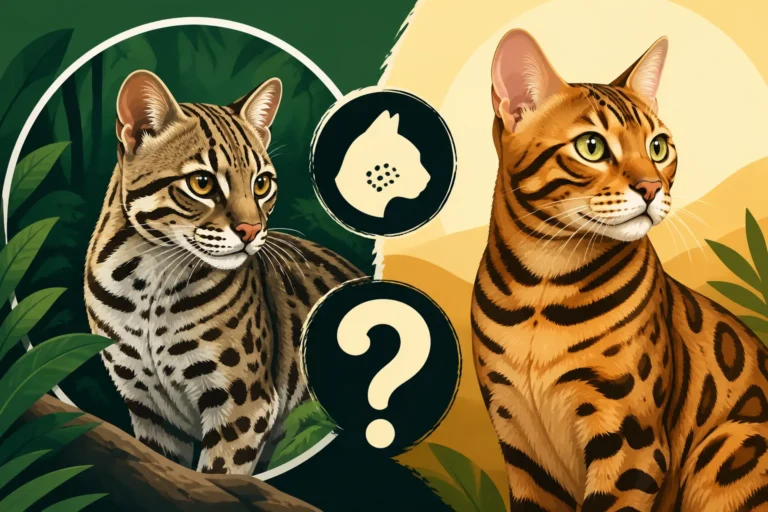
Beyond the main patterns, two specific markings significantly enhance the wild appearance of a Bengal cat: the whited tummy and mascara marks. These details, though subtle, contribute immensely to the overall exotic look. The whited tummy refers to the lighter, often off-white or cream-colored fur found on the Bengal's underside, extending from the chin down the chest and belly. This trait is inherited from the Asian Leopard Cat and is highly desirable, as it further enhances the contrast with the darker spotted or marbled patterns on the sides and back. It gives the impression of a wild cat's camouflaged underbelly, helping them blend into tall grasses. A clear, bright whited tummy, free of any spotting, is particularly sought after in show-quality Bengals. Many owners are enchanted by this striking feature, often found on reputable breeders' cats, much like the fantastic selection of cat beds available on Chewy that often match a cat's light underbelly.
Mascara marks, on the other hand, are dark lines that extend from the outer corner of the eye, akin to eyeliner. These markings further accentuate the eyes and give the Bengal a more intense, "wild eyed" expression. They draw attention to the cat's captivating gaze and complete the feral aesthetic. Along with the "ocelli" (small, light spots on the back of the ears that mimic eyes to deter predators), mascara marks are tiny details that collectively make the Bengal's face so expressive and undeniably wild. Both the whited tummy and mascara marks are examples of how specific features, even small ones, are carefully bred for to maintain the breed standard and the Bengal's distinct jungle-cat appearance.
Genetics of Bengal Cat Color and Pattern
Understanding Bengal colors isn't just about what you see; it's about the fascinating genetics working behind the scenes. Each color and pattern is a result of specific genes inherited from their Asian Leopard Cat ancestors and domestic cat crosses. It's truly a complex and beautiful tapestry of heredity.
How Color Genes Interact
At the heart of every Bengal's stunning coat are a handful of key genes that dictate their base color and how it expresses itself. The primary color gene in cats determines whether they are black-based (which includes brown, charcoal, and silver variations) or red-based (like ginger cats, though pure red Bengals are not recognized). In Bengals, we're almost exclusively talking about black-based colors. The agouti gene plays a huge role here, deciding whether the color is expressed in bands on each hair shaft (agouti, creating patterns) or uniformly (non-agouti, leading to solid colors like melanistic).
Beyond the base color, modifier genes come into play. For instance, the dilute gene can turn black to blue and red to cream, though blue is a non-standard color in Bengals. The colorpoint gene, specifically the Siamese and Burmese alleles, is responsible for the captivating "snow" colors. A Bengal carrying two copies of the Siamese gene will be a Seal Lynx Point, characterized by blue eyes and light markings that darken with age. If they carry two copies of the Burmese gene, they'll be a Seal Sepia, with warmer tones and gold/green eyes. And if they carry one of each, you get the lovely Seal Mink, with aqua eyes. This intricate dance of genes is what allows for such a wide array of beautiful variations within the breed, showcasing the power of feline genetics.
The Role of the Agouti Gene
The agouti gene (A/a) is absolutely fundamental to the patterned coat of a Bengal cat. Without it, you wouldn't have those stunning rosettes or marbling; you'd just have a solid-colored cat. The agouti gene essentially acts like a switch. When the cat inherits at least one dominant "A" allele (making them Agouti), the hair shafts are banded with alternating light and dark pigments. This banding allows the underlying pattern genes (like those for spotted or marbled) to be expressed, creating visible markings. The lighter bands form the background color, and the darker bands make up the spots or swirls. This is why a brown Bengal has dark spots against a lighter brown background – each hair in the spot might be solid dark, while the background hairs are banded.
However, if a cat inherits two recessive "a" alleles (making them non-agouti, or "aa"), the agouti switch is turned off. In this case, the pigment is deposited uniformly along the entire hair shaft, regardless of where the pattern genes say a spot should be. The result is a solid-colored cat, like the melanistic Bengal. Even though a melanistic Bengal genetically has the pattern genes for spots or marbling, the non-agouti gene masks them, making the cat appear solid black. You can sometimes see "ghost spotting" when the light catches the fur just right, revealing the hidden pattern. This is a perfect example of how the agouti gene is paramount in defining the Bengal's signature wild look.
Dilution and Modifier Genes
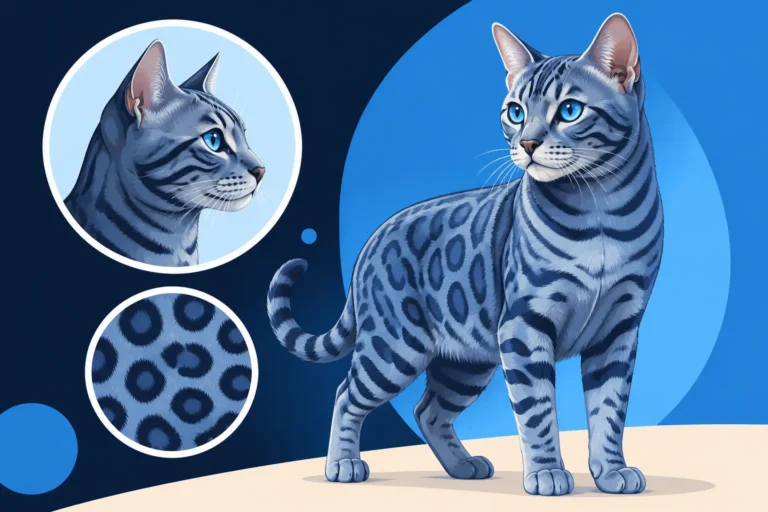
Beyond the basic agouti and colorpoint genes, there are other modifier genes that play a significant role in fine-tuning a Bengal's coat color, even if they aren't always accepted by breed standards. One of the most talked-about is the dilution gene (D/d). When a Bengal inherits two copies of the recessive dilute gene (dd), it essentially "dilutes" the primary colors. Black pigment becomes blue, and red pigment becomes cream. So, a brown Bengal carrying dilution would become a blue Bengal, with a slate-grey base coat and blue-grey markings. Similarly, a snow Bengal could become a "blue snow" or "blue point," a truly unique and softer aesthetic.
However, it's important to note that the blue Bengal is currently not recognized for championship status by most major cat registries like TICA, meaning they can't compete in shows. Despite this, they have a growing following among enthusiasts who appreciate their unique pastel hues. Other modifier genes can influence the richness of the background color, the clarity of the markings, or even the presence of "glitter." The "glitter" gene, for example, gives the Bengal's coat a beautiful, iridescent sheen, making it sparkle. It’s a trait inherited from the Asian Leopard Cat and is highly prized, contributing to the luxurious feel of their short, dense pelt. These modifier genes add layers of complexity and beauty, proving that Bengal cat genetics are truly a wonder.
Unaccepted and Emerging Colors in Bengal Cats
While the recognized colors are stunning, the world of Bengal cat genetics is always evolving, and some colors, though not officially accepted for show, captivate owners with their rarity and unique beauty. These often spark debate within the breeding community about the future direction of the breed.
The Controversial Blue Bengal
The Blue Bengal is one of those colors that generate a lot of buzz. As mentioned, the blue coloration arises from the recessive dilution gene (dd) acting on a black-based cat. Instead of the typical brown or black markings, a blue Bengal will have a beautiful, soft grey or slate-blue base coat with darker blue or grey markings. Their nose leather is often a bluish-grey, and their paw pads might be a deep charcoal. They have a truly gentle and almost ethereal appearance, distinct from the sharper contrast of other Bengal colors.
Despite their undeniable beauty, blue Bengals are considered a non-standard color by most official breed registries like The International Cat Association (TICA). This means they cannot be shown for championship titles, and breeders who produce them sometimes face criticism for deviating from the established breed standard, which aims to preserve the wild look of the Asian Leopard Cat. However, their unique aesthetic has garnered a loyal following, and many pet owners specifically seek out these rare blue beauties. While not universally embraced by the show world, the blue Bengal represents a fascinating genetic variant that showcases the diverse possibilities within the breed, offering a softer, cooler alternative to the traditional wild-cat hues. Check out What a Blue Bengal Cat Is for more details on this fascinating variant.
Long-Haired Bengals and Other Non-Standard Traits
Beyond color, other non-standard traits can appear in Bengal cats, often due to recessive genes or unforeseen genetic combinations. The most prominent of these is the long-haired Bengal, often affectionately called a "Cashmere Bengal." This trait arises from a recessive gene for long hair. If both parents carry this gene, even if they are short-haired themselves, they can produce long-haired kittens. These cats possess all the characteristic patterns and colors of a Bengal but with a luxurious, flowing coat that softens their wild look while maintaining their exotic charm.
Similar to blue Bengals, long-haired Bengals are not recognized for championship status by TICA, but they are recognized by some other associations and are gaining popularity among pet owners. Their soft, flowing fur actually sheds less than many short-haired cats, and they still have the playful, active personality Bengals are known for. Other non-standard traits might include odd eye colors (like one blue and one gold eye, not to be confused with the solid blue eyes of a Seal Lynx Point), or patterns that significantly deviate from the accepted rosetted or marbled forms. While breeders typically focus on adhering to the breed standard, these genetic surprises often find loving homes and contribute to the rich tapestry of Bengal cat variations.
What to Expect When Choosing a Colored Bengal
Bringing a Bengal cat into your home is an exciting journey, and understanding how their magnificent coats develop and change over time is part of the adventure. What you see as a tiny kitten might not be exactly what you get in a mature adult, especially when it comes to color and pattern vibrancy.
Color Changes as a Bengal Kitten Grows
One of the most surprising things for new Bengal owners is how much a kitten's coat can change as they mature. You might bring home a little furball that looks a bit dull or has muted patterns, only for them to blossom into a vibrant, high-contrast stunner! This phenomenon is often referred to as the "fuzzie" stage, and it's completely normal. Bengal kittens, especially between about 3 weeks and 4-6 months of age, often develop a fuzzy, longer guard hair coat that partially obscures their underlying pattern. It’s thought to be a form of camouflage, mimicking how wild leopard cat kittens might hide in their den or among vegetation. During this time, their rosettes or marbling can look blurred, and their overall color might seem less intense.
But don't despair! As they grow, these "fuzzies" gradually clear, revealing the full glory of their adult coat underneath. The colors will deepen, the contrast will sharpen, and those beautiful patterns will truly pop. For snow Bengals, the markings will continue to darken over the first year or two, sometimes even longer, as their colorpoint genetics come into full effect. Even brown Bengals can see their base color warm up and their glitter become more pronounced. Patience is a virtue when you have a Bengal kitten; their best coat often takes time to fully develop. When considering a kitten, it's always wise to ask the breeder to see photos of their parents to get an idea of what the adult cat might look like. Learning about When a Bengal Cat Kitten's Fuzzies Clear can help manage expectations.
The Impact of Lighting and Environment on Appearance
Believe it or not, the lighting and environment can have a surprisingly significant impact on how your Bengal cat's coat color and pattern appear. What looks like a brilliant, high-contrast coat in one setting might seem softer and more muted in another, and it’s not just your eyes playing tricks on you! Natural sunlight, for example, is often the best light to truly appreciate a Bengal's coat. It brings out the depth of their colors, highlights the intricate details of their rosettes or marbling, and makes that special "glitter" shimmer like magic. A brown Bengal might look like burnished gold in the sun, while a silver Bengal will sparkle like freshly fallen snow.
Conversely, indoor lighting, especially warm or yellow-toned artificial light, can sometimes mute colors or even add a subtle yellowish cast to silver Bengals, making them appear less pristine. Over time, even exposure to strong sunlight can subtly change a Bengal's coat color, sometimes deepening it or, in rare cases, causing some fading, though this is usually minimal. Furthermore, diet and overall health play a crucial role in coat quality. A Bengal on a high-quality, balanced diet will generally have a healthier, shinier coat with more vibrant colors and clearer patterns. Essential fatty acids, for instance, are vital for skin and coat health. Investing in quality food, perhaps from a trusted source like Chewy, can make a noticeable difference in your cat's luster. Regular grooming, even though minimal for Bengals, also helps keep their pelt in top condition, ensuring that their stunning colors are always at their best. Just like humans, a healthy diet and environment reflect on the outside!
Disclaimer
This article is for general informational purposes only and does not constitute professional advice. Laws, prices and regulations vary by location and change over time. Consult a qualified professional for guidance on your specific situation.